Governance

FSI's research on the origins, character and consequences of government institutions spans continents and academic disciplines. The institute’s senior fellows and their colleagues across Stanford examine the principles of public administration and implementation. Their work focuses on how maternal health care is delivered in rural China, how public action can create wealth and eliminate poverty, and why U.S. immigration reform keeps stalling. 

FSI’s work includes comparative studies of how institutions help resolve policy and societal issues. Scholars aim to clearly define and make sense of the rule of law, examining how it is invoked and applied around the world. 

FSI researchers also investigate government services – trying to understand and measure how they work, whom they serve and how good they are. They assess energy services aimed at helping the poorest people around the world and explore public opinion on torture policies. The Children in Crisis project addresses how child health interventions interact with political reform. Specific research on governance, organizations and security capitalizes on FSI's longstanding interests and looks at how governance and organizational issues affect a nation’s ability to address security and international cooperation.

-

SCCEI Fall Seminar Series 


Tuesday, November 29, 2022      11:00 am -12:15 pm Pacific Time

Goldman Room E401, Encina Hall, 616 Jane Stanford Way | Zoom Meeting 


Cost-Sharing in Medical Care Can Increase Adult Mortality in Lower-Income Countries


About the Speaker

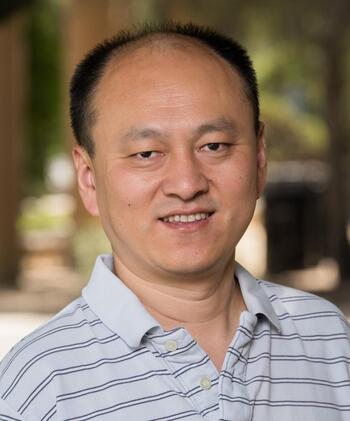
Image
Grant Miller

As a health and development economist based at the Stanford School of Medicine, Dr. Grant Miller's overarching focus is research and teaching aimed at developing more effective health improvement strategies for developing countries.

His agenda addresses three major interrelated themes: First, what are the major causes of population health improvement around the world and over time? His projects addressing this question are retrospective observational studies that focus both on historical health improvement and the determinants of population health in developing countries today. Second, what are the behavioral underpinnings of the major determinants of population health improvement? Policy relevance and generalizability require knowing not only which factors have contributed most to population health gains, but also why. Third, how can programs and policies use these behavioral insights to improve population health more effectively? The ultimate test of policy relevance is the ability to help formulate new strategies using these insights that are effective.


Seminar Series Moderators

Image
Headshot of Dr. Scott Rozelle

Scott Rozelle is the Helen F. Farnsworth Senior Fellow and the co-director of Stanford Center on China's Economy and Institutions in the Freeman Spogli Institute for International Studies and Stanford Institute for Economic Policy Research at Stanford University.  For the past 30 years, he has worked on the economics of poverty reduction. Currently, his work on poverty has its full focus on human capital, including issues of rural health, nutrition and education. For the past 20 year, Rozelle has been the chair of the International Advisory Board of the Center for Chinese Agricultural Policy, Chinese Academy of Sciences (CAS). Most recently, Rozelle's research focuses on the economics of poverty and inequality, with an emphasis on rural education, health and nutrition in China. In recognition of this work, Dr. Rozelle has received numerous honors and awards. Among them, he became a Yangtse Scholar (Changjiang Xuezhe) in Renmin University of China in 2008. In 2008 he also was awarded the Friendship Award by Premiere Wen Jiabao, the highest honor that can be bestowed on a foreigner. 


Image
hongbin li headshot

Hongbin Li is the Co-director of Stanford Center on China's Economy and Institutions, and a Senior Fellow of Stanford Institute for Economic Policy Research (SIEPR) and the Freeman Spogli Institute for International Studies (FSI). Hongbin obtained his Ph.D. in economics from Stanford University in 2001 and joined the economics department of the Chinese University of Hong Kong (CUHK), where he became full professor in 2007. He was also one of the two founding directors of the Institute of Economics and Finance at the CUHK. He taught at Tsinghua University in Beijing 2007-2016 and was C.V. Starr Chair Professor of Economics in the School of Economics and Management. He founded the Chinese College Student Survey (CCSS) in 2009 and the China Employer-Employee Survey (CEES) in 2014.

Hongbin’s research has been focused on the transition and development of the Chinese economy, and the evidence-based research results have been both widely covered by media outlets and well read by policy makers around the world. He is currently the co-editor of the Journal of Comparative Economics.


A NOTE ON LOCATION

This seminar is a hybrid event. Please join us in person in the Goldman Conference Room located within Encina Hall on the 4th floor of the East wing, or join remotely via Zoom.

Questions? Contact Heather Rahimi at hrahimi@stanford.edu


Scott Rozelle
Hongbin Li

Hybrid Event: Goldman Room E409, Encina Hall | Zoom Meeting

Encina Commons Room 101,
615 Crothers Way,
Stanford, CA 94305-6006

(650) 723-2714 (650) 723-1919
0
Henry J. Kaiser, Jr. Professor
Professor, Health Policy
Senior Fellow at the Freeman Spogli Institute for International Studies
Senior Fellow at the Stanford Institute for Economic Policy Research
Professor, Economics (by courtesy)
grant_miller_vert.jpeg PhD, MPP

As a health and development economist based at the Stanford School of Medicine, Dr. Miller's overarching focus is research and teaching aimed at developing more effective health improvement strategies for developing countries.

His agenda addresses three major interrelated themes: First, what are the major causes of population health improvement around the world and over time? His projects addressing this question are retrospective observational studies that focus both on historical health improvement and the determinants of population health in developing countries today. Second, what are the behavioral underpinnings of the major determinants of population health improvement? Policy relevance and generalizability require knowing not only which factors have contributed most to population health gains, but also why. Third, how can programs and policies use these behavioral insights to improve population health more effectively? The ultimate test of policy relevance is the ability to help formulate new strategies using these insights that are effective.

Faculty Fellow, Stanford Center on Global Poverty and Development
Faculty Affiliate, Stanford Center for Latin American Studies
Faculty Affiliate, Woods Institute for the Environment
Faculty Affiliate, Interdisciplinary Program in Environment & Resources
Faculty Affiliate, Stanford Center on China's Economy and Institutions
CV
Date Label
Seminars
-

SCCEI Fall Seminar Series 


Tuesday, December 6, 2022      11:00 am -12:15 pm Pacific Time

Goldman Room E401, Encina Hall, 616 Jane Stanford Way | Zoom Meeting 


Gaslighting: How Comment Section Controls on Social Media Shapes Public Opinion in China

Existing literature on information manipulation in authoritarian regimes has examined government strategies for censorship and propaganda separately. This project seeks to bridge the gap by focusing on the intersection of propaganda and censorship in China, where government-affiliated accounts post propaganda content on social media and moderate comments under these posts. To do so, we collect a massive amount of high-frequency user engagement data of top government-affiliated accounts on Sina Weibo, followed by three online survey experiments to investigate effect mechanisms. We show that comment section controls effectively shift public opinion in favor of the government by changing the public’s second-order beliefs of the government or government policies. 


About the Speaker 
 

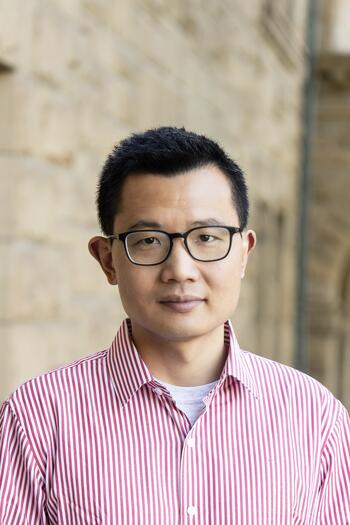
Image
Headshot of Dr. Yiqing Xu.

Yiqing Xu is an Assistant Professor at Department of Political Science, Stanford University. His primary research covers methodology and comparative politics, focusing on China. He received a PhD in Political Science from Massachusetts Institute of Technology (2016), an MA in Economics from China Center for Economic Research at Peking University (2010) and a BA in Economics (2007) from Fudan University.

His work has appeared in American Political Science Review, American Journal of Political Science, Journal of Politics, Political Analysis, Political Science Research and Methods, among other peer-reviewed journals. He has won several professional awards, including the best article award from American Journal of Political Science in 2016 and the Miller Prize (2018, 2020) for the best work appearing in Political Analysis the preceding year.


Seminar Series Moderators

Image
Headshot of Dr. Scott Rozelle

Scott Rozelle is the Helen F. Farnsworth Senior Fellow and the co-director of Stanford Center on China's Economy and Institutions in the Freeman Spogli Institute for International Studies and Stanford Institute for Economic Policy Research at Stanford University.  For the past 30 years, he has worked on the economics of poverty reduction. Currently, his work on poverty has its full focus on human capital, including issues of rural health, nutrition and education. For the past 20 year, Rozelle has been the chair of the International Advisory Board of the Center for Chinese Agricultural Policy, Chinese Academy of Sciences (CAS). Most recently, Rozelle's research focuses on the economics of poverty and inequality, with an emphasis on rural education, health and nutrition in China. In recognition of this work, Dr. Rozelle has received numerous honors and awards. Among them, he became a Yangtse Scholar (Changjiang Xuezhe) in Renmin University of China in 2008. In 2008 he also was awarded the Friendship Award by Premiere Wen Jiabao, the highest honor that can be bestowed on a foreigner. 


Image
hongbin li headshot

Hongbin Li is the Co-director of Stanford Center on China's Economy and Institutions, and a Senior Fellow of Stanford Institute for Economic Policy Research (SIEPR) and the Freeman Spogli Institute for International Studies (FSI). Hongbin obtained his Ph.D. in economics from Stanford University in 2001 and joined the economics department of the Chinese University of Hong Kong (CUHK), where he became full professor in 2007. He was also one of the two founding directors of the Institute of Economics and Finance at the CUHK. He taught at Tsinghua University in Beijing 2007-2016 and was C.V. Starr Chair Professor of Economics in the School of Economics and Management. He founded the Chinese College Student Survey (CCSS) in 2009 and the China Employer-Employee Survey (CEES) in 2014.

Hongbin’s research has been focused on the transition and development of the Chinese economy, and the evidence-based research results have been both widely covered by media outlets and well read by policy makers around the world. He is currently the co-editor of the Journal of Comparative Economics.


A NOTE ON LOCATION

This seminar is a hybrid event. Please join us in person in the Goldman Conference Room located within Encina Hall on the 4th floor of the East wing, or join remotely via Zoom.

Questions? Contact Heather Rahimi at hrahimi@stanford.edu


Scott Rozelle
Hongbin Li

Hybrid Event: Goldman Room E409, Encina Hall | Zoom Meeting

0
Assistant Professor of Political Science, Stanford University
Faculty Affiliate at the Stanford Center on China's Economy and Institutions
headshot2025.jpg PhD

Yiqing Xu is an Assistant Professor at Department of Political Science, Stanford University. His primary research covers methodology and comparative politics, focusing on China. He received a PhD in Political Science from Massachusetts Institute of Technology (2016), an MA in Economics from China Center for Economic Research at Peking University (2010) and a BA in Economics (2007) from Fudan University.

His work has appeared in American Political Science Review, American Journal of Political Science, Journal of Politics, Political Analysis, Political Science Research and Methods, among other peer-reviewed journals. He has won several professional awards, including the best article award from American Journal of Political Science in 2016 and the Miller Prize (2018, 2020) for the best work appearing in Political Analysis the preceding year.

Date Label
Seminars
-

SCCEI Fall Seminar Series 


Tuesday, November 15, 2022      11:00 am -12:15 pm Pacific Time

Goldman Room E401, Encina Hall, 616 Jane Stanford Way | Zoom Meeting 


Inequality by Design: China’s Distinctive Political Economy

With modest income differences and virtually no private wealth four decades ago, China’s inequalities of income and wealth are now almost as extreme as in the United States and Russia. This development is more puzzling than commonly recognized, and analyses of the determinants of household income do not address its institutional origins. Widening inequality is a byproduct of China’s highly distinctive political economy, which is designed to preserve communist party control and enforce the priorities of the central state. These include an enduringly large capital-intensive state sector supported by a financial system unusually reliant on state-owned banks; a tax base highly dependent on business volume rather than profits; a distorted fiscal system that drives local governments into property development; and political constraints on documenting and taxing private assets. These structures create large concentrations of capital and favor those with access to it, transferring incomes from households to corporations while crippling the state’s capacity to remediate resulting inequalities.


About the Speaker 
 

Image
Andrew G. Walder

Andrew Walder is the Denise O'Leary and Kent Thiry Professor at Stanford University, where he is also a senior fellow in the Freeman Spogli Institute. Previously, he served as chair of the department of sociology, and as director of the Walter H. Shorenstein Asia-Pacific Research Center and of the Division of International, Comparative and Area Studies.

A political sociologist, Walder has long specialized on the sources of conflict, stability, and change in communist regimes and their successor states. His publications on China have ranged from the political and economic organization of the Mao era to changing patterns of stratification, social mobility, and political conflict in the post-Mao era. His current research focuses on popular political mobilization in late-1960s China and the subsequent collapse and rebuilding of the Chinese party-state. He holds an AB from Johns Hopkins University and a PhD from the University of Michigan.


Seminar Series Moderators

Image
Headshot of Dr. Scott Rozelle

Scott Rozelle is the Helen F. Farnsworth Senior Fellow and the co-director of Stanford Center on China's Economy and Institutions in the Freeman Spogli Institute for International Studies and Stanford Institute for Economic Policy Research at Stanford University.  For the past 30 years, he has worked on the economics of poverty reduction. Currently, his work on poverty has its full focus on human capital, including issues of rural health, nutrition and education. For the past 20 year, Rozelle has been the chair of the International Advisory Board of the Center for Chinese Agricultural Policy, Chinese Academy of Sciences (CAS). Most recently, Rozelle's research focuses on the economics of poverty and inequality, with an emphasis on rural education, health and nutrition in China. In recognition of this work, Dr. Rozelle has received numerous honors and awards. Among them, he became a Yangtse Scholar (Changjiang Xuezhe) in Renmin University of China in 2008. In 2008 he also was awarded the Friendship Award by Premiere Wen Jiabao, the highest honor that can be bestowed on a foreigner. 


Image
hongbin li headshot

Hongbin Li is the Co-director of Stanford Center on China's Economy and Institutions, and a Senior Fellow of Stanford Institute for Economic Policy Research (SIEPR) and the Freeman Spogli Institute for International Studies (FSI). Hongbin obtained his Ph.D. in economics from Stanford University in 2001 and joined the economics department of the Chinese University of Hong Kong (CUHK), where he became full professor in 2007. He was also one of the two founding directors of the Institute of Economics and Finance at the CUHK. He taught at Tsinghua University in Beijing 2007-2016 and was C.V. Starr Chair Professor of Economics in the School of Economics and Management. He founded the Chinese College Student Survey (CCSS) in 2009 and the China Employer-Employee Survey (CEES) in 2014.

Hongbin’s research has been focused on the transition and development of the Chinese economy, and the evidence-based research results have been both widely covered by media outlets and well read by policy makers around the world. He is currently the co-editor of the Journal of Comparative Economics.


A NOTE ON LOCATION

This seminar is a hybrid event. Please join us in person in the Goldman Conference Room located within Encina Hall on the 4th floor of the East wing, or join remotely via Zoom.

Questions? Contact Heather Rahimi at hrahimi@stanford.edu


Scott Rozelle
Hongbin Li

Hybrid Event: Goldman Room E409, Encina Hall | Zoom Meeting

Shorenstein APARC
Stanford University
Encina Hall E301
Stanford, CA 94305-6055

(650) 723-4560 (650) 723-6530
0
Senior Fellow at the Freeman Spogli Institute for International Studies
Denise O'Leary and Kent Thiry Professor
walder_2019_2.jpg PhD

Andrew G. Walder is the Denise O'Leary and Kent Thiry Professor at Stanford University, where he is also a senior fellow in the Freeman Spogli Institute for International Studies. Previously, he served as Chair of the Department of Sociology, Director of the Walter H. Shorenstein Asia-Pacific Research Center, and Head of the Division of International, Comparative and Area Studies in the School of Humanities and Sciences.

Walder has long specialized in the sources of conflict, stability, and change in communist regimes and their successor states. His publications on Mao-era China have ranged from the social and economic organization of that early period to the popular political mobilization of the late 1960s and the subsequent collapse and rebuilding of the Chinese party-state. His publications on post-Mao China have focused on the evolving pattern of stratification, social mobility, and inequality, with an emphasis on variation in the trajectories of post-state socialist systems. His current research is on the growth and evolution of China’s large modern corporations, both state and private, after the shift away from the Soviet-inspired command economy.

Walder joined the Stanford faculty in 1997. He received his Ph.D. in sociology at the University of Michigan in 1981 and taught at Columbia University before moving to Harvard in 1987. From 1995 to 1997, he headed the Division of Social Sciences at the Hong Kong University of Science and Technology.

Walder has received fellowships and grants from the Guggenheim Foundation, the National Science Foundation, the National Academy of Sciences, the Henry Luce Foundation, the Ford Foundation, the Social Science Research Council, and the Center for Advanced Study in the Behavioral Sciences. His books and articles have won awards from the American Sociological Association, the Association for Asian Studies, and the Social Science History Association. He is an elected member of the American Academy of Arts and Sciences.

His recent and forthcoming books include  Fractured Rebellion: The Beijing Red Guard Movement  (Harvard University Press, 2009);  China Under Mao: A Revolution Derailed  (Harvard University Press, 2015);  Agents of Disorder: Inside China’s Cultural Revolution  (Harvard University Press, 2019); and  A Decade of Upheaval: The Cultural Revolution in Feng County  (Princeton University Press, 2021) (with Dong Guoqiang); and Civil War in Guangxi: The Cultural Revolution on China’s Southern Periphery (Stanford University Press, 2023).  

His recent articles include “After State Socialism: Political Origins of Transitional Recessions.” American Sociological Review  80, 2 (April 2015) (with Andrew Isaacson and Qinglian Lu); “The Dynamics of Collapse in an Authoritarian Regime: China in 1967.”  American Journal of Sociology  122, 4 (January 2017) (with Qinglian Lu); “The Impact of Class Labels on Life Chances in China,”  American Journal of Sociology  124, 4 (January 2019) (with Donald J. Treiman); and “Generating a Violent Insurgency: China’s Factional Warfare of 1967-1968.” American Journal of Sociology 126, 1 (July 2020) (with James Chu).


Director Emeritus of the Shorenstein Asia-Pacific Research Center
Director Emeritus of the Division of International, Comparative and Area Studies
Faculty Affiliate at the Stanford Center on China's Economy and Institutions
Faculty Fellow at the Stanford Center at Peking University, July to November of 2013
Graduate Seminar Instructor at the Stanford Center at Peking University, August to September of 2017
Seminars
Date Label
-

SCCEI Fall Seminar Series 


Tuesday, October 18, 2022      11:00 am -12:15 pm Pacific Time

Goldman Room E401, Encina Hall, 616 Jane Stanford Way | Zoom Meeting 


Sovereign-Biopolitics and Tobacco’s Annihilation of China's Male State

This talk takes up a historical and theoretical puzzle: how has it come to be that nation states, which are run by men, are reputedly biopolitical in design yet facilitate their male citizens' exposure to the greatest cause of preventable death today. The analytical answer offered centers around a phenomenon long ago dubbed the pharmakon, something that simultaneously heals and poisons. The story told here is a smoky one, wafting across territorial boundaries, epochs, big business plays, and an uncanny cast of characters. 


About the Speaker

Image
Matthew Kohrman photo from Zoom.

 Matthew Kohrman is an Associate Professor of Anthropology and a SCCEI Faculty Affiliate. His research and writing bring anthropological methods to bear on the ways health, culture, and politics are interrelated. Focusing on the People's Republic of China, he engages various intellectual terrains such as governmentality, gender theory, political economy, critical science studies, narrativity, and embodiment. His first monograph, Bodies of Difference: Experiences of Disability and Institutional Advocacy in the Making of Modern China, raises questions about how embodied aspects of human existence, such as our gender, such as our ability to propel ourselves through space as walkers, cyclists and workers, become founts for the building of new state apparatuses of social provision, in particular, disability-advocacy organizations. Over the last decade, Prof. Kohrman has been involved in research aimed at analyzing and intervening in the biopolitics of cigarette smoking among Chinese citizens. This work, as seen in his recently edited volume--Poisonous Pandas: Chinese Cigarette Manufacturing in Critical Historical Perspectives--expands upon heuristic themes of his earlier disability research and engages in novel ways techniques of public health, political philosophy, and spatial history. More recently, he has begun projects linking ongoing interests at the intersection of phenomenology and political economy with questions regarding environmental attunement and the arts.


Seminar Series Moderators

Image
Headshot of Dr. Scott Rozelle

Scott Rozelle is the Helen F. Farnsworth Senior Fellow and the co-director of Stanford Center on China's Economy and Institutions in the Freeman Spogli Institute for International Studies and Stanford Institute for Economic Policy Research at Stanford University.  For the past 30 years, he has worked on the economics of poverty reduction. Currently, his work on poverty has its full focus on human capital, including issues of rural health, nutrition and education. For the past 20 year, Rozelle has been the chair of the International Advisory Board of the Center for Chinese Agricultural Policy, Chinese Academy of Sciences (CAS). Most recently, Rozelle's research focuses on the economics of poverty and inequality, with an emphasis on rural education, health and nutrition in China. In recognition of this work, Dr. Rozelle has received numerous honors and awards. Among them, he became a Yangtse Scholar (Changjiang Xuezhe) in Renmin University of China in 2008. In 2008 he also was awarded the Friendship Award by Premiere Wen Jiabao, the highest honor that can be bestowed on a foreigner. 


Image
hongbin li headshot

Hongbin Li is the Co-director of Stanford Center on China's Economy and Institutions, and a Senior Fellow of Stanford Institute for Economic Policy Research (SIEPR) and the Freeman Spogli Institute for International Studies (FSI). Hongbin obtained his Ph.D. in economics from Stanford University in 2001 and joined the economics department of the Chinese University of Hong Kong (CUHK), where he became full professor in 2007. He was also one of the two founding directors of the Institute of Economics and Finance at the CUHK. He taught at Tsinghua University in Beijing 2007-2016 and was C.V. Starr Chair Professor of Economics in the School of Economics and Management. He founded the Chinese College Student Survey (CCSS) in 2009 and the China Employer-Employee Survey (CEES) in 2014.

Hongbin’s research has been focused on the transition and development of the Chinese economy, and the evidence-based research results have been both widely covered by media outlets and well read by policy makers around the world. He is currently the co-editor of the Journal of Comparative Economics.


A NOTE ON LOCATION

This seminar is a hybrid event. Please join us in person in the Goldman Conference Room located within Encina Hall on the 4th floor of the East wing, or join remotely via Zoom.

Questions? Contact Heather Rahimi at hrahimi@stanford.edu


Scott Rozelle
Hongbin Li

Hybrid Event: Goldman Room E409, Encina Hall | Zoom Meeting

Stanford University
Department of Anthropology
Building 50, Central Quad
Stanford, California 94305-2034

(650) 723-3421 (650) 725-0605
0
Associate Professor of Anthropology
Senior Fellow, by courtesy, at the Freeman Spogli Institute for International Studies
Faculty Affiliate at the Walter H. Shorenstein Asia-Pacific Research Center
Faculty Affiliate at the Stanford Center on China's Economy and Institutions
matthewkohrman-vert.jpeg

Matthew Kohrman joined Stanford’s faculty in 1999. His research and writing bring multiple methods to bear on the ways health, culture, and politics are interrelated. Focusing on the People's Republic of China, he engages various intellectual terrains such as governmentality, gender theory, political economy, critical science studies, and embodiment. His first monograph, Bodies of Difference: Experiences of Disability and Institutional Advocacy in the Making of Modern China, examines links between the emergence of a state-sponsored disability-advocacy organization and the lives of Chinese men who have trouble walking. In recent years, Kohrman has been conducting research projects aimed at analyzing and intervening in the biopolitics of cigarette smoking and production. These projects expand upon analytical themes of Kohrman’s disability research and engage in novel ways techniques of public health.

Date Label
Seminars
0
Assistant Professor of Political Science, Stanford University
Faculty Affiliate at the Stanford Center on China's Economy and Institutions
headshot2025.jpg PhD

Yiqing Xu is an Assistant Professor at Department of Political Science, Stanford University. His primary research covers methodology and comparative politics, focusing on China. He received a PhD in Political Science from Massachusetts Institute of Technology (2016), an MA in Economics from China Center for Economic Research at Peking University (2010) and a BA in Economics (2007) from Fudan University.

His work has appeared in American Political Science Review, American Journal of Political Science, Journal of Politics, Political Analysis, Political Science Research and Methods, among other peer-reviewed journals. He has won several professional awards, including the best article award from American Journal of Political Science in 2016 and the Miller Prize (2018, 2020) for the best work appearing in Political Analysis the preceding year.

Date Label
Authors
News Type
News
Date
Paragraphs

The Freeman Spogli Institute for International Studies (FSI) at Stanford University is pleased to announce that Jennifer Pan has been appointed to the position of FSI Senior Fellow, effective September 1. The appointment is concurrent with her promotion to professor at Stanford’s Department of Communication.

At FSI, Pan will work primarily within the Center on China’s Economy and Institutions (SCCEI) and will also be affiliated with the Cyber Policy Center. Her research focuses on political communication and authoritarian politics. She uses experimental and computational methods with large-scale datasets on political activity in China and other authoritarian regimes to answer questions about how autocrats perpetuate their rule; how political censorship, propaganda, and information manipulation work in the digital age; and how peoples’ preferences and behaviors are shaped as a result.

"Jennifer is both a top expert in political communication and authoritarian politics and an outstanding teacher," said FSI Director Michael McFaul. "I’m eager to see how her groundbreaking approach will influence research across the institute and inspire our students in the classroom."


Jennifer is at the forefront of research in her field. We are thrilled to have her officially join our team and I can’t wait to see where her research takes her next."
Scott Rozelle
Co-director of SCCEI

Scott Rozelle, co-director of SCCEI, added: "Jennifer is at the forefront of research in her field, conducting groundbreaking empirical research that uses the unique lens of communication to build understanding of China’s economy and its impact on the world. In the past year alone, Jennifer gave several lectures to our SCCEI community, all of which drew large audiences and sparked lively discussion. We are thrilled to have her officially join our team and I can’t wait to see where her research takes her next."

Pan’s book, “Welfare for Autocrats: How Social Assistance in China Cares for its Rulers,” shows how China’s pursuit of political order transformed the country’s main social assistance program, Dibao, for repressive purposes. Her work has appeared in peer-reviewed publications such as the American Political Science Review, American Journal of Political Science, Comparative Political Studies, Journal of Politics, and Science.

“Jennifer Pan is one of the most exciting, creative and innovative scholars in the field of social media and network analysis,” said Nathaniel Persily, co-director of the Cyber Policy Center. “She has written foundational works relating to the internet in China and has very important research underway concerning the effect of social media on politics in the United States.”

Pan graduated summa cum laude from Princeton University in 2004 and obtained a Ph.D. from Harvard University in 2015. Prior to Stanford, Pan was a consultant at McKinsey & Company. She was also a fellow at Stanford’s Center for Advanced Study in the Behavioral Sciences from 2019 to 2020.

Read More

Scott Rozelle interacts with children in a classroom in Ningxia, China.
News

Why "Big Data China" Is Needed Now More Than Ever: A Conversation

In this video short, Scott Rozelle, SCCEI Co-Director sits down with Scott Kennedy, CSIS Trustee Chair in Chinese Business, to discuss Big Data China, a new project aimed at bridging the gap between cutting-edge academic research on China and the Washington policy community.
Why "Big Data China" Is Needed Now More Than Ever: A Conversation
Hero Image
Jennifer Pan joins the Freeman Spogli Institute for International Studies as a Senior Fellow working with the Center on China's Economy and Institutions
As a senior fellow, Jennifer Pan will continue her research into political communication and authoritarian politics as both a researcher and professor at the Freeman Spogli Institute for International Studies and the Department of Communication.
All News button
1
Subtitle

Pan’s research focuses on political and authoritarian politics, including how preferences and behaviors are shaped by political censorship, propaganda, and information manipulation.

Date Label
-

2022 Sam Dr. Sam-Chung Hsieh Memorial Lecture
Date & Time: Wednesday, September 28, 2022     |    4:30 - 6:00 PM PT 
Location: Green Library, Bing Wing, 5th floor, Bender Room


Overreach and Overreaction: The Downward Spiral in the U.S.-China Relations 

Stanford Libraries and the Stanford Center on China’s Economy and Institutions are pleased to present the 2022 Dr. Sam-Chung Hsieh Memorial Lecture featuring Professor Susan Shirk who will be speaking on Overreach and Overreaction: The Downward Spiral in the U.S.-China Relations.  This is an in-person event.

Why did China abandon its successful foreign policy of restraint and shift toward confrontation and unchecked control over its own society? Surprisingly the shift began under Hu Jintao’s collective leadership (2002-12). Under the personalistic leadership of Xi Jinping the trend has intensified. Those who implement Xi's directives compete to outdo one another, provoking an even greater global backlash. To counter China’s overreach, the worst mistake the rest of the world, and the United States in particular, can make is to overreact. Understanding the domestic political drivers of foreign policy in both countries can help us stem the downward spiral in relations.


About the Speaker

Image
Susan Shirk

Susan Shirk is Chair of the 21st Century China Center and research professor at the UC San Diego School of Global Policy and Strategy. Shirk’s book, China:  Fragile Superpower helped frame the policy debate on China in the U.S. and other countries. Her articles have appeared in leading academic publications in political science, international relations, and China studies. She previously served as deputy assistant secretary of state (1997-2000) responsible for U.S. policy toward China, Taiwan, Hong Kong and Mongolia. She is director emeritus of the UC Institute on Global Conflict and Cooperation and founded the Northeast Asia Cooperation Dialogue, an unofficial forum for discussion of security issues. Shirk is a graduate of Mt. Holyoke College and received her PhD from M.I.T.


The family of Dr. Sam-Chung Hsieh donated his personal archive to the Stanford Libraries' Special Collections and endowed the Dr. Sam-Chung Hsieh Memorial Lecture series to honor his legacy and to inspire future generations. Dr. Sam-Chung Hsieh (1919-2004) was former Governor of the Central Bank in Taiwan. During his tenure, he was responsible for the world's largest foreign exchange reserves, and was widely recognized for achieving stability and economic growth. In his long and distinguished career as economist and development specialist, he held key positions in multilateral institutions including the Asian Development Bank, where as founding Director, he was instrumental in advancing the green revolution and in the transformation of rural Asia. Read more about Dr. Hsieh.


Questions? Contact Sonia Lee from Stanford Libraries 

Green Library, Bing Wing, 5th floor, Bender Room

Susan Shirk University of California San Diego
Lectures
News Type
News
Date
Paragraphs

Earlier this year the Stanford Center on China's Economy and Institutions (SCCEI) joined the Center for Strategic and International Studies (CSIS) to launch Big Data China, a new project aimed at bridging the gap between cutting-edge academic research on China and the Washington policy community. Since the launch of the collaboration, SCCEI and CSIS have hosted a number of featured events, organized briefing sessions for academics to speak directly with policy makers,  launched a new project website, and much more.

We just don’t understand China — if we understood China better, we could make better policy decisions.
Scott Rozelle

Image
Big Data China logo
The Big Data China website features regular multimedia analysis with high-quality data that explores important trends in China’s economy and society. In the newest video release, Scott Rozelle, SCCEI Co-Director, and Scott Kennedy, CSIS Trustee Chair in Chinese Business and Economics, sit down to discuss why the Big Data China collaboration is needed now, more than ever. As Scott Rozelle puts it, "we just don’t understand China — if we understood China better, we could make better policy decisions." This collaboration aims to reduce the current gap between academia and Washington by identifying and highlighting the policy implications of cutting-edge scholarly work on China and presenting it directly to the policy community. 


Watch the video and visit the website for more from Big Data China!

Read More

Data graph lines over cityscape in China.
News

SCCEI Launches New Impact Initiative with the China Briefs

The SCCEI China Briefs are short features that translate top-quality academic research into evidence-based insights for those interested in China and U.S.-China relations. Released twice a month, the briefs will cover timely issues that inform policy and advance the public understanding of China and its role on the global stage.
SCCEI Launches New Impact Initiative with the China Briefs
Big Data China logo in front of Shanghai cityscape
News

SCCEI Launches "Big Data China" in Collaboration with the Center for Strategic and International Studies (CSIS)

"Big Data China" aims to bridge the gap between cutting-edge quantitative academic research and the Washington policy community. On February 11, 2022, SCCEI and CSIS hosted their first Big Data China event, "A Liberal Silent Majority in China?" Curated highlights from the first feature of the collaboration are included below.
SCCEI Launches "Big Data China" in Collaboration with the Center for Strategic and International Studies (CSIS)
American and Chinese flags
News

Politico: Biden Bets Big on Asia

Jude Blanchette from CSIS recommends Scott Rozelle's new book "Invisible China" saying, "If you’re thinking seriously about China’s future trajectory, it’s imperative you read this book to understand the possible impacts of China’s chronic underinvestment in education.”
Politico: Biden Bets Big on Asia
All News button
1
Subtitle

In this video short, Scott Rozelle, SCCEI Co-Director sits down with Scott Kennedy, CSIS Trustee Chair in Chinese Business, to discuss Big Data China, a new project aimed at bridging the gap between cutting-edge academic research on China and the Washington policy community.

-
Image
Big Data China logo

The event will be webcast live from this page.

The Stanford Center on China’s Economy and Institutions (SCCEI) and the CSIS Trustee Chair in Chinese Business and Economics launch the third feature of the new collaboration, Big Data China, on July 27 at 9 a.m. PDT / 12 p.m. EDT.  The feature, “The AI-Surveillance Symbiosis in China,” highlights the work of professors Noam Yuchtman (London School of Economics) and David Yang (Harvard University) and their colleagues. The feature shows how China‘s large-scale investments in surveillance technology is both enhancing the state‘s capacity to repress dissent and providing commercial advantage to Chinese AI companies operating in the facial recognition and surveillance space.


The event will feature a presentation of the key findings of the analysis and its implications for the Washington policy community by Noam Yuchtman of London School of Economics, David Yang of Harvard University, and Trustee Chair Fellow Ilaria Mazzocco. Trustee Chair Director Scott Kennedy will moderate a panel discussion which will include questions from the public and questions from the audience. The distinguished panelists for the event are: Emily Weinstein of CSET, Paul Mozur of the New York Times, and Trustee Chair non-resident senior associate Paul Triolo


WATCH THE RECORDING

FEATURING

Noam Yuchtman 
Professor of Managerial Economics and Strategy, London School of Economics and Political Science
David Yang 
Assistant Professor of Economics, Harvard University
Emily Weinstein  
Research Fellow, Center for Security and Emerging Technology (CSET), Georgetown University
Paul Mozur 
Correspondent, New York Times
Scott Kennedy 
Senior Adviser and Trustee Chair in Chinese Business and Economics
Ilaria Mazzocco 
Fellow, Trustee Chair in Chinese Business and Economics
Paul Triolo 
Senior Associate (Non-resident), Trustee Chair in Chinese Business and Economics
 

EVENT PARTNERS
 

Image
SCCEI and CSIS logos

Virtual Livestream 

Scott Kennedy
Ilaria Mazzocco
Paul Mozur
Paul Triolo
Emily Weinstein
David Yang
Noam Yuchtman
Panel Discussions
-

Image
Big Data China logo
Join the CSIS Trustee Chair in Chinese Business and Economics and the Stanford Center on China’s Economy and Institutions (SCCEI) for the launch of the second feature of their collaboration, Big Data China, on May 27, 12:00-1:15 pm ET. Our latest digital report, “How Inequality Is Undermining China’s Prosperity,” written by CSIS Fellow Ilaria Mazzocco, highlights the path-breaking work of Stanford scholars Scott Rozelle, Hongbin Li, and their colleagues. By analyzing data on inequality and its sources, the feature shows how trends in China’s labor market, educational attainment, automation, and rural employment are conspiring to harden inequality, which could hurt prospects for growth and undermine political stability. These developments will complicate how the United States should address the China challenge in the years ahead.

Following a presentation by Scott Rozelle of Stanford University on the key findings of the analysis and its implications for the Washington policy community, Trustee Chair Fellow Ilaria Mazzocco will moderate the panel discussion and questions from the audience. The distinguished panelists for the event include Mary Gallagher of the University of Michigan, Mary E. Lovely of the Peterson Institute and Syracuse University, and Martin K. Whyte of Harvard University.


Watch the Recording:

FEATURING

Scott Rozelle 
Helen F. Farnsworth Senior Fellow, FSI and SIEPR, 
& Co-director, SCCEI,  
Stanford University
Mary Gallagher 
Professor, Democracy, Democratization, and Human Rights, University of Michigan
Mary E. Lovely 
Senior Fellow, Peterson Institute 
for International Economics; 
Professor Emeritus, Department 
of Economics, Syracuse University
Martin K. Whyte 
Professor Emeritus, International Studies and Sociology, Harvard University
Ilaria Mazzocco 
Fellow, Trustee Chair in Chinese Business and Economics


EVENT PARTNERS
 

Image
SCCEI and CSIS logos

Virtual Livestream 

Mary Gallagher
Mary Lovely
Ilaria Mazzocco
Scott Rozelle
Martin Whyte
Panel Discussions
Date Label
Subscribe to Governance