-

Stanford Center on Early Childhood (SCEC) and The Rural Education Action Program (REAP) are pleased to host Harvard University Professor Chunling Lu for a special seminar event.
 
Please register for the event to receive email reminders and add it to your calendar. Lunch will be provided.


Global, Regional, and Country Level Prevalence of Young Children Exposed to Risks of Poor Development in Low and Middle Income Countries: An Update


Quantifying the prevalence of young children exposed to risks of poor development is imperative for understanding the challenges of reducing those risks, developing and evaluating evidence-based early childhood development policy interventions, and assessing progress in eliminating the risks imposed upon young children during their most critical developmental period. We published estimates on the prevalence of young children exposed to stunting and extreme poverty at the global, regional, and country levels in 2017. Since new data have been released and a new definition of extreme poverty has been proposed, we updated our 2017 study with a focus on the progress in reducing the prevalence of risk exposure at different levels since 2000. For countries with other risk factors available in their micro-level data, we added them to the composite measure and assessed the levels and trends of sociodemographic disparities in young children’s risk exposure.  


About the Speaker 


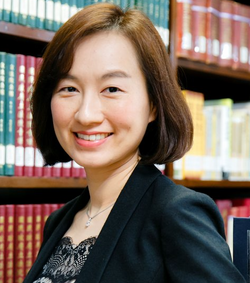
Chunling Lu, Ph.D head shot

Chunling Lu studied international relations (BA) and political science (MA) at Fudan University in Shanghai, China, and sociology (MA) and applied statistics (MS) at Syracuse University, where she also received her PhD in economics. She received postdoctoral training on health care policy analysis at the Harvard Medical School’s Department of Health Care Policy, and joined the School’s Department of Global Health and Social Medicine in 2008 after three years as Senior Research Associate at the Harvard Institute for Global Health.


EVENT PARTNERS


Image
Stanford Center on Early Childhood and Rural Education Action Program logo

Goldman Room E409, Encina Hall

Chunling Lu, Associate Professor of Global Health and Social Medicine, Harvard Medical School
Seminars
Date Label
-

SCCEI Seminar Series (Winter 2026)


Friday, March 6, 2026 | 12:00 pm -1:20 pm Pacific Time
Goldman Room E409, Encina Hall, 616 Jane Stanford Way


Topic will be announced prior to the event. Please register for the event to receive email updates and add it to your calendar. Lunch will be provided.


About the Speaker 
 

Melanie Meng Xue profile.

Professor Melanie Meng Xue is Assistant Professor of Economic History at the London School of Economics and Political Science and a Research Affiliate at the Centre for Economic Policy Research. Her research lies at the intersection of political economy, gender, culture, and economic history, with a regional focus on early modern and modern China. Her work explores the rise of women, the persistence of authoritarian regimes, and the long-term impact of affirmative action and cultural values on economic and political inequality.

Her articles examine topics such as folklore and proverbs as sources of cultural transmission, and she is currently working on a book project analyzing cultural values across ethnic groups and regions in China. Professor Xue has published widely, and her research has influenced both academic and public discourse on the role of historical narratives and norms in shaping institutional development. She received her Ph.D. in Economics and has mentored research assistants who have gone on to top Ph.D. and pre-doctoral programs. During the 2025–26 academic year, she will be on sabbatical, spending the fall semester at Yale University.


Questions? Contact Xinmin Zhao at xinminzhao@stanford.edu


Goldman Room E409, Encina Hall

Melanie Meng Xue, Assistant Professor of Economic History, London School of Economics
Seminars
Date Label
-

SCCEI Seminar Series (Winter 2026)


Friday, February 20, 2026 | 12:00 pm -1:20 pm Pacific Time
Goldman Room E409, Encina Hall, 616 Jane Stanford Way


Competitive Human Capital Investment: Evidence from Housing Prices and Educational Expenditures


The hypothesis of competitive human capital investment posits that one important motivation for parents to invest in their children’s education is to help them to develop an advantage in their future dating and marriage market. If ownership of certain housing conveys a right to access to high-quality educational resources, a “good-school” premium is embedded in the prices of such home ownership. The size of the premium may reflect the degree of local marriage market competition. We investigate such an effect using housing prices and the location of top schools in 33 Chinese cities. We find robust evidence that the local sex ratio of the youth cohort is a strong predictor for the size of the local “good school” premium. We also find that the households from cities with a higher sex ratio are more willing to spend on children’s education, especially for sons.

Please register for the event to receive email reminders and add it to your calendar. Lunch will be provided.


About the Speaker 
 

Shang-Jin Wei headshot

Professor Shang-Jin Wei is the N.T. Wang Professor of Chinese Business and Economy at Columbia University, with joint appointments in the Graduate School of Business and the School of International and Public Affairs. A leading expert on international finance, trade, and macroeconomics, his research focuses on globalization and the Chinese economy. His work has been published in top journals, including the American Economic Review, the Journal of Political Economy, and the Journal of Finance.

From 2014 to 2016, Professor Wei served as Chief Economist of the Asian Development Bank, where he led economic research and policy support for regional cooperation initiatives. He previously held positions at the International Monetary Fund, Harvard University, the Brookings Institution, and the World Bank. He is the recipient of several prestigious awards, including the Sun Yefang Prize, the Zhang Peifang Prize, and the Gregory Chow Award. He received his Ph.D. in Economics and M.S. in Finance from the University of California, Berkeley.


Questions? Contact Xinmin Zhao at xinminzhao@stanford.edu


Goldman Room E409, Encina Hall

Shang-Jin Wei, Professor of Chinese Business and Economy, Columbia University
Seminars
Date Label
-

SCCEI Seminar Series (Winter 2026)


Friday, January 30, 2026 | 12:00 pm -1:20 pm Pacific Time
Goldman Room E409, Encina Hall, 616 Jane Stanford Way


Energy Management and Systems Change in Factories and Supply Chains in China


In China, manufacturing energy use and industrial processes are economically important but are also responsible for approximately 60% of the country's greenhouse gas emissions and cause local environmental harm. This paper develops a framework for studying the multifaceted impacts of production systems and possible interventions to reduce them, then examines the empirical evidence of effectiveness. We apply this framework to iron and steel production, downstream metal components manufacturing, and automotive assembly, relying whenever possible on observations of decision-making in factories. The talk will conclude by discussing how existing incentives interact to influence the pace and direction of progress in addressing sustainability impacts across the supply chain. 

Please register for the event to receive email reminders and add it to your calendar. Lunch will be provided.


About the Speaker 
 

Valerie Karplus headshot

Valerie Karplus is a professor in the Department of Engineering and Public Policy and associate director at the Wilton E. Scott Institute for Energy Innovation at Carnegie Mellon University.

Karplus studies resource and environmental management in organizations operating in diverse national and industry contexts, with a focus on the role of institutions and management practices in explaining performance. Areas of expertise include innovation in global corporate and industrial supply chains, regional approaches to workforce and economic revitalization, and the integrated design and evaluation of public policies. Karplus has taught courses on public policy analysis, global business strategy and organization, entrepreneurship, and the political economy of energy transitions. At CMU, she runs the Laboratory for Energy and OrganizationsOpens in new window. Karplus is also a faculty affiliate of the MIT Energy InitiativeOpens in new window, the MIT Center for Energy and Environmental Policy ResearchOpens in new window, and the MIT Center for Sustainability Science and Strategy.

She has previously worked in the development policy section of the German Federal Foreign Office in Berlin, Germany, as a Robert Bosch Foundation Fellow, and in the biotechnology industry in Beijing, China, as a Luce Scholar. From 2011 to 2016, she co-founded and directed the MIT-Tsinghua China Energy and Climate Project a five-year research effort focused on analyzing the design of energy and climate change policy in China, and its domestic and global impacts. Karplus previously served on the faculty at the MIT Sloan School of Management.

Karplus holds a BS in biochemistry and political science from Yale University and a Ph.D. in engineering systems from MIT.


Questions? Contact Xinmin Zhao at xinminzhao@stanford.edu


Goldman Room E409, Encina Hall

Valerie Karplus, Professor, Carnegie Mellon University
Seminars
Date Label
-

SCCEI Seminar Series (Winter 2026)


Friday, February 13, 2026 | 12:00 pm -1:20 pm Pacific Time
Goldman Room E409, Encina Hall, 616 Jane Stanford Way 

Due to room capacity limitations and high interest in this seminar, registration is now closed. 


From Empire to Nation-State: Aspirational Nation-Building in China


The rise of nation-states was one of the most transformative developments of the 20th century. What drives nation-building? Existing theories emphasize enmity: external threats provoke fear, humiliation, and hostility, hardening national identity through opposition. We propose an aspirational theory of nation-building, highlighting a parallel mechanism—emulation. Under threat, elites not only rally against foreign powers; they also look outward with admiration, comparing their nation to more successful states and seeking to close the gap. This forward-looking ambition can transform crisis into reform.

We test this theory by analyzing China’s transition from empire to nation-state (1872–1911), using two original datasets: a complete collection of newspaper titles and full-text articles from Shen Bao, the most influential publication of the period. We find that emulation—particularly of culturally proximate powers like Japan—consistently outweighed enmity. War sparked temporary surges in antagonism, but emulation quickly returned. This article contributes to scholarship on nation-building and state formation.

Please register for the event to receive email updates and add it to your calendar. Lunch will be provided.


About the Speaker 
 

Peng Peng headshot.

Peng Peng is currently an assistant professor in the Department of Political Science and Global Studies at Washington University in St. Louis. Previously, she was a postdoctoral research associate at the Macmillan Center, Yale University (July 2022 - June 2024). She received her doctoral degree from the Department of Political Science at Duke University in December 2022. Before that, she completed a dual master's program in International Affairs from Paris School of International Affairs of Sciences Po Paris and School of International Relations of Peking University, and she earned her BA from Beijing Foreign Studies University.

Peng Peng studies state-building, nation-building, and political economy of development. Much of her work focuses on the role of political elites in shaping state development and national identity. Her work combines quantitative methods with extensive qualitative archival research. She teaches courses on state building and Chinese politics.


Questions? Contact Xinmin Zhao at xinminzhao@stanford.edu


Goldman Room E409, Encina Hall

Peng Peng, Assistant Professor, Washington University in St. Louis
Seminars
Date Label
-

SCCEI Seminar Series (Fall 2025)


Friday, November 21, 2025 | 12:00 pm -1:20 pm Pacific Time
Goldman Room E409, Encina Hall, 616 Jane Stanford Way


Public Displays of Alignment: Firm Speech in Autocratic Regimes


Political speech by firms is increasingly common around the world. The research examines the government as an important, yet understudied, audience for such speech, focusing on how Chinese firms rhetorically align with the state. We construct a new measure of firms’ rhetorical alignment with the ruling regime and implement it in China, where such behavior is widespread. To interpret the function of rhetorical alignment, we develop a model that nests three common explanations —cheap talk, benefit-seeking, and insurance commitment— and derive testable predictions. Using the new measure, we show that aligned firms’ stock returns fall more when regime reputation deteriorates; alignment rises after regulatory investigations that heighten expropriation risk; and alignment correlates negatively with profitability but positively with performance on political objectives. These patterns are difficult to reconcile with cheap talk or benefit-seeking alone and point to insurance-commitment as a central motive for this form of political speech.

Please register for the event to receive email updates and add it to your calendar. Lunch will be provided.


About the Speaker 
 

Jaya Wen headshot

Jaya Wen is an Assistant Professor in the Business, Government and the International Economy Unit at Harvard Business School. ​Her research focuses on issues in development economics, political economy, and firm behavior. 

She serves as the Director of Research for the China Econ Lab and a faculty co-chair of the China and the Global Economy Initiative. Wen is also an affiliate of the Center for International Development and the Weatherhead Research Cluster on Business and Government. 


Questions? Contact Xinmin Zhao at xinminzhao@stanford.edu


Goldman Room E409, Encina Hall

Jaya Wen, Assistant Professor, Harvard Business School
Seminars
Date Label
-

SCCEI Seminar Series (Fall 2025)


Friday, October 17, 2025 | 12:00 pm -1:20 pm Pacific Time
Goldman Room E409, Encina Hall, 616 Jane Stanford Way

Due to room capacity limitations and high interest in this seminar, registration is now closed. 


Hamilton’s Nightmare: Financial Repression, Political Control, and the Rapid Rise of Local Debt in China


Hamilton’s Paradox highlights the moral hazard faced by local governments due to the implicit expectation of central government bailouts. This paper sets forth a framework where soft-budget constraints (SBC) intensify at the local levels when financial repression eliminates policing from external creditors, and local authorities can credibly threaten central authorities within stability. In such cases, central authorities, even if they could discipline local authorities, may repeatedly raise debt limits for local governments. Empirically, we demonstrate the benefits of financial repression to the central government by showing that rising government debt levels do not impact bond spreads, unlike in most developing countries. We then show that when local debts mature, Chinese local governments, backed by central approval, issue additional debt rather than impose austerity, regardless of outstanding debt levels. Second, by matching a comprehensive geospatial dataset of rainfalls and major floods with China’s provincial boundaries, we show that in those moments of heightened fiscal pressure escalating instability risks, the central government permits localities to borrow further for disaster relief and reconstruction.

Please register for the event to receive email updates and add it to your calendar. Lunch will be provided.


About the Speaker 
 

Victor Shih headshot.

Victor Shih is an expert on the politics of Chinese banking policies, fiscal policies, and exchange rate, as well as the elite politics of China. He is the author of two books published by the Cambridge University Press, "Factions and Finance in China: Elite Conflict and Inflation" and "Coalitions of the Weak: Elite Politics in China from Mao’s Stratagem to the Rise of Xi."  He is also editor of "Economic Shocks and Authoritarian Stability: Duration, Institutions and Financial Conditions," published by the University of Michigan Press. Shih also has published widely in a number of journals, including The American Political Science Review, Comparative Political Studies, Journal of Politics, The China Quarterly, and Party Politics.

Shih is a professor of political science, director of the 21st Century China Center, and the Ho Miu Lam Chair in China and Pacific Relations. He is currently engaged in a study of the activities of the Chinese elite and of Chinese defense firms around the world. He is also maintaining a large database on biographical information of elites in China.

At GPS, Shih teaches courses including Financing the Chinese Miracle, Chinese Sources and Methods, Chinese Politics and Political Economy of Authoritarian Regimes.  

Prior to joining UC San Diego, Shih was a professor of political science at Northwestern University and former principal for The Carlyle Group.


Questions? Contact Xinmin Zhao at xinminzhao@stanford.edu


Goldman Room E409, Encina Hall

Victor Shih, Professor of Political Science, UC San Diego
Seminars
Date Label
-

SCCEI Seminar Series (Fall 2025)


Friday, October 10, 2025 | 12:00 pm -1:20 pm Pacific Time
Goldman Room E409, Encina Hall, 616 Jane Stanford Way

Due to room capacity limitations and high interest in this seminar, registration is now closed. 


Decoding China’s Industrial Policies


We decode China’s industrial policies from 2000 to 2022 by employing large language models (LLMs) to extract and analyze rich information from a comprehensive dataset of 3 million documents issued by central, provincial, and municipal governments. Through careful prompt engineering, multistage extraction and refinement, and rigorous verification, we use LLMs to classify the industrial policy documents and extract structured information on policy objectives, targeted industries, policy tones (supportive or regulatory/suppressive), policy tools, implementation mechanisms, and intergovernmental relationships, etc. Combining these newly constructed industrial policy data with micro-level firm data, we document four sets of facts about China’s industrial policy that explore the following questions: What are the economic and political foundations of the targeted industries? What policy tools are deployed? How do policy tools vary across different levels of government and regions, as well as over the phases of an industry’s development? What are the impacts of these policies on firm behavior, including entry, production, and productivity growth? We also explore the political economy of industrial policy, focusing on top-down transmission mechanisms, policy persistence, and policy diffusion across regions. Finally, we document spatial inefficiencies and industry-wide overcapacity as potential downsides of industrial policies.


About the Speaker 
 

Hanming Fang

Professor Hanming Fang is an applied microeconomist with broad theoretical and empirical interests focusing on public economics. His research integrates rigorous modeling with careful data analysis and has focused on the economic analysis of discrimination; insurance markets, particularly life insurance and health insurance; and health care, including Medicare. In his research on discrimination, Professor Fang has designed and implemented tests to examine the role of prejudice in racial disparities in matters involving search rates during highway stops, treatments received in emergency departments, and racial differences in parole releases. In 2008, Professor Fang was awarded the 17th Kenneth Arrow Prize by the International Health Economics Association (iHEA) for his research on the sources of advantageous selection in the Medigap insurance market.

Professor Fang is currently working on issues related to insurance markets, particularly the interaction between the health insurance reform and the labor market. He has served as co-editor for the Journal of Public Economics and International Economic Review, and associate editor in numerous journals, including the American Economic Review.

Professor Fang received his Ph.D. in Economics from the University of Pennsylvania in 2000. Before joining the Penn faculty, he held positions at Yale University and Duke University.  He is a research associate at the National Bureau of Economic Research, where he served as the acting director of the Chinese Economy Working Group from 2014 to 2016. He is also a research associate of the Population Studies Center and Population Aging Research Center, and a senior fellow at the Leonard Davis Institute of Health Economics at the University of Pennsylvania.


Questions? Contact Xinmin Zhao at xinminzhao@stanford.edu


Goldman Room E409, Encina Hall

Hanming Fang, Professor of Economics, University of Pennsylvania
Seminars
Date Label
-

SCCEI Seminar Series (Spring 2025)


Friday, May 2, 2025 | 1:45 pm -3:05 pm Pacific Time
Goldman Room E409, Encina Hall, 616 Jane Stanford Way


Flick, Click, and Sick: Mental Health Risks of Short-Video Platforms


This study examines the causal impact of short-video platforms like Douyin on mental health in China since 2016. Using city-level data on platform adoption and 4G expansion, combined with individual panel data from the China Family Panel Studies, we identify causal effects by focusing on pre-2016 mobile internet users in high-4 G-penetration cities. Our findings reveal significant mental health deterioration among affected individuals, with stronger depressive symptoms emerging over time. Effects are most pronounced among vulnerable populations: rural residents, youth, the elderly, and those without college degrees, with rural left-behind youths and the elderly showing the most severe outcomes. We identify four key impact channels: (1) heightened social comparison and inequality perception, with affected users reporting lower perceived income and greater awareness of societal inequality; (2) altered time use, including reduced work hours, sleep, and exercise; (3) declining non-cognitive abilities and physical health, evidenced by lower self-reported health status and increased doctor visits; and (4) weakened interpersonal relationships, demonstrated by decreased time and attention affected adults devote to parents and/or children. These findings highlight the unintended consequences of digital innovation on mental health, particularly for vulnerable demographics, and offer important insights for policymakers balancing technological advancement with public health considerations.

Please register for the event to receive email updates and add it to your calendar. Light refreshments will be provided.


About the Speaker 
 

Ting Chen portrait

Ting Chen is an associate professor in the Department of Accountancy, Economics and Finance (AEF) at Hong Kong Baptist University. She obtained her Ph.D. in Social Science from the Hong Kong University of Science and Technology in 2015. Her research specializes in political economy, economic history, and long-term development economics, with a focus on assessing the effectiveness and economic impact of China’s historical and current policies. Her works have been published in Economic Journal and Quarterly Journal of Economics. She serves as the associate director of the Centre for Business Analytics and the Digital Economy (CBADE)  in the School of Business. She is the associate editor of Pacific Economic Review and Regional Science and Urban Economics.


Questions? Contact Xinmin Zhao at xinminzhao@stanford.edu


Goldman Room E409, Encina Hall

Ting Chen, Associate Professor, Hong Kong Baptist University
Seminars
Date Label
-

SCCEI Seminar Series (Spring 2025)


Friday, May 16, 2025 | 12:00 pm -1:20 pm Pacific Time
Goldman Room E409, Encina Hall, 616 Jane Stanford Way


Renegotiating Patriarchy: Property, Lineage, and Gender Inequality in Contemporary China


Gender wealth gaps persist across societies, often attributed to individual factors such as education, work experience, and lifetime earnings. However, structural inequalities rooted in traditional patriarchal kinship systems—characterized by patrilocal marriages and patrilineal inheritance—systematically exclude women from inheriting family wealth. To examine how women and their families navigate these institutional barriers in wealth and inheritance, I conduct original surveys and field research in China, where rapid economic and demographic transformations coexist with enduring patriarchal norms. Specifically, I demonstrate that in the Chinese context, where surname inheritance is closely tied to wealth inheritance, declining fertility rates, coupled with economic and cultural shifts, have spurred growing public support for assigning maternal surnames to children. I further show that this renegotiation of patrilineal practices surrounding surnames and lineage enables Chinese women to maintain a closer bond and secure greater support from their natal families. These findings shed light on the mechanisms through which social change unfolds within patriarchal systems and reveal key conditions for women’s empowerment in the private domain.

Please register for the event to receive email updates and add it to your calendar. Lunch will be provided.


About the Speaker 
 

Fangqi Wen headshot.

Fangqi Wen is an Assistant Professor in the Department of Sociology at the Ohio State University. Before joining OSU, she was an Assistant Professor in the Department of Political and Social Change at the Australian National University and a Postdoctoral Prize Research Fellow in Sociology at ​Nuffield College at the University of Oxford. She received her PhD in Sociology from New York University.

Fangqi’s research centers on the relationships among social institutions, demography, and gender inequality. Specifically, she examines the sources of inequality and how women and their families renegotiate patriarchal social norms. Additionally, she studies social stratification and mobility in historical settings and investigates the misperceptions of inequality and social mobility in the contemporary world. Her work has appeared in academic journals such as Demography, Social Science Research, Population and Development Review, and the Proceedings of the National Academy of Sciences and has been featured in media outlets such as the Wall Street Journal and South China Morning Post.


Questions? Contact Xinmin Zhao at xinminzhao@stanford.edu


Goldman Room E409, Encina Hall

Fangqi Wen, Assistant Professor of Sociology, Ohio State University
Seminars
Date Label
Subscribe to Seminars