0
Senior Fellow at the Freeman Spogli Institute for International Studies
Professor, Environmental Social Sciences, Stanford Doerr School of Sustainability
Denning Global Sustainability Professorship
Director of the Economics for Sustainability and Energy Transition Research Program, Stanford Center on China's Economy and Institutions
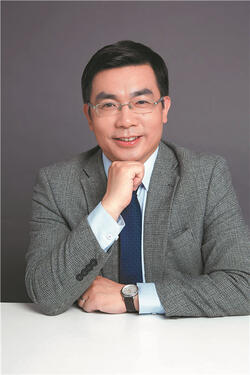
ShanjunLi Vert.png Ph.D.

Shanjun Li is a Professor in the Environmental Social Sciences department of the Stanford Doerr School of Sustainability and holds the Denning Global Sustainability Professorship as a Senior Fellow at the Freeman Spogli Institute for International Studies at Stanford University. His research areas include environmental and energy economics, urban and transportation economics, empirical industrial organization, and Chinese economy. His recent work addresses pressing sustainability challenges and the rapid rise of clean energy industries in China, exploring their global implications to support evidence-based policymaking.

Prior to joining Stanford, he held the Kenneth L. Robinson Chair in the Dyson School of Applied Economics and Management at Cornell University and served as the Director of the Cornell Institute for China Economic Research (CICER). Li is a co-editor for the International Journal of Industrial Organization and the Journal of Public Economics. He is a research associate at the National Bureau of Economic Research (NBER) and a university fellow at Resources for the Future (RFF).

Date Label
Authors
Matthew Boswell
News Type
News
Date
Paragraphs

The second annual SCCEI China Conference, held at Stanford University on May 14, brought together leading scholars and policy experts to engage in a lively discussion on the evolving contours of China’s strategic posture in an ever-changing global economy. Amid a shifting geopolitical and economic landscape, panelists examined how structural shocks—ranging from trade fragmentation to military realignments—are forcing a reassessment of long-standing assumptions. The conference offered a candid, multifaceted view of China's global economic position, exploring its technological prowess, industrial diplomacy, and the increasingly complex global responses to its expanding influence.

Groping Towards a New Great Power Equilibrium
The era of a unipolar security order led by the U.S. and a laissez-faire economic regime anchored in globalization is over. Its demise was hastened by three structural shocks: U.S. backlash to trade liberalization, China’s sweeping industrial policies, and its growing military assertiveness. In the U.S., political support for trade collapsed while China’s Made in China 2025 industrial policies brought about “a large shift in the global production map.” China’s security alignment with Russia, and militarization of regional waters, recast its rise as a national security threat. As one panelist put it, “the dominant role China plays in supply chains now has a national security valence.”

Compounding the matter for one panelist is the weakening of U.S. allies. The U.S comprises just 5% of the global population but accounts for 25% of global GDP and 50% of global military spending. Meanwhile Europe’s share of GDP has dropped from 30% to 17%, even as it shoulders nearly 50% of global social spending—much of it underwritten by U.S. security guarantees. U.S. domestic spending has risen unsustainably from $3.7 trillion under George W. Bush to over $7 trillion, requiring a necessary rebalancing, even if it is messy and unpopular.

U.S. expectations that economic integration would liberalize China have proven wrong and misguided assumptions continue to mar relations. One panelist noted that in Beijing “political concerns are more important than economic interests.” In the latest trade war with the Trump administration, China resisted concessions, prioritizing regime legitimacy and national pride. Conceding on trade isn’t just an economic loss—it would be an unacceptable “political surrender to Western capitalism.”

As the U.S. and China grope for a new equilibrium, one panelist concluded, “if we can get to cold war, we’re good. Cold wars are not hot, and they allow for cooperation.” 

In Beijing, political concerns are more important than economic interests.

Slowing Growth, Thriving Tech
Despite slowing economic growth, China’s industrial and tech strength remains formidable. Its economy is ~75% the size of the U.S. in dollar terms, but China accounts for 33% of global manufacturing value-added, projected to rise to 49% by 2050. “China is very strong in all sorts of advanced manufacturing... in many cases it is almost entirely a Chinese concern.”

The gap is vast, according to another panelist: in 2023, China had 1,500 commercial ships under construction; the U.S. had three. Non-state firms drive export growth, crowding out for shrinking shares of foreign-led exports (60% to 30%). “There is plenty of profitable activity going on, especially in the non-state sector.”

Meanwhile, Made in China 2025 has paid dividends. “At a first approximation, it looks like a pretty good success,” said one panelist, citing EVs, clean tech, and automation, but admitted that weaknesses persist in sectors like semiconductors and aerospace. Nevertheless, China’s highly competent manufacturers, tech companies, and deep reservoir of human capital ensure that despite costly and inefficient industrial policies, China still has “a good amount of fuel left in the tank.”

Rather than stagnating like Japan in the 1990s, panelists agreed China would more closely resemble a “Leninist Germany”—an authoritarian state with a globally competitive, export-driven, tech-intensive economy.

China is very strong in all sorts of advanced manufacturing. In many cases it is almost entirely a Chinese concern.

An Enduring Value Proposition for the World, but Pushback is Growing 
Around the world China is embedding itself in local production ecosystems. Several panelists described how Chinese firms have established smartphone assembly plants in Ethiopia, Uganda, Kenya, and Indonesia. EV assembly and battery processing plants have followed, particularly in Zimbabwe and the DRC. In practice, countries receiving China’s investment often express more concern about being left behind by the West than overwhelmed by China.

China’s outbound investment is not just commercial; it is also strategic. As one panelist put it, this “industrial diplomacy” steers capital toward geopolitically friendly or economically useful countries—especially those with preferential trade access to the U.S. or E.U., like Mexico and Morocco—and away from places perceived as hostile, such as India.

This strategy has helped China rebuild global supply chains with itself at the center, creating new production ecosystems around batteries, robotics, AI, and advanced manufacturing. As one expert noted, firms like BYD, Xiaomi, and Huawei are at the core of “interlocking industrial ecosystems” that tie together multiple cutting-edge sectors across borders.

Yet pushback is growing. In 2023, 117 of 198 World Trade Organization complaints against China came from low- and middle-income countries. These nations aren’t rejecting Chinese investment, panelists pointed out—they’re renegotiating harder, hedging more, and believing less.

The conference underscored a world in flux—one where China’s industrial and technological dynamism continues to reshape global supply chains even as its assertive statecraft provokes growing resistance. While some panelists warned of the breakdown of integrationist hopes, others saw opportunity in a more defined and stable strategic rivalry, even if it takes the form of a new cold war. A key takeaway was the paradox of China’s global role: it remains an important source of growth and innovation, yet inspires distrust that is prompting nations to pursue more reciprocal, conditional partnerships. In navigating this uncertain era, both China and the West appear to be groping toward a new equilibrium—messy, complex, and decidedly post-unipolar.


Discover more from the 2025 SCCEI China Conference. 


Read More

Sean Stein addresses the audience during a keynote speech.
News

The High Cost of Miscalculation: Sean Stein on U.S.-China Trade Fallout

In a keynote address during the 2025 SCCEI China Conference, U.S.-China Business Council President Sean Stein cautioned that strategic miscalculations and trade tensions have left the U.S. economy with lasting setbacks—and few clear gains.
The High Cost of Miscalculation: Sean Stein on U.S.-China Trade Fallout
Elizabeth Economy speaks during a Fireside Chat.
News

Strategic Shifts: Understanding China’s Global Ambitions and U.S.-China Dynamics with Elizabeth Economy

At the 2025 SCCEI China Conference, Elizabeth Economy, Hargrove Senior Fellow at the Hoover Institution, outlined China’s ambitious bid to reshape the global order—and urged the U.S. to respond with vision, not just rivalry, during a Fireside Chat with Professor Hongbin Li, Senior Fellow and SCCEI Faculty Co-Director.
Strategic Shifts: Understanding China’s Global Ambitions and U.S.-China Dynamics with Elizabeth Economy
Panel session during the SCCEI China Conference.
News

2024 SCCEI China Conference Tackles Trends in China’s Economy, Tech, and Politics

Where is China’s economy headed and what are the implications for the rest of the world? Over 20 expert panelists weighed in over two days of discussions during the inaugural SCCEI China Conference.
2024 SCCEI China Conference Tackles Trends in China’s Economy, Tech, and Politics
Hero Image
Panelists speak during a session at the 2025 SCCEI China Conference.
Rod Searcey
All News button
1
Subtitle

The second annual SCCEI China Conference, held at Stanford University on May 14, brought together leading scholars and policy experts. Panelists offered a candid, multifaceted view of China's global economic position, exploring its technological prowess, industrial diplomacy, and the increasingly complex global responses to its expanding influence.

Date Label
Authors
Heather Rahimi
News Type
News
Date
Paragraphs

Against a backdrop of heightened geopolitical tension and economic uncertainty, Sean Stein, President of the U.S.-China Business Council, delivered a keynote address on May 14 during the second annual China Conference organized by the Stanford Center on China’s Economy and Institutions (SCCEI).

Speaking to an audience of faculty, students, and policy experts, Stein offered a grounded and pragmatic assessment of the evolving U.S.-China relationship, emphasizing the enduring importance of commercial engagement and the need for clear-eyed policymaking in a time of strategic rivalry.

Costly Miscalculations
Stein began by highlighting how U.S. policy makers have misjudged the resilience and retaliatory capacity of the Chinese economy. In particular, he argued that in response to the minimal impact China’s retaliatory efforts had on the U.S. economy during Trump’s first administration, the U.S. underestimated both China’s pain threshold and the pain China can inflict on the U.S. economy, while also overestimating its own leverage. The result, he noted, was an awkward U.S. climbdown on tariffs and significant disruption to the U.S. economy without meaningful strategic gain.

“We’re getting all of the downsides of tariffs and trade wars without getting any of the upside,” Stein remarked. Many U.S.-based companies, faced with soaring costs for component parts sourced from China, were forced to move production to third countries—decisions that are likely irreversible. Stein questioned, “Is some of the damage permanent? Yeah…sometimes, when some manufacturing leaves, it doesn't come back,” which is the exact opposite of what the Trump administration hoped would result from the newly imposed tariffs.

We’re getting all of the downsides of tariffs and trade wars without getting any of the upside.
Sean Stein

Urgent Rethink Needed on U.S-China Trade and Technological Competition
Stein also pushed back against long-held assumptions that the U.S. market alone can dictate global business trends. The notion that “the only market that matters is the U.S. market” no longer holds, noting that Chinese consumers and innovation ecosystems now play a decisive role in shaping product development and global supply chains. He noted that European businesses have expressed a radical shift in strategy, they said, “we've been in China for Asia, in North America, for the Americas…We're now going from that model to what could very well become an, ‘in China for China and the world minus one.’ And the minus one is, of course, the U.S. market.”

On the technology front, he offered a candid evaluation of the U.S.-China competition. Stein reflected on the current state of artificial intelligence in China and the U.S., he said, “ at the end of the day it's not who has the best model; a good enough model is a good enough model, where it really makes a difference is in the application…and I see China racing ahead in the application of AI.” 

At the end of the day it's not who has the best model, where it really makes a difference is in the application. I see China racing ahead in the application of AI.
Sean Stein

Know Your Competitor
Stein concluded with a call for more measured and constructive engagement. He urged both Washington and Beijing to establish clearer rules of the road, maintain open lines of communication, and invest in policy solutions that reduce uncertainty rather than amplify it.

Stein’s keynote offered a business-grounded counterpoint to prevailing narratives of decoupling and confrontation. His insights reinforced the importance of understanding the full complexity of economic interdependence, as well as China’s capacity for global market disruption, and the costs of miscalculation. As part of the broader SCCEI China Conference, his remarks served as a reminder that if America does not properly understand its competitor, efforts to stay ahead may well backfire and erode U.S. strength and global standing. 


A full recording of Sean Stein’s keynote is available on YouTube and below.

Read More

Elizabeth Economy speaks during a Fireside Chat.
News

Strategic Shifts: Understanding China’s Global Ambitions and U.S.-China Dynamics with Elizabeth Economy

At the 2025 SCCEI China Conference, Elizabeth Economy, Hargrove Senior Fellow at the Hoover Institution, outlined China’s ambitious bid to reshape the global order—and urged the U.S. to respond with vision, not just rivalry, during a Fireside Chat with Professor Hongbin Li, Senior Fellow and SCCEI Faculty Co-Director.
Strategic Shifts: Understanding China’s Global Ambitions and U.S.-China Dynamics with Elizabeth Economy
Panelists speak during a session at the 2025 SCCEI China Conference.
News

Conference Explores China’s Strategic Posture in a Rapidly Changing Global Economy

The second annual SCCEI China Conference, held at Stanford University on May 14, brought together leading scholars and policy experts. Panelists offered a candid, multifaceted view of China's global economic position, exploring its technological prowess, industrial diplomacy, and the increasingly complex global responses to its expanding influence.
Conference Explores China’s Strategic Posture in a Rapidly Changing Global Economy
Craig Allen speaks at SCCEI 2024 conference
News

Silicon Showdown: Craig Allen Unpacks the Competition for Technology Leadership between the U.S. and China

Craig Allen, the President of the U.S.-China Business Council, spoke on the evolving dynamics of technological leadership between the U.S. and China and their implications for the rest of the world.
Silicon Showdown: Craig Allen Unpacks the Competition for Technology Leadership between the U.S. and China
Hero Image
Sean Stein addresses the audience during a keynote speech with Scott Rozelle seated at a table as moderator.
Rod Searcey
All News button
1
Subtitle

In a keynote address during the 2025 SCCEI China Conference, U.S.-China Business Council President Sean Stein cautioned that strategic miscalculations and trade tensions have left the U.S. economy with lasting setbacks—and few clear gains.

Date Label
Authors
Heather Rahimi
News Type
News
Date
Paragraphs

At the second annual China Conference hosted by the Stanford Center on China’s Economy and Institutions (SCCEI), Dr. Elizabeth Economy, Hargrove Senior Fellow at the Hoover Institution, spoke with SCCEI Co-Director Hongbin Li about the strategic direction of U.S.-China relations and China’s evolving role on the world stage.

Drawing a diverse audience of researchers, students, and policy experts, the SCCEI China Conference convened at Stanford to advance interdisciplinary dialogue on one of the most consequential bilateral relationships of the 21st century.

Charting the Course from Cooperation to Confrontation
Elizabeth Economy noted that after the rise of China’s middle class, which brought greater market forces and demands, U.S. administrations began to take an approach that focused 90% of their efforts on cooperating with China and 10% on conflict over areas such as trade, Taiwan, and human rights. However, during the second half of the Obama administration efforts began to shift from cooperation towards competition and conflict, leading to a full reversal during Trump’s first administration, now focusing 10% on cooperation and 90% on conflict. Economy stressed that our policies should be based in policy analysis, but noted that the second Trump administration’s trade actions toward China amount to “political gamesmanship” and have no actual basis in economics or trade.

Our policies should be based in policy analysis...but it’s clear that these things have no actual basis in economics and trade relationships, this is political gamesmanship.
Elizabeth Economy

China’s Global Ambitions
In response to a question posed by Professor Li, Economy said, “I think, under Xi Jinping, there are big ambitions.” She followed by listing out several of China’s objectives including:

  1. Become the dominant power in the Indo-Pacific, which begins with China's sovereignty claims around Taiwan, Hong Kong and the South China Sea;
  2. Continue to have the international business community be dependent on China for parts of its supply chain;
  3. Create an insulated domestic economy that is protected from pressures of the global economy but at the same time exerts enormous influence on it;
  4. Shape the geostrategic and political landscape in new ways through programs like the Belt and Road Initiative and through its behavior in international institutions;
  5. De-dollarize the global economy and increase the role of the Chinese currency.


Economy concluded by sharing that China has “a number of big ambitions, none of which actually coincides with us,” and although there are certainly areas for collaboration between China and the U.S., she’s not sure the current U.S. administration is interested in exploring them.

China has a number of big ambitions, none of which actually coincides with us.
Elizabeth Economy

Economy’s address was a highlight of the SCCEI China Conference, which featured panels and presentations from leading scholars and practitioners on China’s economy, governance, and international strategy. The event reflects SCCEI’s mission to promote policy-relevant research and open dialogue on China’s role in the global economy.


A full recording of Dr. Economy’s talk is available on YouTube and below.

Read More

Sean Stein addresses the audience during a keynote speech.
News

The High Cost of Miscalculation: Sean Stein on U.S.-China Trade Fallout

In a keynote address during the 2025 SCCEI China Conference, U.S.-China Business Council President Sean Stein cautioned that strategic miscalculations and trade tensions have left the U.S. economy with lasting setbacks—and few clear gains.
The High Cost of Miscalculation: Sean Stein on U.S.-China Trade Fallout
Panelists speak during a session at the 2025 SCCEI China Conference.
News

Conference Explores China’s Strategic Posture in a Rapidly Changing Global Economy

The second annual SCCEI China Conference, held at Stanford University on May 14, brought together leading scholars and policy experts. Panelists offered a candid, multifaceted view of China's global economic position, exploring its technological prowess, industrial diplomacy, and the increasingly complex global responses to its expanding influence.
Conference Explores China’s Strategic Posture in a Rapidly Changing Global Economy
Panel session during the SCCEI China Conference.
News

2024 SCCEI China Conference Tackles Trends in China’s Economy, Tech, and Politics

Where is China’s economy headed and what are the implications for the rest of the world? Over 20 expert panelists weighed in over two days of discussions during the inaugural SCCEI China Conference.
2024 SCCEI China Conference Tackles Trends in China’s Economy, Tech, and Politics
Hero Image
Elizabeth Economy speaks during a Fireside Chat with Hongbin Li.
Rod Searcey
All News button
1
Subtitle

At the 2025 SCCEI China Conference, Elizabeth Economy, Hargrove Senior Fellow at the Hoover Institution, outlined China’s ambitious bid to reshape the global order—and urged the U.S. to respond with vision, not just rivalry, during a Fireside Chat with Professor Hongbin Li, Senior Fellow and SCCEI Faculty Co-Director.

Date Label
All Publications button
1
Publication Type
Journal Articles
Publication Date
Subtitle

Background: The content of children’s screen exposure and interactive coviewing with caregivers are important determinants of early childhood development (ECD) that have been overlooked in past research in resource-limited rural regions. Given the prevalence of digital devices and diverse digital content today, determining screen use practices that minimize the negative impacts on children’s development is crucial for promoting healthy screen use among children.

Objective: This study aims to examine screen exposure among children aged <3 years in rural China and investigate its relationship with ECD outcomes, focusing on duration, content, coviewing, and interaction.

Methods: The sample includes all children aged between 6 and 26 months and their primary caregivers residing in the study area. A survey of screen exposure and household characteristics was conducted for 1052 eligible households. Caregivers reported the duration of screen exposure, defined as the average daily screen time over the past month; the content of exposure, defined by the time spent on educational and child-friendly content; and the caregiver’s presence and interaction with the child during exposure. ECD outcomes were evaluated using the third edition of the Bayley Scales of Infant and Toddler Development assessment scale and the Brief Infant Toddler Social Emotional Assessment. Ordinary least squares regression, logistic regression, and chi-square tests were conducted.

Results: In total, 28.23% (297/1052) of the children in our sample were first exposed to screens before the age of 12 months. Children exposed to screens had an average daily screen time of 27.57 (SD 38.90) minutes. Children who were exposed to screens before the age of 12 months and those who had longer screen time between the ages of 12 and 18 months were more likely to be at risk of motor developmental delays. Children exposed to educational content for >15 minutes on a daily basis had fewer social-emotional or behavioral problems than those with no screen exposure and a lower risk of delay in motor skills development than those exposed to educational content for <15 minutes on a daily basis. Caregiver interaction during screen exposure was associated with a lower risk of cognitive and language delays and better socioemotional skills.

Conclusions: The type of content viewed and how caregivers engaged in children’s screen time were strongly associated with ECD outcomes. Guiding parents to select educational content for their children and engaging in interactive coviewing may better protect children from the negative effects of screen exposure. The findings complement conclusions regarding the impact of screen exposure on ECD in resource-limited rural areas.

Journal Publisher
Journal of Medical Internet Research
Authors
Yuyin Xiao
Hanwen Zhang
Scott Rozelle
-

Skyline Scholars Series


Tuesday, June 3, 2025 | 1:00-2:30 pm Pacific Time
Goldman Room E409, Encina Hall, 616 Jane Stanford Way


Post–Cold War Consensus and Strategic Dilemmas: The United States, China, and the Future of the World Order


The world is at a crossroads. What is happening in world politics today—and the changes that are about to unfold—can be roughly compared to major events such as the collapse of the Soviet Union and the end of the Cold War in 1991, or the end of World War II in 1945 and the formation of a world order centered on U.S.–Soviet competition. Although many unconventional policies since President Donald Trump’s second term have accelerated the arrival of this moment and increased uncertainty in world politics and the global economy, the roots of these developments are long-standing. They are the result of a series of major and gradual structural changes.

The purpose of this lecture is to provide a new theoretical perspective and cognitive framework for the academic community to understand the structural transformations of the world order from the post–Cold War era to the present, and thereby to initiate a dialogue with the global academic community. At the same time, it is hoped that political decision-makers will also find in this framework a useful tool to reflect on their own choices—encouraging more prudent and responsible decisions for their countries and for humanity in the long run.


About the Speaker
 

Gangsheng Bao headshot

Gangsheng Bao is a Professor of Political Science at the School of International Relations and Public Affairs, Fudan University, Shanghai, China. He is also currently appointed as a Skyline Scholar at the Stanford Center on China’s Economy and Institutions, Stanford University.

Professor Bao earned his Ph.D. from Peking University in 2012. His research interests include political theory, comparative politics, and political history, with a particular focus on theories of political modernization and democratization. He has published numerous journal articles and authored several books. His major works include: The Fate of Civilization States: From Political Crisis to Modernization (2024), Political Evolution: From Ancient Times to the 21st Century (2023), Crises and Solutions: Reflections on Political Thought in Early China (2023), Politics of Democratic Breakdown (English version, 2022; Chinese version, 2014), The Logic of Democracy (2018), and The Common Sense of Modern Politics (2015).

Professor Bao’s book Politics of Democratic Breakdown was awarded the "Best Social Science Book of the Year" in 2014 by The Beijing News and was listed among the “Nineteen Recommended Chinese Books of the Year” in 2014 by The New York Times (International Chinese Network). In 2023, Political Evolution: From Ancient Times to the 21st Century was honored as one of the “Ten Best Chinese Original Books in Humanities and Social Sciences of the Year” by Tencent and as one of the “Ten Best Books of the Year” by The China Business Network. Similarly, The Fate of Civilization States: From Political Crisis to Modernization was selected as one of the “Ten Best Books of the Year” in 2024 by the Nanfang Daily. Additionally, his work The Logic of Democracy earned him the title of "Best Author of the Year" in 2018 from The Economic Observer.


Questions? Contact Xinmin Zhao at xinminzhao@stanford.edu


Goldman Room, E409
Encina Hall, East Wing, 4th Floor

0
Professor of Political Science, Fudan University
Skyline Scholar (2025), Stanford Center on China's Economy and Institutions
gangsheng_bao.jpeg Ph.D.

Gangsheng Bao is a Professor of Political Science at the School of International Relations and Public Affairs, Fudan University, Shanghai, China. He was an appointed Skyline Scholar at the Stanford Center on China’s Economy and Institutions in 2025.

Professor Bao earned his Ph.D. from Peking University in 2012. His research interests include political theory, comparative politics, and political history, with a particular focus on theories of political modernization and democratization. He has published numerous journal articles and authored several books. His major works include: The Fate of Civilization States: From Political Crisis to Modernization (2024), Political Evolution: From Ancient Times to the 21st Century (2023), Crises and Solutions: Reflections on Political Thought in Early China (2023), Politics of Democratic Breakdown (English version, 2022; Chinese version, 2014), The Logic of Democracy (2018), and The Common Sense of Modern Politics (2015).

Professor Bao’s book Politics of Democratic Breakdown was awarded the "Best Social Science Book of the Year" in 2014 by The Beijing News and was listed among the “Nineteen Recommended Chinese Books of the Year” in 2014 by The New York Times (International Chinese Network). In 2023, Political Evolution: From Ancient Times to the 21st Century was honored as one of the “Ten Best Chinese Original Books in Humanities and Social Sciences of the Year” by Tencent and as one of the “Ten Best Books of the Year” by The China Business Network. Similarly, The Fate of Civilization States: From Political Crisis to Modernization was selected as one of the “Ten Best Books of the Year” in 2024 by the Nanfang Daily. Additionally, his work The Logic of Democracy earned him the title of "Best Author of the Year" in 2018 from The Economic Observer.

Date Label
Gangsheng Bao, Skyline Scholar (2025); Professor of Political Science, Fudan University
Lectures
Date Label
-

Due to high interest for this event, we have met our space capacity and registration is now closed.


Skyline Scholars Series


Wednesday, May 28, 2025 | 1:00-2:30 pm Pacific Time
Goldman Room E409, Encina Hall, 616 Jane Stanford Way


China's Economic Development From a Perspective of Modernization


China’s economic success can be attributed to its leadership’s pragmatic approach and its respect for grassroots initiatives. The near double-digit average GDP growth during the first three decades after 1978 was achieved through bottom-up industrialization, without fundamentally altering the “ancient regime.” With industrialization largely completed—as evidenced by massive excess capacities—the country faced an urgent need to shift its growth engine from investment to innovation, a transition that demands a very different set of institutions. Delays or failures in making this shift—namely, in modernizing its institutions—may lead to the so-called “middle-income trap” and diminish hopes of becoming a leader in the global race for cutting-edge technologies. This talk explores China’s developmental trajectory through the lens of modernization theory, highlighting both the achievements and the institutional challenges that lie ahead.


About the Speaker
 

Xiaonian Xu headshot

Dr. Xiaonian Xu is Professor Emeritus at CEIBS, where he held the position of Professor of Economics and Finance from 2004 to 2018.  In recognition of his contributions, he was named an Honorary Professor in Economics from September 2018 to August 2023. He is also Skyline Scholar at the Stanford Center on China's Economy and Institutions from 2024-25 at Stanford University.

Between 1999 and 2004, Dr. Xu served as Managing Director and Head of Research at China International Capital Corporation Limited (CICC). Before joining CICC, he was a Senior Economist at Merrill Lynch Asia Pacific, based in Hong Kong from 1997 to 1998, and worked as a World Bank consultant in Washington DC in 1996. Dr. Xu was appointed Assistant Professor of Amherst College, Massachusetts, where he taught Economics and Financial Markets from 1991 to 1995. Earlier in his career, he was a research fellow at the State Development Research Centre of China from 1981 to 1985.

Dr. Xu earned his Ph.D. in Economics from the University of California, Davis, in 1991, and an MA in Industrial Economics from the People's University of China in 1981. In 1996, he was awarded the distinguished Sun Yefang Economics Prize, the highest honor in the field in China, for his research on China’s capital markets. His research interests include Macroeconomics, Financial Institutions and Financial Markets, Transitional Economies, China’s Economic Reform, Corporate Strategy and Digital Transformation. His publications include: Freedom and Market Economy (《自由与市场经济》), There has Never been A Savior (《从来就没有救世主》), The Pendulum Swinging Back (《回荡的钟摆》), The Nature of the Business and the Internet (《商业的本质和互联网》), and The Nature of the Business and the Internet, 2nd Edition (《商业的本质和互联网》第二版).

A dedicated educator, he has been recognized with the CEIBS Teaching Excellence Award in 2005 and 2006, as well as the esteemed CEIBS Medal for Teaching Excellence in 2010.


Questions? Contact Xinmin Zhao at xinminzhao@stanford.edu


Goldman Room, E409
Encina Hall, East Wing, 4th Floor

Encina Hall, East Wing, Room 014

Office Hours:
Select Mondays | 3:00-5:00 PM 
Please schedule a meeting in advance

0
Skyline Scholar (2024), Stanford Center on China's Economy and Institutions
Professor of Economics and Finance, China Europe International Business School
prof._xu_xiaonian.jpg Ph.D.

Dr. Xiaonian Xu is Professor Emeritus at CEIBS, where he held the position of Professor of Economics and Finance from 2004 to 2018. In recognition of his contributions, he was named an Honorary Professor in Economics from September 2018 to August 2023.

Between 1999 and 2004, Dr. Xu served as Managing Director and Head of Research at China International Capital Corporation Limited (CICC). Before joining CICC, he was a Senior Economist at Merrill Lynch Asia Pacific, based in Hong Kong from 1997 to 1998, and worked as a World Bank consultant in Washington DC in 1996. Dr. Xu was appointed Assistant Professor of Amherst College, Massachusetts, where he taught Economics and Financial Markets from 1991 to 1995. Earlier in his career, he was a research fellow at the State Development Research Centre of China from 1981 to 1985.

Dr. Xu earned his Ph.D. in Economics from the University of California, Davis, in 1991, and an MA in Industrial Economics from the People's University of China in 1981. In 1996, he was awarded the distinguished Sun Yefang Economics Prize, the highest honor in the field in China, for his research on China’s capital markets. His research interests include Macroeconomics, Financial Institutions and Financial Markets, Transitional Economies, China’s Economic Reform, Corporate Strategy and Digital Transformation. His publications include: Freedom and Market Economy (《自由与市场经济》), There has Never been A Savior (《从来就没有救世主》), The Pendulum Swinging Back (《回荡的钟摆》), The Nature of the Business and the Internet (《商业的本质和互联网》), and The Nature of the Business and the Internet, 2nd Edition (《商业的本质和互联网》第二版).

A dedicated educator, he has been recognized with the CEIBS Teaching Excellence Award in 2005 and 2006, as well as the esteemed CEIBS Medal for Teaching Excellence in 2010.

Date Label
Xiaonian Xu, Skyline Scholar (2024-25); Professor Emeritus, CEIBS
Lectures
Date Label
All Publications button
1
Publication Type
Journal Articles
Publication Date
Subtitle

Using reading performance data from a randomized controlled trial of 5224 fifth-grade students in East China, this paper provides a novel test of the hypothesis that evoking a gender stereotype creates gender gaps in education through self-fulfilling prophecies. We found that without intervention, boys performed worse than girls did in reading tests. Evoking a gender stereotype by indicating the expected outperformance of girls over boys in reading had a significantly negative effect on boys and an insignificant effect on girls. As a result, the net effect on the gender gap in reading performance was economically important but statistically insignificant. We also found evidence that increased anxiety was likely the underlying mechanism. Finally, a heterogeneous analysis showed that boys from environments with biased gender role beliefs were more susceptible to the intervention.

Journal Publisher
Journal of Population Economics
Authors
Scott Rozelle
All Publications button
1
Publication Type
Working Papers
Publication Date
Subtitle

China’s total fertility rate declined very little following implementation of the One Child Policy (OCP) in 1979/1980, but then fell sharply, by more than one-third, during the early 1990s. In this paper, we propose that strengthening bureaucratic incentives under the “One Vote Veto” (OVV) policy, which strictly prohibited career promotion for adherence failure, was necessary for more “effective” implementation of the OCP—and for its delayed impact on fertility. We use provincial variation in OVV implementation to estimate event study regression inputs needed to build actual and counterfactual sequential multi-decrement fertility life tables, finding that the policy explains 46% of China’s total fertility rate decline during the 1990s, driving it below replacement level. Use of intrauterine devices (IUDs, the most prevalent form of modern contraception in China) that was “recommended” by party officials increased by 133% under the policy, a relative increase more than four times as large as the increase in “voluntary” use. Overall, our paper suggests that population policy made a larger contribution to low fertility in China than suggested by past research. More generally, our paper highlights the central role of aligning bureaucratic incentives with public policy objectives, even in a centrally-planned economy like China’s.

Journal Publisher
National Bureau of Economic Research (NBER)
Authors
Hongbin Li
Lingsheng Meng
Grant Miller
Authors
Belinda Byrne
Scott Rozelle
News Type
News
Date
Paragraphs

The 2nd International Symposium on Early Childhood Development, Advancing Development with "Children First" Strategy, was held in Hangzhou, China, March 27-29, 2025. It was hosted by: the National Clinical Research Center for Child Health; the Zhejiang University School of Medicine's Pediatric Hospital; Stanford University's Rural Education Action Program (REAP); and REAP's partner inside China, the 1000-Day Initiative. The symposium gathered over 100 experts from China and abroad to discuss cutting-edge developments, research topics, and practical approaches in early childhood development (ECD).

At a time when China's National Health Commission and its National Development and Reform Commission are considering upscaling a nationwide ECD program in rural China, the ECD symposium featured keynote speakers Professor Scott Rozelle, director of REAP at Stanford University, Ali Shirazi of UNICEF China, Professor Jiang Fan of Shanghai Jiaotong University's School of Medicine, and Professor Shao Jie of Zhejiang University's School of Medicine. The speakers delivered insights on the importance of ECD in rural communities for both the families themselves, as well as for China's overall economic development. Much of the discussion was focused on evaluating current pilot programs, reviewing research efforts, and developing policy recommendations for upscaling ECD across rural China.

Professor Jiang Fan speaking at 2025 ECD conference.
Professor Jiang Fan speaks at the 2025 Symposium on Early Childhood Development.

Key Takeaways

  • China's national government recognizes a significant challenge in rural communities: the high rate of developmental delays in children. These delays are not primarily due to genetic factors, health, or nutrition, but are largely attributed to a lack of stimulating home environments. Addressing this issue through improved understanding of the importance of engaging ECD at home can make a substantial difference.
  • Experts, including academics and top health officials, believe this challenge is solvable. The research of REAP and its collaborators has been seminal in providing the basis for addressing both the problems and the solutions. By training caregivers - primarily mothers and grandmothers - on how to engage with their children through reading, storytelling, and interactive play, children who are mildly or moderately delayed can achieve normal development. However, current programs are thought to be too costly (given shortages of fiscal resources in many regions of China), highlighting the urgent need to develop both effective and affordable strategies for equipping parents to create enriching home environments for ECD. Supporting caregiver training initiatives is critical for addressing the challenges of developmental delays in rural schoolchildren.
Parents hold two babies while caretaker reads to them.
Parents and babies engage at a local Parenting Center in China.

The conference highlighted the importance of continued research, collaboration, and innovation to advance ECD and achieve high-quality population development. Both REAP and the 1000-Day Initiative was recognized for its contributions to exploring intervention models and fostering ECD in China.

Experience sharing. Many of the presentations and reports showed that investing in ECD projects is effective. One-on-one intervention models tailored to children and caregivers significantly enhance developmental outcomes. Training caregivers in health, nutrition, and mental health amplifies the impact of these initiatives. By focusing on underserved communities and understanding success factors, the lives of young children and their families can be transformed by ensuring ECD projects reach those in need and deliver meaningful benefits.

Researching cost effectiveness - and effectiveness. While it is known that it is possible to intervene and address the basic ECD challenges in rural China, one of the main goals now of academic and policy officials is to identify interventions that are also cost effective. Shen Yun, a postdoctoral scholar at REAP/Stanford University, is running a group-based training project in Zhejiang Province using a one-on-five approach to enhance early learning. In Hubei Province, Xiao Yuyin, also a REAP/Stanford University postdoctoral scholar, and Yiwei Qian, an associate professor at Southwest University of Finance and Economics (and former postdoctoral scholar at REAP/Stanford University) are principal investigators in an innovative "digital plus" intervention that combines digital technology with short-term (8-12 weeks), traditional one-on-one training methods. A cost-benefit analysis shows that if these interventions enhance cognition, language, and social-emotional skills, costs per child could drop to 30-40% of previous one-on-one training models, maximizing reach and impact. Professor Guan Hongyuan, Capital University School of Medicine, introduced a community-based parenting skills model emphasizing parental involvement in child development. These initiatives are vital in transforming education for young rural children.

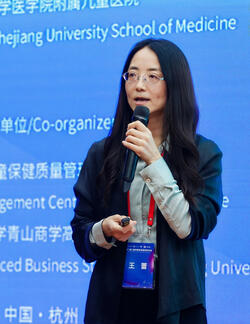
Professor Wang Lei speaks at 2025 ECD symposium.

Long-term impacts. In the presentation by Professor Wang Lei of Shaanxi Normal University (pictured right), the audience was shown the real importance of ECD training for mothers and grandmothers in fostering large, positive, short- and long-term child outcomes. In the longitudinal study with over 600 infants, about 300 received ECD training while the others did not. The results showed that not only did the treatment group children have significant improvements in cognition and language by age 3, even more outstanding is that the benefits of the 0 to 3 training program become even more pronounced by the ages of 5 and 10 and 11. When the treatment children were in the fifth grade, they also scored notably higher in math, indicating long-term academic advantages. This training encourages families to invest in their children's potential, promoting greater educational engagement. The study's title, "Same Village / Different Destinies," underscores the impact of early interventions on life trajectories. Support for ECD programs can help many children experience transformative benefits and create brighter futures.

Grassroots practices. Maternal and child health professionals from three pilot counties in eastern, central, and western China shared experiences from their ECD projects. Professors Shao Jie, Zhejiang University, and Li Guohong, Shanghai Jiaotong University, emphasized the vital need for high-quality nutrition and healthcare for young children. Their discussions highlight that improving these foundational elements is crucial for better health and developmental outcomes. By focusing on grassroots practices, these professionals aim to implement effective strategies to enhance the well-being of children and families in their communities. The study, presented by Dorien Emmers, an assistant professor at Belgium's KU Leuven University, showed that when 1- to 2-year old children have better health and nutrition, their levels of cognition rise faster in a stimulating home environment when they are 2 to 3 years of age.


Read More

Women walk on a street in China pushing a cart full of boxes and full garbage bags.
News

Is It Me or the Economic System? Changing Evaluations of Inequality in China

The latest Big Data China feature examines Martin Whyte and Scott Rozelle's new survey results demonstrating that the Chinese populace increasingly attribute inequality to the economic system rather than individual ability.
Is It Me or the Economic System? Changing Evaluations of Inequality in China
Huan Wang headshot on a meet our researchers series graphic banner.
Q&As

Meet our Researchers: In Conversation with Huan Wang

We sat down with Senior Research Scholar Huan Wang to learn more about her journey to Stanford and drive to address educational disparities and promote human development in China and globally.
Meet our Researchers: In Conversation with Huan Wang
Two young school girls stand shoulder to shoulder smiling at school in China.
News

China's Human Capital Dilemma

Scott Rozelle answers questions about China's human capital dilemma in the Summer 2024 edition of INSIGHT, the journal of the American Chamber of Commerce in Shanghai.
China's Human Capital Dilemma
All News button
1
Subtitle

"Advancing Development with 'Children First' Strategy", the second International Symposium on Early Childhood Development, was held in Hangzhou, China on March 27-29, 2025. The symposium gathered over 100 experts from China and abroad to discuss cutting-edge developments, research topics, and practical approaches in early childhood development.

Date Label
Subscribe to China