
New Book by Chenggang Xu Unpacks the Deep Roots of China’s Totalitarian Regime
New Book by Chenggang Xu Unpacks the Deep Roots of China’s Totalitarian Regime
SCCEI Senior Research Scholar Chenggang Xu’s latest book, "Institutional Genes: Origins of China's Institutions and Totalitarianism", explores the origins and evolution of China's institutions and communist totalitarianism.
SCCEI Senior Research Scholar Chenggang Xu’s latest book, Institutional Genes: Origins of China's Institutions and Totalitarianism, offers a reinterpretation of China’s political and institutional development. Drawing from decades of research, Xu introduces the concept of "institutional genes"—the enduring foundational structures that shape and constrain how institutions evolve. Through this lens, he examines the emergence and evolution of China’s current communist totalitarian institution, contending that substantial parts of its "institutional genes" were implanted by Soviet Russia, building upon a longstanding tradition of authoritarian rule dating back to imperial China.
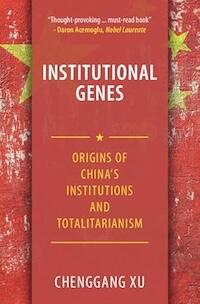
With insights spanning political economy, institutional economics, and history, Institutional Genes presents a compelling account of why China’s institutions have taken their particular form—why they have resisted democratization—and why its economic reforms have risen and fallen. Xu’s work will appeal to scholars, policymakers, and general readers seeking a deeper understanding of how China’s past continues to shape its political trajectory today.
Institutional Genes: Origins of China's Institutions and Totalitarianism, previously published in Chinese, is currently available for pre-order and will be published and available to the public on August 21, 2025. For more from Xu, read his recent essay, The Origins of China’s Institutions and Totalitarianism, based on his forthcoming book.


