International Development

FSI researchers consider international development from a variety of angles. They analyze ideas such as how public action and good governance are cornerstones of economic prosperity in Mexico and how investments in high school education will improve China’s economy.

They are looking at novel technological interventions to improve rural livelihoods, like the development implications of solar power-generated crop growing in Northern Benin.

FSI academics also assess which political processes yield better access to public services, particularly in developing countries. With a focus on health care, researchers have studied the political incentives to embrace UNICEF’s child survival efforts and how a well-run anti-alcohol policy in Russia affected mortality rates.

FSI’s work on international development also includes training the next generation of leaders through pre- and post-doctoral fellowships as well as the Draper Hills Summer Fellows Program.

-

Tuesday, February 1, 2022 | 4:00-5:15 pm Pacific Time

The Impacts of Pollution Levies on Chinese Firms

China's rollout of emission fee reform since 2007 provides a quasi-natural experiment to study the effectiveness of pollution levy on firm emissions and economic consequences. Using firm-level financial and pollution data, we find that doubling the levy rate leads to a 6.87% reduction in SO2 emissions. Firms achieve emission abatement through reducing output and coal consumption rather than end-of-the-pipe solutions. 


About the Speaker

Image
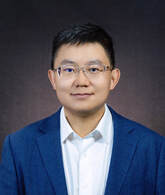
Junjie Zhang

Junjie Zhang is Associate Professor of Environmental Economics in the Nicholas School of the Environment at Duke University. Since 2016, he has founded the Environmental Research Center and International Master of Environmental Policy Program at Duke Kunshan University. During 2021-22, he serves as Volkswagen Visiting Chair in Sustainability in the Schwarzman College at Tsinghua University. Zhang is a co-chair for the Environmental Economics Committee in the Chinese Academy of Environmental Science, an advisory board member for the Nicholas Institute for Environmental Policy Solutions, and a board member for the Professional Association for China's Environment. He has also served on the editorial board of several academic journals. Before his current position, he was an associate professor in the School of Global Policy and Strategy at the University of California, San Diego. Zhang's research centers on empirical policy issues in air pollution, energy transition, and climate change. He has received fundings from the U.S. National Science Foundation, U.S. National Oceanic and Atmospheric Administration, China National Natural Science Foundation, China's Ministry of Ecology and Environment, China Council for International Cooperation on Environment and Development, Energy Foundation, Packard Foundation, World Bank, and Asian Development Bank. He holds a B.S. from Renmin University of China, a B.S. and an M.S. from Tsinghua University, and a Ph.D. from Duke University.


Seminar Series Moderators:

Image
Headshot of Dr. Scott Rozelle

Scott Rozelle is the Helen F. Farnsworth Senior Fellow and the co-director of Stanford Center on China's Economy and Institutions in the Freeman Spogli Institute for International Studies and Stanford Institute for Economic Policy Research at Stanford University.  For the past 30 years, he has worked on the economics of poverty reduction. Currently, his work on poverty has its full focus on human capital, including issues of rural health, nutrition and education. For the past 20 year, Rozelle has been the chair of the International Advisory Board of the Center for Chinese Agricultural Policy, Chinese Academy of Sciences (CAS). Most recently, Rozelle's research focuses on the economics of poverty and inequality, with an emphasis on rural education, health and nutrition in China. In recognition of this work, Dr. Rozelle has received numerous honors and awards. Among them, he became a Yangtse Scholar (Changjiang Xuezhe) in Renmin University of China in 2008. In 2008 he also was awarded the Friendship Award by Premiere Wen Jiabao, the highest honor that can be bestowed on a foreigner. 
Image
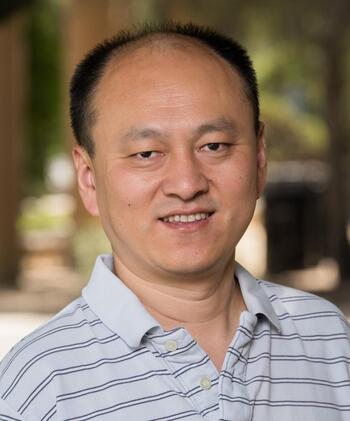
hongbin li headshot

Hongbin Li is the Co-director of Stanford Center on China's Economy and Institutions, and a Senior Fellow of Stanford Institute for Economic Policy Research (SIEPR) and the Freeman Spogli Institute for International Studies (FSI). Hongbin obtained his Ph.D. in economics from Stanford University in 2001 and joined the economics department of the Chinese University of Hong Kong (CUHK), where he became full professor in 2007. He was also one of the two founding directors of the Institute of Economics and Finance at the CUHK. He taught at Tsinghua University in Beijing 2007-2016 and was C.V. Starr Chair Professor of Economics in the School of Economics and Management. He founded the Chinese College Student Survey (CCSS) in 2009 and the China Employer-Employee Survey (CEES) in 2014.

Hongbin’s research has been focused on the transition and development of the Chinese economy, and the evidence-based research results have been both widely covered by media outlets and well read by policy makers around the world. He is currently the co-editor of the Journal of Comparative Economics.


Register Here

Register once to receive the Zoom meeting link that will be used for all lectures in this series.

Academic Seminar | Zoom Meeting
Registration Required

Junjie Zhang
Seminars
Date Label
News Type
News
Date
Hero Image
Factory with lines of robots performing tasks. GettyImages
All News button
1
Subtitle

"By 2016, China had the world’s largest stock of operational robots. This was a massive increase from 2010, when it trailed Japan, the United States, Germany, and South Korea. To learn why and how China is automating so rapidly, [Erin Slawson] spoke with Dr. Hongbin Li, Co-Director of the Stanford Center on China’s Economy and Institutions (SCCEI)."

Authors
Claire Cousineau
Heather Rahimi
News Type
News
Date
Paragraphs

On November 15, 2021, the Stanford Center on China’s Economy and Institutions (SCCEI) launched its new impact initiative:  the SCCEI China Briefs.  The briefs translate data-driven social science research into accessible insights for those interested in China and U.S.-China relations.  Released twice a month, the briefs cover timely issues that inform policy and advance public understanding of China and its role on the global stage.

This initiative targets one of SCCEI’s primary objectives: to inform public debates on U.S.-China relations with empirically-driven social science research.

This initiative targets one of SCCEI’s primary objectives: to inform public debates on U.S.-China relations with empirically-driven social science research.

On Monday, SCCEI released its first three China Briefs spotlighting findings central to China’s economy, U.S.-China trade competition, and their implications for U.S.-China relations:   

In “Did ‘China Shock’ Cause Widespread Job Losses in the U.S.?” Stanford's own Nicholas Bloom and his co-authors find compelling evidence that import competition from China did not, in fact, cause aggregate employment loss in the U.S. – a finding that contradicts prevailing views. Read our brief for a fuller picture of how “China shock” impacted U.S. employment dynamics and how this might impact regional inequality and political polarization in the U.S.

Only a handful of countries have escaped the middle-income trap since 1960. In “Invisible China: Hundreds of Millions of Rural Unemployed May Slow China’s Growth,” SCCEI’s co-director Scott Rozelle finds that approximately 70% of China’s labor force – 500 million people – concentrated in rural areas do not have a high school education. Our SCCEI China Brief sheds light on why these statistics matter – not only for China, but for the rest of the world.

In “Rise of Robots in China,” SCCEI’s co-director Hongbin Li presents strong data revealing China’s global leadership in the use of industrial robots. What is driving this relentless growth of automation in China? What future trends and implications can we glean from China’s use and production of robots? Read our SCCEI China Brief to find out more.

Read the Briefs


Image
Shipping container ship docked.


Did "China Shock" Cause Widespread Job Losses in the U.S.?
Findings in this brief challenge prevailing views regarding net jobs lost in the U.S.


Image
Invisible China feature image


Invisible China: Hundreds of Millions of Rural Underemployed May Slow China's Growth
Education is the key for China to realize its goal of moving from a middle-income to high-income economy


Image
Robotic arm in a factory


Rise of the Robots in China
Data representative of China’s manufacturing sector reveals China’s global leadership in the use of industrial robots


Join our mailing list to receive SCCEI China Brief email announcements. The briefs are also posted on our SCCEI China Briefs homepage every other week. 

Read the Briefs


[[{"fid":"250414","view_mode":"crop_wysiwyg_scale1_960","fields":{"format":"crop_wysiwyg_scale1_960","field_file_image_description[und][0][value]":"","field_file_image_alt_text[und][0][value]":"Shipping container ship docked. ","field_file_image_title_text[und][0][value]":false,"field_credit[und][0][value]":"","field_caption[und][0][value]":"","thumbnails":"crop_wysiwyg_scale1_960"},"type":"media","field_deltas":{"6":{"format":"crop_wysiwyg_scale1_960","field_file_image_description[und][0][value]":"","field_file_image_alt_text[und][0][value]":"Shipping container ship docked. ","field_file_image_title_text[und][0][value]":false,"field_credit[und][0][value]":"","field_caption[und][0][value]":"","thumbnails":"crop_wysiwyg_scale1_960"}},"attributes":{"alt":"Shipping container ship docked. ","style":"width: 200px; height: 150px; margin-left: 10px; margin-right: 10px; float: left;","class":"media-element file-crop-wysiwyg-scale1-960","data-delta":"6"}}]]Did "China Shock" Cause Widespread Job Losses in the U.S.?
Findings in this brief challenge prevailing views regarding net jobs lost in the U.S.


[[{"fid":"250003","view_mode":"crop_wysiwyg_scale4_350","fields":{"format":"crop_wysiwyg_scale4_350","field_file_image_description[und][0][value]":"","field_file_image_alt_text[und][0][value]":"Invisible China feature image","field_file_image_title_text[und][0][value]":false,"field_credit[und][0][value]":"","field_caption[und][0][value]":"","thumbnails":"crop_wysiwyg_scale4_350"},"type":"media","field_deltas":{"1":{"format":"crop_wysiwyg_scale4_350","field_file_image_description[und][0][value]":"","field_file_image_alt_text[und][0][value]":"Invisible China feature image","field_file_image_title_text[und][0][value]":false,"field_credit[und][0][value]":"","field_caption[und][0][value]":"","thumbnails":"crop_wysiwyg_scale4_350"}},"attributes":{"alt":"Invisible China feature image","style":"float: left; height: 150px; width: 200px; margin-left: 10px; margin-right: 10px;","class":"media-element file-crop-wysiwyg-scale4-350","data-delta":"1"}}]]Invisible China: Hundreds of Millions of Rural Underemployed May Slow China's Growth
Education is the key for China to realize its goal of moving from a middle-income to high-income economy


[[{"fid":"250375","view_mode":"crop_wysiwyg_scale1_960","fields":{"format":"crop_wysiwyg_scale1_960","field_file_image_description[und][0][value]":"","field_file_image_alt_text[und][0][value]":"Robotic arm in a factory","field_file_image_title_text[und][0][value]":false,"field_credit[und][0][value]":"GettyImages","field_caption[und][0][value]":"","thumbnails":"crop_wysiwyg_scale1_960"},"type":"media","field_deltas":{"4":{"format":"crop_wysiwyg_scale1_960","field_file_image_description[und][0][value]":"","field_file_image_alt_text[und][0][value]":"Robotic arm in a factory","field_file_image_title_text[und][0][value]":false,"field_credit[und][0][value]":"GettyImages","field_caption[und][0][value]":"","thumbnails":"crop_wysiwyg_scale1_960"}},"attributes":{"alt":"Robotic arm in a factory","style":"float: left; margin-left: 10px; margin-right: 10px; width: 200px; height: 150px;","class":"media-element file-crop-wysiwyg-scale1-960","data-delta":"4"}}]]Rise of the Robots in China
Data representative of China’s manufacturing sector reveals China’s global leadership in the use of industrial robots


Join our mailing list to receive SCCEI China Brief email announcements. The briefs are also posted on our SCCEI China Briefs homepage every other week. 

Hero Image
Data graph lines over cityscape in China.
All News button
1
Subtitle

The SCCEI China Briefs are short features that translate top-quality academic research into evidence-based insights for those interested in China and U.S.-China relations. Released twice a month, the briefs will cover timely issues that inform policy and advance the public understanding of China and its role on the global stage.

All Publications button
1
Publication Type
Working Papers
Publication Date
Subtitle
We present evidence from a randomized experiment testing the impacts of a six-month early childhood home-visiting program on child outcomes at school entry. Two and a half years after completion of the program, we find persistent effects on child working memory - a key skill of executive functioning that plays a central role in children's development of cognitive and socio-emotional skills. We also find that the program had persistent effects on parental time investments and preschool enrollment decisions. Children were enrolled earlier and in higher quality preschools, the latter reflecting a shift in preferences over preschool attributes toward quality. Our findings imply an important role for the availability of high-quality subsequent schooling in sustaining the impacts of early intervention programs.
Authors
Scott Rozelle
-

2021 Forum


Friday, November 12, 5:00 – 7:00 p.m. Pacific Time | Online
Saturday, November 13, 9:00 – 11:00 a.m. Beijing Time | Online

In a world characterized by significant challenges, unprecedented opportunities, and dynamic business environments, the Stanford China Economic Forum remains dedicated to fostering meaningful dialogue and collaboration between change makers in the United States and China.

Hosted by the Stanford Center on China's Economy and Institutions (SCCEI), the Stanford Institute for Economic Policy Research (SIEPR), and Stanford Graduate School of Business, the 2021 Stanford China Economic Forum will have panel discussions on two topics: Environment and Energy Sustainability and China's Financial System: At a Crossroads.
 
The event will be held online. For all inquiries, please visit the event webpage at scef.stanford.edu


Agenda
Image
Jonathan Levin and Marc Tessier-Lavigne

Image
Yi Cui and Gretchen Daily and Fuqiang Yang

Image
Darrell Duffie, Fan Bao, Sigal Mandelker, and David Ye

2021 Faculty Committee

Mark Duggan, The Trione Director, Stanford Institute for Economic Policy Research
Szu-chi Huang, Associate Professor of Marketing at Stanford Graduate School of Business
Jonathan Levin, Philip H. Knight Professor and Dean of Stanford Graduate School of Business
Hongbin Li, Co-Director of the Stanford Center on China's Economy and Institutions
Michael McFaul, Director, Freeman Spogli Institute for International Studies
Jennifer Pan, Associate Professor, Department of Communication at Stanford University
Joseph Piotroski, Robert K. Jaedicke Professor of Accounting at Stanford Graduate School of Business
Scott Rozelle, Co-Director of the Stanford Center on China's Economy and Institutions 

2021 Host Committee

David Chao, MBA, Co-Founder and General Partner, DCM Ventures
Ming Lei, MBA, Co-Founder of Baidu; Founder, Kuwo
Gabriel Li, MBA, Managing Director, Orchid Asia
James Liang, PhD, Co-Founder and Executive Chairman of the Board, Ctrip
Annabelle Long, MBA, CEO, Bertelsmann China


Sponsors

Master Kong | 康师傅

Ed Baker

Annabelle Long

Zoom Webinar
Registration Required

Symposiums
News Type
Commentary
Date
Hero Image
Handheld Chinese flag in front of a government building in Beijing, China. GettyImages
All News button
1
Subtitle

The Los Angeles Times writes about China's new "common prosperity" campaign to narrow the gap between rich and poor. However Scott Rozelle doesn't think "any of these policies that they’re doing are addressing the real underlying issues.” Rozelle says they need to invest in rural education so that workers can move into higher-skill jobs.

All Publications button
1
Publication Type
Journal Articles
Publication Date
Subtitle
We present the results of a cluster-randomized controlled trial that evaluates the effects of a free, center-based parenting intervention on early cognitive development and parenting practices in 100 rural villages in China. We then compare these effects to a previous trial of a home-based intervention conducted in the same region, using the same parenting curriculum and public service system, accounting for potential differences between the studies. We find that the center-based intervention did not have a significant impact on child development outcomes, but did lead to increases in the material investments, time investments, and parenting skills of caregivers. The average impact of the center-based intervention on child skills and investments in children was significantly smaller than the home-visiting intervention. Analysis of the possible mechanisms suggests that the difference in effects was driven primarily by different patterns of selection into program participation.
Journal Publisher
World Development
Authors
Alexis Medina
Scott Rozelle
-

Tuesday, November 30, 2021 | 11:00am-12:15pm Pacific Time

Catching up with the West: The Emergence of China's Middle Class 

China’s recent development strategy calls for the pursuit of ‘common prosperity’ and envisions the expansion of a prosperous middle class with high consumption that will stimulate sustained economic growth. Using household survey data and defining ‘prosperous middle class’ as being neither poor nor rich by developed-country standards, we show the rapid emergence of China’s prosperous middle class from 2002 to 2018. Using the 2018 data, we identify its main characteristics and investigate whether it is, in fact, a high-consumption group.

About the Speaker

Image
Photo of Terry Sicular.

Terry Sicular is Professor and C. Robinson Distinguished Service Fellow of Economics at Western University (Canada). She is a leading North American specialist on the Chinese economy and has written extensively on inequality, poverty, the labor market and the rural economy in China. She is co-editor of and contributor to the book “Changing Trends in China’s Inequality: Evidence, Analysis and Prospects” (Oxford, 2020). Her work has appeared in the Review of Income and Wealth, the Journal of Development Economics, the Economic Journal, China Economic Review, the China Quarterly and the China Journal. She is a recipient of the Zhang Peigang Prize for Development Economics (2010) and the Sun Yefang Prize for Economic Science (2011, 2017). 


Seminar Series Moderators:

Image
Headshot of Dr. Scott Rozelle

Scott Rozelle is the Helen F. Farnsworth Senior Fellow and Co-Director of Stanford Center on China's Economy and Institutions in the Freeman Spogli Institute for International Studies and Stanford Institute for Economic Policy Research at Stanford University. For the past 30 years, he has worked on the economics of poverty reduction. Currently, his work on poverty has its full focus on human capital, including issues of rural health, nutrition and education. For the past 20 year, Rozelle has been the chair of the International Advisory Board of the Center for Chinese Agricultural Policy, Chinese Academy of Sciences (CAS). In recent years Rozelle spends most of his time co-directing the Rural Education Action Project (REAP). In recognition of his outstanding achievements, Rozelle has received numerous honors and awards, including the Friendship Award in 2008, the highest award given to a non-Chinese by the Premier; and the National Science and Technology Collaboration Award in 2009 for scientific achievement in collaborative research.

Image
hongbin li headshot

Hongbin Li is the James Liang Senior Fellow and Co-Director of the Stanford Center on China's Economy and Institutions in Freeman Spogli Institute for International Studies and the Stanford Institute for Economic Policy Research. Hongbin obtained his Ph.D. in economics from Stanford University in 2001 and joined the economics department of the Chinese University of Hong Kong (CUHK), where he became full professor in 2007. He was also one of the two founding directors of the Institute of Economics and Finance at the CUHK. He taught at Tsinghua University in Beijing 2007-2016 and was C.V. Starr Chair Professor of Economics in the School of Economics and Management. He also founded and served as the Executive Associate Director of the China Social and Economic Data Center at Tsinghua University. He founded the Chinese College Student Survey (CCSS) in 2009 and the China Employer-Employee Survey (CEES) in 2014.

Hongbin’s research has been focused on the transition and development of the Chinese economy, and the evidence-based research results have been both widely covered by media outlets and well read by policy makers around the world . He is currently the co-editor of the Journal of Comparative Economics.


Register Here

Register once to receive the Zoom meeting link that will be used for all lectures in this series.

Professor Terry Sicular
Seminars
-

Tuesday, November 16, 2021 | 11:00am-12:15pm Pacific Time

A Confluence of Tech and Talent: Rural Online Entrepreneurship and Return Migration with Professors Chuck Eesley, Stanford University and Wesley Koo, INSEAD

Prior research indicates that the Internet can elevate the rural economy by connecting rural entrepreneurs to the wider market. In this study, we show that return migration is a crucial factor for the performance of e-commerce in rural areas. Using data from a leading ecommerce platform, we set up a natural experiment involving a provincial-level policy change that reduced the barriers for talented rural migrants to return and work in their home villages. In a difference-in-differences design, we find that after the policy change, rural e-commerce businesses in the province that implemented the policy change enjoyed a 22 percent performance gain relative to other rural businesses.


About the Speakers

Image
charles eesley
Chuck Eesley is an Associate Professor and W.M. Keck Foundation Faculty Scholar in the Department of Management Science and Engineering at Stanford University. As part of the Stanford Technology Ventures Program, his research focuses on the role of the institutional and university environment in high-growth, technology entrepreneurship. His research focuses on rethinking how the educational and policy environment shapes the economic and entrepreneurial impact of university alumni. His field research spans China, Japan, Chile, Bangladesh, Thailand and Silicon Valley and has received awards from the Schulze Foundation, the Technical University of Munich, and the Kauffman Foundation. He is a faculty affiliate at the Stanford Center for International Development, the Woods Institute for the Environment and the Stanford King Center on Global Development. He is also a member of the Editorial Board for the Strategic Management Journal. 

Image
Photo of Wesley Koo.
Wesley W. Koo is an Assistant Professor of Strategy at INSEAD. In his research, Wesley studies how digitization and platforms affect business and society. He is particularly interested in the "offline interface" - how an organization's offline environment shapes its online behavior and performance. For instance, he looks at how rural entrepreneurs' local information environment affects their ability to navigate algorithmic changes on digital platforms. During his Ph.D. at Stanford, Wesley's research was supported by the Stanford Technology Ventures Program, Stanford SEED, Accel Partners, Strategic Management Society, and Alibaba Group. Prior to Ph.D., he was a tech entrepreneur and received degrees in Environmental Engineering and Finance from MIT. He was among the Poets & Quants 40 under 40 Best Business School Professors in 2021.


Seminar Series Moderators:

Image
Headshot of Dr. Scott Rozelle

Scott Rozelle is the Helen F. Farnsworth Senior Fellow and Co-Director of Stanford Center on China's Economy and Institutions in the Freeman Spogli Institute for International Studies and Stanford Institute for Economic Policy Research at Stanford University. For the past 30 years, he has worked on the economics of poverty reduction. Currently, his work on poverty has its full focus on human capital, including issues of rural health, nutrition and education. For the past 20 year, Rozelle has been the chair of the International Advisory Board of the Center for Chinese Agricultural Policy, Chinese Academy of Sciences (CAS). In recent years Rozelle spends most of his time co-directing the Rural Education Action Project (REAP). In recognition of his outstanding achievements, Rozelle has received numerous honors and awards, including the Friendship Award in 2008, the highest award given to a non-Chinese by the Premier; and the National Science and Technology Collaboration Award in 2009 for scientific achievement in collaborative research.

Image
hongbin li headshot
Hongbin Li is the James Liang Senior Fellow and Co-Director of the Stanford Center on China's Economy and Institutions in Freeman Spogli Institute for International Studies and the Stanford Institute for Economic Policy Research. Hongbin obtained his Ph.D. in economics from Stanford University in 2001 and joined the economics department of the Chinese University of Hong Kong (CUHK), where he became full professor in 2007. He was also one of the two founding directors of the Institute of Economics and Finance at the CUHK. He taught at Tsinghua University in Beijing 2007-2016 and was C.V. Starr Chair Professor of Economics in the School of Economics and Management. He also founded and served as the Executive Associate Director of the China Social and Economic Data Center at Tsinghua University. He founded the Chinese College Student Survey (CCSS) in 2009 and the China Employer-Employee Survey (CEES) in 2014.

Hongbin’s research has been focused on the transition and development of the Chinese economy, and the evidence-based research results have been both widely covered by media outlets and well read by policy makers around the world . He is currently the co-editor of the Journal of Comparative Economics.


Register Here

Register once to receive the Zoom meeting link that will be used for all lectures in this series.

Professor Chuck Eesley
Seminars
-

The Effects of Chronic Disease Management in Primary Health Care: Evidence from Rural China

Health systems globally face increasing morbidity and mortality from chronic diseases, yet many - especially in low- and middle-income countries - lack strong chronic disease management in primary health care (PHC). We provide evidence on China’s efforts to promote PHC management using unique five-year panel data in a rural county, including health care utilization from medical claims and health outcomes from biomarkers.


Watch the recording now:


About the Speaker

Image
Karen Eggleston 4X4
Karen Eggleston is Senior Fellow at the Freeman Spogli Institute for International Studies (FSI) at Stanford University, and Director of the Stanford Asia Health Policy Program at FSI. She is also a Fellow with the Center for Innovation in Global Health at Stanford University School of Medicine, and a Faculty Research Fellow of the National Bureau of Economic Research (NBER). Eggleston earned her PhD in public policy from Harvard University and has MA degrees in economics and Asian studies from the University of Hawaii and a BA in Asian studies summa cum laude (valedictorian) from Dartmouth College. Eggleston studied in China for two years and was a Fulbright scholar in Korea. Her research focuses on government and market roles in the health sector and Asia health policy, especially in China, India, Japan, and Korea; healthcare productivity; and the economics of the demographic transition. She served on the Strategic Technical Advisory Committee for the Asia Pacific Observatory on Health Systems and Policies, and has been a consultant to the World Bank, the Asian Development Bank, and the WHO regarding health system reforms in the PRC.

Image
Headshot of Hui Ding.
Hui Ding is a six-year Ph.D. student in Economics at Stanford University. Before entering Stanford, she received her bachelor’s degree in Economics and double degree in Psychology from Peking University, China. She has strong interests in the healthcare markets of both U.S. and China. Her current work mainly focuses on the mental health of the elderly population, especially the geographic variation and gender differences in care utilization and suicide. She is also interested in the prevention and management of infectious diseases and chronic diseases, as well as the role of insurance in setting prices, promoting new technology, and adjusting patients’ and providers’ behavior. Hui is currently on the job market (2021-22) and is available for online interviews.


Seminar Series Moderators:

Image
Headshot of Dr. Scott Rozelle

Scott Rozelle is the Helen F. Farnsworth Senior Fellow and Co-Director of Stanford Center on China's Economy and Institutions in the Freeman Spogli Institute for International Studies and Stanford Institute for Economic Policy Research at Stanford University. For the past 30 years, he has worked on the economics of poverty reduction. Currently, his work on poverty has its full focus on human capital, including issues of rural health, nutrition and education. For the past 20 year, Rozelle has been the chair of the International Advisory Board of the Center for Chinese Agricultural Policy, Chinese Academy of Sciences (CAS). In recent years Rozelle spends most of his time co-directing the Rural Education Action Project (REAP). In recognition of his outstanding achievements, Rozelle has received numerous honors and awards, including the Friendship Award in 2008, the highest award given to a non-Chinese by the Premier; and the National Science and Technology Collaboration Award in 2009 for scientific achievement in collaborative research.

Image
hongbin li headshot
Hongbin Li is the James Liang Senior Fellow and Co-Director of the Stanford Center on China's Economy and Institutions in Freeman Spogli Institute for International Studies and the Stanford Institute for Economic Policy Research. Hongbin obtained his Ph.D. in economics from Stanford University in 2001 and joined the economics department of the Chinese University of Hong Kong (CUHK), where he became full professor in 2007. He was also one of the two founding directors of the Institute of Economics and Finance at the CUHK. He taught at Tsinghua University in Beijing 2007-2016 and was C.V. Starr Chair Professor of Economics in the School of Economics and Management. He also founded and served as the Executive Associate Director of the China Social and Economic Data Center at Tsinghua University. He founded the Chinese College Student Survey (CCSS) in 2009 and the China Employer-Employee Survey (CEES) in 2014.

Hongbin’s research has been focused on the transition and development of the Chinese economy, and the evidence-based research results have been both widely covered by media outlets and well read by policy makers around the world . He is currently the co-editor of the Journal of Comparative Economics.

Zoom Meeting

Professor Karen Eggleston
Hui Ding
Seminars
Subscribe to International Development