FSI researchers consider international development from a variety of angles. They analyze ideas such as how public action and good governance are cornerstones of economic prosperity in Mexico and how investments in high school education will improve China’s economy.
Cost-Sharing in Medical Care Can Increase Adult Mortality in Lower-Income Countries with Prof. Grant Miller
SCCEI Fall Seminar Series
Tuesday, November 29, 2022 11:00 am -12:15 pm Pacific Time
Goldman Room E401, Encina Hall, 616 Jane Stanford Way | Zoom Meeting
Cost-Sharing in Medical Care Can Increase Adult Mortality in Lower-Income Countries
About the Speaker

As a health and development economist based at the Stanford School of Medicine, Dr. Grant Miller's overarching focus is research and teaching aimed at developing more effective health improvement strategies for developing countries.
His agenda addresses three major interrelated themes: First, what are the major causes of population health improvement around the world and over time? His projects addressing this question are retrospective observational studies that focus both on historical health improvement and the determinants of population health in developing countries today. Second, what are the behavioral underpinnings of the major determinants of population health improvement? Policy relevance and generalizability require knowing not only which factors have contributed most to population health gains, but also why. Third, how can programs and policies use these behavioral insights to improve population health more effectively? The ultimate test of policy relevance is the ability to help formulate new strategies using these insights that are effective.
Seminar Series Moderators

Scott Rozelle is the Helen F. Farnsworth Senior Fellow and the co-director of Stanford Center on China's Economy and Institutions in the Freeman Spogli Institute for International Studies and Stanford Institute for Economic Policy Research at Stanford University. For the past 30 years, he has worked on the economics of poverty reduction. Currently, his work on poverty has its full focus on human capital, including issues of rural health, nutrition and education. For the past 20 year, Rozelle has been the chair of the International Advisory Board of the Center for Chinese Agricultural Policy, Chinese Academy of Sciences (CAS). Most recently, Rozelle's research focuses on the economics of poverty and inequality, with an emphasis on rural education, health and nutrition in China. In recognition of this work, Dr. Rozelle has received numerous honors and awards. Among them, he became a Yangtse Scholar (Changjiang Xuezhe) in Renmin University of China in 2008. In 2008 he also was awarded the Friendship Award by Premiere Wen Jiabao, the highest honor that can be bestowed on a foreigner.
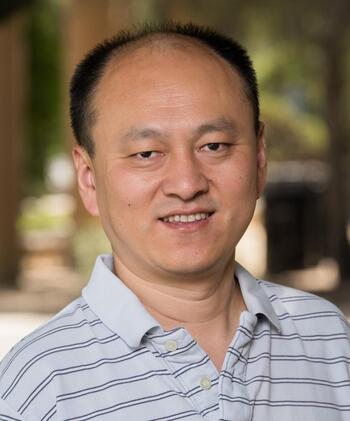
Hongbin Li is the Co-director of Stanford Center on China's Economy and Institutions, and a Senior Fellow of Stanford Institute for Economic Policy Research (SIEPR) and the Freeman Spogli Institute for International Studies (FSI). Hongbin obtained his Ph.D. in economics from Stanford University in 2001 and joined the economics department of the Chinese University of Hong Kong (CUHK), where he became full professor in 2007. He was also one of the two founding directors of the Institute of Economics and Finance at the CUHK. He taught at Tsinghua University in Beijing 2007-2016 and was C.V. Starr Chair Professor of Economics in the School of Economics and Management. He founded the Chinese College Student Survey (CCSS) in 2009 and the China Employer-Employee Survey (CEES) in 2014.
Hongbin’s research has been focused on the transition and development of the Chinese economy, and the evidence-based research results have been both widely covered by media outlets and well read by policy makers around the world. He is currently the co-editor of the Journal of Comparative Economics.
A NOTE ON LOCATION
This seminar is a hybrid event. Please join us in person in the Goldman Conference Room located within Encina Hall on the 4th floor of the East wing, or join remotely via Zoom.
Hybrid Event: Goldman Room E409, Encina Hall | Zoom Meeting
Grant Miller
Encina Commons Room 101,
615 Crothers Way,
Stanford, CA 94305-6006
As a health and development economist based at the Stanford School of Medicine, Dr. Miller's overarching focus is research and teaching aimed at developing more effective health improvement strategies for developing countries.
His agenda addresses three major interrelated themes: First, what are the major causes of population health improvement around the world and over time? His projects addressing this question are retrospective observational studies that focus both on historical health improvement and the determinants of population health in developing countries today. Second, what are the behavioral underpinnings of the major determinants of population health improvement? Policy relevance and generalizability require knowing not only which factors have contributed most to population health gains, but also why. Third, how can programs and policies use these behavioral insights to improve population health more effectively? The ultimate test of policy relevance is the ability to help formulate new strategies using these insights that are effective.