FSI researchers consider international development from a variety of angles. They analyze ideas such as how public action and good governance are cornerstones of economic prosperity in Mexico and how investments in high school education will improve China’s economy.
They are looking at novel technological interventions to improve rural livelihoods, like the development implications of solar power-generated crop growing in Northern Benin.
FSI academics also assess which political processes yield better access to public services, particularly in developing countries. With a focus on health care, researchers have studied the political incentives to embrace UNICEF’s child survival efforts and how a well-run anti-alcohol policy in Russia affected mortality rates.
FSI’s work on international development also includes training the next generation of leaders through pre- and post-doctoral fellowships as well as the Draper Hills Summer Fellows Program.
The Effects of Chronic Disease Management in Primary Health Care: Evidence from Rural China
Health systems globally face increasing morbidity and mortality from chronic diseases, yet many - especially in low- and middle-income countries - lack strong chronic disease management in primary health care (PHC). We provide evidence on China’s efforts to promote PHC management using unique five-year panel data in a rural county, including health care utilization from medical claims and health outcomes from biomarkers.
Watch the recording now:
About the Speaker
Image
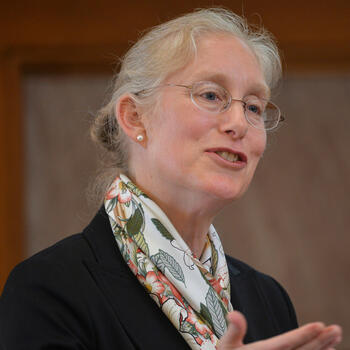
Karen Eggleston is Senior Fellow at the Freeman Spogli Institute for International Studies (FSI) at Stanford University, and Director of the Stanford Asia Health Policy Program at FSI. She is also a Fellow with the Center for Innovation in Global Health at Stanford University School of Medicine, and a Faculty Research Fellow of the National Bureau of Economic Research (NBER). Eggleston earned her PhD in public policy from Harvard University and has MA degrees in economics and Asian studies from the University of Hawaii and a BA in Asian studies summa cum laude (valedictorian) from Dartmouth College. Eggleston studied in China for two years and was a Fulbright scholar in Korea. Her research focuses on government and market roles in the health sector and Asia health policy, especially in China, India, Japan, and Korea; healthcare productivity; and the economics of the demographic transition. She served on the Strategic Technical Advisory Committee for the Asia Pacific Observatory on Health Systems and Policies, and has been a consultant to the World Bank, the Asian Development Bank, and the WHO regarding health system reforms in the PRC.
Image
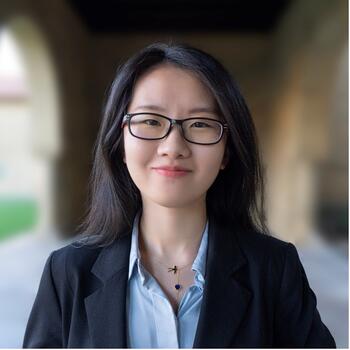
Hui Ding is a six-year Ph.D. student in Economics at Stanford University. Before entering Stanford, she received her bachelor’s degree in Economics and double degree in Psychology from Peking University, China. She has strong interests in the healthcare markets of both U.S. and China. Her current work mainly focuses on the mental health of the elderly population, especially the geographic variation and gender differences in care utilization and suicide. She is also interested in the prevention and management of infectious diseases and chronic diseases, as well as the role of insurance in setting prices, promoting new technology, and adjusting patients’ and providers’ behavior. Hui is currently on the job market (2021-22) and is available for online interviews.
Seminar Series Moderators:
Image
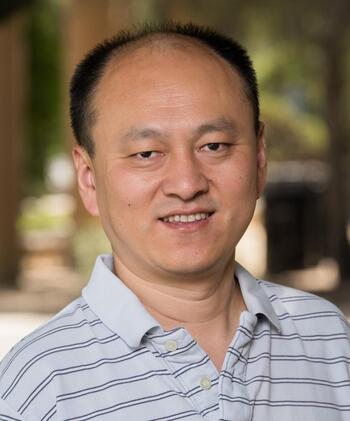
Scott Rozelle is the Helen F. Farnsworth Senior Fellow and Co-Director of Stanford Center on China's Economy and Institutions in the Freeman Spogli Institute for International Studies and Stanford Institute for Economic Policy Research at Stanford University. For the past 30 years, he has worked on the economics of poverty reduction. Currently, his work on poverty has its full focus on human capital, including issues of rural health, nutrition and education. For the past 20 year, Rozelle has been the chair of the International Advisory Board of the Center for Chinese Agricultural Policy, Chinese Academy of Sciences (CAS). In recent years Rozelle spends most of his time co-directing the Rural Education Action Project (REAP). In recognition of his outstanding achievements, Rozelle has received numerous honors and awards, including the Friendship Award in 2008, the highest award given to a non-Chinese by the Premier; and the National Science and Technology Collaboration Award in 2009 for scientific achievement in collaborative research.
Image
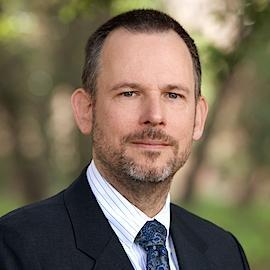
Hongbin Liis the James Liang Senior Fellow and Co-Director of the Stanford Center on China's Economy and Institutions in Freeman Spogli Institute for International Studies and the Stanford Institute for Economic Policy Research. Hongbin obtained his Ph.D. in economics from Stanford University in 2001 and joined the economics department of the Chinese University of Hong Kong (CUHK), where he became full professor in 2007. He was also one of the two founding directors of the Institute of Economics and Finance at the CUHK. He taught at Tsinghua University in Beijing 2007-2016 and was C.V. Starr Chair Professor of Economics in the School of Economics and Management. He also founded and served as the Executive Associate Director of the China Social and Economic Data Center at Tsinghua University. He founded the Chinese College Student Survey (CCSS) in 2009 and the China Employer-Employee Survey (CEES) in 2014.
Hongbin’s research has been focused on the transition and development of the Chinese economy, and the evidence-based research results have been both widely covered by media outlets and well read by policy makers around the world . He is currently the co-editor of the Journal of Comparative Economics.
Tuesday, October 19, 2021 | 11:00am-12:15pm Pacific Time
Ethnic Discrimination in Criminal Sentencing in China (Joint work with Rory Truex)
We present the first analysis of ethnic discrimination in sentencing patterns in China, focusing on drug cases in Yunnan province. We posit the "problem minority" hypothesis, which holds that discrimination in an authoritarian system emerges when an ethnic group becomes. associated with behavior that generates social instability. On average, minority defendants in Yunnan receive sentences that are about 2.1 to 7.5 months longer than Han defendants that have committed similar drug crimes. Further analysis of data from all provinces reveals that this bias is largest for groups heavily involved in the drug trade, and in provinces with significant minority populations and drugs.
About the Speaker
Image
Yue Houis the Janice and Julian Bers Assistant Professor in the Social Sciences in the department of political science at the University of Pennsylvania. Her research centers on the political economy of non-democracies, with a regional focus on China. She is interested in how individual actors (e.g., citizens, firms) interact with the state and state agents that are not held accountable by elections, and how these interactions affect outcomes such as economic growth, government service, quality of institutions, and policy changes. Her book The Private Sector in Public Office: Selective Property Rights in China (October 2019, Cambridge University Press) examines strategies Chinese private entrepreneurs use to protect property from expropriation. Hou is a faculty affiliate of Penn's Center for the Study of Contemporary China (CSCC), Penn Identity and Conflict Lab (PIC Lab), and Penn Development Research Initiative (PDRI).
Seminar Series Moderators:
Image
Scott Rozelle is the Helen F. Farnsworth Senior Fellow and Co-Director of Stanford Center on China's Economy and Institutions in the Freeman Spogli Institute for International Studies and Stanford Institute for Economic Policy Research at Stanford University. For the past 30 years, he has worked on the economics of poverty reduction. Currently, his work on poverty has its full focus on human capital, including issues of rural health, nutrition and education. For the past 20 year, Rozelle has been the chair of the International Advisory Board of the Center for Chinese Agricultural Policy, Chinese Academy of Sciences (CAS). In recent years Rozelle spends most of his time co-directing the Rural Education Action Project (REAP). In recognition of his outstanding achievements, Rozelle has received numerous honors and awards, including the Friendship Award in 2008, the highest award given to a non-Chinese by the Premier; and the National Science and Technology Collaboration Award in 2009 for scientific achievement in collaborative research.
Image
Hongbin Liis the James Liang Senior Fellow and Co-Director of the Stanford Center on China's Economy and Institutions in Freeman Spogli Institute for International Studies and the Stanford Institute for Economic Policy Research. Hongbin obtained his Ph.D. in economics from Stanford University in 2001 and joined the economics department of the Chinese University of Hong Kong (CUHK), where he became full professor in 2007. He was also one of the two founding directors of the Institute of Economics and Finance at the CUHK. He taught at Tsinghua University in Beijing 2007-2016 and was C.V. Starr Chair Professor of Economics in the School of Economics and Management. He also founded and served as the Executive Associate Director of the China Social and Economic Data Center at Tsinghua University. He founded the Chinese College Student Survey (CCSS) in 2009 and the China Employer-Employee Survey (CEES) in 2014.
Hongbin’s research has been focused on the transition and development of the Chinese economy, and the evidence-based research results have been both widely covered by media outlets and well read by policy makers around the world . He is currently the co-editor of the Journal of Comparative Economics.
Controlling the Narrative: The Coordination & Disciplining Role of the People's Daily in China with Professor Joseph Piotroski, Stanford University
This seminar provides an overview of corporate news reporting in China, with a focus on understanding the political and market-based incentives behind Chinese newspapers' biased coverage of China's listed companies. And, given these prevailing incentives, we will explore how politicians in China use the Party's flagship newspaper, the People’s Daily, to coordinate the reporting of corporate news in China.
Image
About the Speaker
Joseph Piotroski is the Robert K. Jaedicke Professor of Accounting at Stanford University’s Graduate School of Business, and a Senior Fellow at the Asian Bureau of Finance and Economic Research (ABFER). Professor Piotroski earned his PhD from the University of Michigan in 1999, an MBA from Indiana University in 1994, a BS in Accounting from the University of Illinois in 1989, and worked as a tax consultant for Coopers and Lybrand in Chicago. His research focuses on corporate transparency, governance, and regulation in a global context. His current research examines the impact of legal, political, and regulatory forces on capital market behavior and corporate decision-making, most notably in China and other emerging economies. His research has been published in scholarly journals in the areas of accounting, finance, and economics, and his research on value investing has been frequently cited in the popular press and is widely used in practice.
Seminar Series Moderators:
Image
Scott Rozelle is the Helen F. Farnsworth Senior Fellow and Co-Director of Stanford Center on China's Economy and Institutions in the Freeman Spogli Institute for International Studies and Stanford Institute for Economic Policy Research at Stanford University. For the past 30 years, he has worked on the economics of poverty reduction. Currently, his work on poverty has its full focus on human capital, including issues of rural health, nutrition and education. For the past 20 year, Rozelle has been the chair of the International Advisory Board of the Center for Chinese Agricultural Policy, Chinese Academy of Sciences (CAS). In recent years Rozelle spends most of his time co-directing the Rural Education Action Project (REAP). In recognition of his outstanding achievements, Rozelle has received numerous honors and awards, including the Friendship Award in 2008, the highest award given to a non-Chinese by the Premier; and the National Science and Technology Collaboration Award in 2009 for scientific achievement in collaborative research.
Image
Hongbin Liis the James Liang Senior Fellow and Co-Director of the Stanford Center on China's Economy and Institutions in Freeman Spogli Institute for International Studies and the Stanford Institute for Economic Policy Research. Hongbin obtained his Ph.D. in economics from Stanford University in 2001 and joined the economics department of the Chinese University of Hong Kong (CUHK), where he became full professor in 2007. He was also one of the two founding directors of the Institute of Economics and Finance at the CUHK. He taught at Tsinghua University in Beijing 2007-2016 and was C.V. Starr Chair Professor of Economics in the School of Economics and Management. He also founded and served as the Executive Associate Director of the China Social and Economic Data Center at Tsinghua University. He founded the Chinese College Student Survey (CCSS) in 2009 and the China Employer-Employee Survey (CEES) in 2014.
Hongbin’s research has been focused on the transition and development of the Chinese economy, and the evidence-based research results have been both widely covered by media outlets and well read by policy makers around the world . He is currently the co-editor of the Journal of Comparative Economics.
Stanford Libraries and the Stanford Center on China’s Economy and Institutions hosted the 2021 Dr. Sam-Chung Hsieh Memorial Lecture featuring Professor Barry Naughton speaking on The Summer of 2021: Consolidation of the New Chinese Economic Model.
During the summer of 2021, a “regulatory storm” shook markets in China. While the crackdown had its most immediate effects on private education, internet business, and finance, the government has also rolled out new policies to shape manufacturing and infrastructure, and even household fertility and income distribution. In this talk, Naughton interprets these actions as an extension of the ongoing Chinese government effort to exercise “grand steerage” of the economy. The new policies of summer 2021 in fact represent the consolidation of a new model, in which the Chinese government decisively steers a predominantly market economy.
Watch the Recording
About the Speaker
Image
Barry Naughton is the So Kwan Lok Chair of Chinese International Affairs at the School of Global Policy and Strategy at UC San Diego. He is one of the world’s most highly respected economists working on China. He is an authority on the Chinese economy with an emphasis on issues relating to industry, trade, finance and China's transition to a market economy.
Naughton’s recent research focuses on regional economic growth in China and its relationship to foreign trade and investment. He has addressed economic reform in Chinese cities, trade and trade disputes between China and the United States and economic interactions among China, Taiwan and Hong Kong.
Naughton has written the authoritative textbook “The Chinese Economy: Transitions and Growth,” which has now been translated into Chinese. His groundbreaking book “Growing Out of the Plan: Chinese Economic Reform, 1978-1993” received the Ohira Memorial Prize, and he most recently translated, edited and annotated a collection of articles by the well-known Chinese economist Wu Jinglian. Naughton writes a quarterly analysis of the Chinese economy for China Leadership Monitor.
The family of Dr. Sam-Chung Hsieh donated his personal archive to the Stanford Libraries' Special Collections and endowed the Dr. Sam-Chung Hsieh Memorial Lecture series to honor his legacy and to inspire future generations. Dr. Sam-Chung Hsieh (1919-2004) was former Governor of the Central Bank in Taiwan. During his tenure, he was responsible for the world's largest foreign exchange reserves, and was widely recognized for achieving stability and economic growth. In his long and distinguished career as economist and development specialist, he held key positions in multilateral institutions including the Asian Development Bank, where as founding Director, he was instrumental in advancing the green revolution and in the transformation of rural Asia.
Scott Rozelle, Yuqing Zheng, and Chengfang Liu were the guest editors of this special issue on agriculture, the rural economy and China's growth in the 21st century. Scott Rozelle also authored a publication in this issue.
Co-author, "The Highest Exam: How the Gaokao Shapes China"
Claire Cousineau 250px.png
Claire Cousineau is a writer and former researcher at the Stanford Center on China’s Economy and Institutions, she is currently pursuing her MBA at Duke University.
Since studying and working in Beijing and Kunming, Claire is passionate about fostering a deeper public understanding of China’s role on the global stage and creating cross-cultural relationships. Claire is the co-author of the book, The Highest Exam: How the Gaokao Shapes China, along with Hongbin Li and Ruixue Jia, published by Harvard University Press in 2025.
Former Program Manager, Stanford Center on China's Economy and Institutions
Objective:
To examine the correlation between birth season and early childhood development.
Background:
Almost all previous studies that examine the effect of birth season on early childhood development were conducted in developed countries with a limited sample size. The present study was conducted in poor, rural areas of western China, a developing region with a continental monsoon climate.
Method:
We administered a hemoglobin test to 650 infants (52% boys), aged 8–10 months, using a Hemocue Hb 201+ finger prick system, and assessed the cognitive and psychomotor development of sample infants using Bayley Scales of Infant Development.
Results:
Infants born in winter have higher Hb concentrations (t = 3.63, p 0.001) compared to infants born in summer. Similarly, cognitive development scores (t = 5.17, p 0.001) and psychomotor development scores (t = 10.60, p 0.001) were significantly higher among winter-born infants.
Conclusion:
The findings point to the involvement of birth season in early childhood development and suggest that aspects of the environment shape the experiences that contribute to early childhood development. Policy suggestions such as providing infants with ample opportunities for movement and stimulation during the cold season are discussed.
Background:
Cognitive development after age three tends to be stable and can therefore predict cognitive skills in later childhood. However, there is evidence that cognitive development is less stable before age three. In rural China, research has found large shares of children under age three are developmentally delayed, yet little is known about the trajectories of cognitive development between 0 and 3 years of age or how developmental trajectories predict later cognitive skills. This study seeks to describe the trajectories of child cognitive development between the ages of 0–3 years and examine how different trajectories predict cognitive development at preschool age.
Methods:
We collected three waves of longitudinal panel data from 1245 children in rural Western China. Child cognitive development was measured by the Bayley Scales of Infant Development when the child was 6–12 months and 22–30 months, and by the Wechsler Preschool and Primary Scale of Intelligence-Fourth Edition when the child was 49–65 months. We used the two measures of cognitive development before age three to determine the trajectories of child cognitive development.
Results:
Of the children, 39% were never cognitively delayed; 13% were persistently delayed; 7% experienced improving cognitive development; and 41% experienced deteriorating development before age 3. Compared to children who had never experienced cognitive delay, children with persistent cognitive delay and those with deteriorating development before age 3 had significantly lower cognitive scores at preschool age. Children with improving development before age 3 showed similar levels of cognition at preschool age as children who had never experienced cognitive delay.
Conclusions:
Large shares of children under age 3 in rural Western China show deteriorating cognitive development from infancy to toddlerhood, which predict lower levels of cognition at preschool age. Policymakers should invest in improving cognitive development before age 3 to prevent long-term poor cognition among China’s rural children.
Tuesday, May 25, 2021 | 11:00am-12:15 pm Pacific Time
Institutional Genes: Confucianism vs. Christianity
This talk was based on a chapter of my ongoing book project titled “Institutional Genes: A Comparative Analysis of Origins of China’s Institutions.” Confucianism / Imperial-Exam-System is one of three what I called institutional genes of China's institutions. As a comparison, Christianity is an institutional gene for other institutions, including constitutional democracy (in the West) on the one hand and totalitarianism (in the Soviet Union), which is implanted into China on the other hand. In this talk, I’ll explain how Confucianism/ Imperial-Exam-System is created and evolved, and why it is an institutional gene that affects today’s institutions in China.
Watch the Recorded Event:
Image
About the Speaker
Chenggang Xu is Visiting Professor at Finance Department, Imperial College London. He is one of the first recipients (joint with Yingyi Qian) of China Economics Prize for contributions in understanding government and enterprise incentive mechanisms for the transition economy of China.
Dr Xu received his PhD in Economics from Harvard in 1991. He is currently a board member of the Ronald Coase Institute (RCI) and a research fellow of the CEPR. He has previously taught at the London School of Economics (1991-2009) as a Reader, at the University of Hong Kong (2009-2016) as Chung Hon-Dak Professor in Economic Development and as Quoin Professor in Economic Development (2008-2016), and as Special-Term Visiting Professor at Tshinghua University (2002-). He has also taught and worked at Harvard (1992-2002), the IMF (1997-1999) and the Chinese Academy of Social Sciences (1982-1992). He was the President of the Asian Law and Economics Association (2010-2012) and World-Class University Professor at Seoul National University (2009-2013). He won the Sun Yefang Economics Prize in 2013. In 2016, he was the joint winner of the China Economics Prize.
Seminar Series Moderators:
Image
Scott Rozelle holds the Helen Farnsworth Endowed Professorship at Stanford University and is Senior Fellow in the Food Security and Environment Program and the Shorenstein Asia-Pacific Research Center, Freeman Spogli Institute (FSI) for International Studies. For the past 30 years, he has worked on the economics of poverty reduction. Currently, his work on poverty has its full focus on human capital, including issues of rural health, nutrition and education. For the past 20 year, Rozelle has been the chair of the International Advisory Board of the Center for Chinese Agricultural Policy, Chinese Academy of Sciences (CAS). In recent years Rozelle spends most of his time co-directing the Rural Education Action Project (REAP). In recognition of this work, Dr. Rozelle has received numerous honors and awards. Among them, he became a Yangtse Scholar (Changjiang Xuezhe) in Renmin University of China in 2008. In 2008 he also was awarded the Friendship Award by Premiere Wen Jiabao, the highest honor that can be bestowed on a foreigner.
Image
Hongbin Liis the James Liang Director of the China Program at the Stanford King Center on Global Development, and a Senior Fellow of Stanford Institute for Economic Policy Research (SIEPR). Hongbin obtained his Ph.D. in economics from Stanford University in 2001 and joined the economics department of the Chinese University of Hong Kong (CUHK), where he became full professor in 2007. He was also one of the two founding directors of the Institute of Economics and Finance at the CUHK. He taught at Tsinghua University in Beijing 2007-2016 and was C.V. Starr Chair Professor of Economics in the School of Economics and Management. He founded the Chinese College Student Survey (CCSS) in 2009 and the China Employer-Employee Survey (CEES) in 2014.
Hongbin’s research has been focused on the transition and development of the Chinese economy, and the evidence-based research results have been both widely covered by media outlets and well read by policy makers around the world. He is currently the co-editor of the Journal of Comparative Economics.
Tuesday, May 11, 2021 | 11:00am-12:15 pm Pacific Time
The Political Economy of Policy Experimentations in China
Policy learning, often involving experimentations, is an essential component of government's decision making. In this project, we aim to describe and understand China's policy experimentations, which are speculated by many to have played a vital role in fostering China's reform and growth. We collect comprehensive data on policy experimentations conducted in China over the past 4 decades by 139 ministries and commissions. In sum, our results suggest that policy experimentations take place under various political and bureaucratic constraints, which could limit the scope and bias the direction of policy learning.
Watch the Recorded Event:
Image
About the Speaker
David Yang is an Assistant Professor of Economics at Harvard University, as well as a Faculty Research Fellow at the National Bureau of Economic Research (NBER) and Global Scholar at the Canadian Institute for Advanced Research (CIFAR). His research focuses on political economy, behavioral and experimental economics, economic history, and cultural economics. In particular, David studies the forces of stability and forces of changes in authoritarian regimes, drawing lessons from historical and contemporary China.
Seminar Series Moderators:
Image
Scott Rozelle holds the Helen Farnsworth Endowed Professorship at Stanford University and is Senior Fellow in the Food Security and Environment Program and the Shorenstein Asia-Pacific Research Center, Freeman Spogli Institute (FSI) for International Studies. For the past 30 years, he has worked on the economics of poverty reduction. Currently, his work on poverty has its full focus on human capital, including issues of rural health, nutrition and education. For the past 20 year, Rozelle has been the chair of the International Advisory Board of the Center for Chinese Agricultural Policy, Chinese Academy of Sciences (CAS). In recent years Rozelle spends most of his time co-directing the Rural Education Action Project (REAP). In recognition of this work, Dr. Rozelle has received numerous honors and awards. Among them, he became a Yangtse Scholar (Changjiang Xuezhe) in Renmin University of China in 2008. In 2008 he also was awarded the Friendship Award by Premiere Wen Jiabao, the highest honor that can be bestowed on a foreigner.
Image
Hongbin Liis the James Liang Director of the China Program at the Stanford King Center on Global Development, and a Senior Fellow of Stanford Institute for Economic Policy Research (SIEPR). Hongbin obtained his Ph.D. in economics from Stanford University in 2001 and joined the economics department of the Chinese University of Hong Kong (CUHK), where he became full professor in 2007. He was also one of the two founding directors of the Institute of Economics and Finance at the CUHK. He taught at Tsinghua University in Beijing 2007-2016 and was C.V. Starr Chair Professor of Economics in the School of Economics and Management. He founded the Chinese College Student Survey (CCSS) in 2009 and the China Employer-Employee Survey (CEES) in 2014.
Hongbin’s research has been focused on the transition and development of the Chinese economy, and the evidence-based research results have been both widely covered by media outlets and well read by policy makers around the world. He is currently the co-editor of the Journal of Comparative Economics.

 FSI researchers consider international development from a variety of angles. They analyze ideas such as how public action and good governance are cornerstones of economic prosperity in Mexico and how investments in high school education will improve China’s economy.