This paper examines the correlation between cognitive ability and firm creation. Drawing on administrative college admissions data and firm registration records in China, we investigate who had created firms by their mid-30s. We find a clear pattern of entrepreneurial reluctance: Given the same backgrounds, individuals with higher college entrance exam scores are less likely to create firms. Through an exploration of firm performance, alternative career trajectories, and variations across regions, we propose an explanation: The ability represented by exam scores is useful across occupations, yet higher-scoring individuals are attracted to waged jobs, particularly those of the state sector.
USA vs China: A New Cold War? Great Power Relations and Competition in the 21st Century
Thirty years ago, the Cold War ended. Today, great power competition is back – or so it seems – with many describing our present era as a “New Cold War” between the United States and China (and Russia). But is this label an illuminating or distorting analogy? More importantly, what should the U.S. do to meet the challengers of great power competition in the 21st century?
In analyzing contemporary relations, we must trace the historical origins of the U.S.-China relationship, then assess the similarities and differences between the Cold War and U.S.-China relations today along dimensions such as power, ideology, and multilateralism, in order to effectively devise unilateral, bilateral, and multilateral policy prescriptions for U.S. policymakers.
This Stanford alumni event featured Stanford professor Michael McFaul, director at the Freeman Spogli Institute for International Studies. He was joined by professor Hongbin Li, co-director of Stanford Center on China's Economy, who moderated a discussion about the major themes of the research.
Watch the event recording:
About the Speakers:
Image
Michael McFaul is Director at the Freeman Spogli Institute for International Studies, the Ken Olivier and Angela Nomellini Professor of International Studies in the Department of Political Science, and the Peter and Helen Bing Senior Fellow at the Hoover Institution. He joined the Stanford faculty in 1995.
Dr. McFaul also is as an International Affairs Analyst for NBC News and a columnist for The Washington Post. He served for five years in the Obama administration, first as Special Assistant to the President and Senior Director for Russian and Eurasian Affairs at the National Security Council at the White House (2009-2012), and then as U.S. Ambassador to the Russian Federation (2012-2014).
He has authored several books, most recently the New York Times bestseller From Cold War to Hot Peace: An American Ambassador in Putin’s Russia. Earlier books include Advancing Democracy Abroad: Why We Should, How We Can; Transitions To Democracy: A Comparative Perspective (eds. with Kathryn Stoner); Power and Purpose: American Policy toward Russia after the Cold War (with James Goldgeier); and Russia’s Unfinished Revolution: Political Change from Gorbachev to Putin.
His current research interests include American foreign policy, great power relations, and the relationship between democracy and development. Dr. McFaul was born and raised in Montana. He received his B.A. in International Relations and Slavic Languages and his M.A. in Soviet and East European Studies from Stanford University in 1986. As a Rhodes Scholar, he completed his D. Phil. in International Relations at Oxford University in 1991.
Image
Hongbin Liis the Co-Director of the Stanford Center on China's Economy and Institutions (SCCEI) and a Senior Fellow of Stanford Institute for Economic Policy Research (SIEPR). Hongbin obtained his Ph.D. in economics from Stanford University in 2001 and joined the economics department of the Chinese University of Hong Kong (CUHK), where he became full professor in 2007. He was also one of the two founding directors of the Institute of Economics and Finance at the CUHK. He taught at Tsinghua University in Beijing 2007-2016 and was C.V. Starr Chair Professor of Economics in the School of Economics and Management. He also founded and served as the Executive Associate Director of the China Social and Economic Data Center at Tsinghua University. He founded the Chinese College Student Survey (CCSS) in 2009 and the China Employer-Employee Survey (CEES) in 2014.
Hongbin’s research has been focused on the transition and development of the Chinese economy, and the evidence-based research results have been both widely covered by media outlets and well read by policy makers around the world . He is currently the co-editor of the Journal of Comparative Economics.
Below is an excerpt from the SIEPR policy brief published online.
"As the United States and China enter a new and contentious phase of their relationship, Stanford scholars are setting and expanding research agendas to analyze China’s economic development and its impact on the world. The newly launched Stanford Center on China’s Economy and Institutions (SCCEI, pronounced “sky”) was formed by the Stanford Institute for Economic Policy Research (SIEPR) and the Freeman Spogli Institute for International Studies (FSI) to support their work.
The goal of SCCEI and its affiliated faculty is to provide a dispassionate, fact-based architecture that can help policymakers, business leaders and the general public navigate the fraught relationship between the U.S. and China.
This policy brief outlines the scholarship already underway by some of SCCEI’s affiliates. It includes a range of research on the world’s most populous country: education and wage disparities; workforce transformation; emissions trading; China’s one-child policy; and the effect that racism against Chinese students in America has upon their views about authoritarian rule. As the center matures, research agendas will expand and focus on trade, global supply chains, technology, intellectual property rights, worker productivity, and a range of developing issues affecting the connection between Washington, D.C., and Beijing and the rest of the world."
Stanford scholars are setting and expanding research agendas to analyze China’s economic development and its impact on the world. The newly launched Stanford Center on China’s Economy and Institutions — co-directed by SIEPR senior fellows Hongbin Li and Scott Rozelle — is supporting their work. In this SIEPR Policy Brief, Li and Rozelle outline the research underway by the new center's affiliates.
The Rise of Robots in China with Professor Hongbin Li
China’s production and adoption of robotic technology have accelerated rapidly in recent years, surpassing Japan, US, and Germany. Stanford professor Hongbin Li and a team of scholars draw on multi-year field research data to show fresh insights into China’s aggressive push into automation—specifically, the increasing use of robots—to maintain its status as the “world’s factory.” His analysis offers an unprecedented look at what’s happening at the factory level, and fresh insight into how rising labor costs, an aging population and government policies are reshaping Chinese manufacturing.
In this Stanford alumni event, Hongbin Li, co-director of Stanford Center on China's Economy and Institutions and senior fellow at the Stanford Institute for Economic Policy Research, was joined by Scott Rozelle, co-director of Stanford Center on China's Economy and Institutions and senior fellow at the Freeman Spogli Institute for International Studies, who moderated a discussion about the major themes of the research.
Watch the event recording:
About the Speakers:
Image
Hongbin Liis the Co-Director of the Stanford Center on China's Economy and Institutions (SCCEI) and a Senior Fellow of Stanford Institute for Economic Policy Research (SIEPR). Hongbin obtained his Ph.D. in economics from Stanford University in 2001 and joined the economics department of the Chinese University of Hong Kong (CUHK), where he became full professor in 2007. He was also one of the two founding directors of the Institute of Economics and Finance at the CUHK. He taught at Tsinghua University in Beijing 2007-2016 and was C.V. Starr Chair Professor of Economics in the School of Economics and Management. He also founded and served as the Executive Associate Director of the China Social and Economic Data Center at Tsinghua University. He founded the Chinese College Student Survey (CCSS) in 2009 and the China Employer-Employee Survey (CEES) in 2014.
Hongbin’s research has been focused on the transition and development of the Chinese economy, and the evidence-based research results have been both widely covered by media outlets and well read by policy makers around the world . He is currently the co-editor of the Journal of Comparative Economics.
Image
Scott Rozelle is the Helen F. Farnsworth Senior Fellow and the co-director of Stanford Center on China's Economy and Institutions in the Freeman Spogli Institute for International Studies and Stanford Institute for Economic Policy Research at Stanford University. For the past 30 years, he has worked on the economics of poverty reduction. Currently, his work on poverty has its full focus on human capital, including issues of rural health, nutrition and education. For the past 20 year, Rozelle has been the chair of the International Advisory Board of the China Center for Agricultural Policy in Peking University. In recent years Rozelle spends most of his time co-directing the Rural Education Action Project (REAP). In recognition of this work, Dr. Rozelle has received numerous honors and awards. Among them, he became a Yangtse Scholar (Changjiang Xuezhe) in Renmin University of China in 2008. In 2008 he also was awarded the Friendship Award by Premier Wen Jiabao, the highest honor that can be bestowed on a foreigner.
A burgeoning literature has documented the importance of elite colleges. Yet, little is known about access to elite education and its labor market implications in China, a country that produces one in every five college graduates in the world. College admission in China is governed by a single exam—the national college entrance exam, and the government sets admission cutoff scores for elite colleges. We examine the impacts of scoring above the elite-tier cutoff on a student's access to elite colleges and wage outcomes after graduation, using the discontinuity around the cutoff score. By employing hand-collected survey data, we find that scoring above the cutoff not only increases the chance of entering an elite college but also raises a young person's first-job wages after graduation. We also find that those just above the cutoff have peers with higher scores and better social networks than those below the cutoff, but it is less clear whether the two groups use their time differently in college.
The Benefits of Acing China's Most Important Academic Exam: High Scorers in the Gaokao Go to Better Universities and Earn Higher Wages
"Chinese students hoping for a reprieve from this year’s gruelling university-entrance exams are out of luck. Unlike America, where many top-tier universities have waived standardised testing requirements amid the covid-19 pandemic, China is keeping its students’ noses to the grindstone. On February 20th the Ministry of Education announced that the national exam, which determines which universities students can attend, will be held as planned on June 7th and 8th.
The annual assessment, known as the gaokao, is the biggest in the world. Every summer some 10m students in China trek to 7,000 testing centres around the country to sit the nerve-racking exam, which lasts for nine hours over two to four days. Pupils study for years, and for good reason. Those who score well on the test are eligible to apply to the country’s best universities, a prerequisite for many good jobs. The high-stakes exam is designed to be meritocratic: anyone can take it; for children from poor families, a good score can offer an escape from a life toiling on the farm or in a factory.
The gaokao influences students’ economic prospects for years to come, according to a recent working paper by Hongbin Li of Stanford University and Ruixue Jia of the London School of Economics. The authors looked at the cut-off score for qualification to enter China’s top 100 universities. Using hand-collected data from over 10,000 people, they found that, whereas students who score just below the cut-off have only a 6% chance of attending a top-tier university, those who score at or above it have a 20-40% chance. They also earn 5-9% more in their first job out of school (see chart)."
This paper studies how the COVID-19 pandemic has affected labor demand using over 100 million posted jobs on one of the largest online platforms in China. Our data reveals that, due to the effects of the pandemic both in China and abroad, the number of newly posted jobs within the first 13 weeks after the Wuhan lockdown on January 23, 2020 was about one third lower than that of the same lunar calendar weeks in 2018 and 2019. Using econometric methods, we show that, via the global supply chain, COVID-19 cases abroad and in particular pandemic-control policies by foreign governments reduced new job creations in China by 11.7%. We also find that Chinese firms most exposed to international trade outperformed other firms at the beginning of the pandemic but underperformed during recovery as the Novel Coronavirus spread throughout the world.
John A. and Cynthia Fry Gunn Building, 366 Galvez Street
Stanford, CA 94305-6015
0
hongbinli@stanford.edu
Professor, by courtesy, of Economics
Senior Fellow at the Freeman Spogli Institute for International Studies
Senior Fellow at the Stanford Institute for Economic Policy Research
Director of the China, Labor, Income, and Population Research Program, Stanford Center on China's Economy and Institutions
Faculty Affiliate at the King Center of Global Development
Faculty Affiliate at Stanford Institute for Human-Centered Artificial Intelligence
Faculty Affiliate at the Stanford Center on China's Economy and Institutions
5268-hongbinli.png
PhD
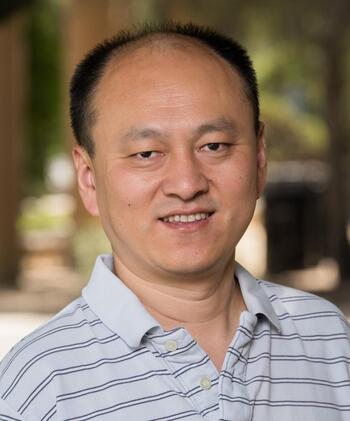
Hongbin Li is a Senior Fellow of Stanford Institute for Economic Policy Research (SIEPR) and the Freeman Spogli Institute for International Studies (FSI).
Hongbin obtained Ph.D. in economics from Stanford University in 2001 and joined the economics department of the Chinese University of Hong Kong (CUHK), where he became full professor in 2007. He was also one of the two founding directors of the Institute of Economics and Finance at the CUHK. He taught at Tsinghua University in Beijing 2007-2016 and was C.V. Starr Chair Professor of Economics in the School of Economics and Management. He also founded and served as the Executive Associate Director of the China Social and Economic Data Center at Tsinghua University. He founded the Chinese College Student Survey (CCSS) in 2009 and the China Employer-Employee Survey (CEES) in 2014.
Hongbin’s research has been focused on the transition and development of the Chinese economy, and the evidence-based research results have been both widely covered by media outlets and well read by policy makers around the world. He is currently the co-editor of the Journal of Comparative Economics and co-author of the forthcoming book, “The Highest Exam: How the Gaokao Shapes China” published by Harvard University Press.
This paper empirically estimates the return to education using twins data that the authors collected from urban China. Our ordinary least-squares estimate shows that one year of schooling increases an individual's earnings by 8.4%. If we use a within-twin fixed effects model, the return is reduced to 2.7%, but rises to 3.8% after the correction of measurement error. These results suggest that a large portion of the estimated returns to education is due to omitted ability or the family effect. We further investigate why the true return is low and the omitted ability bias high, and find evidence showing that it may be a consequence of China's education system, which is highly selective and exam oriented. More specifically, we find that high school education may mainly serve as a mechanism to select college students, but as a human capital investment per se it has low returns in terms of earnings. In contrast, both vocational school education and college education have a large return that is comparable to that found in the United States.
This paper examines the impact of entrepreneurship on economic growth by using a panel data set of 29 provinces in China over 20 years. Two indicators of entrepreneurship are defined and introduced into the traditional growth regression framework that is estimated using the system generalized method of moments. We also use the ratio of staff and workers of state-owned enterprises and per capita sown land area as the instrumental variables to identify the causal effect of entrepreneurship on economic growth. Our results suggest that entrepreneurship has a significant positive effect on economic growth and this finding is robust even after we control for other demographic and institutional variables. Our study provides some evidence that may be used as a basis for evaluating the effect of China’s policy on private business which has been increasingly relaxed since the late 1970s.