International Development

FSI researchers consider international development from a variety of angles. They analyze ideas such as how public action and good governance are cornerstones of economic prosperity in Mexico and how investments in high school education will improve China’s economy.

They are looking at novel technological interventions to improve rural livelihoods, like the development implications of solar power-generated crop growing in Northern Benin.

FSI academics also assess which political processes yield better access to public services, particularly in developing countries. With a focus on health care, researchers have studied the political incentives to embrace UNICEF’s child survival efforts and how a well-run anti-alcohol policy in Russia affected mortality rates.

FSI’s work on international development also includes training the next generation of leaders through pre- and post-doctoral fellowships as well as the Draper Hills Summer Fellows Program.

-

Tuesday, April 27, 2021 | 4:30 - 5:45 pm Pacific Time

China's Belt and Road Initiative (BRI): A Look at the Evidence with Professor Albert Park, Hong Kong University of Science and Technology 

China’s Belt and Road Initiative (BRI) has attracted polarized debate over China’s motives with relatively little evidence. We analyze project-level data on China’s outbound foreign direct investments (FDI) and construction projects to examine several key questions related to the Initiative. First, we study the impact of the BRI on the amount of outbound FDI to BRI countries and examine whether the importance of economic, governance, and other factors in explaining China’s outbound FDI flows to different countries changed under the BRI. We find that after the BRI began, the importance of economic fundamentals declined while the importance of governance factors increased. Second, we quantify the role of state-owned enterprises in the Initiative and compare the nature and determinants of SOE investments to those made by private firms. Finally, to examine the impact of the Initiative on China’s soft power, we study changes in sentiment by using AI algorithms to conduct textual analysis of millions of media articles around the world.

Watch the Recorded Event: 


Image
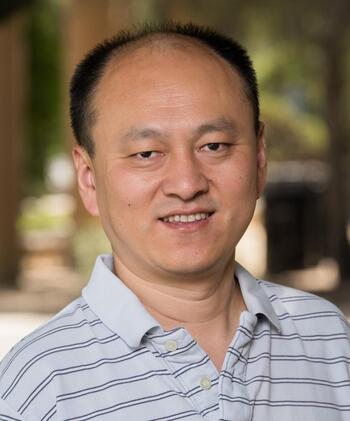
Headshot of Dr. Albert Park.
About the Speaker

Albert Park is a development and labor economist who is an expert on China’s economic development. He is Head and Chair Professor of Economics, Chair Professor of Social Science, Professor of Public Policy, and Director of the Center for Economic Policy at HKUST. His research and commentary has appeared in the Economist, New York Times, Washington Post, Wall Street Journal, China Daily, BBC, CNN, NBC, Bloomberg, Freakonomics, and NPR. In recent years he has published articles in leading economics journals on firm performance, poverty and inequality, migration and employment, health and education, and the economics of aging in China. Prof. Park has played a leadership role in numerous survey research projects in China including the China Employer-Employee Survey (CEES), the China Urban Labor Survey (CULS), the Gansu Survey of Children and Families (GSCF), and the China Health and Retirement Longitudinal Study (CHARLS). He previously held faculty appointments at the University of Michigan and Oxford University, and has consulted frequently for the World Bank.


Seminar Series Moderators:

Image
Headshot of Dr. Scott Rozelle

Scott Rozelle holds the Helen Farnsworth Endowed Professorship at Stanford University and is Senior Fellow in the Food Security and Environment Program and the Shorenstein Asia-Pacific Research Center, Freeman Spogli Institute (FSI) for International Studies. For the past 30 years, he has worked on the economics of poverty reduction. Currently, his work on poverty has its full focus on human capital, including issues of rural health, nutrition and education. For the past 20 year, Rozelle has been the chair of the International Advisory Board of the Center for Chinese Agricultural Policy, Chinese Academy of Sciences (CAS). In recent years Rozelle spends most of his time co-directing the Rural Education Action Project (REAP). In recognition of this work, Dr. Rozelle has received numerous honors and awards. Among them, he became a Yangtse Scholar (Changjiang Xuezhe) in Renmin University of China in 2008. In 2008 he also was awarded the Friendship Award by Premiere Wen Jiabao, the highest honor that can be bestowed on a foreigner. 

Image
hongbin li headshot
Hongbin Li is the James Liang Director of the China Program at the Stanford King Center on Global Development, and a Senior Fellow of Stanford Institute for Economic Policy Research (SIEPR). Hongbin obtained his Ph.D. in economics from Stanford University in 2001 and joined the economics department of the Chinese University of Hong Kong (CUHK), where he became full professor in 2007. He was also one of the two founding directors of the Institute of Economics and Finance at the CUHK. He taught at Tsinghua University in Beijing 2007-2016 and was C.V. Starr Chair Professor of Economics in the School of Economics and Management. He founded the Chinese College Student Survey (CCSS) in 2009 and the China Employer-Employee Survey (CEES) in 2014.

Hongbin’s research has been focused on the transition and development of the Chinese economy, and the evidence-based research results have been both widely covered by media outlets and well read by policy makers around the world. He is currently the co-editor of the Journal of Comparative Economics.

Zoom Meeting

Seminars
Paragraphs
Graph lines and bar charts overlaid on a shipping port in China.

Below is an excerpt from the SIEPR policy brief published online.

"As the United States and China enter a new and contentious phase of their relationship, Stanford scholars are setting and expanding research agendas to analyze China’s economic development and its impact on the world. The newly launched Stanford Center on China’s Economy and Institutions (SCCEI, pronounced “sky”) was formed by the Stanford Institute for Economic Policy Research (SIEPR) and the Freeman Spogli Institute for International Studies (FSI) to support their work.

The goal of SCCEI and its affiliated faculty is to provide a dispassionate, fact-based architecture that can help policymakers, business leaders and the general public navigate the fraught relationship between the U.S. and China.

This policy brief outlines the scholarship already underway by some of SCCEI’s affiliates. It includes a range of research on the world’s most populous country: education and wage disparities; workforce transformation; emissions trading; China’s one-child policy; and the effect that racism against Chinese students in America has upon their views about authoritarian rule. As the center matures, research agendas will expand and focus on trade, global supply chains, technology, intellectual property rights, worker productivity, and a range of developing issues affecting the connection between Washington, D.C., and Beijing and the rest of the world."


Read the Full Policy Brief

All Publications button
1
Publication Type
Policy Briefs
Publication Date
Subtitle
Stanford scholars are setting and expanding research agendas to analyze China’s economic development and its impact on the world. The newly launched Stanford Center on China’s Economy and Institutions — co-directed by SIEPR senior fellows Hongbin Li and Scott Rozelle — is supporting their work. In this SIEPR Policy Brief, Li and Rozelle outline the research underway by the new center's affiliates.
Authors
Hongbin Li
Scott Rozelle
-

China Chats with Stanford Faculty

The Rise of Robots in China with Professor Hongbin Li

China’s production and adoption of robotic technology have accelerated rapidly in recent years, surpassing Japan, US, and Germany. Stanford professor Hongbin Li and a team of scholars draw on multi-year field research data to show fresh insights into China’s aggressive push into automation—specifically, the increasing use of robots—to maintain its status as the “world’s factory.” His analysis offers an unprecedented look at what’s happening at the factory level, and fresh insight into how rising labor costs, an aging population and government policies are reshaping Chinese manufacturing.

In this Stanford alumni event, Hongbin Li, co-director of Stanford Center on China's Economy and Institutions and senior fellow at the Stanford Institute for Economic Policy Research, was joined by Scott Rozelle, co-director of Stanford Center on China's Economy and Institutions and senior fellow at the Freeman Spogli Institute for International Studies, who moderated a discussion about the major themes of the research. 

Watch the event recording:


About the Speakers:

Image
hongbin li headshot

Hongbin Li is the Co-Director of the Stanford Center on China's Economy and Institutions (SCCEI) and a Senior Fellow of Stanford Institute for Economic Policy Research (SIEPR). Hongbin obtained his Ph.D. in economics from Stanford University in 2001 and joined the economics department of the Chinese University of Hong Kong (CUHK), where he became full professor in 2007. He was also one of the two founding directors of the Institute of Economics and Finance at the CUHK. He taught at Tsinghua University in Beijing 2007-2016 and was C.V. Starr Chair Professor of Economics in the School of Economics and Management. He also founded and served as the Executive Associate Director of the China Social and Economic Data Center at Tsinghua University. He founded the Chinese College Student Survey (CCSS) in 2009 and the China Employer-Employee Survey (CEES) in 2014.

Hongbin’s research has been focused on the transition and development of the Chinese economy, and the evidence-based research results have been both widely covered by media outlets and well read by policy makers around the world . He is currently the co-editor of the Journal of Comparative Economics.


Image
Headshot of Dr. Scott Rozelle
Scott Rozelle is the Helen F. Farnsworth Senior Fellow and the co-director of Stanford Center on China's Economy and Institutions in the Freeman Spogli Institute for International Studies and Stanford Institute for Economic Policy Research at Stanford University.  For the past 30 years, he has worked on the economics of poverty reduction. Currently, his work on poverty has its full focus on human capital, including issues of rural health, nutrition and education. For the past 20 year, Rozelle has been the chair of the International Advisory Board of the China Center for Agricultural Policy in Peking University. In recent years Rozelle spends most of his time co-directing the Rural Education Action Project (REAP). In recognition of this work, Dr. Rozelle has received numerous honors and awards. Among them, he became a Yangtse Scholar (Changjiang Xuezhe) in Renmin University of China in 2008. In 2008 he also was awarded the Friendship Award by Premier Wen Jiabao, the highest honor that can be bestowed on a foreigner. 

Seminars
-

This seminar has been cancelled. Please join us for our next seminar in the series with Professor Albert Park on April 27, 2021.

Controlling the Narrative with Professor Joseph Piotroski, Stanford University

This seminar provides an overview of corporate news reporting in China, with a focus on understanding the political and market-based incentives behind Chinese newspapers' biased coverage of China's listed companies. And, given these prevailing incentives, we will explore how politicians in China use the Party's flagship newspaper, the People’s Daily, to coordinate the reporting of corporate news in China.


Image
Headshot of Dr. Joseph Piotroski
About the Speaker

Joseph Piotroski is the Robert K. Jaedicke Professor of Accounting at Stanford University’s Graduate School of Business, and a Senior Fellow at the Asian Bureau of Finance and Economic Research (ABFER). Professor Piotroski earned his PhD from the University of Michigan in 1999, an MBA from Indiana University in 1994, a BS in Accounting from the University of Illinois in 1989, and worked as a tax consultant for Coopers and Lybrand in Chicago. His research focuses on corporate transparency, governance, and regulation in a global context. His current research examines the impact of legal, political, and regulatory forces on capital market behavior and corporate decision-making, most notably in China and other emerging economies. His research has been published in scholarly journals in the areas of accounting, finance, and economics, and his research on value investing has been frequently cited in the popular press and is widely used in practice. 


Seminar Series Moderators:

Image
Headshot of Dr. Scott Rozelle

Scott Rozelle holds the Helen Farnsworth Endowed Professorship at Stanford University and is Senior Fellow in the Food Security and Environment Program and the Shorenstein Asia-Pacific Research Center, Freeman Spogli Institute (FSI) for International Studies. For the past 30 years, he has worked on the economics of poverty reduction. Currently, his work on poverty has its full focus on human capital, including issues of rural health, nutrition and education. For the past 20 year, Rozelle has been the chair of the International Advisory Board of the Center for Chinese Agricultural Policy, Chinese Academy of Sciences (CAS). In recent years Rozelle spends most of his time co-directing the Rural Education Action Project (REAP). In recognition of this work, Dr. Rozelle has received numerous honors and awards. Among them, he became a Yangtse Scholar (Changjiang Xuezhe) in Renmin University of China in 2008. In 2008 he also was awarded the Friendship Award by Premiere Wen Jiabao, the highest honor that can be bestowed on a foreigner. 

Image
hongbin li headshot
Hongbin Li is the James Liang Director of the China Program at the Stanford King Center on Global Development, and a Senior Fellow of Stanford Institute for Economic Policy Research (SIEPR). Hongbin obtained his Ph.D. in economics from Stanford University in 2001 and joined the economics department of the Chinese University of Hong Kong (CUHK), where he became full professor in 2007. He was also one of the two founding directors of the Institute of Economics and Finance at the CUHK. He taught at Tsinghua University in Beijing 2007-2016 and was C.V. Starr Chair Professor of Economics in the School of Economics and Management. He founded the Chinese College Student Survey (CCSS) in 2009 and the China Employer-Employee Survey (CEES) in 2014.

Hongbin’s research has been focused on the transition and development of the Chinese economy, and the evidence-based research results have been both widely covered by media outlets and well read by policy makers around the world. He is currently the co-editor of the Journal of Comparative Economics.


Register Here

Register once to receive the Zoom meeting link that will be used for all lectures in this series.

Seminars
News Type
News
Date
Paragraphs

Foreign Policy: China Will Run Out of Growth if it Doesn't Fix its Rural Crisis

No country with China’s vast education and public health problems has ever broken out of the ranks of middle-income countries.

"At a time when every other major economy is shrinking, China announced in late January that its GDP grew 2.3 percent in 2020. Beneath that impressive achievement, however, lies a very unbalanced recovery: As in the past, Beijing relied heavily on state investment and a state-led push for higher industrial production, while private investment and consumer spending remained weak. Easy credit to fuel growth has likely formed even more so-called zombie companies with little prospect of future profitability and filled the books of Chinese banks with even more bad loans.

That much is familiar to many who have taken a closer look at China’s skewed model for economic growth. What’s much less well known is the disproportionate burden of the COVID-19-induced downturn that has fallen on rural Chinese, including the 290 million migrant workers with rural hukou (household registrations) who work in cities throughout China. Lockdowns forced by the pandemic paralyzed economic sectors where many migrants work, such as services and retail. According to one estimate, Chinese migrant workers lost about $100 billion in wages that they are unlikely ever to recover.

Among migrant workers and the underdeveloped rural communities that depend on the wages they send home, a quiet crisis is taking place—with potentially dramatic consequences for China’s future growth. Despite what the GDP number suggests about the country’s successful handling of the pandemic, China’s longer-term economic risks have only grown—and are a direct result of the crisis in rural China. As Stanford University researchers Scott Rozelle and Natalie Hell document in their meticulously researched book, Invisible China: How the Urban-Rural Divide Threatens China’s Risehundreds of millions of rural Chinese face a dangerous lack of human capital and suffer from pervasive health problems, including widespread iron-deficiency anemia, uncorrected myopia, and parasitic intestinal worms. Exacerbated by the pandemic, China’s rural crisis remains largely invisible to outside observers, and even to many Chinese."


Read the full article from Foreign Policy.

Hero Image
A mother and child preparing food inside a yurt in rural China. GettyImages - Matteo Colombo
All News button
1
Subtitle

Chorzempa & Huang write on China's rural human capital crisis stating that "no country with China's vast education and public health problems has ever broken out of the ranks of middle-income countries." The article references FSI Senior Fellow and SCCEI Director Scott Rozelle's book "Invisible China: How the Urban-Rural Divide Threatens China’s Rise" throughout.

-

Image
SCCEI February 2021 Meet & Greet montage of faculty affiliates. Event held on Februrary 17, 2021 at 11am.

Wednesday, February 17, 2021 | 11:00 - 12:00 pm Pacific Time

SCCEI Co-Directors Hongbin Li and Scott Rozelle will share the motivation, mission, and vision for the new center. They will then be joined by SCCEI faculty affiliates for a panel discussion on their current and future research plans related to SCCEI's six flagship research initiatives. 

This event is by invitation only and has limited space, if you would like to attend please reach out to Heather Rahimi to inquire about an invitation.

SCCEI Directors

Image
Headshot of Dr. Scott Rozelle

Scott Rozelle holds the Helen Farnsworth Endowed Professorship at Stanford University and is Senior Fellow in the Food Security and Environment Program and the Shorenstein Asia-Pacific Research Center, Freeman Spogli Institute (FSI) for International Studies. For the past 30 years, he has worked on the economics of poverty reduction. Currently, his work on poverty has its full focus on human capital, including issues of rural health, nutrition and education. For the past 20 year, Rozelle has been the chair of the International Advisory Board of the Center for Chinese Agricultural Policy, Chinese Academy of Sciences (CAS). In recent years Rozelle spends most of his time co-directing the Rural Education Action Project (REAP). In recognition of this work, Dr. Rozelle has received numerous honors and awards. Among them, he became a Yangtse Scholar (Changjiang Xuezhe) in Renmin University of China in 2008. In 2008 he also was awarded the Friendship Award by Premiere Wen Jiabao, the highest honor that can be bestowed on a foreigner. 

Image
hongbin li headshot
Hongbin Li is the James Liang Director of the China Program at the Stanford King Center on Global Development, and a Senior Fellow of Stanford Institute for Economic Policy Research (SIEPR). Hongbin obtained his Ph.D. in economics from Stanford University in 2001 and joined the economics department of the Chinese University of Hong Kong (CUHK), where he became full professor in 2007. He was also one of the two founding directors of the Institute of Economics and Finance at the CUHK. He taught at Tsinghua University in Beijing 2007-2016 and was C.V. Starr Chair Professor of Economics in the School of Economics and Management. He founded the Chinese College Student Survey (CCSS) in 2009 and the China Employer-Employee Survey (CEES) in 2014.

Hongbin’s research has been focused on the transition and development of the Chinese economy, and the evidence-based research results have been both widely covered by media outlets and well read by policy makers around the world. He is currently the co-editor of the Journal of Comparative Economics.
 

Zoom Meeting

Panel Discussions
Paragraphs

Little attention has been paid to the role that low levels of cognitive development (or IQ) play among both left-behind children (LBCs) and children living with parents (CLPs) in the context of poor educational attainment in rural China. In this paper, we examine how general cognitive abilities contribute to the academic achievement gains of both LBCs and CLPs in poor areas of rural China. We measure the general cognitive ability of the 4,780 sample students using the Raven’s Standard Progressive Matrices (Raven IQ) and assess academic achievement using a curriculum-based mathematics exam. We find that IQ and left-behind status predict achievement gains for the average student. Among low-IQ students, however, left-behind status does not correlate with a change in achievement, suggesting that the migration of parents does not immediately/automatically translate into a loss of academic achievement for students with delays in their general cognitive ability.

All Publications button
1
Publication Type
Journal Articles
Publication Date
Journal Publisher
Compare: A Journal of Comparative and International Education
Authors
Huan Wang

John A. and Cynthia Fry Gunn Building, 366 Galvez Street
Stanford, CA 94305-6015

0
Faculty Co-director of the Stanford Center on China's Economy and Institutions
Professor, by courtesy, of Economics
Senior Fellow at the Freeman Spogli Institute for International Studies
Senior Fellow at the Stanford Institute for Economic Policy Research
Faculty Affiliate at the King Center of Global Development
Faculty Affiliate at Stanford Institute for Human-Centered Artificial Intelligence
5268-hongbinli.png PhD

Hongbin Li is the Co-director of Stanford Center on China's Economy and Institutions, and a Senior Fellow of Stanford Institute for Economic Policy Research (SIEPR) and the Freeman Spogli Institute for International Studies (FSI).

Hongbin obtained Ph.D. in economics from Stanford University in 2001 and joined the economics department of the Chinese University of Hong Kong (CUHK), where he became full professor in 2007. He was also one of the two founding directors of the Institute of Economics and Finance at the CUHK. He taught at Tsinghua University in Beijing 2007-2016 and was C.V. Starr Chair Professor of Economics in the School of Economics and Management. He also founded and served as the Executive Associate Director of the China Social and Economic Data Center at Tsinghua University. He founded the Chinese College Student Survey (CCSS) in 2009 and the China Employer-Employee Survey (CEES) in 2014.

Hongbin’s research has been focused on the transition and development of the Chinese economy, and the evidence-based research results have been both widely covered by media outlets and well read by policy makers around the world. He is currently the co-editor of the Journal of Comparative Economics and co-author of the forthcoming book, “The Highest Exam: How the Gaokao Shapes China” published by Harvard University Press.

CV
Date Label
-

Please join us for our winter seminar series of four lectures given by multidisciplinary faculty who are leading experts on China's economy and institutions. These lectures will cover discussion topics ranging from rural livelihood and environmental sustainability in China to talent and firm creation in China and will be moderated by Stanford Center on China's Economy and Institution co-directors Scott Rozelle and Hongbin Li.


Seminar 3: Tuesday, March 9, 2021 | 11:00 - 12:15 am Pacific Time

The Political Genesis of Local Government Debt in China with Professor Jean Oi, Stanford University

China’s rapidly growing local government debt (LGD) is now branded a “grey rhino,” a known threat that has received little attention.  Why did Beijing let LGD get so out of hand?  What are the sources of LGD?  Oi will argue that LGD stems from a grand bargain between the center and the localities that was made to secure support for the 1994 fiscals reforms.  This series of policy decisions institutionalized backdoor financing, creating a “win-win” solution that recentralized tax revenues to Beijing while countering the downsides of fiscal recentralization for the localities.  The cost, however, was that China’s economic growth model was increasingly undergirded by mounting LGD, with little transparency and control by the center.  


Image
Jean C. OI
About the Speaker

Jean C. Oi is the William Haas Professor of Chinese Politics in the Department of Political Science and a Senior Fellow of the Freeman Spogli Institute for International Studies (FSI) at Stanford University.  She also directs the China Program at the Walter H. Shorenstein Asia-Pacific Research Center at FSI and is the founding Lee Shau Kee Director of the Stanford Center at Peking University.  Oi has published extensively on political economy and the process of reform in China.  Recent books include Fateful Decisions: Choices That Will Shape China's Future, co-edited with Thomas Fingar (2020); and Zouping Revisited: Adaptive Governance in a Chinese County, co-edited with Steven Goldstein (2018).  Recent articles include “China’s Challenges: Now it Gets Much Harder,” co-authored with Thomas Finger, The Washington Quarterly (Spring 2020); and “After COVID-19: Rebooting Business in China,” co-authored with Jennifer Choo, Christopher Thomas, and Xue (Xander) Wu, The Diplomat (July 2020).  Her current research continues to explore central-local relations, including local government debt.  She is also in the early stages of a project on China’s Belt and Road Initiative.   


Seminar Series Moderators:

Image
Headshot of Dr. Scott Rozelle

Scott Rozelle holds the Helen Farnsworth Endowed Professorship at Stanford University and is Senior Fellow in the Food Security and Environment Program and the Shorenstein Asia-Pacific Research Center, Freeman Spogli Institute (FSI) for International Studies. For the past 30 years, he has worked on the economics of poverty reduction. Currently, his work on poverty has its full focus on human capital, including issues of rural health, nutrition and education. For the past 20 year, Rozelle has been the chair of the International Advisory Board of the Center for Chinese Agricultural Policy, Chinese Academy of Sciences (CAS). In recent years Rozelle spends most of his time co-directing the Rural Education Action Project (REAP). In recognition of this work, Dr. Rozelle has received numerous honors and awards. Among them, he became a Yangtse Scholar (Changjiang Xuezhe) in Renmin University of China in 2008. In 2008 he also was awarded the Friendship Award by Premiere Wen Jiabao, the highest honor that can be bestowed on a foreigner. 

Image
hongbin li headshot
Hongbin Li is the James Liang Director of the China Program at the Stanford King Center on Global Development, and a Senior Fellow of Stanford Institute for Economic Policy Research (SIEPR). Hongbin obtained his Ph.D. in economics from Stanford University in 2001 and joined the economics department of the Chinese University of Hong Kong (CUHK), where he became full professor in 2007. He was also one of the two founding directors of the Institute of Economics and Finance at the CUHK. He taught at Tsinghua University in Beijing 2007-2016 and was C.V. Starr Chair Professor of Economics in the School of Economics and Management. He founded the Chinese College Student Survey (CCSS) in 2009 and the China Employer-Employee Survey (CEES) in 2014.

Hongbin’s research has been focused on the transition and development of the Chinese economy, and the evidence-based research results have been both widely covered by media outlets and well read by policy makers around the world. He is currently the co-editor of the Journal of Comparative Economics.


Register Here

Register once to receive the Zoom meeting link that will be used for all lectures in this series.

Seminars
-

Please join us for our winter seminar series of four lectures given by multidisciplinary faculty who are leading experts on China's economy and institutions. These lectures will cover discussion topics ranging from rural livelihood and environmental sustainability in China to talent and firm creation in China and will be moderated by Stanford Center on China's Economy and Institution co-directors Scott Rozelle and Hongbin Li.


Seminar 3: Tuesday, February 23, 2021 | 11:00 - 12:15 am Pacific Time

Entrepreneurial Reluctance: Talent and Firm Creation in China with Professor Ruixue Jia, UC San Diego

An influential theoretical literature has long noted that talent can be used in both the entrepreneur and non-entrepreneur sectors and its allocation depends on the reward restructure. We test this insight by linking administrative college admissions data for 1.8 million individuals with information on firm registration records in China. I will open discussion on the findings of our study including who is more likely to create firms, which firms are more successful, and the overall association between entrepreneurial ability and college entrance exam scores.


Image
Headshot of Dr. Ruixue Jia.
About the Speaker

Ruixue Jia is an associate professor of economics at the School of Global Policy and Strategy at UC San Diego. Jia is interested in the interplay of economics, history and politics. One stream of her research focuses on understanding elite formation and elite influence, in both historical and modern contexts. A second focus of her work is the deep historical roots of economic development. More recently, she started following the ongoing transformation of the manufacturing sector in China and expanded her interest to labor and technology issues.


Seminar Series Moderators:

Image
Headshot of Dr. Scott Rozelle

Scott Rozelle holds the Helen Farnsworth Endowed Professorship at Stanford University and is Senior Fellow in the Food Security and Environment Program and the Shorenstein Asia-Pacific Research Center, Freeman Spogli Institute (FSI) for International Studies. For the past 30 years, he has worked on the economics of poverty reduction. Currently, his work on poverty has its full focus on human capital, including issues of rural health, nutrition and education. For the past 20 year, Rozelle has been the chair of the International Advisory Board of the Center for Chinese Agricultural Policy, Chinese Academy of Sciences (CAS). In recent years Rozelle spends most of his time co-directing the Rural Education Action Project (REAP). In recognition of this work, Dr. Rozelle has received numerous honors and awards. Among them, he became a Yangtse Scholar (Changjiang Xuezhe) in Renmin University of China in 2008. In 2008 he also was awarded the Friendship Award by Premiere Wen Jiabao, the highest honor that can be bestowed on a foreigner. 

Image
hongbin li headshot
Hongbin Li is the James Liang Director of the China Program at the Stanford King Center on Global Development, and a Senior Fellow of Stanford Institute for Economic Policy Research (SIEPR). Hongbin obtained his Ph.D. in economics from Stanford University in 2001 and joined the economics department of the Chinese University of Hong Kong (CUHK), where he became full professor in 2007. He was also one of the two founding directors of the Institute of Economics and Finance at the CUHK. He taught at Tsinghua University in Beijing 2007-2016 and was C.V. Starr Chair Professor of Economics in the School of Economics and Management. He founded the Chinese College Student Survey (CCSS) in 2009 and the China Employer-Employee Survey (CEES) in 2014.

Hongbin’s research has been focused on the transition and development of the Chinese economy, and the evidence-based research results have been both widely covered by media outlets and well read by policy makers around the world. He is currently the co-editor of the Journal of Comparative Economics.


Register Here

Register once to receive the Zoom meeting link that will be used for all lectures in this series.

Seminars
Subscribe to International Development