2026 SCCEI China Conference: Understanding “DeepSeek Moments” and China’s Innovation Ecosystem
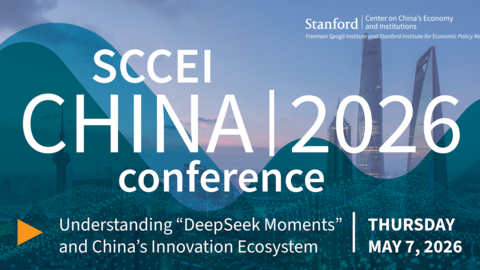
Governments, markets, and analysts in the United States and around the world frequently find themselves surprised by China’s capabilities in industries central to economic and national security—from artificial intelligence and robotics to pharmaceuticals, advanced manufacturing, and strategic supply chains. Episodes widely described as “DeepSeek moments” reflect more than isolated breakthroughs; they reveal a systematic failure to understand how China builds technological capacity and scales it with speed. Yet these cutting-edge advances are emerging against the backdrop of a sustained economic slowdown, raising new questions about whether China’s push for technological supremacy is occurring at the expense of broader economic health.
The Stanford Center on China's Economy and Institution's (SCCEI) annual China Conference convenes leading experts to examine why prevailing frameworks consistently underestimate China’s industrial performance and assess how its technology ecosystem, industrial policies, and trade strategies function and interact to push many critical sectors to the frontier.
We are finalizing an outstanding lineup of speakers from academia, industry, and policy communities. Updates will be posted here as confirmed.
Location:
Bechtel Conference Center
Encina Hall
616 Jane Stanford Way, Stanford University
*Topics, speakers, and timing will be confirmed soon.
10:30 AM - 11:00 AM Registration & Light Breakfast
11:00 AM - 11:15 AM Welcome & Opening Remarks
Scott Rozelle
Faculty Co-Director of the Stanford Center on China's Economy and Institutions;
Senior Fellow at the Freeman Spogli Institute for International Studies and at the Stanford Institute for Economic Policy Research
Stanford University
11:15 AM - 12:15 PM Session 1 | What Distinguishes China's Innovation Ecosystem?
Session Panelists:
Barry Naughton
So Kwan Lok Chair of Chinese International Affairs
University of California, San Diego
Philip Wong
Willard R. and Inez Kerr Bell Professor of Electrical Engineering, Stanford University
Chief Scientist Advisor, TSMC
Chenjian Li
Research Fellow, Hoover Institution
Stanford University
Moderator:
Joshua Rosenzweig
Senior Associate Director, Stanford Center on China's Economy and Institutions, Stanford University
12:15 PM - 1:30 PM Lunch
1:30 PM - 2:30 PM Session 2 | Industrial Policy at the Tech Frontier
Session Panelists:
Heiwai Tang
Victor and William Fung Professor in Economics; Associate Vice President (Global);
Associate Dean for External Relations, Business School
University of Hong Kong
Scott Kennedy
Senior Adviser and Trustee Chair in Chinese Business and Economics
Center for Strategic and International Studies
Ruixue Jia
Professor of Economics, School of Global Policy and Strategy
University of California, San Diego
Moderator:
Shanjun Li
Professor of Environmental Social Sciences, Stanford Doerr School of Sustainability;
Senior Fellow, Freeman Spogli Institute for International Studies
Stanford University
2:30 PM - 3:00 PM Break
3:00 PM - 4:00 PM Session 3 | Trade War Meets Tech War: Trade Technology in a Fragmented World
Session Panelists:
Jiajun Wu
Assistant Professor of Computer Science
Stanford University
Graham Webster
Research Scholar, Program on Geopolitics, Technology, and Governance;
Editor-in-Chief, DigiChina Project, Stanford University
Hong Ma
Professor and Chair, Department of Economics
Tsinghua University
Moderator:
Jennifer Pan
Professor of Communication
Stanford University
4:00 PM - 4:15 PM Break
4:15 PM - 5:30 PM Keynote Address
Rush Doshi
C.V. Starr Senior Fellow for Asia Studies and Director of the China Strategy Initiative, Council on Foreign Relations
Assistant Professor of Security Studies, Walsh School of Foreign Service, Georgetown University
Moderator:
Scott Rozelle
Faculty Co-Director of the Stanford Center on China's Economy and Institutions;
Senior Fellow at the Freeman Spogli Institute for International Studies and at the Stanford Institute for Economic Policy Research
Stanford University
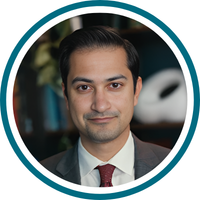
Rush Doshi, C.V. Starr Senior Fellow for Asia Studies and Director of the China Strategy Initiative, Council on Foreign Relations; Assistant Professor of Security Studies, Walsh School of Foreign Service, Georgetown University
Rush Doshi is the C.V. Starr Senior Fellow for Asia Studies and Director of the China Strategy Initiative at the Council on Foreign Relations, and an Assistant Professor in Georgetown's Walsh School of Foreign Service. From 2021 to 2024, he served as Deputy Senior Director for China and Taiwan on the National Security Council, where he helped manage the NSC's first China directorate, drafted the administration's China strategy, staffed the President's meetings with PRC counterparts including the Bali and Woodside summits, and was lead action officer for the negotiations that launched AUKUS. He is the author of The Long Game: China's Grand Strategy to Displace American Order (Oxford University Press, 2021), winner of the Mershon Center's Edgar S. Furniss Book Award and named a Financial Times "best book." A US Navy Reserve officer, Doshi holds a doctorate from Harvard and a bachelor's from Princeton's School of Public and International Affairs. He is proficient in Mandarin Chinese.

Ruixue Jia, Professor of Economics, School of Global Policy and Strategy, University of California San Diego
Ruixue Jia is a professor of economics at the School of Global Policy and Strategy at UC San Diego. She serves as co-editor of the Review of Economics and Statistics, co-director of the China Data Lab, and co-chair of the China Economic Summer Institute (CESI). Her research lies at the intersection of economics, history, and politics, examining how power structures evolve and shape economic development. Her recent work has focused on the political economy of idea formation and diffusion, with attention to the interplay among the state, education, science, and technology. Jia is affiliated with the Centre for Economic Policy Research (CEPR), CESifo, and the National Bureau of Economic Research (NBER). She is coauthor of The Highest Exam, a book on how China’s education system affects and reflects society.

Scott Kennedy, Senior Adviser and Trustee Chair in Chinese Business and Economics, Center for Strategic and International Studies
Scott Kennedy is Senior Adviser and Trustee Chair in Chinese Business and Economics at the Center for Strategic and International Studies (CSIS). A leading authority on Chinese economy, ongoing areas of focus include China’s innovation drive, Chinese industrial policy, U.S.-China relations, and global economic governance. Major publications include: The Power of Innovation: The Strategic Value of China’s High-Tech Drive (CSIS, March 2026); Managing U.S.-China Tensions over the Global Economic Order: Tentative Proposals (CSIS, November 2024); U.S.-China Scholarly Recoupling: Advancing Mutual Understanding in an Era of Intense Rivalry (CSIS, March 2024); (with Wang Jisi) Breaking the Ice: The Role of Scholarly Exchange in Stabilizing U.S.-China Relations (CSIS, 2023); China’s Uneven High-Tech Drive: Implications for the United States (CSIS, 2020); Global Governance and China: The Dragon’s Learning Curve (Routledge, 2018); The Fat Tech Dragon: Benchmarking China’s Innovation Drive (CSIS, 2017); and The Business of Lobbying in China (Harvard University Press, 2005). Kennedy hosts the “China Field Notes” podcast, which features voices from on the ground in China.
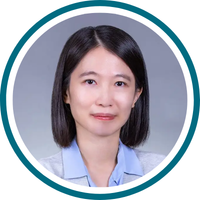
Bingjing Li, Associate Professor of Economics, University of Hong Kong
Dr. Bingjing Li is an Associate Professor of Economics at the University of Hong Kong (HKU). Her main research fields are international trade and applied microeconomics. Her works focus on understanding how openness to trade interacts with development and political economy factors, using both micro data and quantitative models.
Dr. Li obtained her Ph.D. in Economics from the University of British Columbia in 2016, M.Phil. in Economics from the Chinese University of Hong Kong (CUHK) in 2011, and B.Soc.Sc. from CUHK in 2009. She joined the HKU Business School as an Associate Professor in 2021. Before joining HKU, she worked at the National University of Singapore.
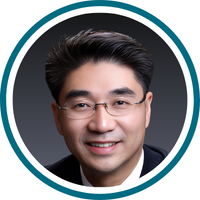
Chenjian Li, Research Fellow, Hoover Institution, Stanford University
Dr. Chenjian Li is a Research Fellow at the Hoover Institution at Stanford University, on leave from his position as University Chair Professor at Peking University. He trained at Peking University, Peking Union Medical College, and received his PhD in Molecular Genetics from Purdue University, followed by postdoctoral training at Rockefeller University. He has held faculty positions at Weill Medical College of Cornell University and served as Aidekman Endowed Chair of Neurology at Mount Sinai School of Medicine. At Peking University from 2013 to 2019, he served as Vice Provost, Executive Dean of Yuanpei College, and Associate Dean of the School of Life Sciences. His research focuses on the molecular and cellular basis of higher brain functions and neurological disease mechanisms, pioneering transgenic animal models for these studies. He has received the C.H. Lee Scholar Award and National Service Award and serves on advisory boards for Cornell University and Eli Lilly's China Advisory Committee.

Hongbin Li, Senior Fellow, Stanford Institute for International Studies and Freeman Spogli Institute for International Studies; Faculty Co-Director of Stanford Center on China’s Economy and Institutions, Stanford University
Hongbin Li is the Co-director of Stanford Center on China's Economy and Institutions, and a Senior Fellow of Stanford Institute for Economic Policy Research and the Freeman Spogli Institute for International Studies. Li obtained his Ph.D. in economics from Stanford University in 2001 before joining the economics department at the Chinese University of Hong Kong (CUHK). He was also one of the two founding directors of the Institute of Economics and Finance at the CUHK. He taught at Tsinghua University from 2007 to 2016 in the School of Economics and Management and was the founder and Executive Associate Director of the China Social and Economic Data Center. Li’s research has been focused on the transition and development of the Chinese economy, and the evidence-based research results have been both widely covered by media outlets and well read by policy makers around the world. He is currently the co-editor of the Journal of Comparative Economics and co-author of the book, The Highest Exam: How the Gaokao Shapes China (2025, Harvard University Press).
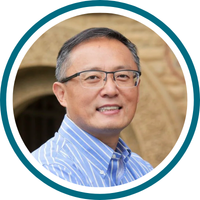
Shanjun Li, Professor of Environmental Social Sciences, Stanford Doerr School of Sustainability; Senior Fellow, Freeman Spogli Institute for International Studies, Stanford University
Shanjun Li is a Professor in the Environmental Social Sciences department of the Stanford Doerr School of Sustainability and holds the Denning Global Sustainability Professorship as a Senior Fellow at the Freeman Spogli Institute for International Studies at Stanford University. His research areas include environmental and energy economics, urban and transportation economics, empirical industrial organization, and Chinese economy. His recent work addresses pressing sustainability challenges and the rapid rise of clean energy industries in China, exploring their global implications to support evidence-based policymaking.
Prior to joining Stanford, he held the Kenneth L. Robinson Chair in the Dyson School of Applied Economics and Management at Cornell University and served as the Director of the Cornell Institute for China Economic Research (CICER). Li is a co-editor for the International Journal of Industrial Organization and the Journal of Public Economics. He is a research associate at the National Bureau of Economic Research (NBER) and a university fellow at Resources for the Future (RFF).
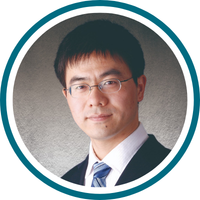
Hong Ma, Professor and Chair, Department of Economics, Tsinghua University
Hong Ma is a professor of economics at Tsinghua University. He graduated from Fudan University in 2002 with a BA (High Honors) in economics. He received a PhD in economics from the University of California at Davis in 2009.
Hong’s research focuses on international trade and the Chinese economy. His most recent work studies the interactions of trade and industry policies between China and the U.S. His research applies both empirical and theoretical models to understand the effects of tariffs, subsidies, and various domestic industrial policies on firm performance, industry structure, innovation, and social welfare. His previous research includes the price effect of Chinese RMB fluctuation, the impact of uncertainty on firm innovation, the global value chain, and the role of SOEs in China’s trade liberalization.

Barry Naughton, So Kwan Lok Chair of Chinese International Affairs, University of California, San Diego
Barry Naughton is the So Kwan Lok Chair of Chinese International Affairs at the School of Global Policy and Strategy at University of California, San Diego. He is an expert on the Chinese economy with an emphasis on issues relating to industry, trade, finance and China's transition to a market economy. His recent research focuses on regional economic growth in China and its relationship to foreign trade and investment. He has addressed economic reform in Chinese cities, trade and trade disputes between China and the United States, and economic interactions among China, Taiwan and Hong Kong. Naughton has written the authoritative textbook The Chinese Economy: Transitions and Growth, which has now been translated into Chinese. His groundbreaking book Growing Out of the Plan: Chinese Economic Reform, 1978-1993 received the Ohira Memorial Prize, and he most recently translated, edited, and annotated a collection of articles by the well-known Chinese economist Wu Jinglian.
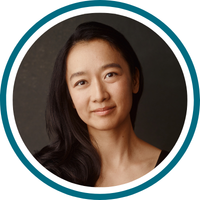
Jennifer Pan, Professor of Communication, Stanford University
Jennifer Pan is the Sir Robert Ho Tung Professor of Chinese Studies, a Professor of Communication and a Senior Fellow at the Freeman Spogli Institute at Stanford University. Her research focuses on political communication and authoritarian politics. Pan uses experimental and computational methods with large-scale datasets on political activity in China and other authoritarian regimes to answer questions about how autocrats perpetuate their rule; how political censorship, propaganda, and information manipulation work in the digital age; and how preferences and behaviors are shaped as a result. Her work has appeared in peer reviewed publications such as the American Political Science Review, American Journal of Political Science, Journal of Politics, Science, and Nature. She graduated from Princeton University, summa cum laude, and received her Ph.D. from Harvard University’s Department of Government.

Scott Rozelle, Senior Fellow, Freeman Spogli Institute for International Studies and Stanford Institute for International Studies; Faculty Co-Director of Stanford Center on China’s Economy and Institutions, Stanford University
Scott Rozelle is the Helen F. Farnsworth Senior Fellow and the co-director of Stanford Center on China's Economy and Institutions in the Freeman Spogli Institute for International Studies and Stanford Institute for Economic Policy Research at Stanford University. He received his B.S. from the University of California, Berkeley, and his M.S. and Ph.D. from Cornell University. Previously, Rozelle was a professor at the University of California, Davis and an assistant professor in Stanford’s Food Research Institute and department of economics. His research focuses almost exclusively on China and is concerned with agricultural policy, including the supply, demand, and trade in agricultural projects; the emergence and evolution of markets and other economic institutions in the transition process and their implications for equity and efficiency; and the economics of poverty and inequality, with an emphasis on rural education, health, and nutrition. His book, Invisible China: How the Urban-Rural Divide Threatens China’s Rise, was published in 2020 by The University of Chicago Press.
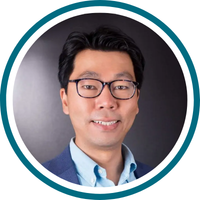
Heiwai Tang, Victor and William Fung Professor in Economics; Associate Vice President (Global); Associate Dean for External Relations, Business School, University of Hong Kong
Heiwai Tang is the Victor and William Fung Professor in Economics at the University of Hong Kong (HKU), where he also serves as Director of the Asia Global Institute, Associate Vice President (Global), and Associate Dean for External Relations at the Business School. Previously, he was a tenured Associate Professor of International Economics at Johns Hopkins SAIS. He is affiliated with CESifo, ABFER, the Kiel Institute for the World Economy, and the GEP Center, and has consulted for the World Bank, IMF, United Nations, and Asian Development Bank. He has held visiting positions at MIT, Stanford, Harvard, and the IMF. Since 2021, he has served on several public and regulatory bodies in Hong Kong SAR, including committees of the Hong Kong Monetary Authority and the Minimum Wage Commission. His research on international trade, production networks, and global value chains has been published in the American Economic Review and the Journal of International Economics. He holds a PhD from MIT and a BS in mathematics from UCLA.
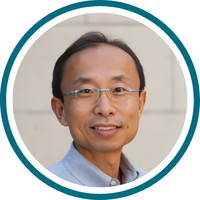
Philip Wong, Willard R. and Inez Kerr Bell Professor of Electrical Engineering, Stanford University
H.-S. Philip Wong is the Willard R. and Inez Kerr Bell Professor in the School of Engineering at Stanford University. He joined Stanford University as Professor of Electrical Engineering in 2004. From 1988 to 2004, he was with the IBM T.J. Watson Research Center. From 2018 to 2020, he was on leave from Stanford and was the Vice President of Corporate Research at TSMC, the largest semiconductor foundry in the world, and since 2020 remains the Chief Scientist of TSMC in a consulting, advisory role. He is a member of the National Academy of Engineering and a Fellow of the IEEE. He received the IEEE Andrew S. Grove Award, the IEEE Technical Field Award to honor individuals for outstanding contributions to solid-state devices and technology, as well as the IEEE Electron Devices Society J.J. Ebers Award, the society’s highest honor to recognize outstanding technical contributions to the field of electron devices that have made a lasting impact. He is the Principal Investigator of the Microelectronics Commons California-Pacific-Northwest AI Hardware Hub, a consortium of over 60 companies and academic institutions funded by the CHIPS Act. He was a member of the US Department of Commerce Industrial Advisory Committee on microelectronics. He serves on the Board of the UC Berkeley think tank Technology Competitiveness and Industrial Policy (TCIP).

Jiajun Wu, Assistant Professor of Computer Science, Stanford University
Jiajun Wu is an Assistant Professor of Computer Science and, by courtesy, of Psychology at Stanford University, working on computer vision, machine learning, robotics, and computational cognitive science. Before joining Stanford, he was a Visiting Faculty Researcher at Google Research. He received his PhD in Electrical Engineering and Computer Science from the Massachusetts Institute of Technology. Wu’s research has been recognized through the Young Investigator Programs (YIP) by ONR and by AFOSR, the NSF CAREER award, the Okawa research grant, the AI’s 10 to Watch by IEEE Intelligent Systems, paper awards and finalists at ICCV, CVPR, SIGGRAPH Asia, ICRA, CoRL, and IROS, dissertation awards from ACM, AAAI, and MIT, the 2020 Samsung AI Researcher of the Year, and faculty research awards from Google, J.P. Morgan, Samsung, Amazon, and Meta.
Parking meters are enforced Monday - Friday 8 AM to 4 PM, unless otherwise posted.
The event will take place in the Bechtel Conference Center located on the first floor of Encina Hall Central. The closest visitor parking to Encina Hall is:
- Knight Management Parking structure on Campus Drive East (this is an underground option)
- Galvez Lot, located across from the Stadium lot
- Track House Visitor Lot at the corner of Galvez Street and Campus Drive
Please visit the this website for more detailed parking options and directions to the venue.
Bechtel Conference Center
Encina Hall
616 Jane Stanford Way, Stanford University
This event is by invitation only.