-

China Chats with Stanford Faculty

The Rise of Robots in China with Professor Hongbin Li

China’s production and adoption of robotic technology have accelerated rapidly in recent years, surpassing Japan, US, and Germany. Stanford professor Hongbin Li and a team of scholars draw on multi-year field research data to show fresh insights into China’s aggressive push into automation—specifically, the increasing use of robots—to maintain its status as the “world’s factory.” His analysis offers an unprecedented look at what’s happening at the factory level, and fresh insight into how rising labor costs, an aging population and government policies are reshaping Chinese manufacturing.

In this Stanford alumni event, Hongbin Li, co-director of Stanford Center on China's Economy and Institutions and senior fellow at the Stanford Institute for Economic Policy Research, was joined by Scott Rozelle, co-director of Stanford Center on China's Economy and Institutions and senior fellow at the Freeman Spogli Institute for International Studies, who moderated a discussion about the major themes of the research. 

Watch the event recording:


About the Speakers:

Image
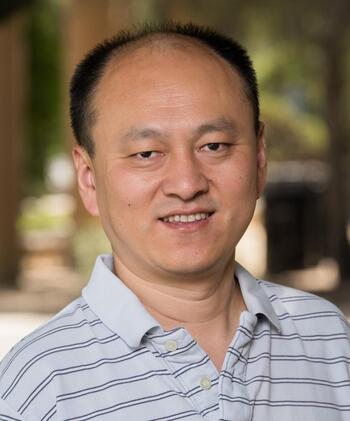
hongbin li headshot

Hongbin Li is the Co-Director of the Stanford Center on China's Economy and Institutions (SCCEI) and a Senior Fellow of Stanford Institute for Economic Policy Research (SIEPR). Hongbin obtained his Ph.D. in economics from Stanford University in 2001 and joined the economics department of the Chinese University of Hong Kong (CUHK), where he became full professor in 2007. He was also one of the two founding directors of the Institute of Economics and Finance at the CUHK. He taught at Tsinghua University in Beijing 2007-2016 and was C.V. Starr Chair Professor of Economics in the School of Economics and Management. He also founded and served as the Executive Associate Director of the China Social and Economic Data Center at Tsinghua University. He founded the Chinese College Student Survey (CCSS) in 2009 and the China Employer-Employee Survey (CEES) in 2014.

Hongbin’s research has been focused on the transition and development of the Chinese economy, and the evidence-based research results have been both widely covered by media outlets and well read by policy makers around the world . He is currently the co-editor of the Journal of Comparative Economics.


Image
Headshot of Dr. Scott Rozelle
Scott Rozelle is the Helen F. Farnsworth Senior Fellow and the co-director of Stanford Center on China's Economy and Institutions in the Freeman Spogli Institute for International Studies and Stanford Institute for Economic Policy Research at Stanford University.  For the past 30 years, he has worked on the economics of poverty reduction. Currently, his work on poverty has its full focus on human capital, including issues of rural health, nutrition and education. For the past 20 year, Rozelle has been the chair of the International Advisory Board of the China Center for Agricultural Policy in Peking University. In recent years Rozelle spends most of his time co-directing the Rural Education Action Project (REAP). In recognition of this work, Dr. Rozelle has received numerous honors and awards. Among them, he became a Yangtse Scholar (Changjiang Xuezhe) in Renmin University of China in 2008. In 2008 he also was awarded the Friendship Award by Premier Wen Jiabao, the highest honor that can be bestowed on a foreigner. 

Seminars
-

This seminar has been cancelled. Please join us for our next seminar in the series with Professor Albert Park on April 27, 2021.

Controlling the Narrative with Professor Joseph Piotroski, Stanford University

This seminar provides an overview of corporate news reporting in China, with a focus on understanding the political and market-based incentives behind Chinese newspapers' biased coverage of China's listed companies. And, given these prevailing incentives, we will explore how politicians in China use the Party's flagship newspaper, the People’s Daily, to coordinate the reporting of corporate news in China.


Image
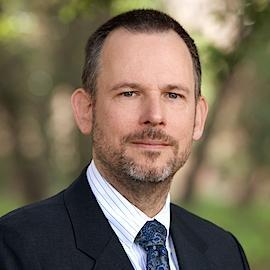
Headshot of Dr. Joseph Piotroski
About the Speaker

Joseph Piotroski is the Robert K. Jaedicke Professor of Accounting at Stanford University’s Graduate School of Business, and a Senior Fellow at the Asian Bureau of Finance and Economic Research (ABFER). Professor Piotroski earned his PhD from the University of Michigan in 1999, an MBA from Indiana University in 1994, a BS in Accounting from the University of Illinois in 1989, and worked as a tax consultant for Coopers and Lybrand in Chicago. His research focuses on corporate transparency, governance, and regulation in a global context. His current research examines the impact of legal, political, and regulatory forces on capital market behavior and corporate decision-making, most notably in China and other emerging economies. His research has been published in scholarly journals in the areas of accounting, finance, and economics, and his research on value investing has been frequently cited in the popular press and is widely used in practice. 


Seminar Series Moderators:

Image
Headshot of Dr. Scott Rozelle

Scott Rozelle holds the Helen Farnsworth Endowed Professorship at Stanford University and is Senior Fellow in the Food Security and Environment Program and the Shorenstein Asia-Pacific Research Center, Freeman Spogli Institute (FSI) for International Studies. For the past 30 years, he has worked on the economics of poverty reduction. Currently, his work on poverty has its full focus on human capital, including issues of rural health, nutrition and education. For the past 20 year, Rozelle has been the chair of the International Advisory Board of the Center for Chinese Agricultural Policy, Chinese Academy of Sciences (CAS). In recent years Rozelle spends most of his time co-directing the Rural Education Action Project (REAP). In recognition of this work, Dr. Rozelle has received numerous honors and awards. Among them, he became a Yangtse Scholar (Changjiang Xuezhe) in Renmin University of China in 2008. In 2008 he also was awarded the Friendship Award by Premiere Wen Jiabao, the highest honor that can be bestowed on a foreigner. 

Image
hongbin li headshot
Hongbin Li is the James Liang Director of the China Program at the Stanford King Center on Global Development, and a Senior Fellow of Stanford Institute for Economic Policy Research (SIEPR). Hongbin obtained his Ph.D. in economics from Stanford University in 2001 and joined the economics department of the Chinese University of Hong Kong (CUHK), where he became full professor in 2007. He was also one of the two founding directors of the Institute of Economics and Finance at the CUHK. He taught at Tsinghua University in Beijing 2007-2016 and was C.V. Starr Chair Professor of Economics in the School of Economics and Management. He founded the Chinese College Student Survey (CCSS) in 2009 and the China Employer-Employee Survey (CEES) in 2014.

Hongbin’s research has been focused on the transition and development of the Chinese economy, and the evidence-based research results have been both widely covered by media outlets and well read by policy makers around the world. He is currently the co-editor of the Journal of Comparative Economics.


Register Here

Register once to receive the Zoom meeting link that will be used for all lectures in this series.

Seminars
All Publications button
1
Publication Type
Journal Articles
Publication Date
Subtitle
The home language environment is critical to early language development and subsequent skills. However, few studies have quantitatively measured the home language environment in low-income, developing settings. This study explores variations in the home language environment and child language skills among households in poor rural villages in northwestern China. Audio recordings were collected for 38 children aged 20–28 months and analyzed using Language Environment Analysis (LENA) software; language skills were measured using the MacArthur–Bates Mandarin Communicative Developmental Inventories expressive vocabulary scale. The results revealed large variability in both child language skills and home language environment measures (adult words, conversational turns, and child vocalizations) with 5- to 6-fold differences between the highest and lowest scores. Despite variation, however, the average number of adult words and conversational turns were lower than found among urban Chinese children. Correlation analyses did not identify significant correlations between demographic characteristics and the home language environment. However, the results do indicate significant correlations between the home language environment and child language skills, with conversational turns showing the strongest correlation. The results point to a need for further research on language engagement and ways to increase parent–child interactions to improve early language development among young children in rural China.
Journal Publisher
International Journal of Environmental Research and Public Health
Authors
Scott Rozelle
All Publications button
1
Publication Type
Journal Articles
Publication Date
Subtitle
This paper examines the external validity of health intervention by comparing the impacts of providing free eyeglasses on the educational performance of nearsighted children in two settings: rural public schools in Western China and urban private migrant schools in Eastern China. The intervention significantly improves educational outcomes by 0.14 standard deviations in math in rural public schools but not in private migrant schools. The difference in measured impacts is due in part to lower quality schooling in migrant schools in Eastern China. Our findings show that only when school is providing a quality education, health interventions might increase student learnings.
Journal Publisher
Journal of Development Effectiveness
Authors
Huan Wang
Scott Rozelle
All Publications button
1
Publication Type
Journal Articles
Publication Date
Subtitle
Background: The educational resources that parents provide at home are crucial to their children’s development. In this study, we focused on home reading environment, a key contributor to success rates regarding the mastery of reading skills. We aimed to investigate students’ home reading environments and examine its effect on the reading development of primary school students in rural China. Methods: We draw on a dataset composed of 10,740 randomly selected primary school students and their households in rural areas of Jiangxi province in China. Surveys were administered by trained enumerators in May 2015. Results: The results show that students exhibited quite poor reading environments and reading outcomes. Specifically, we found the majority of the rural students lacked reading and learning resources in the context of their families and their parents did not enjoy reading or support their children’s reading. Moreover, our regression analysis documented students with poorer home reading environments are more likely to have worse reading performance. Conclusion: Our study supports the significance of the home reading environment in the reading development of students in the upper elementary grades in rural China. Furthermore, the results suggest that the home reading environments of rural Chinese students must be improved.
Journal Publisher
Journal of Research in Reading
Authors
Huan Wang
All Publications button
1
Publication Type
Journal Articles
Publication Date
Subtitle
Universities contribute to economic growth and national competitiveness by equipping students with higher-order thinking and academic skills. Despite large investments in university science, technology, engineering and mathematics (STEM) education, little is known about how the skills of STEM undergraduates compare across countries and by institutional selectivity. Here, we provide direct evidence on these issues by collecting and analysing longitudinal data on tens of thousands of computer science and electrical engineering students in China, India, Russia and the United States. We find stark differences in skill levels and gains among countries and by institutional selectivity. Compared with the United States, students in China, India and Russia do not gain critical thinking skills over four years. Furthermore, while students in India and Russia gain academic skills during the first two years, students in China do not. These gaps in skill levels and gains provide insights into the global competitiveness of STEM university students across nations and institutional types.
Journal Publisher
Nature Human Behavior
Authors
Prashant Loyalka
Huan Wang
-

China Chats with Stanford Faculty

"Invisible China: How the Urban-Rural Divide Threatens China's Rise"

Friday, March 12, 2021 5 PM - 6 PM PDT

Saturday, March 13, 2021 9 AM - 10 AM Beijing


As the glittering skyline in Shanghai seemingly attests, China has quickly transformed itself from a place of stark poverty into a modern, urban, technologically savvy economic powerhouse. But as FSI Senior Fellow Scott Rozelle shows in his new book Invisible China, the truth is much more complicated and might be a serious cause for concern. 

Drawing on extensive surveys on the ground in China, Rozelle reveals that while China may be the second-largest economy in the world, its labor force has one of the lowest levels of education of any comparable country. The low levels of basic education of such a large share of workers may leave many unable to find work in the formal workplace as China’s economy changes and as manufacturing jobs both begin to automate and move elsewhere 

In this Stanford alumni event, Rozelle, who is also the co-director of Stanford Center on China's Economy and Institutions and senior fellow at the Freeman Spogli Institute for International Studies, will be joined by Hongbin Li, co-director of Stanford Center on China's Economy and Institutions and senior fellow at the Stanford Institute for Economic Policy Research, who will moderate a discussion about the major themes of the book. 

A question and answer session with the audience will follow the discussion.


About the Speakers:

Image
Headshot of Dr. Scott Rozelle
Scott Rozelle is the Helen F. Farnsworth Senior Fellow and the co-director of Stanford Center on China's Economy and Institutions in the Freeman Spogli Institute for International Studies and Stanford Institute for Economic Policy Research at Stanford University.  For the past 30 years, he has worked on the economics of poverty reduction. Currently, his work on poverty has its full focus on human capital, including issues of rural health, nutrition and education. For the past 20 year, Rozelle has been the chair of the International Advisory Board of the China Center for Agricultural Policy in Peking University. In recent years Rozelle spends most of his time co-directing the Rural Education Action Project (REAP). In recognition of this work, Dr. Rozelle has received numerous honors and awards. Among them, he became a Yangtse Scholar (Changjiang Xuezhe) in Renmin University of China in 2008. In 2008 he also was awarded the Friendship Award by Premier Wen Jiabao, the highest honor that can be bestowed on a foreigner. 


Image
hongbin li headshot
Hongbin Li is the James Liang Director of the China Program at the Stanford King Center on Global Development, and a Senior Fellow of Stanford Institute for Economic Policy Research (SIEPR). Hongbin’s research has been focused on the transition and development of the Chinese economy, and the evidence-based research results have been both widely covered by media outlets and well read by policy makers around the world. He is currently the co-editor of the Journal of Comparative Economics.


Register Here

Zoom Webinar
Registration Required


Seminars
All Publications button
1
Publication Type
Working Papers
Publication Date
Subtitle
A burgeoning literature has documented the importance of elite colleges. Yet, little is known about access to elite education and its labor market implications in China, a country that produces one in every five college graduates in the world. College admission in China is governed by a single exam—the national college entrance exam, and the government sets admission cutoff scores for elite colleges. We examine the impacts of scoring above the elite-tier cutoff on a student's access to elite colleges and wage outcomes after graduation, using the discontinuity around the cutoff score. By employing hand-collected survey data, we find that scoring above the cutoff not only increases the chance of entering an elite college but also raises a young person's first-job wages after graduation. We also find that those just above the cutoff have peers with higher scores and better social networks than those below the cutoff, but it is less clear whether the two groups use their time differently in college.
Journal Publisher
National Bureau of Economic Research
Authors
Hongbin Li
Subscribe to China