-

Tuesday, November 16, 2021 | 11:00am-12:15pm Pacific Time

A Confluence of Tech and Talent: Rural Online Entrepreneurship and Return Migration with Professors Chuck Eesley, Stanford University and Wesley Koo, INSEAD

Prior research indicates that the Internet can elevate the rural economy by connecting rural entrepreneurs to the wider market. In this study, we show that return migration is a crucial factor for the performance of e-commerce in rural areas. Using data from a leading ecommerce platform, we set up a natural experiment involving a provincial-level policy change that reduced the barriers for talented rural migrants to return and work in their home villages. In a difference-in-differences design, we find that after the policy change, rural e-commerce businesses in the province that implemented the policy change enjoyed a 22 percent performance gain relative to other rural businesses.


About the Speakers

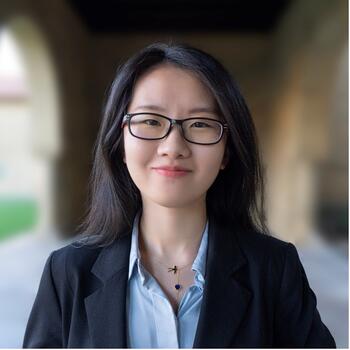
Image
charles eesley
Chuck Eesley is an Associate Professor and W.M. Keck Foundation Faculty Scholar in the Department of Management Science and Engineering at Stanford University. As part of the Stanford Technology Ventures Program, his research focuses on the role of the institutional and university environment in high-growth, technology entrepreneurship. His research focuses on rethinking how the educational and policy environment shapes the economic and entrepreneurial impact of university alumni. His field research spans China, Japan, Chile, Bangladesh, Thailand and Silicon Valley and has received awards from the Schulze Foundation, the Technical University of Munich, and the Kauffman Foundation. He is a faculty affiliate at the Stanford Center for International Development, the Woods Institute for the Environment and the Stanford King Center on Global Development. He is also a member of the Editorial Board for the Strategic Management Journal. 

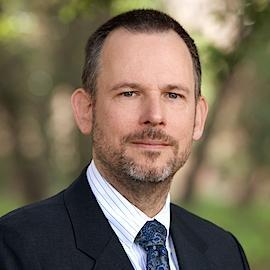
Image
Photo of Wesley Koo.
Wesley W. Koo is an Assistant Professor of Strategy at INSEAD. In his research, Wesley studies how digitization and platforms affect business and society. He is particularly interested in the "offline interface" - how an organization's offline environment shapes its online behavior and performance. For instance, he looks at how rural entrepreneurs' local information environment affects their ability to navigate algorithmic changes on digital platforms. During his Ph.D. at Stanford, Wesley's research was supported by the Stanford Technology Ventures Program, Stanford SEED, Accel Partners, Strategic Management Society, and Alibaba Group. Prior to Ph.D., he was a tech entrepreneur and received degrees in Environmental Engineering and Finance from MIT. He was among the Poets & Quants 40 under 40 Best Business School Professors in 2021.


Seminar Series Moderators:

Image
Headshot of Dr. Scott Rozelle

Scott Rozelle is the Helen F. Farnsworth Senior Fellow and Co-Director of Stanford Center on China's Economy and Institutions in the Freeman Spogli Institute for International Studies and Stanford Institute for Economic Policy Research at Stanford University. For the past 30 years, he has worked on the economics of poverty reduction. Currently, his work on poverty has its full focus on human capital, including issues of rural health, nutrition and education. For the past 20 year, Rozelle has been the chair of the International Advisory Board of the Center for Chinese Agricultural Policy, Chinese Academy of Sciences (CAS). In recent years Rozelle spends most of his time co-directing the Rural Education Action Project (REAP). In recognition of his outstanding achievements, Rozelle has received numerous honors and awards, including the Friendship Award in 2008, the highest award given to a non-Chinese by the Premier; and the National Science and Technology Collaboration Award in 2009 for scientific achievement in collaborative research.
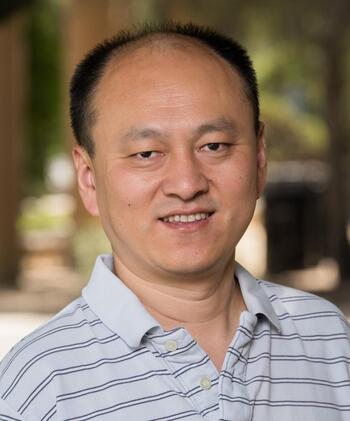
Image
hongbin li headshot
Hongbin Li is the James Liang Senior Fellow and Co-Director of the Stanford Center on China's Economy and Institutions in Freeman Spogli Institute for International Studies and the Stanford Institute for Economic Policy Research. Hongbin obtained his Ph.D. in economics from Stanford University in 2001 and joined the economics department of the Chinese University of Hong Kong (CUHK), where he became full professor in 2007. He was also one of the two founding directors of the Institute of Economics and Finance at the CUHK. He taught at Tsinghua University in Beijing 2007-2016 and was C.V. Starr Chair Professor of Economics in the School of Economics and Management. He also founded and served as the Executive Associate Director of the China Social and Economic Data Center at Tsinghua University. He founded the Chinese College Student Survey (CCSS) in 2009 and the China Employer-Employee Survey (CEES) in 2014.

Hongbin’s research has been focused on the transition and development of the Chinese economy, and the evidence-based research results have been both widely covered by media outlets and well read by policy makers around the world . He is currently the co-editor of the Journal of Comparative Economics.


Register Here

Register once to receive the Zoom meeting link that will be used for all lectures in this series.

Professor Chuck Eesley
Seminars
-

The Effects of Chronic Disease Management in Primary Health Care: Evidence from Rural China

Health systems globally face increasing morbidity and mortality from chronic diseases, yet many - especially in low- and middle-income countries - lack strong chronic disease management in primary health care (PHC). We provide evidence on China’s efforts to promote PHC management using unique five-year panel data in a rural county, including health care utilization from medical claims and health outcomes from biomarkers.


Watch the recording now:


About the Speaker

Image
Karen Eggleston 4X4
Karen Eggleston is Senior Fellow at the Freeman Spogli Institute for International Studies (FSI) at Stanford University, and Director of the Stanford Asia Health Policy Program at FSI. She is also a Fellow with the Center for Innovation in Global Health at Stanford University School of Medicine, and a Faculty Research Fellow of the National Bureau of Economic Research (NBER). Eggleston earned her PhD in public policy from Harvard University and has MA degrees in economics and Asian studies from the University of Hawaii and a BA in Asian studies summa cum laude (valedictorian) from Dartmouth College. Eggleston studied in China for two years and was a Fulbright scholar in Korea. Her research focuses on government and market roles in the health sector and Asia health policy, especially in China, India, Japan, and Korea; healthcare productivity; and the economics of the demographic transition. She served on the Strategic Technical Advisory Committee for the Asia Pacific Observatory on Health Systems and Policies, and has been a consultant to the World Bank, the Asian Development Bank, and the WHO regarding health system reforms in the PRC.

Image
Headshot of Hui Ding.
Hui Ding is a six-year Ph.D. student in Economics at Stanford University. Before entering Stanford, she received her bachelor’s degree in Economics and double degree in Psychology from Peking University, China. She has strong interests in the healthcare markets of both U.S. and China. Her current work mainly focuses on the mental health of the elderly population, especially the geographic variation and gender differences in care utilization and suicide. She is also interested in the prevention and management of infectious diseases and chronic diseases, as well as the role of insurance in setting prices, promoting new technology, and adjusting patients’ and providers’ behavior. Hui is currently on the job market (2021-22) and is available for online interviews.


Seminar Series Moderators:

Image
Headshot of Dr. Scott Rozelle

Scott Rozelle is the Helen F. Farnsworth Senior Fellow and Co-Director of Stanford Center on China's Economy and Institutions in the Freeman Spogli Institute for International Studies and Stanford Institute for Economic Policy Research at Stanford University. For the past 30 years, he has worked on the economics of poverty reduction. Currently, his work on poverty has its full focus on human capital, including issues of rural health, nutrition and education. For the past 20 year, Rozelle has been the chair of the International Advisory Board of the Center for Chinese Agricultural Policy, Chinese Academy of Sciences (CAS). In recent years Rozelle spends most of his time co-directing the Rural Education Action Project (REAP). In recognition of his outstanding achievements, Rozelle has received numerous honors and awards, including the Friendship Award in 2008, the highest award given to a non-Chinese by the Premier; and the National Science and Technology Collaboration Award in 2009 for scientific achievement in collaborative research.

Image
hongbin li headshot
Hongbin Li is the James Liang Senior Fellow and Co-Director of the Stanford Center on China's Economy and Institutions in Freeman Spogli Institute for International Studies and the Stanford Institute for Economic Policy Research. Hongbin obtained his Ph.D. in economics from Stanford University in 2001 and joined the economics department of the Chinese University of Hong Kong (CUHK), where he became full professor in 2007. He was also one of the two founding directors of the Institute of Economics and Finance at the CUHK. He taught at Tsinghua University in Beijing 2007-2016 and was C.V. Starr Chair Professor of Economics in the School of Economics and Management. He also founded and served as the Executive Associate Director of the China Social and Economic Data Center at Tsinghua University. He founded the Chinese College Student Survey (CCSS) in 2009 and the China Employer-Employee Survey (CEES) in 2014.

Hongbin’s research has been focused on the transition and development of the Chinese economy, and the evidence-based research results have been both widely covered by media outlets and well read by policy makers around the world . He is currently the co-editor of the Journal of Comparative Economics.

Zoom Meeting

Professor Karen Eggleston
Hui Ding
Seminars
-

Tuesday, October 19, 2021 | 11:00am-12:15pm Pacific Time

Ethnic Discrimination in Criminal Sentencing in China (Joint work with Rory Truex)

We present the first analysis of ethnic discrimination in sentencing patterns in China, focusing on drug cases in Yunnan province. We posit the "problem minority" hypothesis, which holds that discrimination in an authoritarian system emerges when an ethnic group becomes. associated with behavior that generates social instability. On average, minority defendants in Yunnan receive sentences that are about 2.1 to 7.5 months longer than Han defendants that have committed similar drug crimes. Further analysis of data from all provinces reveals that this bias is largest for groups heavily involved in the drug trade, and in provinces with significant minority populations and drugs.


About the Speaker

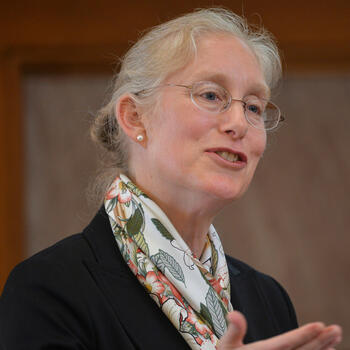
Image
Headshot of Dr. Yue Hou
Yue Hou is the Janice and Julian Bers Assistant Professor in the Social Sciences in the department of political science at the University of Pennsylvania. Her research centers on the political economy of non-democracies, with a regional focus on China.  She is interested in how individual actors (e.g., citizens, firms) interact with the state and state agents that are not held accountable by elections, and how these interactions affect outcomes such as economic growth, government service, quality of institutions, and policy changes. Her book The Private Sector in Public Office: Selective Property Rights in China (October 2019, Cambridge University Press) examines strategies Chinese private entrepreneurs use to protect property from expropriation. Hou is a faculty affiliate of Penn's Center for the Study of Contemporary China (CSCC), Penn Identity and Conflict Lab (PIC Lab), and Penn Development Research Initiative (PDRI).


Seminar Series Moderators:

Image
Headshot of Dr. Scott Rozelle

Scott Rozelle is the Helen F. Farnsworth Senior Fellow and Co-Director of Stanford Center on China's Economy and Institutions in the Freeman Spogli Institute for International Studies and Stanford Institute for Economic Policy Research at Stanford University. For the past 30 years, he has worked on the economics of poverty reduction. Currently, his work on poverty has its full focus on human capital, including issues of rural health, nutrition and education. For the past 20 year, Rozelle has been the chair of the International Advisory Board of the Center for Chinese Agricultural Policy, Chinese Academy of Sciences (CAS). In recent years Rozelle spends most of his time co-directing the Rural Education Action Project (REAP). In recognition of his outstanding achievements, Rozelle has received numerous honors and awards, including the Friendship Award in 2008, the highest award given to a non-Chinese by the Premier; and the National Science and Technology Collaboration Award in 2009 for scientific achievement in collaborative research.

Image
hongbin li headshot
Hongbin Li is the James Liang Senior Fellow and Co-Director of the Stanford Center on China's Economy and Institutions in Freeman Spogli Institute for International Studies and the Stanford Institute for Economic Policy Research. Hongbin obtained his Ph.D. in economics from Stanford University in 2001 and joined the economics department of the Chinese University of Hong Kong (CUHK), where he became full professor in 2007. He was also one of the two founding directors of the Institute of Economics and Finance at the CUHK. He taught at Tsinghua University in Beijing 2007-2016 and was C.V. Starr Chair Professor of Economics in the School of Economics and Management. He also founded and served as the Executive Associate Director of the China Social and Economic Data Center at Tsinghua University. He founded the Chinese College Student Survey (CCSS) in 2009 and the China Employer-Employee Survey (CEES) in 2014.

Hongbin’s research has been focused on the transition and development of the Chinese economy, and the evidence-based research results have been both widely covered by media outlets and well read by policy makers around the world . He is currently the co-editor of the Journal of Comparative Economics.


Register Here

Register once to receive the Zoom meeting link that will be used for all lectures in this series.

Zoom Meeting
Registration Required 
Professor Yue Hou
Seminars
-

Controlling the Narrative: The Coordination & Disciplining Role of the People's Daily in China with Professor Joseph Piotroski, Stanford University

This seminar provides an overview of corporate news reporting in China, with a focus on understanding the political and market-based incentives behind Chinese newspapers' biased coverage of China's listed companies. And, given these prevailing incentives, we will explore how politicians in China use the Party's flagship newspaper, the People’s Daily, to coordinate the reporting of corporate news in China.


Image
Headshot of Dr. Joseph Piotroski
About the Speaker

Joseph Piotroski is the Robert K. Jaedicke Professor of Accounting at Stanford University’s Graduate School of Business, and a Senior Fellow at the Asian Bureau of Finance and Economic Research (ABFER). Professor Piotroski earned his PhD from the University of Michigan in 1999, an MBA from Indiana University in 1994, a BS in Accounting from the University of Illinois in 1989, and worked as a tax consultant for Coopers and Lybrand in Chicago. His research focuses on corporate transparency, governance, and regulation in a global context. His current research examines the impact of legal, political, and regulatory forces on capital market behavior and corporate decision-making, most notably in China and other emerging economies. His research has been published in scholarly journals in the areas of accounting, finance, and economics, and his research on value investing has been frequently cited in the popular press and is widely used in practice. 


Seminar Series Moderators:

Image
Headshot of Dr. Scott Rozelle

Scott Rozelle is the Helen F. Farnsworth Senior Fellow and Co-Director of Stanford Center on China's Economy and Institutions in the Freeman Spogli Institute for International Studies and Stanford Institute for Economic Policy Research at Stanford University. For the past 30 years, he has worked on the economics of poverty reduction. Currently, his work on poverty has its full focus on human capital, including issues of rural health, nutrition and education. For the past 20 year, Rozelle has been the chair of the International Advisory Board of the Center for Chinese Agricultural Policy, Chinese Academy of Sciences (CAS). In recent years Rozelle spends most of his time co-directing the Rural Education Action Project (REAP). In recognition of his outstanding achievements, Rozelle has received numerous honors and awards, including the Friendship Award in 2008, the highest award given to a non-Chinese by the Premier; and the National Science and Technology Collaboration Award in 2009 for scientific achievement in collaborative research.

Image
hongbin li headshot
Hongbin Li is the James Liang Senior Fellow and Co-Director of the Stanford Center on China's Economy and Institutions in Freeman Spogli Institute for International Studies and the Stanford Institute for Economic Policy Research. Hongbin obtained his Ph.D. in economics from Stanford University in 2001 and joined the economics department of the Chinese University of Hong Kong (CUHK), where he became full professor in 2007. He was also one of the two founding directors of the Institute of Economics and Finance at the CUHK. He taught at Tsinghua University in Beijing 2007-2016 and was C.V. Starr Chair Professor of Economics in the School of Economics and Management. He also founded and served as the Executive Associate Director of the China Social and Economic Data Center at Tsinghua University. He founded the Chinese College Student Survey (CCSS) in 2009 and the China Employer-Employee Survey (CEES) in 2014.

Hongbin’s research has been focused on the transition and development of the Chinese economy, and the evidence-based research results have been both widely covered by media outlets and well read by policy makers around the world . He is currently the co-editor of the Journal of Comparative Economics.


Register Here

Joseph Piotroski
Seminars
-

Stanford Libraries and the Stanford Center on China’s Economy and Institutions hosted the 2021 Dr. Sam-Chung Hsieh Memorial Lecture featuring Professor Barry Naughton speaking on The Summer of 2021: Consolidation of the New Chinese Economic Model.

Read the event recap and watch the recording on demand. 

During the summer of 2021, a “regulatory storm” shook markets in China.  While the crackdown had its most immediate effects on private education, internet business, and finance, the government has also rolled out new policies to shape manufacturing and infrastructure, and even household fertility and income distribution.  In this talk, Naughton interprets these actions as an extension of the ongoing Chinese government effort to exercise “grand steerage” of the economy.  The new policies of summer 2021 in fact represent the consolidation of a new model, in which the Chinese government decisively steers a predominantly market economy.

Watch the Recording


About the Speaker

Image
Photo of Barry Naughton giving a lecture.
Barry Naughton is the So Kwan Lok Chair of Chinese International Affairs at the School of Global Policy and Strategy at UC San Diego. He is one of the world’s most highly respected economists working on China. He is an authority on the Chinese economy with an emphasis on issues relating to industry, trade, finance and China's transition to a market economy.

Naughton’s recent research focuses on regional economic growth in China and its relationship to foreign trade and investment. He has addressed economic reform in Chinese cities, trade and trade disputes between China and the United States and economic interactions among China, Taiwan and Hong Kong.

Naughton has written the authoritative textbook “The Chinese Economy: Transitions and Growth,” which has now been translated into Chinese. His groundbreaking book “Growing Out of the Plan: Chinese Economic Reform, 1978-1993” received the Ohira Memorial Prize, and he most recently translated, edited and annotated a collection of articles by the well-known Chinese economist Wu Jinglian. Naughton writes a quarterly analysis of the Chinese economy for China Leadership Monitor. 

Read more about Professor Naughton.


The family of Dr. Sam-Chung Hsieh donated his personal archive to the Stanford Libraries' Special Collections and endowed the Dr. Sam-Chung Hsieh Memorial Lecture series to honor his legacy and to inspire future generations. Dr. Sam-Chung Hsieh (1919-2004) was former Governor of the Central Bank in Taiwan. During his tenure, he was responsible for the world's largest foreign exchange reserves, and was widely recognized for achieving stability and economic growth. In his long and distinguished career as economist and development specialist, he held key positions in multilateral institutions including the Asian Development Bank, where as founding Director, he was instrumental in advancing the green revolution and in the transformation of rural Asia.

Read more about Dr. Hsieh.


Event Sponsors:
Stanford Libraries
Stanford Center on China's Economy & Institutions

Zoom Webinar

Barry Naughton
Lectures
All Publications button
1
Publication Type
Journal Articles
Publication Date
Subtitle
Introduction: Inadequate care during early childhood can lead to long-term deficits in skills. Parenting programmes that encourage investment in young children are a promising tool for improving early development outcomes and long-term opportunities in low-income and middle-income regions, such as rural China. Methods: We conducted a systematic review and a meta-analysis to investigate the prevalence of early developmental delays and stimulating parenting practices as well as the effect of parental training programmes on child development outcomes in rural China. We obtained data in English from EconPapers, PubMed, PsycARTICLES, Cochrane Library, Web of Science and Scopus (Elsevier) and in Chinese from China National Knowledge Infrastructure, Wanfang Data and VIP Information. We conducted frequentist meta-analyses of aggregate data and estimated random-effects meta-regressions. Certainty of evidence was rated according to the Grading of Recommendations Assessment, Development and Evaluation approach. Results: We identified 19 observational studies on the prevalence of developmental delays and stimulating parenting practices for children under 5 years of age (n=19 762) and ten studies on the impact of parental training programmes on early child development (n=13 766). Children’s risk of cognitive, language and social-emotional delays in the rural study sites (covering 14 provinces mostly in Central and Western China) was 45%, 46%, and 36%, respectively. Parental training programmes had a positive impact on child cognition, language and social-emotional development. Conclusion: There is evidence to suggest that early developmental delay and the absence of stimulating parenting practices (ie, reading, storytelling and singing with children) may be prevalent across rural, low-income and middle-income regions in Central and Western China. Results support the effectiveness of parental training programmes to improve early development by encouraging parental engagement.
Journal Publisher
BMJ Global Health
Authors
All Publications button
1
Publication Type
Journal Articles
Publication Date
Subtitle
Objective: Consultation length, the time spent between patient and health care provider during a visit, is an essential element in measuring quality of health care patients receive from a primary care facility. However, the linkage between consultation length and process quality and diagnosis quality of primary care is still uncertain. This study aims to examine the role consultation length plays in delivering process quality and diagnosis quality, two central components of overall primary care quality, in rural China. Methods: We recruited unannounced standardized patients (SPs) to present classic symptoms of angina and tuberculosis in selected healthcare facilities in three provinces of China. The consultation length and primary care quality of SPs were measured and compared with both international and national standards of care. Ordinary Least Squares (OLS) regressions for process quality (continuous dependent variable) and Logistic regressions for diagnosis quality (binary dependent variable) were performed to investigate the relationship between consultation length and primary care quality. Results: The average consultation lengths among patients with classic symptoms of angina and those with symptoms of tuberculosis were approximately 4.33 min and 6.28 min, respectively. Providers who spent more time with patients were significantly more likely to complete higher percentage of recommended checklist items of both questions and examinations for angina (β = 1.39, 95%CI 1.01–1.78) and tuberculosis (β = 0.89, 95%CI 0.69–1.08). Further, providers who spent more time with patients were more likely to make correct diagnosis for angina (marginal effect = 0.014, 95%CI 0.002–0.026) and for tuberculosis (marginal effect = 0.013, 95%CI 0.005–0.021). Conclusions: The average consultation length is extremely short among primary care providers in rural China. The longer consultation leads to both better process and diagnosis quality of primary care. Practice Implications: We recommend primary care providers to increase the length of their communication with patients. To do so, government should implement healthcare reforms to clarify the requirements of affordable and reliable consultation length in medical care services. Moreover, such an experience can also be extended to other developing countries.
Journal Publisher
Patient Education and Counseling
Authors
Scott Rozelle
Authors
Hongbin Li
News Type
News
Date
Paragraphs

This article was first published in Vox China. Read the full article online.

In 2021, over 10.78 million Chinese high school students took the college entrance exam (Gaokao): a historical high. While the Gaokao is the most important talent selection channel in China, many questions about the Gaokao system remain unanswered. Does the exam measure ability? What type of ability? Does the exam score make a difference for a young person’s future career? Are higher-score individuals more likely to work in government, become entrepreneurs, or earn higher wages?

It is impossible to provide comprehensive answers to all of these questions in a single study, but here, we provide partial answers to some of these questions. Our results come from a recent study, motivated by a theoretical literature on talent allocation (e.g., Baumol 1990; Murphy, Shleifer and Vishny 1991; Acemoglu 1995). This literature has long noted that talent is general and can be used in both the entrepreneurial and non-entrepreneurial sectors, and that its allocation depends on the reward structure of a society. While this important theory of talent allocation has been developed for three decades, few empirical studies have directly tested it due to data challenges.

In Bai, Jia, Li and Wang (2021), we study whether talented Chinese are more or less likely to become entrepreneurs. Empirically, we link the universe of college admission records in 1999–2003 with the universe of Chinese firms and their owners, and then use a random sample of 20% of the linked data to examine who have become entrepreneurs and how successful their firms are. In total, this yields a sample of 1.8 million college graduates who created approximately 170,000 firms by 2015. We supplement this linked data with a large survey of Chinese college graduates that we conducted during 2010–2015 to study waged jobs. We use students’ Gaokao score as a proxy for talent and validate our measure with data.

Research design: within-college comparison

We focus on within-college analyses -- comparing individuals in their mid-30s with others in their cohort who graduated from the same college -- for conceptual and empirical reasons. Conceptually, the within-college comparison helps to control for the confounding factors of college reputation and network. Empirically, we find that most of the variation in firm creation comes from within colleges. For instance, although college fixed effects can explain up to 19% of the variation in wages of paid jobs (in our survey data), the effects can account for only 1.2% of the variation in firm creation. In addition, we find that the college fixed effects can explain only 46% of the variation in exam scores, leaving the majority of the variation to occur within colleges. The wide variation in scores within a college is driven by considerable uncertainty and political economy factors (particularly provincial quotas) in the college admission process. In addition, because Gaokao scores are comparable only for students from the same province and year, as well as the same academic track (social science vs. natural science), we isolate province-year-track fixed effects in our analyses.

We control for a set of individuals’ personal characteristics, which include gender, Hukou (rural vs. urban), high school quality, birth county’s GDP per capita, and age fixed effects. Although we do not have a specific measure of socioeconomic status (such as parental income), it is reasonable to assume that those from better high schools and wealthier counties have higher socioeconomic status. Within colleges, higher socioeconomic status is positively associated with exam scores.

Hero Image
Crowd takes photos on their smartphones of a group of graduates in front of a Chinese university.
VoxChina
All News button
1
Subtitle

Hongbin Li's research finds that "In China, the college entrance exam score is predictive for both firm success and wage-job success in the future, yet higher-score individuals are less likely to create firms."

News Type
News
Date
Hero Image
Solar panels in a field in China.
GettyImages
All News button
1
Subtitle

SCCEI Affiliate Gretchen Daily is featured in The Washington Post discussing Natural Capital Project and her many research initiatives working to prioritize environmental conservation globally.

Subscribe to China