Semiconductors: The Limits of Containment?
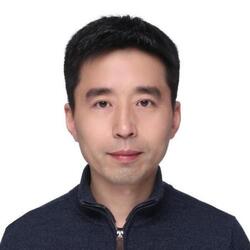
The conference returned repeatedly to America’s use of export controls—and whether they are working. The verdict was nuanced. Philip Wong, the Willard R. and Inez Kerr Bell Professor of Electrical Engineering at Stanford, argued that in the semiconductor space the strategy has plainly backfired. By cutting China’s firms off from American chip-making equipment and advanced logic chips, the controls created a large captive domestic market for China’s equipment suppliers who previously had no customers. “It basically enabled the indigenous supply chains to have a wonderful set of customers within China,” Wong said, “and so they were able to climb up the learning curve really quickly, much more quickly than before.” Other speakers suggested that may be a tolerable cost as long as export controls allow the US to reach certain frontier capabilities first—as has been the case with Anthropic’s Mythos model.
Wong pushed back on both alarmism and dismissiveness about China's broader technological rise. China, he argued, has genuine world-class talent and infrastructure across multiple sectors—a peer competitor, not a pretender. "If you are among the best athletes, sometimes you win, sometimes other people win. That happens all the time." To treat any given Chinese breakthrough as proof of American collapse, or to wave it away as a fluke, both miss the point: China is, in his words, "a bona fide good athlete."
Wong’s recommended alternative to export controls was direct: rather than trying to slow a competitor, the United States should focus on “how do we make ourselves run faster.” That sentiment echoed throughout the day, particularly after he noted that the National Science Board had recently been dismissed and that American R&D funding continues to be primarily focused on defense-oriented research.
Biotech: From Follower to Leading Force
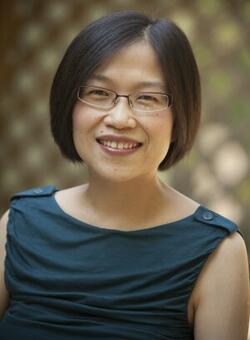
Physician-scientist Chenjian Li, a research fellow at the Hoover Institution, offered striking data on China’s advancement in biotech. In the active pharmaceutical ingredients that form the basis of medicines taken by hundreds of millions of Americans daily, China has achieved near-total global dominance—some categories are 100% Chinese-sourced. “Medicine, be it advanced experimental drugs, high-end prescriptions or just daily over-the-counter pills, are actually much more impactful than weapons of mass destruction,” Li said, “because they affect 80% of the United States and global population.”
At the cutting edge of drug discovery, the picture is more nuanced but equally notable. Chinese biotech startups are increasingly producing competitive "me-too, me-better" drugs that improve on existing treatments, and pushing into "first-in-class" drugs—the crown jewels of pharmaceutical innovation. Major multinational corporations (MNCs) are paying billions to acquire them. The fact that Pfizer, Merck, and Eli Lilly are spending at this scale, Li argued, says something important: “The MNCs buy those new therapeutic assets because they are solid and unique, and because the MNCs don’t think that they can be as fast and as good in those lines.”
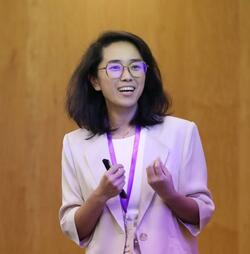
Economist Ruixue Jia of UC San Diego connected this pharmaceutical surge to China’s education system, which has spent decades steering enormous numbers of students toward engineering and STEM fields, including biology and life sciences. The founder of one of last year’s biggest biotech deals—a $5.6 billion transaction—fit a pattern Jia’s research keeps finding: educated in China, PhD in Canada, postdoc in the United States, returned to China in 2008. “It’s not just a success story of Chinese education,” she noted. “It’s also a success story of North American education.”