Understanding China’s Gaokao Exam
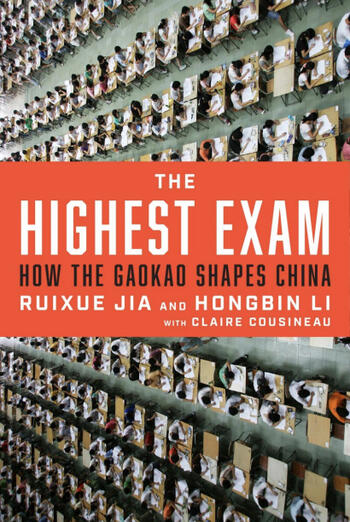
Authors Hongbin Li and Ruixue Jia break down their new book, "The Highest Exam: How the Gaokao Shapes China", in an interview with Harvard University Press.
Stanford Center on China’s Economy and Institutions is a joint effort of the Freeman Spogli Institute for International Studies and Stanford Institute for Economic Policy Research.
Authors Hongbin Li and Ruixue Jia break down their new book, "The Highest Exam: How the Gaokao Shapes China", in an interview with Harvard University Press.
Imagine one test deciding your future. For millions of students in China every year, that test is the gaokao—the national university entrance exam and one of the most competitive educational systems in the world. Published by Harvard University Press in Fall 2025, The Highest Exam: How the Gaokao Shapes China, takes readers inside this high-stakes exam and uncovers how it has shaped families, careers, and even the nation itself.
Written by leading scholars Ruixue Jia and Hongbin Li, with writer and researcher Claire Cousineau, the book combines rigorous research with compelling personal narratives to reveal how the gaokao has become much more than a test: it is a tool to shape China’s society and economy.
The gaokao has long been considered one of the world’s most consequential educational exams. Each year, tens of millions of students sit for this high-stakes test that determines access to universities, career opportunities, and pathways of social mobility. The Highest Exam traces the gaokao’s historical origins and evolution, showing how it became deeply intertwined with China’s governance, social strata, and economy.
Through empirical analysis and personal narrative, the book illustrates how the exam system reflects broader themes in Chinese society: the pursuit of meritocracy, the tension between equality and advantage, and the state’s reliance on education to reinforce legitimacy. The authors aptly identify China’s education system as a centralized hierarchical tournament, returning to this framework in each section of the book: family, state, and society.
The Highest Exam also brings a comparative lens, contrasting China’s exam-driven system with education practices in the United States and beyond. It raises urgent questions about fairness, access, and the role of education in shaping societies—questions that resonate far beyond China’s borders.
Engaging and deeply researched, The Highest Exam is essential reading for anyone interested in education, global society, or the forces shaping the next generation.
Ruixue Jia is Professor of Economics at the School of Global Policy and Strategy, University of California, San Diego.
Hongbin Li is Co-director of Stanford Center on China's Economy and Institutions, and a Senior Fellow of Stanford Institute for Economic Policy Research (SIEPR) and the Freeman Spogli Institute for International Studies (FSI) at Stanford University.
Claire Cousineau is a writer and former researcher at the Stanford Center on China’s Economy and Institutions, she is currently pursuing her MBA at Duke University.
The Highest Exam: How the Gaokao Shapes China is available now for purchase from Amazon and elsewhere.
Join us on Tuesday, October 21 at 4 PM (Pacific) for a fireside chat with co-authors Ruixue Jia and Hongbin Li. The fireside chat will be held in-person in the Bechtel Conference Center and livestreamed for virtual attendees. Learn More & Register
"The Highest Exam: How the Gaokao Shapes China", written by Ruixue Jia, Hongbin Li, and Claire Cousineau, combines rigorous research with compelling personal narratives to reveal how the gaokao has become much more than a test: it is a tool to shape China’s society and economy.
Join us for a fireside chat with co-authors Ruixue Jia and Hongbin Li who will discuss their most recent book, The Highest Exam: How the Gaokao Shapes China. The fireside chat will be held in-person in the Bechtel Conference Center and livestreamed for virtual attendees. After the fireside chat, we invite in-person attendees to join us for a light reception and book signing with Hongbin Li. Order your copy of the book here.
Join the webinar to watch the event live:
Webinar ID: 985 1962 7327
Passcode: 361163
Each year, more than ten million students across China pin their hopes on the gaokao, the nationwide college entrance exam. Unlike in the United States, where standardized tests are just one factor, in China college admission is determined entirely by gaokao performance. It is no wonder the test has become a national obsession.
Drawing on extensive surveys, historical research, and economic analysis, and informed by Ruixue Jia and Hongbin Li’s own experiences of the gaokao gauntlet, The Highest Exam reveals how China’s education system functions as a centralized tournament that serves the needs of the Chinese Communist Party and drives much of the country’s economic growth. The book examines the gaokao’s far-reaching effects on China’s society and beyond. As Chinese-American families bring the expectations of the highest exam with them, their calls for objective, transparent metrics in the education system increasingly clash with the more holistic measures of achievement used by American schools and universities.
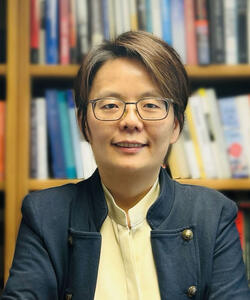
Hongbin Li is the Co-director of Stanford Center on China's Economy and Institutions, and a Senior Fellow of Stanford Institute for Economic Policy Research and the Freeman Spogli Institute for International Studies. Li obtained his Ph.D. in economics from Stanford University in 2001 before joining the economics department at the Chinese University of Hong Kong (CUHK). He was also one of the two founding directors of the Institute of Economics and Finance at the CUHK. He taught at Tsinghua University from 2007 to 2016 in the School of Economics and Management and was the founder and Executive Associate Director of the China Social and Economic Data Center.
Li’s research has been focused on the transition and development of the Chinese economy, and the evidence-based research results have been both widely covered by media outlets and well read by policy makers around the world. He is currently the co-editor of the Journal of Comparative Economics and co-author of the book, The Highest Exam: How the Gaokao Shapes China, published by Harvard University Press.
Ruixue Jia is a professor of economics at the School of Global Policy and Strategy at UC San Diego. She also serves as Co-director of the China Data Lab, executive secretary of the Association of Comparative Economic Studies (ACES) and co-chair of the China Economic Summer Institute (CESI).
Jia’s research lies at the intersections of economics, history and politics, with a focus on how power structures evolve and shape economic development. Her recent work examines the political economy of idea formation and diffusion, including the interplay between the state, education, science and technology. She is the co-author of The Highest Exam, a book that explores how China’s education system both mirrors and molds its society.
Claire Cousineau is a writer and former researcher at the Stanford Center on China’s Economy and Institutions, she is currently pursuing her MBA at Duke University.
Since studying and working in Beijing and Kunming, Claire is passionate about fostering a deeper public understanding of China’s role on the global stage and creating cross-cultural relationships. Claire is the co-author of the book, The Highest Exam: How the Gaokao Shapes China, along with Hongbin Li and Ruixue Jia, published by Harvard University Press in 2025.
Bechtel Conference Center
Encina Hall
616 Jane Stanford Way, Stanford University
or via Livestream
John A. and Cynthia Fry Gunn Building, 366 Galvez Street
Stanford, CA 94305-6015
Hongbin Li is the Co-director of Stanford Center on China's Economy and Institutions, and a Senior Fellow of Stanford Institute for Economic Policy Research (SIEPR) and the Freeman Spogli Institute for International Studies (FSI).
Hongbin obtained Ph.D. in economics from Stanford University in 2001 and joined the economics department of the Chinese University of Hong Kong (CUHK), where he became full professor in 2007. He was also one of the two founding directors of the Institute of Economics and Finance at the CUHK. He taught at Tsinghua University in Beijing 2007-2016 and was C.V. Starr Chair Professor of Economics in the School of Economics and Management. He also founded and served as the Executive Associate Director of the China Social and Economic Data Center at Tsinghua University. He founded the Chinese College Student Survey (CCSS) in 2009 and the China Employer-Employee Survey (CEES) in 2014.
Hongbin’s research has been focused on the transition and development of the Chinese economy, and the evidence-based research results have been both widely covered by media outlets and well read by policy makers around the world. He is currently the co-editor of the Journal of Comparative Economics and co-author of the forthcoming book, “The Highest Exam: How the Gaokao Shapes China” published by Harvard University Press.
For years the Rural Education Action Program (REAP) has been working to improve early childhood development outcomes across rural China. One of the most impactful programs has been the development and implementation of REAP’s parenting curriculum and parenting centers. The centers expand upon our parenting curriculum by providing free and accessible spaces where caregivers and their young children can read, play, and explore together using developmentally appropriate toys and books that promote cognitive development. REAP has now supported the development of over 150 centers at county, township, and village levels across multiple provinces.
Recently, REAP helped establish a parenting center at the Zhengzhou Foxconn Facility serving migrant factory employees and their families. Since opening, the center has already hosted over 10,000 child visits and supported over 350 families. Following the REAP model, this parenting center combines a research-based curriculum for early childhood development with local needs. The new center has received positive media attention across several outlets in China, including Henan Daily, Global Times, and Zhenggang News. The success of this parenting center introduces new opportunities for future parenting center collaborations that better serve manufacturing communities across China.
Discover more REAP research projects on early childhood development (ECD).
REAP helped establish a parenting center at the Zhengzhou Foxconn Facility serving migrant factory employees and their families. The center implements a research-based curriculum for early childhood development to better meet local needs. The new center has recently received positive media attention across several outlets in China.
This article was published by Stanford Daily. Please click below to read the full article.
Stanford Daily reporter Kayla Chan spotlights Scott Rozelle, REAP Program Director, and the research he has conducted over his 40 years studying agriculture and development in China.
Using reading performance data from a randomized controlled trial of 5224 fifth-grade students in East China, this paper provides a novel test of the hypothesis that evoking a gender stereotype creates gender gaps in education through self-fulfilling prophecies. We found that without intervention, boys performed worse than girls did in reading tests. Evoking a gender stereotype by indicating the expected outperformance of girls over boys in reading had a significantly negative effect on boys and an insignificant effect on girls. As a result, the net effect on the gender gap in reading performance was economically important but statistically insignificant. We also found evidence that increased anxiety was likely the underlying mechanism. Finally, a heterogeneous analysis showed that boys from environments with biased gender role beliefs were more susceptible to the intervention.
This paper examines whether education can play a role in mitigating gender inequality in the process of sectoral reallocation of labour. We exploit the exogenous variations in educational attainment induced by the implementation of the 1986 Compulsory Education Law (CEL) in China. Using data from the 2018 wave of the China Family Panel Studies (CFPS) and a cohort difference-in-differences (DID) approach, we find that the CEL narrowed the gender gap in education for rural residents, but it did not reduce gender inequality in labour market outcomes, such as wage labour participation and wage rate. Our analysis reveals that this persistent inequality in labour market outcomes can be attributed to gender differences in migration and occupational choices. Specifically, rural males exposed to the CEL were more likely to migrate outside local provinces and work in low-skilled manufacturing sectors, while rural females tended to stay within local counties and work in low-skilled service sectors. Furthermore, we provide evidence that their differential migration responses are driven by household labour divisions and social gender norms, rather than disparities in cognitive skills.
Despite investments in teacher education programs, teacher shortages persist in rural areas of many low- and middle-income countries. Using data from 1860 tuition-free students, we examine factors influencing enrollment in China's Tuition-Free Normal Education (TNE) program and their implications for teacher recruitment and retention in rural schools. Descriptive analysis and OLS regression reveal that TNE students mostly come from larger, poorer families, and enroll for job security and financial benefits. Many aspire to teach but resist rural placements, risking non-compliance. These findings can guide the design and reform of programs to attract qualified teachers to rural areas in China and abroad.
This study aims to compare the ratings of primary caregivers and teachers of any mental health problems of preschool children in rural China. The primary caregivers and teachers provided their ratings of mental health of 1,191 sample rural preschool children (mean age = 56.8 months; 587 girls) using the Strengths and Difficulties Questionnaire (SDQ). According to the findings, primary caregivers consistently gave their children higher SDQ scores and identified more symptoms across the different categories of mental health problems (i.e., normal, borderline, and abnormal) than teachers. The correlations between the ratings of caregivers and the ratings of teachers were low. The study also identifies the characteristics of children, caregivers, and teacher that were correlated with the differences in the ratings. Specifically, boys, children that were identified by scales of cognitively development as being delayed, and those that parented with authoritarian style were more likely to be rated differently by primary caregivers and teachers. In addition, primary caregivers from relatively poor families rated their children differently from teachers, compared with primary caregivers from relatively rich families. Regarding teachers, they tended to rate on child mental health differently from primary caregivers when they were male or at older age. These findings suggest considering multi-informant reports when assessing the mental health problems of preschool children in different settings. In addition, understanding factors linked to informant discrepancies can potentially improve the accuracy of the assessments.
A growing body of literature explores the effect of higher education on the urban–rural divide in China. Despite an increasing number of rural students gaining access to college, little is known about their performance in college or their job prospects after graduation. Using nationally representative data from over 40,000 urban and rural college students, we examine rural students’ college performance and estimate the impact of rural status on students’ first job wages in comparison to their urban peers. Our results indicate that once accepted into college, rural students perform equally as well, if not better, than their urban counterparts. Additionally, we discovered that rural students earn a 6.2 per cent wage premium compared to their urban counterparts in their first job after graduation. Our findings suggest the importance of expanding access to higher education for rural students, as it appears to serve as an equalizer between urban and rural students despite their significantly different backgrounds.