-
Logan Wright Book

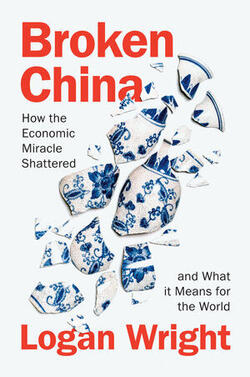
Economic competition between the United States and China has been a defining issue of the twenty-first century. But after years of rapid growth, China's economy has faltered. How did its long-term economic outlook change so quickly? And can Beijing change course and preserve China's political ambition for global economic primacy?


Join Logan Wright, author of Broken China: How the Economic Miracle Shattered and What it Means for the World, for a book talk exploring these questions and more co-hosted by the Stanford Center on China's Economy and Institutions and the Hoover History Lab. More details to come as the event date nears.


About the Speaker
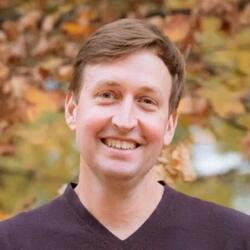
 

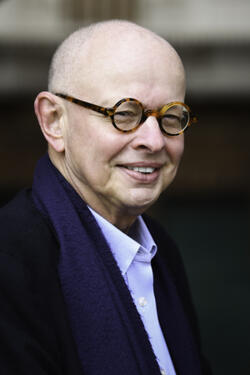
Logan Wright Photo

Logan Wright is a Partner at Rhodium Group and leads the firm’s China Markets Research work.  He is also a Senior Associate of the Trustee Chair in Chinese Business and Economics at the Center for Strategic and International Studies. Previously, Logan was head of China research for Medley Global Advisors and a China analyst with Stone & McCarthy Research Associates, both in Beijing.

Logan’s research focuses on China’s financial system and credit conditions in shaping outcomes within China’s economy, as well as the policies of China’s central bank. He is the author of the forthcoming book Broken China: How the Economic Miracle Shattered and What it Means for the World, as well as three reports on China’s financial system and the country’s longer-term economic trajectory: Credit and Credibility (2018), The China Economic Risk Matrix (2020), and Grasping Shadows (2023).

Logan holds a Ph.D. from the George Washington University, where his dissertation concerned the political factors shaping the reform of China’s exchange rate regime. He graduated with a Master’s degree in Security Studies and a Bachelor’s degree in Foreign Service from Georgetown University. He is a member of the Council on Foreign Relations. He is based in Washington, DC, after living and working in Beijing and Hong Kong for over two decades.


Questions? Contact SCCEI at sccei-info@stanford.edu


Shultz Auditorium, George P. Shultz Building, Hoover Institution
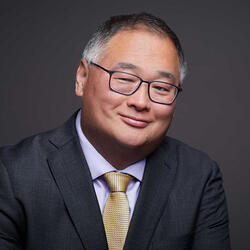
Logan Wright, Partner, Rhodium Group
Lectures
Date Label
-

Stanford University Libraries and the Stanford Center on China’s Economy and Institutions are pleased to present the 2026 Dr. Sam-Chung Hsieh Memorial Lecture featuring Professor Chang-Tai Hsieh who will be speaking on The Risks of Taiwan's Economic Boom.

To attend in person, please register here.
To attend online, please register here.


Professor Hsieh will discuss how Taiwan's Central Bank has had a longstanding unstated policy of keeping the exchange rate undervalued to boost exports. The rise of Taiwan as the center of the semiconductor industry, and more generally as the center of AI hardware, is making this policy untenable. The trade surplus reached 20% of GDP in 2025 and is likely reach an astronomical 35% of GDP this year. Furthermore, much of the surplus has been channeled into purchases of US treasury bonds by Taiwan's life insurance industry that face collapse when the Taiwan dollar appreciates.


About the Speaker 


Chang-Tai Hsieh headshot.

Professor Hsieh is the Phyllis and Irwin Winkelreid Distinguished Service Professor of Economics at the University of Chicago. He is an elected member of Taiwan's Academia Sinica, the American Academy of Arts and Sciences, and the Econometric Society. He is also a two times recipient of the Sun Ye-Fang Award of China's Academy of Social Sciences.


The family of Dr. Sam-Chung Hsieh donated his personal archive to the Stanford Libraries' Special Collections and endowed the Dr. Sam-Chung Hsieh Memorial Lecture series to honor his legacy and to inspire future generations. Dr. Sam-Chung Hsieh (1919-2004) was former Governor of the Central Bank in Taiwan. During his tenure, he was responsible for the world's largest foreign exchange reserves, and was widely recognized for achieving stability and economic growth. In his long and distinguished career as economist and development specialist, he held key positions in multilateral institutions including the Asian Development Bank, where as founding Director, he was instrumental in advancing the green revolution and in the transformation of rural Asia. Read more about Dr. Hsieh.

Green Library, Bing Wing, 5th floor, Bender Room
459 Lasuen Mall, Stanford, CA 94305

Chang-Tai Hsieh, Professor of Economics, University of Chicago
Lectures
Date Label
-

One Bed, Two Dreams: Why Joint Ventures So Often Fail in China


Please join us for an on-campus lecture and discussion led by author Kenneth Wilcox and moderated by SCCEI Senior Research Fellow Chenggang Xu.

Light refreshments will be served.


Kkenneth Wilcox headshot

Ken Wilcox is the author of “The China Business Conundrum: Ensure that Win-Win Doesn’t Mean Western Companies Lose Twice” (Wiley, November 2024) and “Leading Through Culture” (Waterside, 2020).

Ken was the CEO of Silicon Valley Bank (SVB) from 2001 to 2011, then the CEO of SVB’s joint venture with Shanghai Pudong Development Bank (SPDB-SVB) in Shanghai until 2015, followed by four years as its Vice Chairman. He currently serves on the boards of the Asia Society of Northern California, the Asian Art Museum, and UC San Diego’s 21st Century China Center, as well as Columbia Lake Partners, a European venture-debt fund. He is on the Board of Advisors of the Fudan University School of Management in Shanghai and teaches as an Adjunct Professor at U.C. Berkeley.

Ken holds a PhD in German from Ohio State University and an MBA from Harvard Business School. He is a former member of the board of directors of the Federal Reserve Bank of San Francisco. He has given numerous speeches in both English and Chinese, published a variety of articles in the banking press, and recently wrote the management book “Leading Through Culture: How Real Leaders Create Cultures That Motivate People to Achieve Great Things” (Waterside Productions, 2020) and its accompanying workbook, “How About You?” (Waterside Productions, 2023). The father of two sons, he lives in San Francisco with his wife, Ruth, and several antique cars.

Goldman Room, Encina Hall, E409

Kenneth Wilcox, author and former CEO of Silicon Valley Bank (SVB) 2001-2010
Lectures
Date Label
-

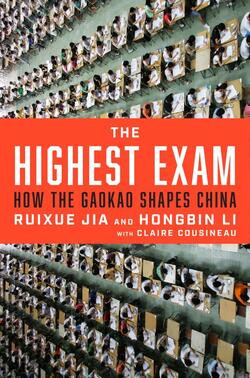
Join us for a fireside chat with co-authors Ruixue Jia and Hongbin Li who will discuss their most recent book, The Highest Exam: How the Gaokao Shapes China. The fireside chat will be held in-person in the Bechtel Conference Center and livestreamed for virtual attendees. After the fireside chat, we invite in-person attendees to join us for a light reception and book signing with Hongbin Li. Order your copy of the book here.

Join the webinar to watch the event live:

Webinar ID: 985 1962 7327
Passcode: 361163


The Highest Exam book cover.

Each year, more than ten million students across China pin their hopes on the gaokao, the nationwide college entrance exam. Unlike in the United States, where standardized tests are just one factor, in China college admission is determined entirely by gaokao performance. It is no wonder the test has become a national obsession.

Drawing on extensive surveys, historical research, and economic analysis, and informed by Ruixue Jia and Hongbin Li’s own experiences of the gaokao gauntlet, The Highest Exam reveals how China’s education system functions as a centralized tournament that serves the needs of the Chinese Communist Party and drives much of the country’s economic growth. The book examines the gaokao’s far-reaching effects on China’s society and beyond. As Chinese-American families bring the expectations of the highest exam with them, their calls for objective, transparent metrics in the education system increasingly clash with the more holistic measures of achievement used by American schools and universities.


About the Authors
 

Hongbin Li

Hongbin Li is the Co-director of Stanford Center on China's Economy and Institutions, and a Senior Fellow of Stanford Institute for Economic Policy Research and the Freeman Spogli Institute for International Studies. Li obtained his Ph.D. in economics from Stanford University in 2001 before joining the economics department at the Chinese University of Hong Kong (CUHK). He was also one of the two founding directors of the Institute of Economics and Finance at the CUHK. He taught at Tsinghua University from 2007 to 2016 in the School of Economics and Management and was the founder and Executive Associate Director of the China Social and Economic Data Center. 

Li’s research has been focused on the transition and development of the Chinese economy, and the evidence-based research results have been both widely covered by media outlets and well read by policy makers around the world. He is currently the co-editor of the Journal of Comparative Economics and co-author of the book, The Highest Exam: How the Gaokao Shapes China, published by Harvard University Press.
 

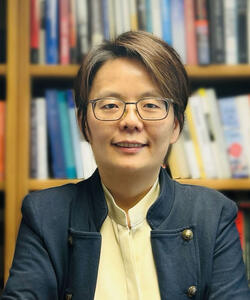
Ruixue Jia headshot.

Ruixue Jia is a professor of economics at the School of Global Policy and Strategy at UC San Diego. She also serves as Co-director of the China Data Lab, executive secretary of the Association of Comparative Economic Studies (ACES) and co-chair of the China Economic Summer Institute (CESI). 

Jia’s research lies at the intersections of economics, history and politics, with a focus on how power structures evolve and shape economic development. Her recent work examines the political economy of idea formation and diffusion, including the interplay between the state, education, science and technology. She is the co-author of The Highest Exam, a book that explores how China’s education system both mirrors and molds its society.
 

Headshot of Claire Cousineau.

Claire Cousineau  is a writer and former researcher at the Stanford Center on China’s Economy and Institutions, she is currently pursuing her MBA at Duke University.

Since studying and working in Beijing and Kunming, Claire is passionate about fostering a deeper public understanding of China’s role on the global stage and creating cross-cultural relationships. Claire is the co-author of the book, The Highest Exam: How the Gaokao Shapes China, along with Hongbin Li and Ruixue Jia, published by Harvard University Press in 2025. 


Bechtel Conference Center
Encina Hall
616 Jane Stanford Way, Stanford University

or via Livestream

Ruixue Jia

John A. and Cynthia Fry Gunn Building, 366 Galvez Street
Stanford, CA 94305-6015

0
Professor, by courtesy, of Economics
Senior Fellow at the Freeman Spogli Institute for International Studies
Senior Fellow at the Stanford Institute for Economic Policy Research
Director of the China, Labor, Income, and Population Research Program, Stanford Center on China's Economy and Institutions
Faculty Affiliate at the King Center of Global Development
Faculty Affiliate at Stanford Institute for Human-Centered Artificial Intelligence
Faculty Affiliate at the Stanford Center on China's Economy and Institutions
5268-hongbinli.png PhD

Hongbin Li is a Senior Fellow of Stanford Institute for Economic Policy Research (SIEPR) and the Freeman Spogli Institute for International Studies (FSI).

Hongbin obtained Ph.D. in economics from Stanford University in 2001 and joined the economics department of the Chinese University of Hong Kong (CUHK), where he became full professor in 2007. He was also one of the two founding directors of the Institute of Economics and Finance at the CUHK. He taught at Tsinghua University in Beijing 2007-2016 and was C.V. Starr Chair Professor of Economics in the School of Economics and Management. He also founded and served as the Executive Associate Director of the China Social and Economic Data Center at Tsinghua University. He founded the Chinese College Student Survey (CCSS) in 2009 and the China Employer-Employee Survey (CEES) in 2014.

Hongbin’s research has been focused on the transition and development of the Chinese economy, and the evidence-based research results have been both widely covered by media outlets and well read by policy makers around the world. He is currently the co-editor of the Journal of Comparative Economics and co-author of the forthcoming book, “The Highest Exam: How the Gaokao Shapes China” published by Harvard University Press.

CV
Date Label
Hongbin Li
Lectures
News Feed Image
highest_exam_book_talk.png
Date Label
-

Skyline Scholars Series


Tuesday, June 3, 2025 | 1:00-2:30 pm Pacific Time
Goldman Room E409, Encina Hall, 616 Jane Stanford Way


Post–Cold War Consensus and Strategic Dilemmas: The United States, China, and the Future of the World Order


The world is at a crossroads. What is happening in world politics today—and the changes that are about to unfold—can be roughly compared to major events such as the collapse of the Soviet Union and the end of the Cold War in 1991, or the end of World War II in 1945 and the formation of a world order centered on U.S.–Soviet competition. Although many unconventional policies since President Donald Trump’s second term have accelerated the arrival of this moment and increased uncertainty in world politics and the global economy, the roots of these developments are long-standing. They are the result of a series of major and gradual structural changes.

The purpose of this lecture is to provide a new theoretical perspective and cognitive framework for the academic community to understand the structural transformations of the world order from the post–Cold War era to the present, and thereby to initiate a dialogue with the global academic community. At the same time, it is hoped that political decision-makers will also find in this framework a useful tool to reflect on their own choices—encouraging more prudent and responsible decisions for their countries and for humanity in the long run.


About the Speaker
 

Gangsheng Bao headshot

Gangsheng Bao is a Professor of Political Science at the School of International Relations and Public Affairs, Fudan University, Shanghai, China. He is also currently appointed as a Skyline Scholar at the Stanford Center on China’s Economy and Institutions, Stanford University.

Professor Bao earned his Ph.D. from Peking University in 2012. His research interests include political theory, comparative politics, and political history, with a particular focus on theories of political modernization and democratization. He has published numerous journal articles and authored several books. His major works include: The Fate of Civilization States: From Political Crisis to Modernization (2024), Political Evolution: From Ancient Times to the 21st Century (2023), Crises and Solutions: Reflections on Political Thought in Early China (2023), Politics of Democratic Breakdown (English version, 2022; Chinese version, 2014), The Logic of Democracy (2018), and The Common Sense of Modern Politics (2015).

Professor Bao’s book Politics of Democratic Breakdown was awarded the "Best Social Science Book of the Year" in 2014 by The Beijing News and was listed among the “Nineteen Recommended Chinese Books of the Year” in 2014 by The New York Times (International Chinese Network). In 2023, Political Evolution: From Ancient Times to the 21st Century was honored as one of the “Ten Best Chinese Original Books in Humanities and Social Sciences of the Year” by Tencent and as one of the “Ten Best Books of the Year” by The China Business Network. Similarly, The Fate of Civilization States: From Political Crisis to Modernization was selected as one of the “Ten Best Books of the Year” in 2024 by the Nanfang Daily. Additionally, his work The Logic of Democracy earned him the title of "Best Author of the Year" in 2018 from The Economic Observer.


Questions? Contact Xinmin Zhao at xinminzhao@stanford.edu


Goldman Room, E409
Encina Hall, East Wing, 4th Floor

0
Professor of Political Science, Fudan University
Skyline Scholar (2025), Stanford Center on China's Economy and Institutions
gangsheng_bao.jpeg Ph.D.

Gangsheng Bao is a Professor of Political Science at the School of International Relations and Public Affairs, Fudan University, Shanghai, China. He was an appointed Skyline Scholar at the Stanford Center on China’s Economy and Institutions in 2025.

Professor Bao earned his Ph.D. from Peking University in 2012. His research interests include political theory, comparative politics, and political history, with a particular focus on theories of political modernization and democratization. He has published numerous journal articles and authored several books. His major works include: The Fate of Civilization States: From Political Crisis to Modernization (2024), Political Evolution: From Ancient Times to the 21st Century (2023), Crises and Solutions: Reflections on Political Thought in Early China (2023), Politics of Democratic Breakdown (English version, 2022; Chinese version, 2014), The Logic of Democracy (2018), and The Common Sense of Modern Politics (2015).

Professor Bao’s book Politics of Democratic Breakdown was awarded the "Best Social Science Book of the Year" in 2014 by The Beijing News and was listed among the “Nineteen Recommended Chinese Books of the Year” in 2014 by The New York Times (International Chinese Network). In 2023, Political Evolution: From Ancient Times to the 21st Century was honored as one of the “Ten Best Chinese Original Books in Humanities and Social Sciences of the Year” by Tencent and as one of the “Ten Best Books of the Year” by The China Business Network. Similarly, The Fate of Civilization States: From Political Crisis to Modernization was selected as one of the “Ten Best Books of the Year” in 2024 by the Nanfang Daily. Additionally, his work The Logic of Democracy earned him the title of "Best Author of the Year" in 2018 from The Economic Observer.

Date Label
Gangsheng Bao, Skyline Scholar (2025); Professor of Political Science, Fudan University
Lectures
Date Label
-

Due to high interest for this event, we have met our space capacity and registration is now closed.


Skyline Scholars Series


Wednesday, May 28, 2025 | 1:00-2:30 pm Pacific Time
Goldman Room E409, Encina Hall, 616 Jane Stanford Way


China's Economic Development From a Perspective of Modernization


China’s economic success can be attributed to its leadership’s pragmatic approach and its respect for grassroots initiatives. The near double-digit average GDP growth during the first three decades after 1978 was achieved through bottom-up industrialization, without fundamentally altering the “ancient regime.” With industrialization largely completed—as evidenced by massive excess capacities—the country faced an urgent need to shift its growth engine from investment to innovation, a transition that demands a very different set of institutions. Delays or failures in making this shift—namely, in modernizing its institutions—may lead to the so-called “middle-income trap” and diminish hopes of becoming a leader in the global race for cutting-edge technologies. This talk explores China’s developmental trajectory through the lens of modernization theory, highlighting both the achievements and the institutional challenges that lie ahead.


About the Speaker
 

Xiaonian Xu headshot

Dr. Xiaonian Xu is Professor Emeritus at CEIBS, where he held the position of Professor of Economics and Finance from 2004 to 2018.  In recognition of his contributions, he was named an Honorary Professor in Economics from September 2018 to August 2023. He is also Skyline Scholar at the Stanford Center on China's Economy and Institutions from 2024-25 at Stanford University.

Between 1999 and 2004, Dr. Xu served as Managing Director and Head of Research at China International Capital Corporation Limited (CICC). Before joining CICC, he was a Senior Economist at Merrill Lynch Asia Pacific, based in Hong Kong from 1997 to 1998, and worked as a World Bank consultant in Washington DC in 1996. Dr. Xu was appointed Assistant Professor of Amherst College, Massachusetts, where he taught Economics and Financial Markets from 1991 to 1995. Earlier in his career, he was a research fellow at the State Development Research Centre of China from 1981 to 1985.

Dr. Xu earned his Ph.D. in Economics from the University of California, Davis, in 1991, and an MA in Industrial Economics from the People's University of China in 1981. In 1996, he was awarded the distinguished Sun Yefang Economics Prize, the highest honor in the field in China, for his research on China’s capital markets. His research interests include Macroeconomics, Financial Institutions and Financial Markets, Transitional Economies, China’s Economic Reform, Corporate Strategy and Digital Transformation. His publications include: Freedom and Market Economy (《自由与市场经济》), There has Never been A Savior (《从来就没有救世主》), The Pendulum Swinging Back (《回荡的钟摆》), The Nature of the Business and the Internet (《商业的本质和互联网》), and The Nature of the Business and the Internet, 2nd Edition (《商业的本质和互联网》第二版).

A dedicated educator, he has been recognized with the CEIBS Teaching Excellence Award in 2005 and 2006, as well as the esteemed CEIBS Medal for Teaching Excellence in 2010.


Questions? Contact Xinmin Zhao at xinminzhao@stanford.edu


Goldman Room, E409
Encina Hall, East Wing, 4th Floor

Encina Hall, East Wing, Room 014

Office Hours:
Select Mondays | 3:00-5:00 PM 
Please schedule a meeting in advance

0
Skyline Scholar (2024), Stanford Center on China's Economy and Institutions
Professor of Economics and Finance, China Europe International Business School
prof._xu_xiaonian.jpg Ph.D.

Dr. Xiaonian Xu is Professor Emeritus at CEIBS, where he held the position of Professor of Economics and Finance from 2004 to 2018. In recognition of his contributions, he was named an Honorary Professor in Economics from September 2018 to August 2023.

Between 1999 and 2004, Dr. Xu served as Managing Director and Head of Research at China International Capital Corporation Limited (CICC). Before joining CICC, he was a Senior Economist at Merrill Lynch Asia Pacific, based in Hong Kong from 1997 to 1998, and worked as a World Bank consultant in Washington DC in 1996. Dr. Xu was appointed Assistant Professor of Amherst College, Massachusetts, where he taught Economics and Financial Markets from 1991 to 1995. Earlier in his career, he was a research fellow at the State Development Research Centre of China from 1981 to 1985.

Dr. Xu earned his Ph.D. in Economics from the University of California, Davis, in 1991, and an MA in Industrial Economics from the People's University of China in 1981. In 1996, he was awarded the distinguished Sun Yefang Economics Prize, the highest honor in the field in China, for his research on China’s capital markets. His research interests include Macroeconomics, Financial Institutions and Financial Markets, Transitional Economies, China’s Economic Reform, Corporate Strategy and Digital Transformation. His publications include: Freedom and Market Economy (《自由与市场经济》), There has Never been A Savior (《从来就没有救世主》), The Pendulum Swinging Back (《回荡的钟摆》), The Nature of the Business and the Internet (《商业的本质和互联网》), and The Nature of the Business and the Internet, 2nd Edition (《商业的本质和互联网》第二版).

A dedicated educator, he has been recognized with the CEIBS Teaching Excellence Award in 2005 and 2006, as well as the esteemed CEIBS Medal for Teaching Excellence in 2010.

Date Label
Xiaonian Xu, Skyline Scholar (2024-25); Professor Emeritus, CEIBS
Lectures
Date Label
-

Stanford Libraries and the Stanford Center on China’s Economy and Institutions are pleased to present the 2025 Dr. Sam-Chung Hsieh Memorial Lecture featuring Professor Matteo Maggiori who will be speaking on Geoeconomics and the US-China Great Power Competition.

To attend in person, please register here.
To attend online, please register here.


Professor Maggiori will discuss how the U.S. and China apply economic pressure to achieve their political and economic goals, and the economic costs and benefits that this competition is imposing on the world. A discussion of economic security policies that other countries are implementing to shield their economies.


About the Speaker 


Headshot of Matteo Maggiori in dark collared shirt with light blue background

Professor Maggiori is the Moghadam Family Professor of Finance at the Stanford Graduate School of Business. His research focuses on international macroeconomics and finance. He is a co-founder and director of the Global Capital Allocation Project. His research topics have included the analysis of exchange rates under imperfect capital markets, capital flows, the international monetary system, reserve currencies, geoeconomics, tax havens, very long-run discount rates and climate change, and expectations and portfolio investment. His research combines theory and data with the aim of improving international economic policy. He is a faculty research fellow at the National Bureau of Economic Research and a research affiliate at the Center for Economic Policy Research. He received his PhD from the University of California at Berkeley.

Among a number of honors, he is the recipient of the Fischer Black Prize awarded to an outstanding financial economist under the age of 40, the Carnegie and Guggenheim fellowships, and the Bernacer Prize for outstanding contributions in macroeconomics and finance by a European economist under age 40.


The family of Dr. Sam-Chung Hsieh donated his personal archive to the Stanford Libraries' Special Collections and endowed the Dr. Sam-Chung Hsieh Memorial Lecture series to honor his legacy and to inspire future generations. Dr. Sam-Chung Hsieh (1919-2004) was former Governor of the Central Bank in Taiwan. During his tenure, he was responsible for the world's largest foreign exchange reserves, and was widely recognized for achieving stability and economic growth. In his long and distinguished career as economist and development specialist, he held key positions in multilateral institutions including the Asian Development Bank, where as founding Director, he was instrumental in advancing the green revolution and in the transformation of rural Asia. Read more about Dr. Hsieh.


Request Disability Accommodations and Access Info

GSB Knight Management Center, Oberndorf Event Center 
657 Jane Stanford Way, Stanford, CA 94305

Matteo Maggiori, Professor of Finance, Stanford Graduate School of Business
Lectures
Date Label
-
Disguised Repression:  Targeting Opponents with Non-Political Crimes to Undermine Dissent lecture on 10.3.24 with Jennifer Pan.

Why do authoritarian regimes charge political opponents with non-political crimes when they can levy charges directly related to opponents' political activism? Using experimental and observational data from China, we find that disguising repression by charging opponents with non-political crimes undermines the moral authority of opponents, minimizing backlash and mobilization while increasing public support for repression.

Stanford Center on China’s Economy and Institutions (SCCEI) is pleased to present a lecture by Jennifer Pan, Sir Robert Ho Tung Professor of Chinese Studies, Professor of Communication and (by courtesy) Political Science, and a Senior Fellow at the Freeman Spogli Institute, who will be speaking on Disguised Repression: Targeting Opponents with Non-Political Crimes to Undermine Dissent. The event opens with a welcome reception at 4:00 pm, followed by the lecture and discussion with Jennifer Pan and Hongbin Li, SCCEI Co-director and James Liang Endowed Chair, beginning at 4:45 pm.


Watch the Recorded Lecture

About the Speaker


Jennifer Pan

Jennifer Pan is a political scientist whose research focuses on political communication, digital media, and authoritarian politics. She is the Sir Robert Ho Tung Professor of Chinese Studies, Professor of Communication and (by courtesy) Political Science, and a Senior Fellow at the Freeman Spogli Institute. Pan's research uses experimental and computational methods with large-scale datasets on political activity to answer questions about the role of digital media in authoritarian and democratic politics, including how political censorship, propaganda, and information manipulation work in the digital age and how preferences and behaviors are shaped as a result. Her papers have appeared in peer reviewed publications such as the American Political Science Review, American Journal of Political Science, Journal of Politics, Political Communication, and Science. She graduated from Princeton University, summa cum laude, and received her Ph.D. from Harvard University’s Department of Government.


Parking & Directions


Parking meters are enforced Monday - Friday 8 AM to 4 PM, unless otherwise posted.

The event will take place in the Koret-Taube Conference Center located within the John A. and Cynthia Fry Gunn Building. The closest visitor parking to the Gunn-SIEPR building is:


Please visit this website for more detailed parking options and directions to the venue.


Questions? Contact Ragina Johnson at raginaj@stanford.edu

Koret-Taube Conference Center
366 Galvez Street, Stanford, CA

Jennifer Pan, Professor of Communication, Stanford University
Lectures
Date Label
-

The Stanford Center on China’s Economy and Institutions is delighted to present a keynote address by U.S.-China Business Council president Craig Allen, who will be speaking on Shenzhen and Silicon Valley – The Competition for Technology Leadership. The event will begin with a lecture by Craig Allen and conclude with a Q&A session moderated by Hongbin Li, Co-Director of Stanford Center on China's Economy and Institutions and the James Liang Endowed Chair at Stanford University.  

Since the May 4th Movement of 1919, China has been dedicated to advancing science and technology as the primary driver of national development. The current leadership of China is intensely focused on developing the “new productive forces” associated with innovation. China’s 2024 government budget increases spending on R&D by 10 percent, with an emphasis on self-sufficiency and corporate innovation. The Chinese government also currently deploys a vast pallet of incentives and industrial policies to advance the country’s innovation – often at the expense of foreigners. Its policies and vision have already changed the global innovation ecosystem in profound ways. In the future, Chinese individuals and companies will play a yet larger role in the global scientific and technological advancement. What role does innovation play in China’s development model, and how does it differ from innovation in the West? What does “digital Leninism” mean, and is it effective in practice? Why are the Chinese leading in numerous scientific fields, and where does China struggle? What are the rules of the road for either US-China technology cooperation or competition, and are the rules enforceable? How do we enjoy the benefits of S&T cooperation with China, while minimizing the risks of S&T inter-dependency or over-dependency?  


Watch the Recorded Event

About the Speaker 
 

Image
craig allen

In 2018, Craig Allen began his tenure as the president of the US-China Business Council (USCBC), a private, nonpartisan, nonprofit organization representing over 270 American companies doing business with China. Prior to joining USCBC, Allen had a career in US public service. Allen began his government career in 1985 at the Department of Commerce’s International Trade Administration (ITA) where he served as an international economist in ITA’s China Office. He served as the Senior Commercial Officer at the US Embassy in Beijing in 2002 where he was later promoted to the rank of Minister Counselor of the Senior Foreign Service. Allen then became Deputy Assistant Secretary for Asia at the US Department of Commerce’s ITA and later became Deputy Assistant Secretary for China. Allen was sworn in as the United States Ambassador to Brunei Darussalam in 2014. He served there until 2018, when he transitioned to President of the US-China Business Council. Allen received a B.A. from the University of Michigan in Political Science and Asian Studies in 1979. He received a Master of Science in Foreign Service from Georgetown University in 1985.


In Person: Koret Taube Conference Center, John A. & Cynthia Fry Gunn Building (366 Galvez Street, Stanford)
Online: Via Livestream

Craig Allen, President, US-China Business Council
Lectures
Date Label
-

Stanford Libraries and the Stanford Center on China’s Economy and Institutions are pleased to present the 2024 Dr. Sam-Chung Hsieh Memorial Lecture featuring Bo Li who will be speaking on The Macroeconomics of Climate Change: Key Issues, Policy Responses, and International Cooperation. Senior Research Scholar Chenggang Xu will be moderating the event.

To attend in person, please register here.
To attend online, please register here.


Bo Li will be speaking on the macroeconomic impacts of climate change. He will discuss fiscal and financial policy priorities to meet Paris Agreement goals; key policy recommendations ranging from carbon taxation to scaling up climate finance; and challenges and opportunities for international cooperation on climate action.


About the Speaker 
 

Bo Li headhsot

Mr. Bo Li assumed the role of Deputy Managing Director at the IMF on August 23, 2021. He is responsible for the IMF’s work on about 90 countries as well as on a wide range of policy issues.

Before joining the IMF, Mr. Li worked for many years at the People’s Bank of China, most recently as Deputy Governor. He earlier headed the Monetary Policy, Monetary Policy II, and Legal and Regulation Departments, where he played an important role in the reform of state-owned banks, the drafting of China’s anti-money-laundering law, the internationalization of the renminbi, and the establishment of China’s macroprudential policy framework.

Outside of the PBoC, Mr. Li served as Vice Mayor of Chongqing—China’s largest municipality, with a population of over 30 million—where he oversaw the city’s financial-sector development, international trade, and foreign direct investment. Mr. Li was also Vice Chairman of the All-China Federation of Returned Overseas Chinese. He started his career at the New York law firm of Davis Polk & Wardwell, where he was a practicing attorney for five years.

Mr. Li holds a Ph.D. from Stanford University and an M.A. from Boston University, both in economics, as well as a J.D., magna cum laude, from Harvard Law School. He received his undergraduate education from Renmin University of China in Beijing.


The family of Dr. Sam-Chung Hsieh donated his personal archive to the Stanford Libraries' Special Collections and endowed the Dr. Sam-Chung Hsieh Memorial Lecture series to honor his legacy and to inspire future generations. Dr. Sam-Chung Hsieh (1919-2004) was former Governor of the Central Bank in Taiwan. During his tenure, he was responsible for the world's largest foreign exchange reserves, and was widely recognized for achieving stability and economic growth. In his long and distinguished career as economist and development specialist, he held key positions in multilateral institutions including the Asian Development Bank, where as founding Director, he was instrumental in advancing the green revolution and in the transformation of rural Asia. Read more about Dr. Hsieh.


Request Disability Accommodations and Access Info

Bo Li, Deputy Managing Director at the IMF
Lectures
Subscribe to Lectures