
Gangsheng Bao | Post–Cold War Consensus and Strategic Dilemmas: The United States, China, and the Future of the World Order
Gangsheng Bao | Post–Cold War Consensus and Strategic Dilemmas: The United States, China, and the Future of the World Order
Tuesday, June 3, 20251:00 PM - 2:30 PM (Pacific)
Goldman Room, E409
Encina Hall, East Wing, 4th Floor
Skyline Scholars Series
Tuesday, June 3, 2025 | 1:00-2:30 pm Pacific Time
Goldman Room E409, Encina Hall, 616 Jane Stanford Way
Post–Cold War Consensus and Strategic Dilemmas: The United States, China, and the Future of the World Order
The world is at a crossroads. What is happening in world politics today—and the changes that are about to unfold—can be roughly compared to major events such as the collapse of the Soviet Union and the end of the Cold War in 1991, or the end of World War II in 1945 and the formation of a world order centered on U.S.–Soviet competition. Although many unconventional policies since President Donald Trump’s second term have accelerated the arrival of this moment and increased uncertainty in world politics and the global economy, the roots of these developments are long-standing. They are the result of a series of major and gradual structural changes.
The purpose of this lecture is to provide a new theoretical perspective and cognitive framework for the academic community to understand the structural transformations of the world order from the post–Cold War era to the present, and thereby to initiate a dialogue with the global academic community. At the same time, it is hoped that political decision-makers will also find in this framework a useful tool to reflect on their own choices—encouraging more prudent and responsible decisions for their countries and for humanity in the long run.
About the Speaker
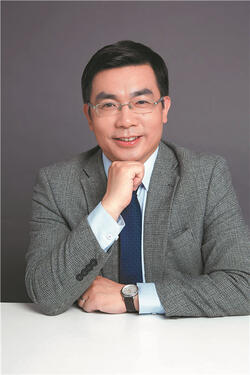
Gangsheng Bao is a Professor of Political Science at the School of International Relations and Public Affairs, Fudan University, Shanghai, China. He is also currently appointed as a Skyline Scholar at the Stanford Center on China’s Economy and Institutions, Stanford University.
Professor Bao earned his Ph.D. from Peking University in 2012. His research interests include political theory, comparative politics, and political history, with a particular focus on theories of political modernization and democratization. He has published numerous journal articles and authored several books. His major works include: The Fate of Civilization States: From Political Crisis to Modernization (2024), Political Evolution: From Ancient Times to the 21st Century (2023), Crises and Solutions: Reflections on Political Thought in Early China (2023), Politics of Democratic Breakdown (English version, 2022; Chinese version, 2014), The Logic of Democracy (2018), and The Common Sense of Modern Politics (2015).
Professor Bao’s book Politics of Democratic Breakdown was awarded the "Best Social Science Book of the Year" in 2014 by The Beijing News and was listed among the “Nineteen Recommended Chinese Books of the Year” in 2014 by The New York Times (International Chinese Network). In 2023, Political Evolution: From Ancient Times to the 21st Century was honored as one of the “Ten Best Chinese Original Books in Humanities and Social Sciences of the Year” by Tencent and as one of the “Ten Best Books of the Year” by The China Business Network. Similarly, The Fate of Civilization States: From Political Crisis to Modernization was selected as one of the “Ten Best Books of the Year” in 2024 by the Nanfang Daily. Additionally, his work The Logic of Democracy earned him the title of "Best Author of the Year" in 2018 from The Economic Observer.
Questions? Contact Xinmin Zhao at xinminzhao@stanford.edu