Paragraphs

Promoting an educated labor force is critical for emerging economies. Educational achievement, in turn, depends heavily on general cognitive abilities as well as non-cognitive skills, such as grit. Current research, however, has not examined how cognition and grit may explain the academic performance of students in an economically disadvantaged context. Thus, this study examines how IQ and grit contribute to academic achievement gains for students in poor areas of rural China. Drawing on data from 2931 students in rural China, we measure general cognitive ability, using the Wechsler Intelligence Scale for Children, Fourth Edition (WISC-IV) and Raven’s Standard Progressive Matrices (Raven IQ); non-cognitive ability, using the Short Grit Scale; and academic achievement, using a curricular-based mathematics exam. We find that IQ and grit each predict achievement gains for the average student. Grit is not positively associated with achievement gains among low-IQ students, however, suggesting that grit does not translate into academic achievement gains for students with delays in general cognitive ability.

All Publications button
1
Publication Type
Journal Articles
Publication Date
Journal Publisher
International Journal of Educational Development
Authors
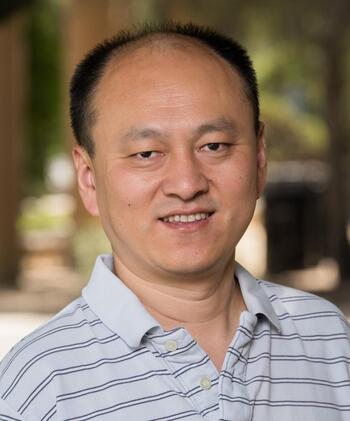
Huan Wang
Paragraphs

Little attention has been paid to the role that low levels of cognitive development (or IQ) play among both left-behind children (LBCs) and children living with parents (CLPs) in the context of poor educational attainment in rural China. In this paper, we examine how general cognitive abilities contribute to the academic achievement gains of both LBCs and CLPs in poor areas of rural China. We measure the general cognitive ability of the 4,780 sample students using the Raven’s Standard Progressive Matrices (Raven IQ) and assess academic achievement using a curriculum-based mathematics exam. We find that IQ and left-behind status predict achievement gains for the average student. Among low-IQ students, however, left-behind status does not correlate with a change in achievement, suggesting that the migration of parents does not immediately/automatically translate into a loss of academic achievement for students with delays in their general cognitive ability.

All Publications button
1
Publication Type
Journal Articles
Publication Date
Journal Publisher
Compare: A Journal of Comparative and International Education
Authors
Huan Wang
Paragraphs

Background: China issued strict nationwide guidelines to combat the COVID-19 outbreak in January 2020 and gradually loosened the restrictions on movement in early March. Little is known about how these disease control measures affected the 600 million people who live in rural China. The goal of this paper is to document the quarantine measures implemented in rural China outside the epicenter of Hubei Province and to assess the socioeconomic effect of the measures on rural communities over time.

Methods: We conducted three rounds of interviews with informants from 726 villages in seven provinces, accounting for over 25% of China’s overall rural population. The survey collected data on rural quarantine implementation; COVID-19 infections and deaths in the survey villages; and effects of the quarantine on employment, income, education, health care, and government policies to address any negative impacts. The empirical findings of the work established that strict quarantine measures were implemented in rural villages throughout China in February.

Results: There was little spread of COVID-19 in rural communities: an infection rate of 0.001% and zero deaths reported in our sample. However, there were negative social and economic outcomes, including high rates of unemployment, falling household income, rising prices, and disrupted student learning. Health care was generally accessible, but many delayed their non-COVID-19 health care due to the quarantine measures. Only 20% of villagers received any form of local government aid, and only 11% of villages received financial subsidies. There were no reports of national government aid programs that targeted rural villagers in the sample areas.

Conclusions: By examining the economic and social effects of the COVID-19 restrictions in rural communities, this study will help to guide other middle- and low-income countries in their containment and restorative processes. Without consideration for economically vulnerable populations, economic hardships and poverty will likely continue to have a negative impact on the most susceptible communities.

All Publications button
1
Publication Type
Journal Articles
Publication Date
Journal Publisher
International Journal for Equity in Health
Authors
Huan Wang
Matthew Boswell
Prashant Loyalka
Scott Rozelle
Paragraphs

Purpose: To combat poverty in China's rural areas, Chinese government has established an unconditional cash transfer program known as the Rural Minimum Living Standard Guarantee (Rural Dibao) Program. Interestingly, despite the importance of education in breaking cycles of poverty, little is known about Rural Dibao's impact on rural children's education. This study investigates Rural Dibao's impact on rural children's learning outcomes by first examining targeting issues within the program, exploring a causal relationship between Rural Dibao and learning outcomes, and then exploring potential mechanisms and heterogeneous effects.

Design/methodology/approach: Fixed effects model and propensity score weighting method and data from China Family Panel Studies (CFPS) from the years 2010 and 2014 were used.

Findings: The results suggest that the Rural Dibao program suffers from high levels of targeting error, yet is still effective (i.e., program transfers generally still go to people in need). The fixed effects and propensity score weighting models find that program participation raises rural children's standardized test scores in CFPS Chinese-language and math tests. In investigating mechanisms, increased education expenditure seems to connect Rural Dibao participation to increased learning results. The heterogeneity analysis shows that poorer, non-eastern, not left behind, younger or male children benefit from the program (while others have no effect).

Originality/value: These findings suggest that Rural Dibao participation boosts rural children's learning, which could indicate a long-term anti-poverty effect, and that if the program can resolve targeting problems, this effect could be even greater.

All Publications button
1
Publication Type
Journal Articles
Publication Date
Journal Publisher
China Agricultural Economic Review
Authors
Scott Rozelle

John A. and Cynthia Fry Gunn Building, 366 Galvez Street
Stanford, CA 94305-6015

0
Faculty Co-director of the Stanford Center on China's Economy and Institutions
Professor, by courtesy, of Economics
Senior Fellow at the Freeman Spogli Institute for International Studies
Senior Fellow at the Stanford Institute for Economic Policy Research
Director of the China, Labor, Income, and Population Research Program, Stanford Center on China's Economy and Institutions
Faculty Affiliate at the King Center of Global Development
Faculty Affiliate at Stanford Institute for Human-Centered Artificial Intelligence
5268-hongbinli.png PhD

Hongbin Li is a Senior Fellow of Stanford Institute for Economic Policy Research (SIEPR) and the Freeman Spogli Institute for International Studies (FSI).

Hongbin obtained Ph.D. in economics from Stanford University in 2001 and joined the economics department of the Chinese University of Hong Kong (CUHK), where he became full professor in 2007. He was also one of the two founding directors of the Institute of Economics and Finance at the CUHK. He taught at Tsinghua University in Beijing 2007-2016 and was C.V. Starr Chair Professor of Economics in the School of Economics and Management. He also founded and served as the Executive Associate Director of the China Social and Economic Data Center at Tsinghua University. He founded the Chinese College Student Survey (CCSS) in 2009 and the China Employer-Employee Survey (CEES) in 2014.

Hongbin’s research has been focused on the transition and development of the Chinese economy, and the evidence-based research results have been both widely covered by media outlets and well read by policy makers around the world. He is currently the co-editor of the Journal of Comparative Economics and co-author of the forthcoming book, “The Highest Exam: How the Gaokao Shapes China” published by Harvard University Press.

CV
Date Label

John A. and Cynthia Fry Gunn Building,
366 Galvez Street
Stanford, CA 94305-6015

0
8232-tina-shi-portrait.jpg

Tina Shi is the associate director of strategic partnerships at the Stanford Center on China’s Economy and Institutions (SCCEI). Tina joined Stanford in May 2019 as the associate director for the China Program at the Stanford King Center on Global Development. Before joining Stanford, Tina ran the Stanford Club of Beijing for university alumni. Her professional experience includes working for Qunar.com, China’s leading online travel company, where she was vice president of the mobile business group. Prior to that, she spent six years at GSR Ventures, a China-focused early-stage technology venture capital fund. Tina holds an MBA from the Wharton School at the University of Pennsylvania, an MA in Communication from Stanford University, and a BA in English from Fudan University. She is a recipient of the 2019-2020 Stanford Associates Award of Merit. 

Associate Director, Strategic Partnerships, Stanford Center on China's Economy and Institutions
-

Please join us for our winter seminar series of four lectures given by multidisciplinary faculty who are leading experts on China's economy and institutions. These lectures will cover discussion topics ranging from rural livelihood and environmental sustainability in China to talent and firm creation in China and will be moderated by Stanford Center on China's Economy and Institution co-directors Scott Rozelle and Hongbin Li.


Seminar 3: Tuesday, March 9, 2021 | 11:00 - 12:15 am Pacific Time

The Political Genesis of Local Government Debt in China with Professor Jean Oi, Stanford University

China’s rapidly growing local government debt (LGD) is now branded a “grey rhino,” a known threat that has received little attention.  Why did Beijing let LGD get so out of hand?  What are the sources of LGD?  Oi will argue that LGD stems from a grand bargain between the center and the localities that was made to secure support for the 1994 fiscals reforms.  This series of policy decisions institutionalized backdoor financing, creating a “win-win” solution that recentralized tax revenues to Beijing while countering the downsides of fiscal recentralization for the localities.  The cost, however, was that China’s economic growth model was increasingly undergirded by mounting LGD, with little transparency and control by the center.  


Image
Jean C. OI
About the Speaker

Jean C. Oi is the William Haas Professor of Chinese Politics in the Department of Political Science and a Senior Fellow of the Freeman Spogli Institute for International Studies (FSI) at Stanford University.  She also directs the China Program at the Walter H. Shorenstein Asia-Pacific Research Center at FSI and is the founding Lee Shau Kee Director of the Stanford Center at Peking University.  Oi has published extensively on political economy and the process of reform in China.  Recent books include Fateful Decisions: Choices That Will Shape China's Future, co-edited with Thomas Fingar (2020); and Zouping Revisited: Adaptive Governance in a Chinese County, co-edited with Steven Goldstein (2018).  Recent articles include “China’s Challenges: Now it Gets Much Harder,” co-authored with Thomas Finger, The Washington Quarterly (Spring 2020); and “After COVID-19: Rebooting Business in China,” co-authored with Jennifer Choo, Christopher Thomas, and Xue (Xander) Wu, The Diplomat (July 2020).  Her current research continues to explore central-local relations, including local government debt.  She is also in the early stages of a project on China’s Belt and Road Initiative.   


Seminar Series Moderators:

Image
Headshot of Dr. Scott Rozelle

Scott Rozelle holds the Helen Farnsworth Endowed Professorship at Stanford University and is Senior Fellow in the Food Security and Environment Program and the Shorenstein Asia-Pacific Research Center, Freeman Spogli Institute (FSI) for International Studies. For the past 30 years, he has worked on the economics of poverty reduction. Currently, his work on poverty has its full focus on human capital, including issues of rural health, nutrition and education. For the past 20 year, Rozelle has been the chair of the International Advisory Board of the Center for Chinese Agricultural Policy, Chinese Academy of Sciences (CAS). In recent years Rozelle spends most of his time co-directing the Rural Education Action Project (REAP). In recognition of this work, Dr. Rozelle has received numerous honors and awards. Among them, he became a Yangtse Scholar (Changjiang Xuezhe) in Renmin University of China in 2008. In 2008 he also was awarded the Friendship Award by Premiere Wen Jiabao, the highest honor that can be bestowed on a foreigner. 

Image
hongbin li headshot
Hongbin Li is the James Liang Director of the China Program at the Stanford King Center on Global Development, and a Senior Fellow of Stanford Institute for Economic Policy Research (SIEPR). Hongbin obtained his Ph.D. in economics from Stanford University in 2001 and joined the economics department of the Chinese University of Hong Kong (CUHK), where he became full professor in 2007. He was also one of the two founding directors of the Institute of Economics and Finance at the CUHK. He taught at Tsinghua University in Beijing 2007-2016 and was C.V. Starr Chair Professor of Economics in the School of Economics and Management. He founded the Chinese College Student Survey (CCSS) in 2009 and the China Employer-Employee Survey (CEES) in 2014.

Hongbin’s research has been focused on the transition and development of the Chinese economy, and the evidence-based research results have been both widely covered by media outlets and well read by policy makers around the world. He is currently the co-editor of the Journal of Comparative Economics.


Register Here

Register once to receive the Zoom meeting link that will be used for all lectures in this series.

Seminars
-

Please join us for our winter seminar series of four lectures given by multidisciplinary faculty who are leading experts on China's economy and institutions. These lectures will cover discussion topics ranging from rural livelihood and environmental sustainability in China to talent and firm creation in China and will be moderated by Stanford Center on China's Economy and Institution co-directors Scott Rozelle and Hongbin Li.


Seminar 3: Tuesday, February 23, 2021 | 11:00 - 12:15 am Pacific Time

Entrepreneurial Reluctance: Talent and Firm Creation in China with Professor Ruixue Jia, UC San Diego

An influential theoretical literature has long noted that talent can be used in both the entrepreneur and non-entrepreneur sectors and its allocation depends on the reward restructure. We test this insight by linking administrative college admissions data for 1.8 million individuals with information on firm registration records in China. I will open discussion on the findings of our study including who is more likely to create firms, which firms are more successful, and the overall association between entrepreneurial ability and college entrance exam scores.


Image
Headshot of Dr. Ruixue Jia.
About the Speaker

Ruixue Jia is an associate professor of economics at the School of Global Policy and Strategy at UC San Diego. Jia is interested in the interplay of economics, history and politics. One stream of her research focuses on understanding elite formation and elite influence, in both historical and modern contexts. A second focus of her work is the deep historical roots of economic development. More recently, she started following the ongoing transformation of the manufacturing sector in China and expanded her interest to labor and technology issues.


Seminar Series Moderators:

Image
Headshot of Dr. Scott Rozelle

Scott Rozelle holds the Helen Farnsworth Endowed Professorship at Stanford University and is Senior Fellow in the Food Security and Environment Program and the Shorenstein Asia-Pacific Research Center, Freeman Spogli Institute (FSI) for International Studies. For the past 30 years, he has worked on the economics of poverty reduction. Currently, his work on poverty has its full focus on human capital, including issues of rural health, nutrition and education. For the past 20 year, Rozelle has been the chair of the International Advisory Board of the Center for Chinese Agricultural Policy, Chinese Academy of Sciences (CAS). In recent years Rozelle spends most of his time co-directing the Rural Education Action Project (REAP). In recognition of this work, Dr. Rozelle has received numerous honors and awards. Among them, he became a Yangtse Scholar (Changjiang Xuezhe) in Renmin University of China in 2008. In 2008 he also was awarded the Friendship Award by Premiere Wen Jiabao, the highest honor that can be bestowed on a foreigner. 

Image
hongbin li headshot
Hongbin Li is the James Liang Director of the China Program at the Stanford King Center on Global Development, and a Senior Fellow of Stanford Institute for Economic Policy Research (SIEPR). Hongbin obtained his Ph.D. in economics from Stanford University in 2001 and joined the economics department of the Chinese University of Hong Kong (CUHK), where he became full professor in 2007. He was also one of the two founding directors of the Institute of Economics and Finance at the CUHK. He taught at Tsinghua University in Beijing 2007-2016 and was C.V. Starr Chair Professor of Economics in the School of Economics and Management. He founded the Chinese College Student Survey (CCSS) in 2009 and the China Employer-Employee Survey (CEES) in 2014.

Hongbin’s research has been focused on the transition and development of the Chinese economy, and the evidence-based research results have been both widely covered by media outlets and well read by policy makers around the world. He is currently the co-editor of the Journal of Comparative Economics.


Register Here

Register once to receive the Zoom meeting link that will be used for all lectures in this series.

Seminars
-

Please join us for our winter seminar series of four lectures given by multidisciplinary faculty who are leading experts on China's economy and institutions. These lectures will cover discussion topics ranging from rural livelihood and environmental sustainability in China to talent and firm creation in China and will be moderated by Stanford Center on China's Economy and Institution co-directors Scott Rozelle and Hongbin Li.


Seminar 2: Tuesday, February 9, 2021 | 11:00 - 12:15 am Pacific Time

A Study of Confucius Institute Teachers Around the World with Professor Jennifer Pan, Stanford University

Confucius Institutes (CI) have been accused of extending Chinese government censorship and propaganda around the world, but there are few systematic studies of how these organizations operate. By combining survey and experimental methods with qualitative analyses, we study the behavior of CI teachers with a focus on how the Chinese government imposes control over teachers and its consequences. 


Image
Headshot of Dr. Jennifer Pan
About the Speaker

Jennifer Pan is an Assistant Professor of Communication at Stanford University. Her research focuses on political communication and authoritarian politics. Pan uses experimental and computational methods with large-scale datasets on political activity in China and other authoritarian regimes to answer questions about how autocrats perpetuate their rule. How political censorship, propaganda, and information manipulation work in the digital age. How preferences and behaviors are shaped as a result.

Her book, Welfare for Autocrats: How Social Assistance in China Cares for its Rulers (Oxford, 2020) shows how China's pursuit of political order transformed the country’s main social assistance program, Dibao, for repressive purposes. Her work has appeared in peer reviewed publications such as the American Political Science Review, American Journal of Political Science, Comparative Political Studies, Journal of Politics, and Science.

She graduated from Princeton University, summa cum laude, and received her Ph.D. from Harvard University’s Department of Government.


Seminar Series Moderators:

Image
Headshot of Dr. Scott Rozelle

Scott Rozelle holds the Helen Farnsworth Endowed Professorship at Stanford University and is Senior Fellow in the Food Security and Environment Program and the Shorenstein Asia-Pacific Research Center, Freeman Spogli Institute (FSI) for International Studies. For the past 30 years, he has worked on the economics of poverty reduction. Currently, his work on poverty has its full focus on human capital, including issues of rural health, nutrition and education. For the past 20 year, Rozelle has been the chair of the International Advisory Board of the Center for Chinese Agricultural Policy, Chinese Academy of Sciences (CAS). In recent years Rozelle spends most of his time co-directing the Rural Education Action Project (REAP). In recognition of this work, Dr. Rozelle has received numerous honors and awards. Among them, he became a Yangtse Scholar (Changjiang Xuezhe) in Renmin University of China in 2008. In 2008 he also was awarded the Friendship Award by Premiere Wen Jiabao, the highest honor that can be bestowed on a foreigner. 

Image
hongbin li headshot
Hongbin Li is the James Liang Director of the China Program at the Stanford King Center on Global Development, and a Senior Fellow of Stanford Institute for Economic Policy Research (SIEPR). Hongbin obtained his Ph.D. in economics from Stanford University in 2001 and joined the economics department of the Chinese University of Hong Kong (CUHK), where he became full professor in 2007. He was also one of the two founding directors of the Institute of Economics and Finance at the CUHK. He taught at Tsinghua University in Beijing 2007-2016 and was C.V. Starr Chair Professor of Economics in the School of Economics and Management. He founded the Chinese College Student Survey (CCSS) in 2009 and the China Employer-Employee Survey (CEES) in 2014.

Hongbin’s research has been focused on the transition and development of the Chinese economy, and the evidence-based research results have been both widely covered by media outlets and well read by policy makers around the world. He is currently the co-editor of the Journal of Comparative Economics.


Register Here

Register once to receive the Zoom meeting link that will be used for all lectures in this series.

Seminars
-

Watch the Recorded Seminar

Please join us for our winter seminar series. Moderated by SCCEI Directors Scott Rozelle and Hongbin Li, the four-part series features leading experts on China, speaking on topics ranging from China's aspirations to build an ecological civilization, to talent and firm creation in China.


Image
Headshot of Dr. Gretchen Daily.
Seminar 1: Tuesday, February 2, 2021 | 11:00 - 12:15 am Pacific Time

China’s Dream: Science, Economics, and Policy for an Ecological Civilization with Professor Gretchen Daily, Stanford University

China’s efforts to build an “ecological civilization” constitute the most comprehensive strategy to achieve inclusive, sustainable development by any major economy. The aspiration is to weave the values of nature into the fabric of the economy and society.  How?  I will open discussion of the transformation being attempted and the arc of their development, both in China and globally, focusing on natural capital and economic dimensions.  These include (i) valuing nature’s contributions to people; (ii) determining where and how much nature to protect or restore, in cities and across the country; (iii) aligning livelihood security and investments in nature; and (iv) tracking progress through Gross Ecosystem Product.


Seminar Series Moderators:

Image
Headshot of Dr. Scott Rozelle

Scott Rozelle holds the Helen Farnsworth Endowed Professorship at Stanford University and is Senior Fellow in the Food Security and Environment Program and the Shorenstein Asia-Pacific Research Center, Freeman Spogli Institute (FSI) for International Studies. For the past 30 years, he has worked on the economics of poverty reduction. Currently, his work on poverty has its full focus on human capital, including issues of rural health, nutrition and education. For the past 20 year, Rozelle has been the chair of the International Advisory Board of the Center for Chinese Agricultural Policy, Chinese Academy of Sciences (CAS). In recent years Rozelle spends most of his time co-directing the Rural Education Action Project (REAP). In recognition of this work, Dr. Rozelle has received numerous honors and awards. Among them, he became a Yangtse Scholar (Changjiang Xuezhe) in Renmin University of China in 2008. In 2008 he also was awarded the Friendship Award by Premiere Wen Jiabao, the highest honor that can be bestowed on a foreigner. 

Image
hongbin li headshot
Hongbin Li is the James Liang Director of the China Program at the Stanford King Center on Global Development, and a Senior Fellow of Stanford Institute for Economic Policy Research (SIEPR). Hongbin obtained his Ph.D. in economics from Stanford University in 2001 and joined the economics department of the Chinese University of Hong Kong (CUHK), where he became full professor in 2007. He was also one of the two founding directors of the Institute of Economics and Finance at the CUHK. He taught at Tsinghua University in Beijing 2007-2016 and was C.V. Starr Chair Professor of Economics in the School of Economics and Management. He founded the Chinese College Student Survey (CCSS) in 2009 and the China Employer-Employee Survey (CEES) in 2014.

Hongbin’s research has been focused on the transition and development of the Chinese economy, and the evidence-based research results have been both widely covered by media outlets and well read by policy makers around the world. He is currently the co-editor of the Journal of Comparative Economics.

Seminars
Subscribe to China