-

In the ever-growing gulf between the U.S. and Chinese governments, what can often be lost are the citizens of the two superpowers. More difficult to sum up in a news article than the platform of a politician, public opinion is a nevertheless immensely important barometer of the U.S.-China relationship.

From an American perspective, gaining an understanding of what people in China really think can be a difficult task; with a completely different system of governance, a complex ideological history, and a social media and information ecosystem largely separate from that of the U.S., public opinion in China cannot necessarily be grafted neatly onto American perceptions of right and left.

Join the Stanford Center on China's Economy and Institutions (SCCEI) for a conversation on understanding the Chinese ideological spectrum with leading scholars in the field of contemporary Chinese politics and political communication, the first in a series of collaborations with Asia Society Southern California.

Joining us for the first feature, “Charting the Ideological Spectrum and Public Opinion in China,” is Jennifer Pan, Assistant Professor of Communication and, by courtesy, of Political Science and of Sociology, at Stanford University, and Rory Truex, Assistant Professor of Politics and International Affairs at Princeton University. Senior Adviser and Trustee Chair in Chinese Business and Economics at the Center for Strategic and International Studies Scott Kennedy will moderate.


WATCH THE RECORDING


SPEAKERS

Image
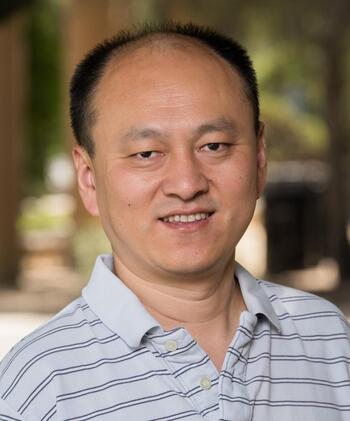
Headshot of Dr. Jennifer Pan

Jennifer Pan is an Associate Professor of Communication at Stanford University. Her research focuses on political communication and authoritarian politics. Pan uses experimental and computational methods with large-scale datasets on political activity in China and other authoritarian regimes to answer questions about how autocrats perpetuate their rule; how political censorship, propaganda, and information manipulation work in the digital age; and how preferences and behaviors are shaped as a result.

Her book, Welfare for Autocrats: How Social Assistance in China Cares for its Rulers (Oxford, 2020) shows how China's pursuit of political order transformed the country’s main social assistance program, Dibao, for repressive purposes. Her work has appeared in peer reviewed publications such as the American Political Science Review, American Journal of Political Science, Comparative Political Studies, Journal of Politics, and Science.

She graduated from Princeton University, summa cum laude, and received her Ph.D. from Harvard University’s Department of Government.

Image
Rory Truex headshot

Rory Truex is Assistant Professor of Politics and International Affairs at Princeton University. His research focuses on Chinese politics and authoritarian systems. His work has been published in the American Political Science Review, British Journal of Political Science, Journal of Politics, Comparative Political Studies, Perspectives on Politics, and The China Quarterly, and featured in the Wall Street Journal and The New York Times. In 2021 he received the President’s Award for Distinguished Teaching, the highest teaching honor at Princeton. He currently resides in Philadelphia.


MODERATOR

Image
Scott Kennedy headshot

Scott Kennedy is senior adviser and Trustee Chair in Chinese Business and Economics at the Center for Strategic and International Studies (CSIS). A leading authority on Chinese economic policy, Kennedy has been traveling to China for over 30 years. His specific areas of expertise include industrial policy, technology innovation, business lobbying, U.S.-China commercial relations, and global governance. He is the editor of China’s Uneven High-Tech Drive: Implications for the United States (CSIS, February 2020) and the author of The State and the State of the Art on Philanthropy in China (Voluntas, August 2019), China’s Risky Drive into New-Energy Vehicles (CSIS, November 2018), The Fat Tech Dragon: Benchmarking China’s Innovation Drive (CSIS, August 2017), and The Business of Lobbying in China (Harvard University Press, 2005). He has edited three books, including Global Governance and China: The Dragon’s Learning Curve (Routledge, 2018). His articles have appeared in a wide array of policy, popular, and academic venues, including The New York Times, Wall Street Journal, Foreign Affairs, Foreign Policy, and China Quarterly. He is currently writing a report tentatively titled, Beyond Decoupling: Winning the Hi-Tech Competition Against China.

From 2000 to 2014, Kennedy was a professor at Indiana University (IU), where he established the Research Center for Chinese Politics & Business and was the founding academic director of IU’s China Office. Kennedy received his Ph.D. in political science from George Washington University, his M.A. in China Studies from the Johns Hopkins School of Advanced International Studies, and his B.A. from the University of Virginia.

IN PARTNERNSHIP WITH:

Asia Society Southern California

Scott Kennedy

Zoom Webinar

Jennifer Pan
Rory Truex
Panel Discussions
All Publications button
1
Publication Type
Journal Articles
Publication Date
Subtitle

Poor knowledge, scarce resources, and lack of or misaligned incentives have been widely documented as drivers of the irrational use of medicine (IUM), which significantly challenges the efficiency of health systems across the globe. However, there is limited understanding of the influence of each factor on IUM. We used detailed data on provider treatment of presumptive asthma cases in rural China to assess the contributions of provider knowledge, resource constraints, and provider behavior on IUM. This study enrolled 370 village providers from southwest China. All providers responded to a clinical vignette to test their knowledge of how to treat presumptive asthma. Resource constraints (“capacity”) were defined as the availability of the prescribed medicines in vignette. To measure provider behavior (“performance”), a subset of providers (104 of 370) were randomly selected to receive unannounced visits by standardized patients (SPs) who performed of presumptive asthma symptoms described in the vignette. We found that, 54% (201/370) of providers provided the vignette-based patients with prescriptions. Moreover, 67% (70/104) provided prescriptions for the SPs. For the vignette, only 10% of the providers prescribed the correct medicines; 38% prescribed only unnecessary medicines (and did not provide correct medicine); 65% prescribed antibiotics (although antibiotics were not required); and 55% prescribed polypharmacy prescriptions (that is, they prescribed five or more different types of drugs). For the SP visits, the numbers were 12%, 51%, 63%, and 0%, respectively. The lower number of medicines in the SP visits was due, in part, to the injections’ not being allowed based on ethical considerations (in response to the vignette, however, 65% of providers prescribed injections). The difference between provider knowledge and capacity is insignificant, while a significant large gap exists between provider performance and knowledge/capacity (for 11 of 17 indicators). Our analysis indicated that capacity constraints play a minor role in driving IUM compared to provider performance in the treatment of asthma cases in rural China. If similar findings hold for other disease cases, this suggests that policies to reduce the IUM in rural China have largely been unsuccessful, and alternatives for improving aligning provider incentives with appropriate drug use should be explored.

Journal Publisher
Frontiers in Pharmacology
Authors
Scott Rozelle
News Type
News
Date
Hero Image
Robot arms in a factory
GettyImages
All News button
1
Subtitle

On the Sound of Economics Podcast Giuseppe Porcaro is joined by Alicia García-Herrero and Scott Rozelle to talk about the impact of industrialization and automation are having on rural and low-income workers in China.

-

Image
Big Data China logo
The CSIS Trustee Chair in Chinese Business and Economics and the Stanford Center on China’s Economy and Institutions (SCCEI) launch a new collaboration, Big Data China, to bridge the gap between cutting-edge quantitative academic research and the Washington policy community. Through regular multimedia features, written analysis, and public events, Big Data China identifies, analyzes, and introduces top academic research on China and then teases out the most relevant findings for today’s policy issues.


Please join the CSIS Trustee Chair in Chinese Business and Economics for the launch of the inaugural feature, “Public Opinion in China: A Liberal Silent Majority?” which highlights the work of Stanford professors Jennifer Pan and Yiqing Xu on recent trends in Chinese public opinion. CSIS Trustee Chair Scott Kennedy and SCCEI co-director Scott Rozelle will offer opening remarks and moderate the panel discussion. Jennifer Pan and Yiqing Xu will present the main findings of their research. Panelists include Carla Freeman of the U.S. Institute of Peace, Suisheng Zhao of University of Denver, Bruce Dickson of George Washington University, and Jessica Chen Weiss of Cornell University and the U.S. Department of State.

Watch the recorded event:

FEATURING

Jennifer Pan
Associate Professor of
Communication, Stanford
University
Yiqing Xu
Assistant Professor of Political Science, Stanford University
Carla Freeman
Senior Expert for China, United
States Institute of Peace & Senior
Fellow, SAIS Foreign Policy Institute
Suisheng Zhao
Professor & Director, Center for China-U.S. Cooperation, University of Denver
Bruce Dickson
Professor of Political Science and International Affairs, George Washington University
Jessica Chen Weiss
Professor of Government, Cornell University; Senior Advisor, Secretary's Policy Planning Staff, U.S. Department of State
Scott Rozelle
Helen F. Farnsworth Senior Fellow,
FSI and SIEPR, & Co-director, SCCEI, Stanford University
Scott Kennedy
Senior Adviser and Trustee Chair in Chinese Business and Economics, CSIS


EVENT PARTNERS
 

Image
SCCEI and CSIS logos

Scott Kennedy
Scott Rozelle

Virtual Livestream 

Bruce Dickson
Carla Freeman
Jennifer Pan
Jessica Chen Weiss
Yiqing Xu
Suisheng Zhao
Panel Discussions
Date Label
News Type
News
Date
Hero Image
Kids sit at desks in a classroom in rural China.
Rural Education Action Program
All News button
1
Subtitle

The Little Red Podcast interviewed FSI senior fellow and SCCEI co-director Scott Rozelle on their podcast to discuss whether common prosperity in China can trickle down to the countryside or not and how China's rural population came to be where they are today.

-
China Chats with Stanford Faculty event header by the Stanford Center on China's Economy and Institutions

China Chats with Stanford Faculty 


Friday, March 4, 2022          5 - 6 PM Pacific Time 
Saturday, March 5, 2022    9 - 10 AM Beijing Time


Information Flow Between Global and Chinese Social Media

Despite the connectivity of social media, the Chinese government has been extremely successful in using controls such as firewalls and filtering to restrict the transnational flow of information into China. Does information from global social media flow into China? What types of information are transmitted and by whom? In this talk, Professor Jennifer Pan will share answers to these questions based on on-going research where she analyzed 14 million tweets to identify viral Twitter content pertaining to the COVID-19 outbreak and China during the first quarter of 2020. She developed a system that combines deep learning and human annotation to determine whether these viral tweets appear in a corpus of 8.3 million Weibo posts related to COVID-19 from the same period.

This Stanford alumni event features Stanford professor Jennifer Pan, Associate Professor of Communication, and Associate Professor, by courtesy, of Political Science and Sociology at Stanford University. She is joined by professor Hongbin Li, co-director of Stanford Center on China's Economy, and Senior Fellow at the Stanford Institute for Economic Policy Research (SIEPR) and Freeman Spogli Institute for International Studies (FSI), who moderated a discussion about the major themes of the research. A question and answer session with the audience follows the discussion.


About the Speakers
 

Image
Headshot of Dr. Jennifer Pan

Jennifer Pan is an Associate Professor of Communication, and an Associate Professor, by courtesy, of Political Science and Sociology at Stanford University. Pan received her Ph.D. in Government from Harvard University and her A.B. from Princeton University's School of Public and International Affairs.

Her research resides at the intersection of political communication and comparative politics, showing how authoritarian governments try to control society in the digital age, how the public responds, and when and why each is successful. Her book, Welfare for Autocrats: How Social Assistance in China Cares for its Rulers (Oxford, 2020) shows how China’s pursuit of political order transformed the country’s main social assistance program, Dibao, for repressive purposes. Her work has appeared in peer reviewed publications such as the American Political Science Review, American Journal of Political Science, and Science. 

Image
Dr. Hongbin Li

Hongbin Li is the Co-Director of the Stanford Center on China's Economy and Institutions (SCCEI) and a Senior Fellow of Stanford Institute for Economic Policy Research (SIEPR). Hongbin obtained his Ph.D. in economics from Stanford University in 2001 and joined the economics department of the Chinese University of Hong Kong (CUHK), where he became full professor in 2007. He was also one of the two founding directors of the Institute of Economics and Finance at the CUHK. He taught at Tsinghua University in Beijing 2007-2016 and was C.V. Starr Chair Professor of Economics in the School of Economics and Management. He also founded and served as the Executive Associate Director of the China Social and Economic Data Center at Tsinghua University. He founded the Chinese College Student Survey (CCSS) in 2009 and the China Employer-Employee Survey (CEES) in 2014.

Hongbin’s research has been focused on the transition and development of the Chinese economy, and the evidence-based research results have been both widely covered by media outlets and well read by policy makers around the world. He is currently the co-editor of the Journal of Comparative Economics.


Questions? Contact Debbie Aube at debbie.aube@stanford.edu


Watch the recording:

Hongbin Li

Zoom Webinar

Jennifer Pan Associate Professor of Communication Stanford University
Lectures
Date Label
-

Wednesday, March 9, 2022 | 4:00-5:15 pm Pacific Time

Integrating Nature into Policy & Finance for Transformation in China

In response to escalating ecosystem degradation, China has avowed to transform its development model and build an “ecological civilization” that “harmonizes humanity and nature”. I will discuss science-based policy innovation designed to achieve three key goals in support of this vision.  The first is to secure the vital benefits of nature to people – such as climate stability, water security, and food security – targeting key regions and sectors.  The second is to drive investments in protecting and revitalizing both natural capital and also human livelihoods and well-being.  The third is to evaluate and track progress, moving beyond gross domestic product (GDP) to include a new system of accounts and high-level metric called gross ecosystem product (GEP).  


About the Speaker


Dr. Ouyang Zhiyun is Professor and director, Research Center for Eco-Environmental Sciences, Chinese Academy of Sciences.  His research interests include ecosystem assessment, ecosystem services, ecosystem restoration and biodiversity conservation. In recent years, he has made his main efforts in mainstreaming ecosystem services in policy making for ecosystem conservation, restoration and land management in China, including national ecosystem survey and assessment of China, national framework of ecological redline planning, national key ecological functional area identification, national park network planning, giant panda protection, and national ecological transfer payment. Dr. Ouyang has played a key role in conservation policy innovation in China since 2000.


Seminar Series Moderators

Image
Headshot of Dr. Scott Rozelle

Scott Rozelle is the Helen F. Farnsworth Senior Fellow and the co-director of Stanford Center on China's Economy and Institutions in the Freeman Spogli Institute for International Studies and Stanford Institute for Economic Policy Research at Stanford University.  For the past 30 years, he has worked on the economics of poverty reduction. Currently, his work on poverty has its full focus on human capital, including issues of rural health, nutrition and education. For the past 20 year, Rozelle has been the chair of the International Advisory Board of the Center for Chinese Agricultural Policy, Chinese Academy of Sciences (CAS). Most recently, Rozelle's research focuses on the economics of poverty and inequality, with an emphasis on rural education, health and nutrition in China. In recognition of this work, Dr. Rozelle has received numerous honors and awards. Among them, he became a Yangtse Scholar (Changjiang Xuezhe) in Renmin University of China in 2008. In 2008 he also was awarded the Friendship Award by Premiere Wen Jiabao, the highest honor that can be bestowed on a foreigner. 

Image
hongbin li headshot

Hongbin Li is the Co-director of Stanford Center on China's Economy and Institutions, and a Senior Fellow of Stanford Institute for Economic Policy Research (SIEPR) and the Freeman Spogli Institute for International Studies (FSI). Hongbin obtained his Ph.D. in economics from Stanford University in 2001 and joined the economics department of the Chinese University of Hong Kong (CUHK), where he became full professor in 2007. He was also one of the two founding directors of the Institute of Economics and Finance at the CUHK. He taught at Tsinghua University in Beijing 2007-2016 and was C.V. Starr Chair Professor of Economics in the School of Economics and Management. He founded the Chinese College Student Survey (CCSS) in 2009 and the China Employer-Employee Survey (CEES) in 2014.

Hongbin’s research has been focused on the transition and development of the Chinese economy, and the evidence-based research results have been both widely covered by media outlets and well read by policy makers around the world. He is currently the co-editor of the Journal of Comparative Economics.


Register Here

Register once to receive the Zoom meeting link that will be used for all lectures in this series.

Academic Seminar | Zoom Meeting
Registration Required

Ouyang Zhiyun
Seminars
650-724-4503
0
xinmin_zhao.jpg

Xinmin is a Program Manger at the Stanford Center on China's Economy and Institutions (SCCEI). Before join SCCEI, Xinmin was an administrator with the King Center on Global Development at the Stanford Institute for Economic Policy Research since January 2018. She has previously worked as an associate director at the Academic Service Center for the Fudan Development Institute (FDDI) at Fudan University in China. She holds a master's degree in political science from Fudan University. She is the translator of three books published in China: "The Military Revolution and Political Change: Origins of Democracy and Autocracy in Early Modern Europe", "The Dolphin Way: A Parent's Guide to Raising Healthy, Happy, and Motivated Kids-Without Turning into a Tiger" and "Teenagers Learn What They Live: Parenting to Inspire Integrity & Independence".

Program Manager, Stanford Center on China's Economy and Institutions
Date Label
All Publications button
1
Publication Type
Journal Articles
Publication Date
Subtitle

Background: Social-emotional development during the first three years of life is associated with later social-emotional development and cognitive development. In rural China, research has found large shares of children under age three are developmentally delayed, yet little is known about the paths of social-emotional development before age 3 or how developmental paths predict later social-emotional skills and cognitive skills. 

Aims: To investigate the paths of child social-emotional development during ages 0–3 and examine how different paths predict social-emotional development and cognitive development at preschool age. 

Methods: Three waves of longitudinal panel data from 1245 children in rural Western China was collected. Child social-emotional development was measured by the Ages and Stages Questionnaire: Social-Emotional. Child cognitive development was measured by the Bayley Scales of Infant Development and by the Wechsler Preschool and Primary Scale of Intelligence-Fourth Edition. Four paths of child social-emotional development were classified: “never” social-emotionally delayed; “persistently” social-emotionally delayed; “improving,” or “deteriorating.” 

Results: 331 (27%) were never social-emotionally delayed; 373 children (30%) were persistently social-emotionally delayed; 149 children (12%) experienced improving social-emotional development; and 392 children (31%) experienced deteriorating social-emotional development. Children who were never social-emotionally delayed or who were on an “improving” path had higher social-emotional development at preschool age (p < .01). Children who were persistently social-emotionally delayed (p < .5) and on a deteriorating path (p < .01) had lower social-emotional development at preschool age. Children on the persistently delay path also were shown to have lower levels of cognitive development at preschool age (p < .01). 

Conclusions: Different paths of child social-emotional development before age 3 are associated with different social-emotional and cognitive development at preschool age.

Journal Publisher
Early Human Development
Authors
Scott Rozelle
Subscribe to China