Location:
Bechtel Conference Center
Encina Hall
616 Jane Stanford Way, Stanford University
9:00 AM - 9:30 AM Registration & Light Breakfast
9:30 AM - 9:45 AM Welcome & Opening Remarks
Scott Rozelle
Faculty Co-director of the Stanford Center on China's Economy and Institutions
Helen F. Farnsworth Endowed Professorship; Senior Fellow at the Freeman Spogli Institute for International Studies and at the Stanford Institute for Economic Policy Research
Stanford University
9:45 AM - 10:30 AM Morning Fireside Chat
Elizabeth Economy
Hargrove Senior Fellow, Hoover Institution
Stanford University
Moderator:
Hongbin Li
Faculty Co-director of the Stanford Center on China's Economy and Institutions
The James Liang Endowed Chair; Senior Fellow at the Freeman Spogli Institute for International Studies and at the Stanford Institute for Economic Policy Research
Stanford University
10:30 AM - 11:00 AM Break
11:00 AM - 12:00 PM Session 1 | The View from Beijing: China's Economic Ambitions in a Changing World
Session Panelists:
Gangsheng Bao
Professor of Political Science, Fudan University
Skyline Scholar, Stanford Center on China’s Economy and Institutions
Jonathan Czin
Michael H. Armacost Chair in Foreign Policy Studies, John L. Thornton China Center
Brookings Institute
Stephen Kotkin
Senior Fellow, Freeman Spogli Institute for International Studies;
Kleinheinz Senior Fellow, Hoover Institution
Stanford University
Moderator:
Ruixue Jia
Professor of Economics, School of Global Policy and Strategy
University of California San Diego
12:00 PM - 1:00 PM Lunch
1:00 PM - 2:00 PM Session 2 | China Inc.: The Role of State and Private Enterprises in Fulfilling China's Ambitions
Session Panelists:
Nan Jia
Professor of Management and Organization
University of Southern California
Arthur Kroeber
Founding Partner
Gavekal Dragonomics
Dan Wang
Research Fellow, Hoover Institution
Stanford University
Moderator:
Zhiguo He
James Irvin Miller Professor of Finance, Stanford Graduate School of Business; Faculty Affiliate, Stanford Center on China’s Economy and Institutions,
Stanford University
2:00 PM - 2:30 PM Break
2:30 PM - 3:15 PM Afternoon Keynote
Sean Stein
President, U.S.-China Business Council
Moderator:
Scott Rozelle
Faculty Co-director of the Stanford Center on China's Economy and Institutions
Stanford University
3:15 PM - 3:45 PM Break
3:45 PM – 4:45 PM Session 3 | China in the Global Economy: Disruptor, Competitor, Partner?
Session Panelists:
Deborah Brautigam
Director of the China Africa Research Initiative; Bernard L. Schwartz Professor of Political Economy Emerita
Johns Hopkins University
Kyle Chan
Postdoctoral Research Associate and Lecturer in Sociology
Princeton University
Ramin Toloui
Distinguished Policy Fellow, Stanford Institute for Economic Policy Research
Stanford University
Moderator:
Shaoda Wang
Skyline Scholar, Stanford Center on China's Economy and Institutions, Stanford University; Assistant Professor, Harris School of Public Policy, University of Chicago
4:45 PM - 5:00 PM Closing Remarks
Hongbin Li
Faculty Co-director of the Stanford Center on China's Economy and Institutions
Stanford University
5:00 PM - 6:00 PM Reception in the Courtyard

Gangsheng Bao, Professor of Political Science, Fudan University; Skyline Scholar, Stanford Center on China’s Economy and Institutions
Gangsheng Bao is a Professor of Political Science at the School of International Relations and Public Affairs, Fudan University, and a Skyline Scholar at the Stanford Center on China’s Economy and Institutions. He earned his Ph.D. from Peking University in 2012. His research interests include political theory, comparative politics, and political history, focusing on political modernization and democratization. He has published numerous journal articles and authored several books, including The Fate of Civilization States: From Political Crisis to Modernization (2024), Political Evolution: From Ancient Times to the 21st Century (2023), Crises and Solutions: Reflections on Political Thought in Early China (2023), The Logic of Democracy (2018), The Common Sense of Modern Politics (2015), and Politics of Democratic Breakdown (2014). His works have received multiple awards, including "Best Social Science Book of the Year" (2014).

Deborah Brautigam, Director of the China Africa Research Initiative; Bernard L. Schwartz Professor of Political Economy Emerita, Johns Hopkins University
Deborah Brautigam is the Director of the China Africa Research Initiative and Bernard L. Schwartz Professor of Political Economy Emerita at Johns Hopkins University’s School of Advanced International Studies (SAIS). Her recent books include The Dragon’s Gift: The Real Story of China in Africa (Oxford University Press, 2011) and Will Africa Feed China? (Oxford University Press, 2015). She has been a visiting scholar at the World Bank, a senior research fellow at the International Food Policy Research Institute (IFPRI) and advised more than a dozen governments on China-Africa relations. Her PhD is from the Fletcher School, Tufts University.

Kyle Chan, Postdoctoral Research Associate and Lecturer in Sociology, Princeton University
Kyle Chan is a postdoctoral researcher in the Sociology Department at Princeton University and an adjunct researcher with the RAND Corporation. His work focuses on industrial policy, clean technology, and infrastructure development in China and India. Dr. Chan has testified as an expert for the U.S.-China Economic and Security Review Commission and has been cited in international media, including the Financial Times, The New Yorker, Nikkei Asia, Times of India, and Le Monde. He writes a popular newsletter on these topics called High Capacity.

Jonathan Czin, Michael H. Armacost Chair in Foreign Policy Studies, John L. Thornton China Center, Brookings Institute
Jonathan A. Czin is the Michael H. Armacost Chair in Foreign Policy Studies and a fellow in the John L. Thornton China Center at the Brookings Institution. He is a former member of the Senior Analytic Service at the CIA, where he was one of the intelligence community’s top China experts. Czin led analysis on Chinese politics and policymaking, briefing senior policymakers on President Xi Jinping and key issues. From 2021 to 2023, he was director for China at the National Security Council, advising on White House diplomacy with China. Czin previously served at the Department of Defense and a CIA field station in Southeast Asia. Czin holds a master’s from Yale University, graduated magna cum laude from Haverford College, and studied at Oxford University.

Elizabeth Economy, Hargrove Senior Fellow, Hoover Institution, Stanford University
Elizabeth Economy is the Hargrove Senior Fellow and co-chair of the Program on the U.S., China, and the World at the Hoover Institution. From 2021 to 2023, she served as senior advisor for China at the Department of Commerce. Previously, she was the C.V. Starr Senior Fellow and director for Asia Studies at the Council on Foreign Relations for over a decade. An expert on Chinese domestic and foreign policy, Economy is the author of The World According to China (2022), The Third Revolution: Xi Jinping and the New Chinese State (2018), and By All Means Necessary: How China’s Resource Quest Is Changing the World (2014). Her work has been widely recognized and translated into a dozen languages. Economy has published in top journals, appeared on national television and radio, and testified before Congress. She serves on the boards of several organizations, including the National Committee on U.S.-China Relations, and has taught at multiple prestigious universities.

Zhiguo He, James Irvin Miller Professor of Finance, Stanford Graduate School of Business; Faculty Affiliate, Stanford Center on China’s Economy and Institutions, Stanford University
Zhiguo He is the James Irvin Miller Professor of Finance at the Graduate School of Business, Stanford University. He is a financial economist whose expertise covers financial markets, financial institutions, and macroeconomics broadly. He is also conducting academic research on Chinese financial markets, and writing academic articles on new progress in the area of cryptocurrency and blockchains. Before joining Stanford GSB, he was on the faculty of Chicago Booth from 2008 to 2023, where he received tenure in 2015 and led Becker Friedman Institute China from 2020 to 2023. He holds degrees from Tsinghua University and a PhD from Northwestern. He was named a 2014 Alfred P. Sloan Research Fellow, and has won numerous awards for his outstanding scholastic record.

Nan Jia, Professor of Management and Organization, University of Southern California
Nan Jia is Professor of Strategic Management. She holds a PhD in Strategic Management from the Rotman School of Management, University of Toronto (Canada). Her research interests include corporate political strategy, business-governance relationships, and applications of Artificial Intelligence technologies in management. Nan’s research has been published in multiple top journals in strategic management. She currently serves as an associate editor for the Strategic Management Journal and on the editorial boards of multiple leading academic journals.

Ruixue Jia, Professor of Economics, School of Global Policy and Strategy, University of California San Diego
Ruixue Jia is a professor of economics at the School of Global Policy and Strategy at UC San Diego. She also serves as co-director of the China Data Lab, executive secretary of the Association of Comparative Economic Studies (ACES) and co-chair of the China Economic Summer Institute (CESI). Jia’s research lies at the intersections of economics, history and politics, with a focus on how power structures evolve and shape economic development. Her recent work examines the political economy of idea formation and diffusion, including the interplay between the state, education, science and technology. She is the co-author of The Highest Exam, a forthcoming book that explores how China’s education system both mirrors and molds its society.

Stephen Kotkin, Senior Fellow, Freeman Spogli Institute for International Studies; Kleinheinz Senior Fellow, Hoover Institution, Stanford University
Stephen Kotkin is the Kleinheinz Senior Fellow at the Hoover Institution and a senior fellow at the Asian Pacific Research Center at the Freeman Spogli Institute for International Studies, both at Stanford. He directs the Hoover History Lab, which uses history to address contemporary policy challenges. At Princeton, where he taught for 33 years, he directed the Princeton Institute for International and Regional Studies, where he established the Wythes Center for Contemporary China and the Chadha Center on Global India, among other endeavors, and edited a book series on Northeast Asia. He is completing a multivolume biography of Joseph Stalin.

Arthur R. Kroeber, Founding Partner, Gavekal Dragonomics
Arthur R. Kroeber is the founder of Gavekal Dragonomics, a China-focused economic research firm with offices in Beijing and Hong Kong; and partner in its parent firm Gavekal. Before establishing Dragonomics in 2002, he spent fifteen years as a financial and economic journalist in China and South Asia. He is adjunct professor of economics at the NYU Stern School of Business and a member of the Council on Foreign Relations and the National Committee on US-China Relations. His book China’s Economy: What Everyone Needs to Know (2nd edition 2020) is published by Oxford University Press.

Hongbin Li, The James Liang Endowed Chair; Faculty Co-director of Stanford Center on China’s Economy and Institutions, Stanford University
Hongbin Li is the Co-director of Stanford Center on China's Economy and Institutions, and a Senior Fellow of Stanford Institute for Economic Policy Research and the Freeman Spogli Institute for International Studies. Li obtained his Ph.D. in economics from Stanford University in 2001 before joining the economics department at the Chinese University of Hong Kong (CUHK). He was also one of the two founding directors of the Institute of Economics and Finance at the CUHK. He taught at Tsinghua University from 2007 to 2016 in the School of Economics and Management and was the founder and Executive Associate Director of the China Social and Economic Data Center. Li’s research has been focused on the transition and development of the Chinese economy, and the evidence-based research results have been both widely covered by media outlets and well read by policy makers around the world. He is currently the co-editor of the Journal of Comparative Economics and co-author of the forthcoming book, The Highest Exam: How the Gaokao Shapes China, published by Harvard University Press.

Scott Rozelle, Helen F. Farnsworth Endowed Professorship; Faculty Co-director of Stanford Center on China’s Economy and Institutions, Stanford University
Scott Rozelle is the Helen F. Farnsworth Senior Fellow and the co-director of Stanford Center on China's Economy and Institutions in the Freeman Spogli Institute for International Studies and Stanford Institute for Economic Policy Research at Stanford University. He received his B.S. from the University of California, Berkeley, and his M.S. and Ph.D. from Cornell University. Previously, Rozelle was a professor at the University of California, Davis and an assistant professor in Stanford’s Food Research Institute and department of economics. His research focuses almost exclusively on China and is concerned with agricultural policy, including the supply, demand, and trade in agricultural projects; the emergence and evolution of markets and other economic institutions in the transition process and their implications for equity and efficiency; and the economics of poverty and inequality, with an emphasis on rural education, health, and nutrition. His book, Invisible China: How the Urban-Rural Divide Threatens China’s Rise, was published in 2020 by The University of Chicago Press.

Sean Stein, President, U.S.-China Business Council
Sean Stein is the president of the US-China Business Council. He previously served as the board chair of the American Chamber of Commerce in China and is the chair emeritus of the American Chamber of Commerce in Shanghai. He also co-chaired the China Public Policy Practice at Covington and Burling where he advised international businesses on political risk, public affairs, communications, and US and China government relations. Sean previously served for nearly three decades as a US diplomat, including as Consul General in Shenyang and Shanghai. He also served on the China desk at the State Department, at the former consulate general in Chengdu, and in other positions around the Indo-Pacific. Sean speaks Mandarin and Indonesian and is a graduate of Georgetown University.

Ramin Toloui, Distinguished Policy Fellow, Stanford Institute for Economic Policy Research, Stanford University
Ramin Toloui is a Distinguished Policy Fellow at the Stanford Institute for Economic Policy Research, focusing on global economic and geopolitical competition, financial crises, and critical technologies. From 2022 to 2024, he served as Assistant Secretary of State for Economic and Business Affairs, shaping U.S. economic strategy, strengthening global supply chains, and overseeing sanctions programs. From 2014 to 2017, he was Assistant Secretary for International Finance at the U.S. Treasury, managing global financial stability efforts. Toloui played a key role in shaping the U.S. government’s approaches to navigating Ukraine’s financial crisis, threats to Eurozone financial stability, Brexit, and China’s foreign exchange and market volatility. Before joining the U.S. Treasury, Toloui served as Global Co-Head of Emerging Markets Portfolio Management at PIMCO. Toloui holds degrees from Harvard University and Oxford University.
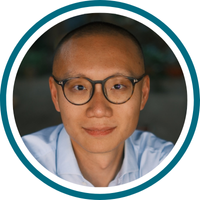
Dan Wang, Research Fellow, Hoover Institution, Stanford University
Dan Wang is a research fellow at the Hoover Institution and is one of the leading international experts on China’s technological capabilities, especially semiconductors and clean tech. Dan was previously a fellow at the Yale Law School's Paul Tsai China Center. From 2017 to 2023, Dan worked in China as the technology analyst at Gavekal Dragonomics, based in Hong Kong, Beijing, and then Shanghai. In addition to a widely circulated annual letter from China, Dan’s essays have appeared in the New York Times, Foreign Affairs, the Financial Times, New York Magazine, and The Atlantic. Dan is the author of Breakneck: China’s Quest to Engineer the Future, forthcoming in Fall 2025 from W. W. Norton (US) and Penguin (UK).

Shaoda Wang, Skyline Scholar, Stanford Center on China's Economy and Institutions, Stanford University; Assistant Professor, Harris School of Public Policy, University of Chicago
Shaoda Wang is an Assistant Professor at the University of Chicago Harris School of Public Policy, 2024-25 Skyline Scholar at the Stanford Center on China’s Economy and Institutions, a Faculty Research Fellow at the National Bureau of Economic Research (NBER), and an affiliate of the Bureau for Research and Economic Analysis in Development (BREAD). He also serves as the deputy faculty director of the China branches of the Becker Friedman Institute for Economics (BFI-China) and the Energy Policy Institute at UChicago (EPIC-China). He is an applied economist with research interests in development economics, environmental economics, and political economy, with a regional focus on China. He holds a BA from Peking University and a PhD from the University of California, Berkeley.