-

Tuesday, October 19, 2021 | 11:00am-12:15pm Pacific Time

Ethnic Discrimination in Criminal Sentencing in China (Joint work with Rory Truex)

We present the first analysis of ethnic discrimination in sentencing patterns in China, focusing on drug cases in Yunnan province. We posit the "problem minority" hypothesis, which holds that discrimination in an authoritarian system emerges when an ethnic group becomes. associated with behavior that generates social instability. On average, minority defendants in Yunnan receive sentences that are about 2.1 to 7.5 months longer than Han defendants that have committed similar drug crimes. Further analysis of data from all provinces reveals that this bias is largest for groups heavily involved in the drug trade, and in provinces with significant minority populations and drugs.


About the Speaker

Image
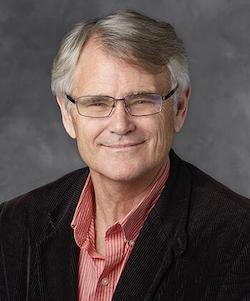
Headshot of Dr. Yue Hou
Yue Hou is the Janice and Julian Bers Assistant Professor in the Social Sciences in the department of political science at the University of Pennsylvania. Her research centers on the political economy of non-democracies, with a regional focus on China.  She is interested in how individual actors (e.g., citizens, firms) interact with the state and state agents that are not held accountable by elections, and how these interactions affect outcomes such as economic growth, government service, quality of institutions, and policy changes. Her book The Private Sector in Public Office: Selective Property Rights in China (October 2019, Cambridge University Press) examines strategies Chinese private entrepreneurs use to protect property from expropriation. Hou is a faculty affiliate of Penn's Center for the Study of Contemporary China (CSCC), Penn Identity and Conflict Lab (PIC Lab), and Penn Development Research Initiative (PDRI).


Seminar Series Moderators:

Image
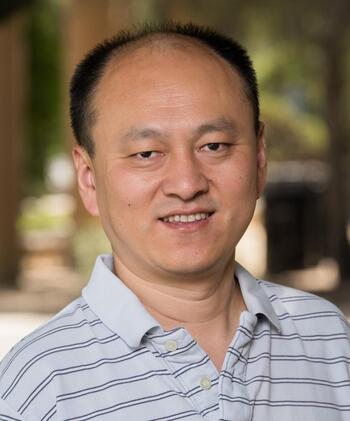
Headshot of Dr. Scott Rozelle

Scott Rozelle is the Helen F. Farnsworth Senior Fellow and Co-Director of Stanford Center on China's Economy and Institutions in the Freeman Spogli Institute for International Studies and Stanford Institute for Economic Policy Research at Stanford University. For the past 30 years, he has worked on the economics of poverty reduction. Currently, his work on poverty has its full focus on human capital, including issues of rural health, nutrition and education. For the past 20 year, Rozelle has been the chair of the International Advisory Board of the Center for Chinese Agricultural Policy, Chinese Academy of Sciences (CAS). In recent years Rozelle spends most of his time co-directing the Rural Education Action Project (REAP). In recognition of his outstanding achievements, Rozelle has received numerous honors and awards, including the Friendship Award in 2008, the highest award given to a non-Chinese by the Premier; and the National Science and Technology Collaboration Award in 2009 for scientific achievement in collaborative research.

Image
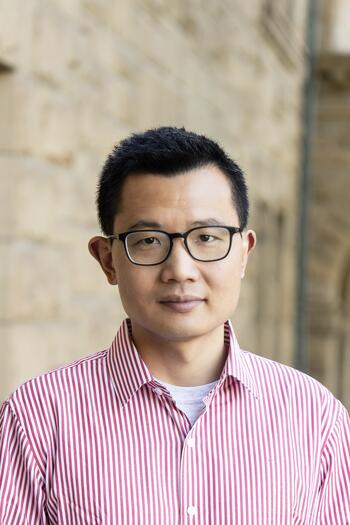
hongbin li headshot
Hongbin Li is the James Liang Senior Fellow and Co-Director of the Stanford Center on China's Economy and Institutions in Freeman Spogli Institute for International Studies and the Stanford Institute for Economic Policy Research. Hongbin obtained his Ph.D. in economics from Stanford University in 2001 and joined the economics department of the Chinese University of Hong Kong (CUHK), where he became full professor in 2007. He was also one of the two founding directors of the Institute of Economics and Finance at the CUHK. He taught at Tsinghua University in Beijing 2007-2016 and was C.V. Starr Chair Professor of Economics in the School of Economics and Management. He also founded and served as the Executive Associate Director of the China Social and Economic Data Center at Tsinghua University. He founded the Chinese College Student Survey (CCSS) in 2009 and the China Employer-Employee Survey (CEES) in 2014.

Hongbin’s research has been focused on the transition and development of the Chinese economy, and the evidence-based research results have been both widely covered by media outlets and well read by policy makers around the world . He is currently the co-editor of the Journal of Comparative Economics.


Register Here

Register once to receive the Zoom meeting link that will be used for all lectures in this series.

Zoom Meeting
Registration Required 

Professor Yue Hou
Seminars
-

Controlling the Narrative: The Coordination & Disciplining Role of the People's Daily in China with Professor Joseph Piotroski, Stanford University

This seminar provides an overview of corporate news reporting in China, with a focus on understanding the political and market-based incentives behind Chinese newspapers' biased coverage of China's listed companies. And, given these prevailing incentives, we will explore how politicians in China use the Party's flagship newspaper, the People’s Daily, to coordinate the reporting of corporate news in China.


Image
Headshot of Dr. Joseph Piotroski
About the Speaker

Joseph Piotroski is the Robert K. Jaedicke Professor of Accounting at Stanford University’s Graduate School of Business, and a Senior Fellow at the Asian Bureau of Finance and Economic Research (ABFER). Professor Piotroski earned his PhD from the University of Michigan in 1999, an MBA from Indiana University in 1994, a BS in Accounting from the University of Illinois in 1989, and worked as a tax consultant for Coopers and Lybrand in Chicago. His research focuses on corporate transparency, governance, and regulation in a global context. His current research examines the impact of legal, political, and regulatory forces on capital market behavior and corporate decision-making, most notably in China and other emerging economies. His research has been published in scholarly journals in the areas of accounting, finance, and economics, and his research on value investing has been frequently cited in the popular press and is widely used in practice. 


Seminar Series Moderators:

Image
Headshot of Dr. Scott Rozelle

Scott Rozelle is the Helen F. Farnsworth Senior Fellow and Co-Director of Stanford Center on China's Economy and Institutions in the Freeman Spogli Institute for International Studies and Stanford Institute for Economic Policy Research at Stanford University. For the past 30 years, he has worked on the economics of poverty reduction. Currently, his work on poverty has its full focus on human capital, including issues of rural health, nutrition and education. For the past 20 year, Rozelle has been the chair of the International Advisory Board of the Center for Chinese Agricultural Policy, Chinese Academy of Sciences (CAS). In recent years Rozelle spends most of his time co-directing the Rural Education Action Project (REAP). In recognition of his outstanding achievements, Rozelle has received numerous honors and awards, including the Friendship Award in 2008, the highest award given to a non-Chinese by the Premier; and the National Science and Technology Collaboration Award in 2009 for scientific achievement in collaborative research.

Image
hongbin li headshot
Hongbin Li is the James Liang Senior Fellow and Co-Director of the Stanford Center on China's Economy and Institutions in Freeman Spogli Institute for International Studies and the Stanford Institute for Economic Policy Research. Hongbin obtained his Ph.D. in economics from Stanford University in 2001 and joined the economics department of the Chinese University of Hong Kong (CUHK), where he became full professor in 2007. He was also one of the two founding directors of the Institute of Economics and Finance at the CUHK. He taught at Tsinghua University in Beijing 2007-2016 and was C.V. Starr Chair Professor of Economics in the School of Economics and Management. He also founded and served as the Executive Associate Director of the China Social and Economic Data Center at Tsinghua University. He founded the Chinese College Student Survey (CCSS) in 2009 and the China Employer-Employee Survey (CEES) in 2014.

Hongbin’s research has been focused on the transition and development of the Chinese economy, and the evidence-based research results have been both widely covered by media outlets and well read by policy makers around the world . He is currently the co-editor of the Journal of Comparative Economics.


Register Here

Joseph Piotroski
Seminars
-

Tuesday, May 25, 2021 | 11:00am-12:15 pm Pacific Time

Institutional Genes: Confucianism vs. Christianity

This talk was based on a chapter of my ongoing book project titled “Institutional Genes: A Comparative Analysis of Origins of China’s Institutions.” Confucianism / Imperial-Exam-System is one of three what I called institutional genes of China's institutions. As a comparison, Christianity is an institutional gene for other institutions, including constitutional democracy (in the West) on the one hand and totalitarianism (in the Soviet Union), which is implanted into China on the other hand.  In this talk, I’ll explain how Confucianism/  Imperial-Exam-System is created and evolved, and why it is an institutional gene that affects today’s institutions in China.   

Watch the Recorded Event:


Image
Headshot of Dr. Chenggang Xu.
About the Speaker

Chenggang Xu is Visiting Professor at Finance Department, Imperial College London. He is one of the first recipients (joint with Yingyi Qian) of China Economics Prize for contributions in understanding government and enterprise incentive mechanisms for the transition economy of China. 

Dr Xu received his PhD in Economics from Harvard in 1991. He is currently a board member of the Ronald Coase Institute (RCI) and a research fellow of the CEPR. He has previously taught at the London School of Economics (1991-2009) as a Reader, at the University of Hong Kong (2009-2016) as Chung Hon-Dak Professor in Economic Development and as Quoin Professor in Economic Development (2008-2016), and as Special-Term Visiting Professor at Tshinghua University (2002-). He has also taught and worked at Harvard (1992-2002), the IMF (1997-1999) and the Chinese Academy of Social Sciences (1982-1992). He was the President of the Asian Law and Economics Association (2010-2012) and World-Class University Professor at Seoul National University (2009-2013). He won the Sun Yefang Economics Prize in 2013. In 2016, he was the joint winner of the China Economics Prize.


Seminar Series Moderators:

Image
Headshot of Dr. Scott Rozelle

Scott Rozelle holds the Helen Farnsworth Endowed Professorship at Stanford University and is Senior Fellow in the Food Security and Environment Program and the Shorenstein Asia-Pacific Research Center, Freeman Spogli Institute (FSI) for International Studies. For the past 30 years, he has worked on the economics of poverty reduction. Currently, his work on poverty has its full focus on human capital, including issues of rural health, nutrition and education. For the past 20 year, Rozelle has been the chair of the International Advisory Board of the Center for Chinese Agricultural Policy, Chinese Academy of Sciences (CAS). In recent years Rozelle spends most of his time co-directing the Rural Education Action Project (REAP). In recognition of this work, Dr. Rozelle has received numerous honors and awards. Among them, he became a Yangtse Scholar (Changjiang Xuezhe) in Renmin University of China in 2008. In 2008 he also was awarded the Friendship Award by Premiere Wen Jiabao, the highest honor that can be bestowed on a foreigner. 
Image
hongbin li headshot
Hongbin Li is the James Liang Director of the China Program at the Stanford King Center on Global Development, and a Senior Fellow of Stanford Institute for Economic Policy Research (SIEPR). Hongbin obtained his Ph.D. in economics from Stanford University in 2001 and joined the economics department of the Chinese University of Hong Kong (CUHK), where he became full professor in 2007. He was also one of the two founding directors of the Institute of Economics and Finance at the CUHK. He taught at Tsinghua University in Beijing 2007-2016 and was C.V. Starr Chair Professor of Economics in the School of Economics and Management. He founded the Chinese College Student Survey (CCSS) in 2009 and the China Employer-Employee Survey (CEES) in 2014.

Hongbin’s research has been focused on the transition and development of the Chinese economy, and the evidence-based research results have been both widely covered by media outlets and well read by policy makers around the world. He is currently the co-editor of the Journal of Comparative Economics.


Zoom Meeting

Seminars
-

Tuesday, May 11, 2021 | 11:00am-12:15 pm Pacific Time

The Political Economy of Policy Experimentations in China

Policy learning, often involving experimentations, is an essential component of government's decision making. In this project, we aim to describe and understand China's policy experimentations, which are speculated by many to have played a vital role in fostering China's reform and growth. We collect comprehensive data on policy experimentations conducted in China over the past 4 decades by 139 ministries and commissions. In sum, our results suggest that policy experimentations take place under various political and bureaucratic constraints, which could limit the scope and bias the direction of policy learning.

Watch the Recorded Event:


Image
Headshot of Dr. David Yang
About the Speaker

David Yang is an Assistant Professor of Economics at Harvard University, as well as a Faculty Research Fellow at the National Bureau of Economic Research (NBER) and Global Scholar at the Canadian Institute for Advanced Research (CIFAR). His research focuses on political economy, behavioral and experimental economics, economic history, and cultural economics. In particular, David studies the forces of stability and forces of changes in authoritarian regimes, drawing lessons from historical and contemporary China.


Seminar Series Moderators:

Image
Headshot of Dr. Scott Rozelle

Scott Rozelle holds the Helen Farnsworth Endowed Professorship at Stanford University and is Senior Fellow in the Food Security and Environment Program and the Shorenstein Asia-Pacific Research Center, Freeman Spogli Institute (FSI) for International Studies. For the past 30 years, he has worked on the economics of poverty reduction. Currently, his work on poverty has its full focus on human capital, including issues of rural health, nutrition and education. For the past 20 year, Rozelle has been the chair of the International Advisory Board of the Center for Chinese Agricultural Policy, Chinese Academy of Sciences (CAS). In recent years Rozelle spends most of his time co-directing the Rural Education Action Project (REAP). In recognition of this work, Dr. Rozelle has received numerous honors and awards. Among them, he became a Yangtse Scholar (Changjiang Xuezhe) in Renmin University of China in 2008. In 2008 he also was awarded the Friendship Award by Premiere Wen Jiabao, the highest honor that can be bestowed on a foreigner. 

Image
hongbin li headshot
Hongbin Li is the James Liang Director of the China Program at the Stanford King Center on Global Development, and a Senior Fellow of Stanford Institute for Economic Policy Research (SIEPR). Hongbin obtained his Ph.D. in economics from Stanford University in 2001 and joined the economics department of the Chinese University of Hong Kong (CUHK), where he became full professor in 2007. He was also one of the two founding directors of the Institute of Economics and Finance at the CUHK. He taught at Tsinghua University in Beijing 2007-2016 and was C.V. Starr Chair Professor of Economics in the School of Economics and Management. He founded the Chinese College Student Survey (CCSS) in 2009 and the China Employer-Employee Survey (CEES) in 2014.

Hongbin’s research has been focused on the transition and development of the Chinese economy, and the evidence-based research results have been both widely covered by media outlets and well read by policy makers around the world. He is currently the co-editor of the Journal of Comparative Economics.

Zoom Meeting

Seminars
-

China Chats with Stanford Faculty


USA vs China:  A New Cold War? Great Power Relations and Competition in the 21st Century

Thirty years ago, the Cold War ended. Today, great power competition is back – or so it seems – with many describing our present era as a “New Cold War” between the United States and China (and Russia). But is this label an illuminating or distorting analogy? More importantly, what should the U.S. do to meet the challengers of great power competition in the 21st century? 

In analyzing contemporary relations, we must trace the historical origins of the U.S.-China relationship, then assess the similarities and differences between the Cold War and U.S.-China relations today along dimensions such as power, ideology, and multilateralism, in order to effectively devise unilateral, bilateral, and multilateral policy prescriptions for U.S. policymakers.

This Stanford alumni event featured Stanford professor Michael McFaul, director at the Freeman Spogli Institute for International Studies. He was joined by professor Hongbin Li, co-director of Stanford Center on China's Economy, who moderated a discussion about the major themes of the research. 

Watch the event recording:


About the Speakers:

Image
Headshot of Michael McFaul - 3x4
Michael McFaul is Director at the Freeman Spogli Institute for International Studies, the Ken Olivier and Angela Nomellini Professor of International Studies in the Department of Political Science, and the Peter and Helen Bing Senior Fellow at the Hoover Institution. He joined the Stanford faculty in 1995.

Dr. McFaul also is as an International Affairs Analyst for NBC News and a columnist for The Washington Post. He served for five years in the Obama administration, first as Special Assistant to the President and Senior Director for Russian and Eurasian Affairs at the National Security Council at the White House (2009-2012), and then as U.S. Ambassador to the Russian Federation (2012-2014).

He has authored several books, most recently the New York Times bestseller From Cold War to Hot Peace: An American Ambassador in Putin’s Russia. Earlier books include Advancing Democracy Abroad: Why We Should, How We Can; Transitions To Democracy: A Comparative Perspective (eds. with Kathryn Stoner); Power and Purpose: American Policy toward Russia after the Cold War (with James Goldgeier); and Russia’s Unfinished Revolution: Political Change from Gorbachev to Putin.

His current research interests include American foreign policy, great power relations, and the relationship between democracy and development. Dr. McFaul was born and raised in Montana. He received his B.A. in International Relations and Slavic Languages and his M.A. in Soviet and East European Studies from Stanford University in 1986. As a Rhodes Scholar, he completed his D. Phil. in International Relations at Oxford University in 1991.


Image
hongbin li headshot
Hongbin Li is the Co-Director of the Stanford Center on China's Economy and Institutions (SCCEI) and a Senior Fellow of Stanford Institute for Economic Policy Research (SIEPR). Hongbin obtained his Ph.D. in economics from Stanford University in 2001 and joined the economics department of the Chinese University of Hong Kong (CUHK), where he became full professor in 2007. He was also one of the two founding directors of the Institute of Economics and Finance at the CUHK. He taught at Tsinghua University in Beijing 2007-2016 and was C.V. Starr Chair Professor of Economics in the School of Economics and Management. He also founded and served as the Executive Associate Director of the China Social and Economic Data Center at Tsinghua University. He founded the Chinese College Student Survey (CCSS) in 2009 and the China Employer-Employee Survey (CEES) in 2014.

Hongbin’s research has been focused on the transition and development of the Chinese economy, and the evidence-based research results have been both widely covered by media outlets and well read by policy makers around the world . He is currently the co-editor of the Journal of Comparative Economics.


Seminars
-

Tuesday, April 27, 2021 | 4:30 - 5:45 pm Pacific Time

China's Belt and Road Initiative (BRI): A Look at the Evidence with Professor Albert Park, Hong Kong University of Science and Technology 

China’s Belt and Road Initiative (BRI) has attracted polarized debate over China’s motives with relatively little evidence. We analyze project-level data on China’s outbound foreign direct investments (FDI) and construction projects to examine several key questions related to the Initiative. First, we study the impact of the BRI on the amount of outbound FDI to BRI countries and examine whether the importance of economic, governance, and other factors in explaining China’s outbound FDI flows to different countries changed under the BRI. We find that after the BRI began, the importance of economic fundamentals declined while the importance of governance factors increased. Second, we quantify the role of state-owned enterprises in the Initiative and compare the nature and determinants of SOE investments to those made by private firms. Finally, to examine the impact of the Initiative on China’s soft power, we study changes in sentiment by using AI algorithms to conduct textual analysis of millions of media articles around the world.

Watch the Recorded Event: 


Image
Headshot of Dr. Albert Park.
About the Speaker

Albert Park is a development and labor economist who is an expert on China’s economic development. He is Head and Chair Professor of Economics, Chair Professor of Social Science, Professor of Public Policy, and Director of the Center for Economic Policy at HKUST. His research and commentary has appeared in the Economist, New York Times, Washington Post, Wall Street Journal, China Daily, BBC, CNN, NBC, Bloomberg, Freakonomics, and NPR. In recent years he has published articles in leading economics journals on firm performance, poverty and inequality, migration and employment, health and education, and the economics of aging in China. Prof. Park has played a leadership role in numerous survey research projects in China including the China Employer-Employee Survey (CEES), the China Urban Labor Survey (CULS), the Gansu Survey of Children and Families (GSCF), and the China Health and Retirement Longitudinal Study (CHARLS). He previously held faculty appointments at the University of Michigan and Oxford University, and has consulted frequently for the World Bank.


Seminar Series Moderators:

Image
Headshot of Dr. Scott Rozelle

Scott Rozelle holds the Helen Farnsworth Endowed Professorship at Stanford University and is Senior Fellow in the Food Security and Environment Program and the Shorenstein Asia-Pacific Research Center, Freeman Spogli Institute (FSI) for International Studies. For the past 30 years, he has worked on the economics of poverty reduction. Currently, his work on poverty has its full focus on human capital, including issues of rural health, nutrition and education. For the past 20 year, Rozelle has been the chair of the International Advisory Board of the Center for Chinese Agricultural Policy, Chinese Academy of Sciences (CAS). In recent years Rozelle spends most of his time co-directing the Rural Education Action Project (REAP). In recognition of this work, Dr. Rozelle has received numerous honors and awards. Among them, he became a Yangtse Scholar (Changjiang Xuezhe) in Renmin University of China in 2008. In 2008 he also was awarded the Friendship Award by Premiere Wen Jiabao, the highest honor that can be bestowed on a foreigner. 

Image
hongbin li headshot
Hongbin Li is the James Liang Director of the China Program at the Stanford King Center on Global Development, and a Senior Fellow of Stanford Institute for Economic Policy Research (SIEPR). Hongbin obtained his Ph.D. in economics from Stanford University in 2001 and joined the economics department of the Chinese University of Hong Kong (CUHK), where he became full professor in 2007. He was also one of the two founding directors of the Institute of Economics and Finance at the CUHK. He taught at Tsinghua University in Beijing 2007-2016 and was C.V. Starr Chair Professor of Economics in the School of Economics and Management. He founded the Chinese College Student Survey (CCSS) in 2009 and the China Employer-Employee Survey (CEES) in 2014.

Hongbin’s research has been focused on the transition and development of the Chinese economy, and the evidence-based research results have been both widely covered by media outlets and well read by policy makers around the world. He is currently the co-editor of the Journal of Comparative Economics.

Zoom Meeting

Seminars
-

China Chats with Stanford Faculty

The Rise of Robots in China with Professor Hongbin Li

China’s production and adoption of robotic technology have accelerated rapidly in recent years, surpassing Japan, US, and Germany. Stanford professor Hongbin Li and a team of scholars draw on multi-year field research data to show fresh insights into China’s aggressive push into automation—specifically, the increasing use of robots—to maintain its status as the “world’s factory.” His analysis offers an unprecedented look at what’s happening at the factory level, and fresh insight into how rising labor costs, an aging population and government policies are reshaping Chinese manufacturing.

In this Stanford alumni event, Hongbin Li, co-director of Stanford Center on China's Economy and Institutions and senior fellow at the Stanford Institute for Economic Policy Research, was joined by Scott Rozelle, co-director of Stanford Center on China's Economy and Institutions and senior fellow at the Freeman Spogli Institute for International Studies, who moderated a discussion about the major themes of the research. 

Watch the event recording:


About the Speakers:

Image
hongbin li headshot

Hongbin Li is the Co-Director of the Stanford Center on China's Economy and Institutions (SCCEI) and a Senior Fellow of Stanford Institute for Economic Policy Research (SIEPR). Hongbin obtained his Ph.D. in economics from Stanford University in 2001 and joined the economics department of the Chinese University of Hong Kong (CUHK), where he became full professor in 2007. He was also one of the two founding directors of the Institute of Economics and Finance at the CUHK. He taught at Tsinghua University in Beijing 2007-2016 and was C.V. Starr Chair Professor of Economics in the School of Economics and Management. He also founded and served as the Executive Associate Director of the China Social and Economic Data Center at Tsinghua University. He founded the Chinese College Student Survey (CCSS) in 2009 and the China Employer-Employee Survey (CEES) in 2014.

Hongbin’s research has been focused on the transition and development of the Chinese economy, and the evidence-based research results have been both widely covered by media outlets and well read by policy makers around the world . He is currently the co-editor of the Journal of Comparative Economics.


Image
Headshot of Dr. Scott Rozelle
Scott Rozelle is the Helen F. Farnsworth Senior Fellow and the co-director of Stanford Center on China's Economy and Institutions in the Freeman Spogli Institute for International Studies and Stanford Institute for Economic Policy Research at Stanford University.  For the past 30 years, he has worked on the economics of poverty reduction. Currently, his work on poverty has its full focus on human capital, including issues of rural health, nutrition and education. For the past 20 year, Rozelle has been the chair of the International Advisory Board of the China Center for Agricultural Policy in Peking University. In recent years Rozelle spends most of his time co-directing the Rural Education Action Project (REAP). In recognition of this work, Dr. Rozelle has received numerous honors and awards. Among them, he became a Yangtse Scholar (Changjiang Xuezhe) in Renmin University of China in 2008. In 2008 he also was awarded the Friendship Award by Premier Wen Jiabao, the highest honor that can be bestowed on a foreigner. 

Seminars
-

This seminar has been cancelled. Please join us for our next seminar in the series with Professor Albert Park on April 27, 2021.

Controlling the Narrative with Professor Joseph Piotroski, Stanford University

This seminar provides an overview of corporate news reporting in China, with a focus on understanding the political and market-based incentives behind Chinese newspapers' biased coverage of China's listed companies. And, given these prevailing incentives, we will explore how politicians in China use the Party's flagship newspaper, the People’s Daily, to coordinate the reporting of corporate news in China.


Image
Headshot of Dr. Joseph Piotroski
About the Speaker

Joseph Piotroski is the Robert K. Jaedicke Professor of Accounting at Stanford University’s Graduate School of Business, and a Senior Fellow at the Asian Bureau of Finance and Economic Research (ABFER). Professor Piotroski earned his PhD from the University of Michigan in 1999, an MBA from Indiana University in 1994, a BS in Accounting from the University of Illinois in 1989, and worked as a tax consultant for Coopers and Lybrand in Chicago. His research focuses on corporate transparency, governance, and regulation in a global context. His current research examines the impact of legal, political, and regulatory forces on capital market behavior and corporate decision-making, most notably in China and other emerging economies. His research has been published in scholarly journals in the areas of accounting, finance, and economics, and his research on value investing has been frequently cited in the popular press and is widely used in practice. 


Seminar Series Moderators:

Image
Headshot of Dr. Scott Rozelle

Scott Rozelle holds the Helen Farnsworth Endowed Professorship at Stanford University and is Senior Fellow in the Food Security and Environment Program and the Shorenstein Asia-Pacific Research Center, Freeman Spogli Institute (FSI) for International Studies. For the past 30 years, he has worked on the economics of poverty reduction. Currently, his work on poverty has its full focus on human capital, including issues of rural health, nutrition and education. For the past 20 year, Rozelle has been the chair of the International Advisory Board of the Center for Chinese Agricultural Policy, Chinese Academy of Sciences (CAS). In recent years Rozelle spends most of his time co-directing the Rural Education Action Project (REAP). In recognition of this work, Dr. Rozelle has received numerous honors and awards. Among them, he became a Yangtse Scholar (Changjiang Xuezhe) in Renmin University of China in 2008. In 2008 he also was awarded the Friendship Award by Premiere Wen Jiabao, the highest honor that can be bestowed on a foreigner. 

Image
hongbin li headshot
Hongbin Li is the James Liang Director of the China Program at the Stanford King Center on Global Development, and a Senior Fellow of Stanford Institute for Economic Policy Research (SIEPR). Hongbin obtained his Ph.D. in economics from Stanford University in 2001 and joined the economics department of the Chinese University of Hong Kong (CUHK), where he became full professor in 2007. He was also one of the two founding directors of the Institute of Economics and Finance at the CUHK. He taught at Tsinghua University in Beijing 2007-2016 and was C.V. Starr Chair Professor of Economics in the School of Economics and Management. He founded the Chinese College Student Survey (CCSS) in 2009 and the China Employer-Employee Survey (CEES) in 2014.

Hongbin’s research has been focused on the transition and development of the Chinese economy, and the evidence-based research results have been both widely covered by media outlets and well read by policy makers around the world. He is currently the co-editor of the Journal of Comparative Economics.


Register Here

Register once to receive the Zoom meeting link that will be used for all lectures in this series.

Seminars
-

China Chats with Stanford Faculty

"Invisible China: How the Urban-Rural Divide Threatens China's Rise"

Friday, March 12, 2021 5 PM - 6 PM PDT

Saturday, March 13, 2021 9 AM - 10 AM Beijing


As the glittering skyline in Shanghai seemingly attests, China has quickly transformed itself from a place of stark poverty into a modern, urban, technologically savvy economic powerhouse. But as FSI Senior Fellow Scott Rozelle shows in his new book Invisible China, the truth is much more complicated and might be a serious cause for concern. 

Drawing on extensive surveys on the ground in China, Rozelle reveals that while China may be the second-largest economy in the world, its labor force has one of the lowest levels of education of any comparable country. The low levels of basic education of such a large share of workers may leave many unable to find work in the formal workplace as China’s economy changes and as manufacturing jobs both begin to automate and move elsewhere 

In this Stanford alumni event, Rozelle, who is also the co-director of Stanford Center on China's Economy and Institutions and senior fellow at the Freeman Spogli Institute for International Studies, will be joined by Hongbin Li, co-director of Stanford Center on China's Economy and Institutions and senior fellow at the Stanford Institute for Economic Policy Research, who will moderate a discussion about the major themes of the book. 

A question and answer session with the audience will follow the discussion.


About the Speakers:

Image
Headshot of Dr. Scott Rozelle
Scott Rozelle is the Helen F. Farnsworth Senior Fellow and the co-director of Stanford Center on China's Economy and Institutions in the Freeman Spogli Institute for International Studies and Stanford Institute for Economic Policy Research at Stanford University.  For the past 30 years, he has worked on the economics of poverty reduction. Currently, his work on poverty has its full focus on human capital, including issues of rural health, nutrition and education. For the past 20 year, Rozelle has been the chair of the International Advisory Board of the China Center for Agricultural Policy in Peking University. In recent years Rozelle spends most of his time co-directing the Rural Education Action Project (REAP). In recognition of this work, Dr. Rozelle has received numerous honors and awards. Among them, he became a Yangtse Scholar (Changjiang Xuezhe) in Renmin University of China in 2008. In 2008 he also was awarded the Friendship Award by Premier Wen Jiabao, the highest honor that can be bestowed on a foreigner. 


Image
hongbin li headshot
Hongbin Li is the James Liang Director of the China Program at the Stanford King Center on Global Development, and a Senior Fellow of Stanford Institute for Economic Policy Research (SIEPR). Hongbin’s research has been focused on the transition and development of the Chinese economy, and the evidence-based research results have been both widely covered by media outlets and well read by policy makers around the world. He is currently the co-editor of the Journal of Comparative Economics.


Register Here

Zoom Webinar
Registration Required


Seminars
-

Please join us for our winter seminar series of four lectures given by multidisciplinary faculty who are leading experts on China's economy and institutions. These lectures will cover discussion topics ranging from rural livelihood and environmental sustainability in China to talent and firm creation in China and will be moderated by Stanford Center on China's Economy and Institution co-directors Scott Rozelle and Hongbin Li.


Seminar 3: Tuesday, March 9, 2021 | 11:00 - 12:15 am Pacific Time

The Political Genesis of Local Government Debt in China with Professor Jean Oi, Stanford University

China’s rapidly growing local government debt (LGD) is now branded a “grey rhino,” a known threat that has received little attention.  Why did Beijing let LGD get so out of hand?  What are the sources of LGD?  Oi will argue that LGD stems from a grand bargain between the center and the localities that was made to secure support for the 1994 fiscals reforms.  This series of policy decisions institutionalized backdoor financing, creating a “win-win” solution that recentralized tax revenues to Beijing while countering the downsides of fiscal recentralization for the localities.  The cost, however, was that China’s economic growth model was increasingly undergirded by mounting LGD, with little transparency and control by the center.  


Image
Jean C. OI
About the Speaker

Jean C. Oi is the William Haas Professor of Chinese Politics in the Department of Political Science and a Senior Fellow of the Freeman Spogli Institute for International Studies (FSI) at Stanford University.  She also directs the China Program at the Walter H. Shorenstein Asia-Pacific Research Center at FSI and is the founding Lee Shau Kee Director of the Stanford Center at Peking University.  Oi has published extensively on political economy and the process of reform in China.  Recent books include Fateful Decisions: Choices That Will Shape China's Future, co-edited with Thomas Fingar (2020); and Zouping Revisited: Adaptive Governance in a Chinese County, co-edited with Steven Goldstein (2018).  Recent articles include “China’s Challenges: Now it Gets Much Harder,” co-authored with Thomas Finger, The Washington Quarterly (Spring 2020); and “After COVID-19: Rebooting Business in China,” co-authored with Jennifer Choo, Christopher Thomas, and Xue (Xander) Wu, The Diplomat (July 2020).  Her current research continues to explore central-local relations, including local government debt.  She is also in the early stages of a project on China’s Belt and Road Initiative.   


Seminar Series Moderators:

Image
Headshot of Dr. Scott Rozelle

Scott Rozelle holds the Helen Farnsworth Endowed Professorship at Stanford University and is Senior Fellow in the Food Security and Environment Program and the Shorenstein Asia-Pacific Research Center, Freeman Spogli Institute (FSI) for International Studies. For the past 30 years, he has worked on the economics of poverty reduction. Currently, his work on poverty has its full focus on human capital, including issues of rural health, nutrition and education. For the past 20 year, Rozelle has been the chair of the International Advisory Board of the Center for Chinese Agricultural Policy, Chinese Academy of Sciences (CAS). In recent years Rozelle spends most of his time co-directing the Rural Education Action Project (REAP). In recognition of this work, Dr. Rozelle has received numerous honors and awards. Among them, he became a Yangtse Scholar (Changjiang Xuezhe) in Renmin University of China in 2008. In 2008 he also was awarded the Friendship Award by Premiere Wen Jiabao, the highest honor that can be bestowed on a foreigner. 

Image
hongbin li headshot
Hongbin Li is the James Liang Director of the China Program at the Stanford King Center on Global Development, and a Senior Fellow of Stanford Institute for Economic Policy Research (SIEPR). Hongbin obtained his Ph.D. in economics from Stanford University in 2001 and joined the economics department of the Chinese University of Hong Kong (CUHK), where he became full professor in 2007. He was also one of the two founding directors of the Institute of Economics and Finance at the CUHK. He taught at Tsinghua University in Beijing 2007-2016 and was C.V. Starr Chair Professor of Economics in the School of Economics and Management. He founded the Chinese College Student Survey (CCSS) in 2009 and the China Employer-Employee Survey (CEES) in 2014.

Hongbin’s research has been focused on the transition and development of the Chinese economy, and the evidence-based research results have been both widely covered by media outlets and well read by policy makers around the world. He is currently the co-editor of the Journal of Comparative Economics.


Register Here

Register once to receive the Zoom meeting link that will be used for all lectures in this series.

Seminars
Subscribe to Seminars