
Seeing Like a State: The Organizational Logic of China’s Corporate Social Credit System with Lauren Yu-hsin Lin, Curtis Milhaupt, and Scott Rozelle
Seeing Like a State: The Organizational Logic of China’s Corporate Social Credit System with Lauren Yu-hsin Lin, Curtis Milhaupt, and Scott Rozelle
Wednesday, October 7, 202612:00 PM - 1:30 PM (Pacific)
Goldman Conference Room, Encina Hall, E409
Seeing Like a State: The Organizational Logic of China’s Corporate Social Credit System
The digitization of surveillance has expanded the capacities of the government to monitor corporate behavior. Using panel data of listed firms in Zhejiang Province from 2021 to 2023, we examine the organizational logic of China’s Corporate Social Credit System (CSCS), a digital governance instrument designed to assess the “trustworthiness” of firms. By design, more “trustworthy” firms will be subject to less government monitoring and have better access to government contracts and market financing. The empirical evidence shows that the CSCS rewards organizational characteristics associated with regulatory compliance and political embeddedness, while firms with more independent boards are less likely to gain points through Social Responsibility activities such as charity and government awards. This pattern reflects a broader logic of rendering firms administratively legible to the state. Cross-sectional analysis suggests that the channels of political embeddedness shift over time, from latent personal political ties to the more recent, formal Party-building provisions adopted across the largely non-SOE sample. The evidence also supports a behavior modification effect, with lower-rated firms improving their scores over time, mainly by paying back taxes and administrative fines, while top-rated firms remain stable. In addition, variation in scores across firms is driven mainly by persistent, firm-level differences rather than by changes in firm characteristics over time. Our findings reveal the logic of CSCS in institutionalizing a hierarchical order of corporate “trustworthiness” through which corporate activities become administratively legible, thereby advancing a distinct state-centric model of corporate governance.
About the Speakers
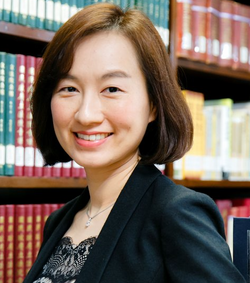
Lauren Yu-Hsin Lin (J.S.D. ’10) is a Professor of Law at City University of Hong Kong, President of the Asian Law and Economics Association (AsLEA), and a Research Member of the European Corporate Governance Institute (ECGI). A former corporate attorney, her empirical research explores Chinese corporate governance, securities regulation, and state-market institutions—focusing on political influence, party-building in enterprises, and regulatory developments in China. Her scholarship is published in leading journals, including the Journal of Legal Studies and The China Quarterly, cited by the U.S. SEC and U.S.-China Economic and Security Review Commission, and featured in The Wall Street Journal and The Economist.
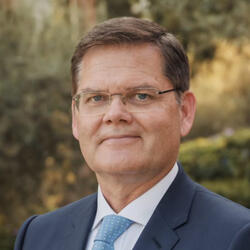
Curtis J. Milhaupt is an internationally recognized expert on comparative corporate governance, the legal systems of East Asia (particularly Japanese law), and state capitalism. He is a Fellow of the European Corporate Governance Institute (ECGI) and an elected member of the American Law Institute.
In addition to numerous scholarly articles, he has co-authored or edited seven books, including Regulating the Visible Hand? The Institutional Implications of Chinese State Capitalism (Oxford, 2016), Law and Capitalism: What Corporate Crises Reveal about Legal Systems and Economic Development Around the World (Chicago, 2008) and Transforming Corporate Governance in East Asia (Routledge, 2008). His research has been profiled in The Economist, the Financial Times, and the Wall Street Journal and has been widely translated. He is the 2024 recipient of the Cleary Gottlieb Prize for his ECGI working paper, “The (Geo)Politics of Controlling Shareholders.”

Scott Rozelle is the Helen F. Farnsworth Senior Fellow at the Freeman Spogli Institute for International Studies and Stanford Institute for Economic Policy Research at Stanford University. He received his BS from the University of California, Berkeley, and his MS and PhD from Cornell University. Previously, Rozelle was a professor at the University of California, Davis and an assistant professor in Stanford’s Food Research Institute and department of economics. He currently is a member of several organizations, including the American Economics Association, the International Association for Agricultural Economists, and the Association for Asian Studies. Rozelle also serves on the editorial boards of Economic Development and Cultural Change, Agricultural Economics, the Australian Journal of Agricultural and Resource Economics, and the China Economic Review.
His research focuses almost exclusively on China and is concerned with: agricultural policy, including the supply, demand, and trade in agricultural projects; the emergence and evolution of markets and other economic institutions in the transition process and their implications for equity and efficiency; and the economics of poverty and inequality, with an emphasis on rural education, health and nutrition.