
Jikun Huang: My 30 years with the China Center for Agricultural Policy
Jikun Huang: My 30 years with the China Center for Agricultural Policy
Jikun Huang reflects on his 30 years with the China Center for Agricultural at Peking University and how the founding of the center was deeply influenced by his chance encounter with Scott Rozelle in the Philippines in 1988.
This article was originally written by Jikun Huang in Mandarin and published by Peking University. Read the original article here.
Founding
The story of the China Center for Agricultural Policy (CCAP) started with my encounter with Scott Rozelle in the Philippines in 1988. Then a Ph.D. student at Cornell University, Scott attended an international conference hosted by Dr. Cristina David, my advisor at the International Rice Research Institute (IRRI). This chance encounter started our collaboration that has lasted 30 years and continues today. We both completed our graduate studies in 1990: Scott began teaching at Stanford University, while I started my postgraduate work at IRRI after receiving my degree from IRRI and the University of the Philippines, Los Baños (UPLB).
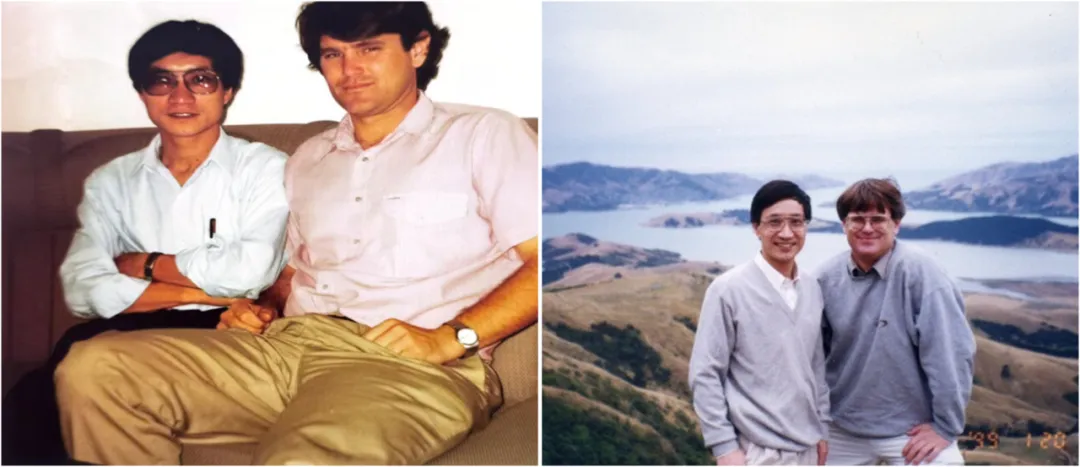
Jikun Huang and Scott Rozelle.
Between 1990 and 1992, we submitted a joint project proposal to study China’s rice economy to the International Development Research Center (IDRC). I returned to China in 1992 and initiated the project with Scott at the National Rice Research Institute under the Chinese Academy of Agricultural Sciences (CAAS). Besides producing many important findings, the project helped us discover a cohort of talented scholars, including Yongzhong Qian, Ting Zuo, and Ruifa Hu, who later became my Ph.D. advisee at Zhejiang Agricultural University. Scott and I have since become not only collaborators in research, but also mentors and friends to each other.
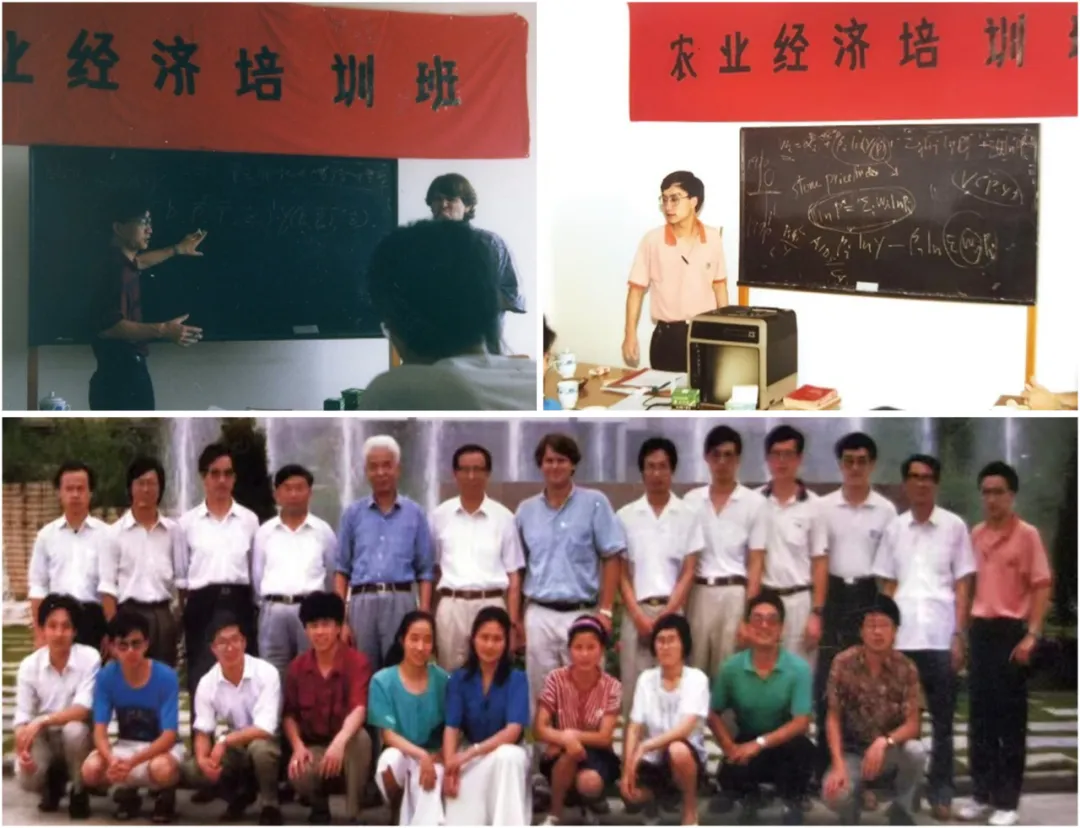
The agricultural economics project team in 1992.
The decision to establish CCAP was deeply informed by my experience at the International Food Policy Research Institute (IFPRI). After being promoted to become the youngest principal investigator at CAAS in 1993, I joined IFPRI to conduct research on its 2020 Vision Initiative. During my time there, Lester R. Brown, founder of the Worldwatch Institute, proposed in his famous opinion piece that “China could starve the world in 2020.” I felt compelled to rebut his claim and, inspired by IFPRI’s framework for agricultural policy research, sought to establish a research institution for agricultural policy in China. My idea received support from Scott and Dr. Xigang Zhu, then director of the Institute of Agricultural Economics at CAAS. I also contacted Linxiu Zhang, my colleague at UPLB, and Ninghui Li, a collaborator of IFPRI, to enlist their support. When my decision finally reached Dr. Per Pinstrup-Andersen, then director of IFPRI, he felt surprised by my decision to return to China but excited by the prospect of my establishing a “mini-IFPRI” there.
I travelled back to China in August 1995 and started preparing for CCAP in September. Our first office was two small rooms on the first floor of an unassuming two-story building in the computation center of CAAS in Beijing. In the rooms were computers, files, and a laser printer I purchased in the U.S.– since then it had served us loyally for years, only retiring when we relocated out of CAAS. The team at the time included me, Linxiu, two graduate students, and a research assistant. With help from Scott and Songqing Jin, my assistant at the China National Rice Research Institute, CCAP’s work began in fall 1995.
The first months at the office were sprinkled with many fun and memorable moments: I gave the students a budget of 500 CNY to buy a thermos so that we can drink hot water in the office; They brought back an electric kettle with a button-operated dispenser, a luxury item that turned out to be our most trusty office appliance.
After about six months in the small office in the computation center, we relocated in the spring of 1996 to an office in the Institute of Agricultural Economics. The Institute offered a suite of four rooms to accommodate our team, which grew with the joining of new scholars, including Ruifa Hu and Ninghui Li. With newly acquired funding, we equipped our office with state-of-the-art infrastructure, complete with corner desks, swivel office chairs, and cubicle dividers. Even our logo, which we designed ourselves, stood out at the time for its creativity.
The center’s administrative structure was also innovative for its time. Thanks to support from my mentors and the senior agricultural economists at CAAS, like director Xigang Zhu and Dr. Fangquan Mei, the center remained financially independent from the Institute. Its staff received an annual salary, and its expenses were managed independently to allow for more efficient allocation.
In May 1996, the center was officially named as the Center for Chinese Agricultural Policy. Our first large-scale field research in rural China began that summer and lasted for over a month. For many of us, this was our first foray into standardized field research, and it left a lasting impression: Many of the children we surveyed dropped out of school due to poverty. In 1997, I proposed that we pool a research award the center had received and a proportion of our wage together to start a financial aid program for children struggling with poverty to stay in schools. The proposal was warmly welcomed by my colleagues and collaborators. On our behalf, education officials in Xingguo County in Jiangxi Province subsidized the education of children from low-income families in the county and purchased stationery for them. The program lasted 15 years until the government initiated its poverty-alleviation initiatives in the 2010s. Many of the beneficiaries attended college, and some even completed Ph.D. degrees.
CCAP’s work quickly accelerated after the establishment of the first Advisory Committee in 1997, with Scott as its chair and 12 renowned scholars from 10 countries, including Professor Yifu Lin at Peking University and Dr. Shenggen Fan at IFPRI, serving as members. In January 1998, we initiated a project on the challenges and strategies of China’s grain production in the 21st Century. Inspired by IFPRI’s framework, we focused our research on four areas: agricultural technology, food and agricultural economics, resource and environmental economics, and rural developmental economics. Our projects examined China’s agricultural technology and innovation, rice production, pesticide use and conservation, industrial policy, land rights and the labor market, the grain market and agricultural subsidies, water resources, and rural public goods.
As our projects grew, so did the number of late nights at the office. I was fortunate to have the company of my family in Beijing from the summer of 1996, while many colleagues split their time between conducting fieldwork in rural communities and cleaning data in Beijing. We often stayed up in the office, writing research reports until the security guard locked the gate to the building at midnight, and had to ask to be let out. On several memorable nights when even the guards had left, we resorted to exiting from a second-floor window and sliding down the tree outside.
The team expanded, too. Dinghuan Hu and Zhenyu Sun joined in 1998; I invited Jintao Xu, who had just finished his studies in the U.S., to join after meeting him in Singapore in 1999; In 2000, Luping Li joined after graduating from UPLB. The center also enrolled over 30 graduate students between 1997 and 2000 and hired a growing team of dedicated administrative and research assistants to support them. Many of the assistants went on to pursue degrees at universities abroad. Besides Scott, the center also hosted international scholars like Don Antiporta, Carl Pray, Loren Brandt, Chunlai Chen, and students like Albert Park, Bryan Lohmar, and Xiaoyong Zhang. Outside of our research, we organized many gatherings and outings to bring the growing team closer together.
Our work soon paid off. To our pride, two projects were awarded by the Department of Agriculture for advancing agricultural technology between 1996 and 1999, and our center and I also received numerous awards for contributions to agricultural technology and China’s food security.
The center’s first five years at CAAS laid the foundation for its development in the following 25 years; Despite the center being restructured as part of the Chinese Academy of Sciences (CAS) later, the collaboration with CAAS continued, and its use of fieldwork to inform agricultural economics research still influences us today.
Development
The years between 2000 and 2015 saw CCAP expand from a team of several researchers to one of Asia’s premier agricultural economics research institutions. In 1999 and 2000, CCAP’s work drew attention from officials spearheading CAS’s intellectual innovation initiative. With support from Scott, we felt prepared to contribute to this initiative. In September 2000, the two institutions reached a consensus that CCAP would be restructured as part of the CAS, while individual researchers who chose to remain at CAAS did so. Soon, in October, my students and assistant helped pack up my office supplies and files and shipped them to the new office in the CAS while I left town for my university reunion. When I returned to Beijing, I was astonished to find my familiar desk, chair, bookshelves, and even air conditioner shipped to my new office. When I asked my assistants why they went to the great lengths to move these large pieces of furniture, they simply replied that they had seen me and the team work hard to raise the funds for these “assets” – how could they just be thrown away? We had barely settled into our new office when new opportunities for research and exchange unfolded before us. In November 2011, CCAP co-hosted a delegation from the International Institute for Applied Systems Analysis (IIASA) at the “CHINA–IIASA DAY” conference with support from China’s Academy of Labor and Social Security.
The tenth anniversary of CCAP coincided with the mid-autumn festival of 2005. It was celebrated with a conference that included three days of memorable events and fruitful exchange: Scott and Jintao invited colleagues working in many different countries, while I extended invitations to the center’s long-time advisors and collaborators in China. On the first day, we had the honor to hear from Jiayang Li, the vice president of the CAS, and Joachim von Braun, the director of IFPRI. CAS academician Guofang Shen and Professor Partha Dasgupta of Cambridge University also spoke about their work on sustainable development. The focus of the second day was agricultural economics: Mr. Xiwen Chen unpacked China’s agricultural finance policy on behalf of finance officials; Scott Rozelle, Tushaar Shah, then chief scientist at the International Water Management Institute, and I each reported our ongoing research; The presentations entailed heated discussions among the guests, including officials from China’s State Council and National Reform and Development Commission. The third day was reserved for celebration, culminating with gatherings and performances by dancers from the logging communities in the Northeast Forest Area.
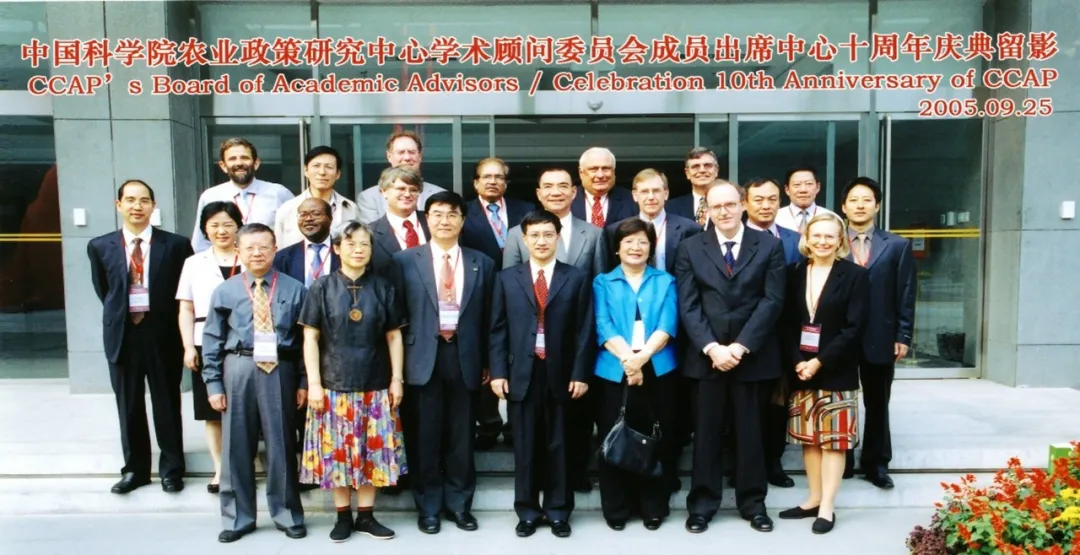
CCAP's Board of Academic Advisors at the at CCAP's 10th anniversary celebration held on September 25, 2005.
As part of the CAS, CCAP systematically expanded its areas of research: We have deepened our work on seed technology and policy while extending into bioenergy innovation and seed-industry governance; We continued to develop a analytics system to support decision-making on agricultural industrial policies, while also tackling emerging topics like WTO and China’s food security, price-subsidies, and value-chain restructuring; We leveraged our long-standing strengths in water and forest sustainability research to expand into interdisciplinary projects on land management, pollution control, climate-change adaptation, and ecological compensation; Finally, we applied our research in rural public services provision, governance, and urban–rural integration. Part of this effort were the groundbreaking projects on human capital development like the Rural Education Action Program in collaboration with Stanford.
During this period, we initiated 300 research projects in our areas of focus and published over 1,000 manuscripts in academic journals both in China and abroad. Since 2003, we have submitted over 100 reports via the CAS to the central government, over 60 of which led to feedback and discussion that directly informed China’s agricultural policy. Since about 2007, CCAP has ranked among the most influential agricultural economics research institutions in Asia.
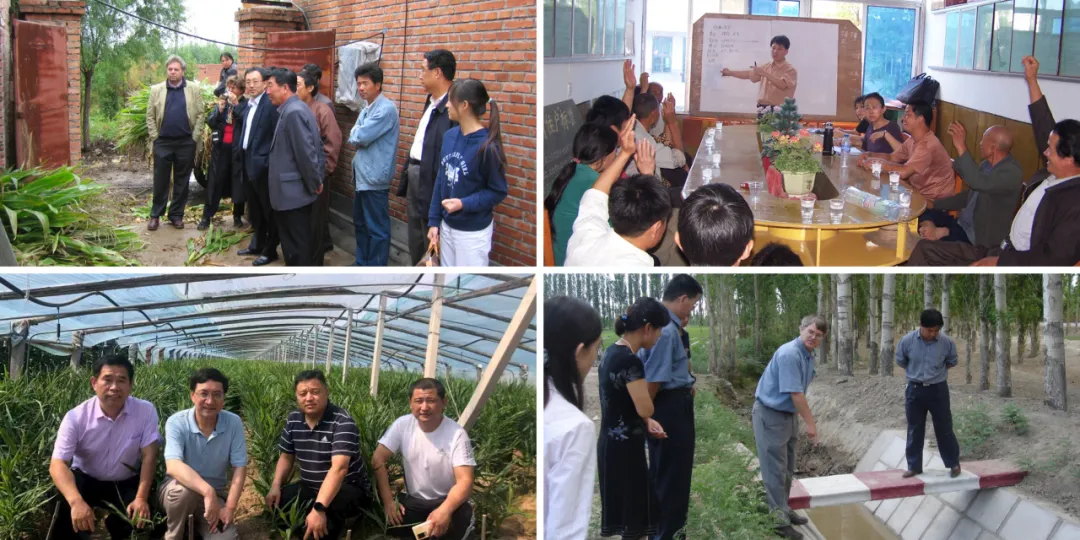
Fieldwork during CCAP’s time as part of the CAS.
CCAP also became a cradle for agricultural economists: Two of our members (myself included) were elected to The World Academy of Sciences for the Advancement of Science in Developing Countries (TWAS), four were awarded by the Chinese government for outstanding contributions to scientific research, in addition to numerous awards both at home and abroad. Between 2001 and 2015, we welcomed numerous post-doctorate scholars and visiting scholars, while several Ph.D. students chose to remain on the team as researchers after receiving their degrees. Meanwhile, Jintao Xu left for the School of the Environment at Peking University (PKU) and later its National School of Development, Ran Tao joined the faculty of Renmin University, and numerous other team members joined the faculty of universities across China to advance their work.
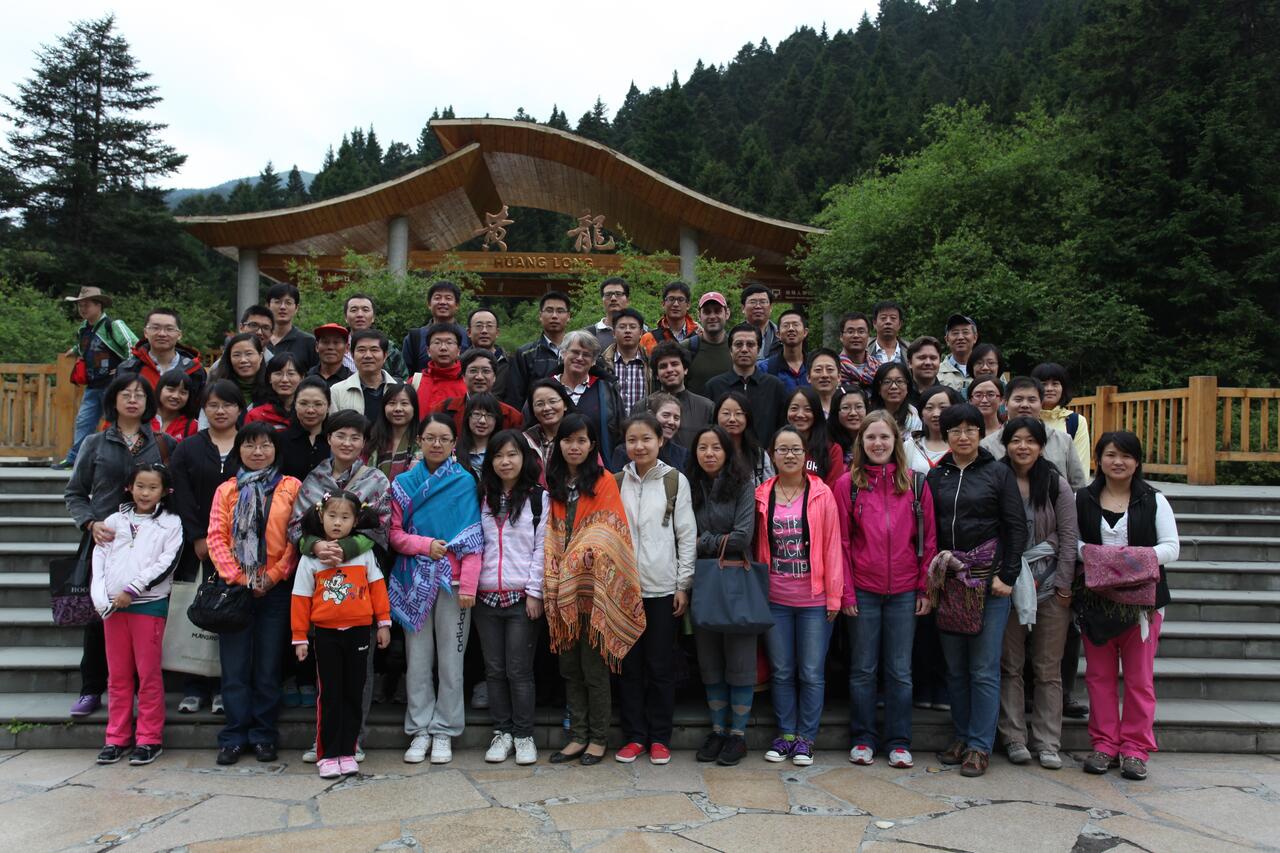
A group photo during a CCAP fieldwork excursion in 2012. Researchers featured include current team members of the Rrural Education Action Program: Scott Rozelle, Matthew Boswell, Alexis Medina, and Huan Wang.
We also developed a rigorous program for training graduate students: Besides studying agricultural economics, students at CCAP were required to complete advanced coursework in microeconomics, econometrics, and other core topics in economics at PKU. After completing their coursework, students conducted an average of three months of fieldwork in rural China every year to advance their dissertation research. For this, we have become affectionately known as “the national census team,” and being part of the Huang lab carried immense respect in the field of agricultural economics.
The year 2015 was particularly significant for CCAP. Then in its 20th year, the center faced difficult decisions about its future directions as the CAS underwent major restructuring. I consulted with Scott, Linxiu, and presented our past work and current vision at the 29th Conference of the International Association of Agricultural Economists in Milan, Italy. The resulting consensus was that, for CCAP to maintain its independence and development trajectory, it needed a new institution and platform. Eventually, CCAP found its new home at Peking University, marking the end of 15 years of rapid yet steady development with support from the CAS and the beginning of a new chapter.
Exploration
The decision to join Peking University (PKU) was motivated by intensifying competition in China’s academia and changing performance benchmarks for promotion within the CAS. We had always found the academic ecosystem at PKU ideal for CCAP’s development, but it was not until I got in touch with the administration that I realized how competitive and rigorous PKU’s talent acquisition process was: Each member of the center underwent an individual review process, in which we defended our work in front of a panel of reviewers. Surprisingly, despite most of us being economists, our first round of reviews was led by a panel of natural scientists and engineers, and none of us passed our review; I then requested an unprecedented second round of reviews by economics and social scientists who were more familiar with our work. Eventually, all members of CCAP had passed their reviews and relocated to PKU by the end of 2016, except for two colleagues, Linxiu and Xiangzheng, who chose to remain at the Institute of Geography in the CAS.
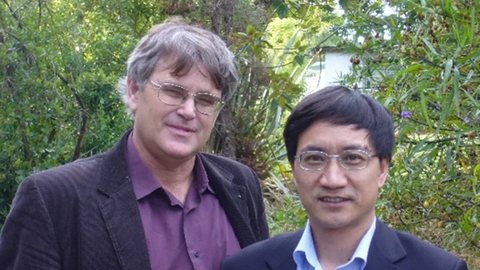
Scott Rozelle and Jikun Huang.
At PKU, CCAP changed its name from the “Center for Chinese Agricultural Policy” to the “China Center for Agricultural Policy.” While the acronym remained the same, the name change reflected the shift in our focus from China’s agriculture to agricultural policy in the global South. To achieve this, we expanded the agricultural economics curriculum at PKU, a change anticipated by the field. We also closely integrated our research with policymaking. Specifically, we furthered our research on plant breeding and the seed industry to inform the transition to digital agriculture and governance in rural communities; We situated our food security research within China’s geopolitical context while also giving more attention to sustainable agriculture; And we drew on our previous works on human capital development in rural China to study the theory and policies of rural transformation in emerging economies.
Like in any other stage of CCAP’s journey, talent has remained the driving force of our work. CCAP welcomed five research scholars between 2021 and 2025, while hosting 43 Ph.D. students and 41 post-doctoral scholars. We also welcomed 13 visiting scholars from our partner institutions, many of whom have become leading figures in agricultural economics. Notably, our collaboration with Jiangxi Agricultural University also took off through the exchange of faculty and students and the joint development of data and research infrastructure. In 2021, I transitioned into an advisory role as the honorary director of CCAP, and Jinxia Wang succeeded the role of director and was supported by two assistant directors, Chengfang Liu and Lingling Hou. The new leadership embodies the very international vision and innovative thinking that have come to define CCAP.
In the past ten years, CCAP’s work has made notable contributions to the field. More than 400 of our 500 publications since 2016 were included in the Science Citation Index / Social Sciences Citation Index; We have published in not only agricultural economics journals like the American Journal of Agricultural Economics (AJAE) and Food Policy, but also natural science journals like Nature, Nature Plants, Nature Ecology & Evolution, Nature Communications, and Proceedings of the National Academy of Sciences (PNAS) and many other academic journals in economics, environmental studies, and public health. We established a good reputation in the global agricultural economics community, too: CCAP has been ranked among the top research institutions in Asia by RePEc/IDEAS for nine consecutive years, and five of our team members have been named Highly Cited Scholars by Elsevier. Meanwhile, the Institute of Advanced Agricultural Sciences at PKU, a joint effort headed by CCAP and supported by 16 academic departments across the university, has become a globally renowned think tank for rural development since its founding in 2018. The institute focuses on applied research on rural development and agricultural policy and has contributed over 100 proposals to the government. CCAP was also part of the scientific group in the United Nations Food Systems Summit in 2021 and organized the G20 expert working group on grain security and sustainable agriculture in Argentina in 2018 and again in Indonesia in 2022. The 2024 PKU Forum on Rural Revitalization, organized by CCAP, received a total of six million visits from in-person and online audiences, highlighting the influence of our work on public conversations around rural development.
New Horizons
For me, CCAP’s accomplishments today are thanks to five reasons. The first is our commitment to institutional environments that support principal investigators (PIs) in their independent research and innovation. The second is our commitment to facts and integrity, embodied by our tradition of gaining insights from rigorous fieldwork and drawing conclusions from data. The third is collaboration, which includes establishing rapport with our research participants, teamwork between assistants and PIs to collect data, and constructive debate between students and their mentors to further our understanding. The fourth is the rigorous training our students and young scholars receive, which not only enhances their understanding of theory and methods but also cultivates their commitment to research integrity. The fifth and final reason is our effort to use research to inform policymaking and make tangible contributions to rural development.
In the future, CCAP plans to leverage the interdisciplinary approach of PKU to train researchers who can advance the work of the center and transform the discipline of agricultural economics. As a think tank, we are confident that through enhancing our capacity for data collection and analysis, we can contribute solutions to global sustainable development.


