
Perfecting Parenting Pilot Launch Update
All Publications button
1
Publication Type
Reports
Publication Date
FSI’s researchers assess health and medicine through the lenses of economics, nutrition and politics. They’re studying and influencing public health policies of local and national governments and the roles that corporations and nongovernmental organizations play in providing health care around the world. Scholars look at how governance affects citizens’ health, how children’s health care access affects the aging process and how to improve children’s health in Guatemala and rural China. They want to know what it will take for people to cook more safely and breathe more easily in developing countries.
FSI professors investigate how lifestyles affect health. What good does gardening do for older Americans? What are the benefits of eating organic food or growing genetically modified rice in China? They study cost-effectiveness by examining programs like those aimed at preventing the spread of tuberculosis in Russian prisons. Policies that impact obesity and undernutrition are examined; as are the public health implications of limiting salt in processed foods and the role of smoking among men who work in Chinese factories. FSI health research looks at sweeping domestic policies like the Affordable Care Act and the role of foreign aid in affecting the price of HIV drugs in Africa.
Hannah Myers
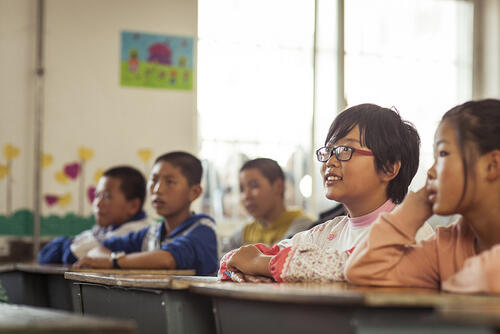 Students whose vision problems were corrected learned almost twice as much in a single academic year as myopic children who did not receive glasses.
Having never had their vision tested, many rural children are unaware that they have poor vision, and that their eyesight is holding them back in school.
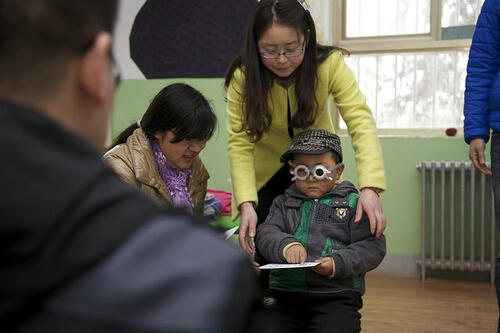
Teachers are generally a trusted source of advice in rural communities. When they buy in to vision care, families often do too.
 |
Yongshou, Shaanxi province (Photo Credit: Wikipedia) |
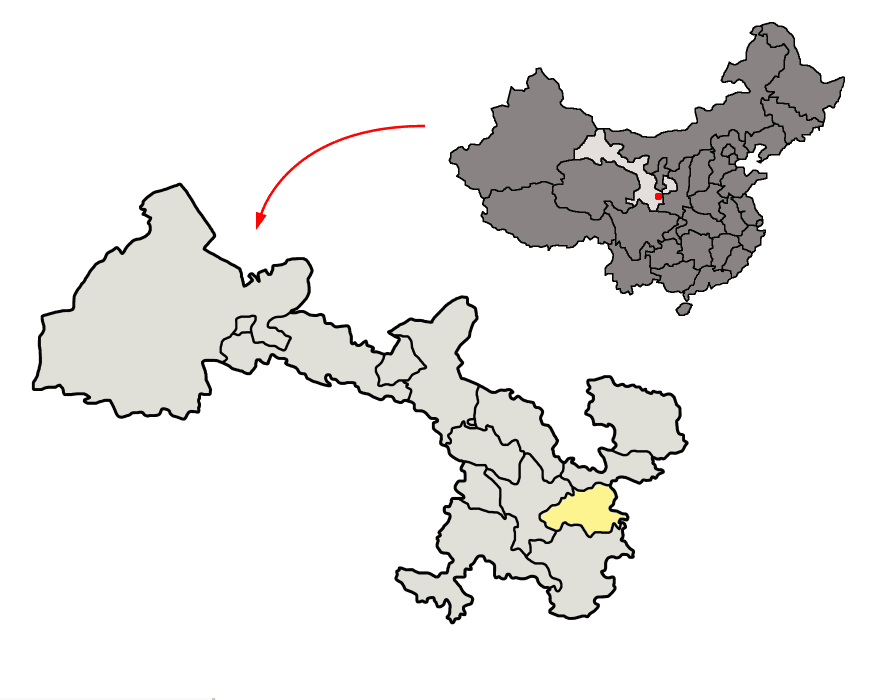 |
Qinan, Gansu province (Photo Credit: Wikipedia) |

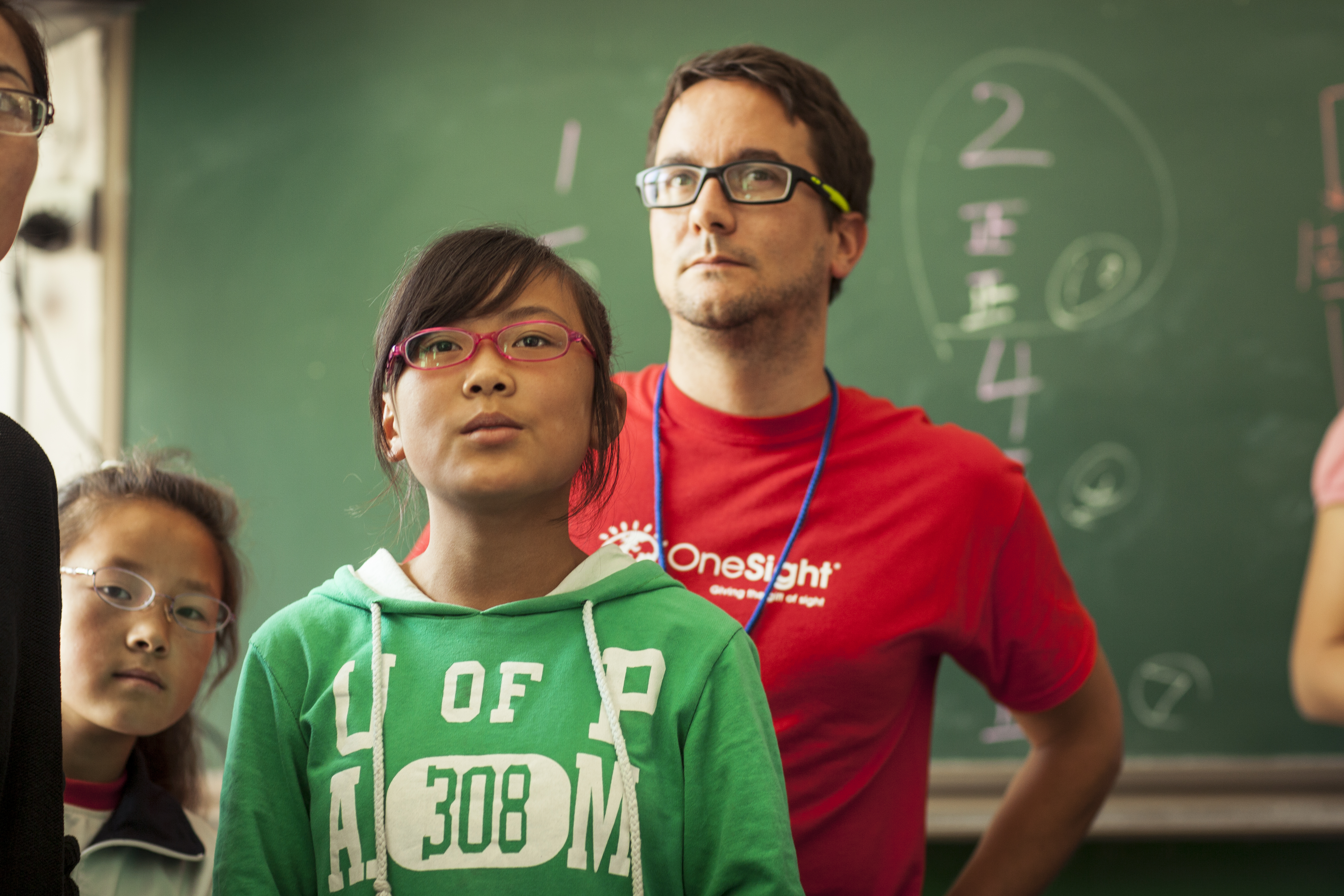
A view inside Seeing is Learning's Yongshou vision clinic: newly certified refractionists and opticians diagnose and treat rural children.

The Shaanxi Daily issued a press release on REAP's ongoing Perfecting Parenting project. This article was translated and reprinted with permission from The Shaanxi Daily. Read the original article (in Chinese) here.
China’s First “Parenting Trainers” Will Be Born in Shangluo
In Shangluo, tucked away in the distant parts of the Qinling mountain range, 70 officials have already undertaken the assignment of “early child development parenting trainers.”
Yaojiang Shi, Director of the Center for Experimental Economics in Education at Shaanxi Normal University, was brimming with confidence as he received journalists, saying, “before long, they will pass the evaluations and become China’s first generation of parenting trainers.”
According to statistics, in 2013, 40 percent of 6- to 12-month-old children living in rural areas in Shaanxi province clearly lagged behind in cognitive ability and social-emotional development. Parents are only concerned that their children have enough to eat and warm clothes to wear, neglecting their mental health and development. Scientific research has proven that the first three years of a child’s life is a critical period for mental development. However, in China’s vast rural areas, there is still a blank space in place of education for 0- to 3-year-old children. In order to change this situation, China’s National Health and Family Planning Commission, Shaanxi Normal University, Stanford University in the United States, and the Chinese Academy of Sciences jointly established the “Perfecting Parenting” project. Following this project’s officially launch last November, 70 “parenting trainers” were recruited from among the family planning officials in 58 townships across Danfeng, Shangnan, Shanyang, and Zhenan counties, and 275 babies were randomly selected to take part in the project. After undergoing rigorous training, the “parenting trainers” will teach scientific child-rearing knowledge to children’s parents and caretakers through demonstration and guidance. By having parents interact more with their children through story telling, singing songs with them, playing games, and engaging in other parent-child activities, they aim to improve the babies’ cognitive abilities, motor development, and social-emotional development.

 |
Contacts
Matthew Boswell: Project Manager, Seeing is Learning (boswell@stanford.edu)
Scott Rozelle: REAP Co-Director (rozelle@stanford.edu)

Soil-transmitted helminths (STHs) are parasitic intestinal worms that infect more than two out of every five schoolchildren in rural China, an alarmingly high prevalence given the low cost and wide availability of safe and effective deworming treatment. Understanding of local knowledge, attitudes, and practices regarding STHs in rural China has until now, been sparse, although such information is critical for prevention and control initiatives. This study elucidates the structural and sociocultural factors that explain why deworming treatment is rarely sought for schoolchildren in poor villages of rural China with persistently high intestinal worm infection rates. In-depth, qualitative interviews were conducted in six rural villages in Guizhou Province; participants included schoolchildren, children’s parents and grandparents, and village doctors. We found evidence of three predominant reasons for high STH prevalence: lack of awareness and skepticism about STHs, local myths about STHs and deworming treatment, and poor quality of village health care. The findings have significant relevance for the development of an effective deworming program in China as well as improvement of the quality of health care at the village level.
Although China has experienced rapid economic growth over the past few decades, significant health and nutritional problems remain. Little work has been done to track basic diseases, such as iron-deficiency anemia, so the exact prevalence of these health problems is unknown. The goals of this study were to assess the prevalence of anemia in China and identify individual, household and community-based factors associated with anemia. We used data from the 2009 China Health and Nutrition Survey (CHNS), including the measurement of he- moglobin levels among 7,261 individuals from 170 communities and 7 provinces in central and eastern China. The overall prevalence of anemia was 13.4% using the WHO’s blood hemoglobin thresholds (1968). This means in China’s more developed central and eastern regions up to 180 million people may be anemic. Some vulnerable subgroups were disproportionately affected by anemia. Seniors (aged 60 years and above) were more likely to be anemic than younger age cohorts, and females had higher anemia prevalence among all age groups except among children aged 7 to 14 years. We found a negative correlation between household wealth and the presence of anemia, suggesting anemia prevalence may decline as China’s economy grows. However, the prevalence of anemia was greater in migrant households, which should be experiencing an improved economic status.
For 14 years, Mariano-Florentino Cuéllar has been a tireless Stanford professor who has strengthened the fabric of university’s interdisciplinary nature. Joining the faculty at Stanford Law School in 2001, Cuéllar soon found a second home for himself at the Freeman Spogli for International Studies. He held various leadership roles throughout the institute for several years – including serving as co-director of the Center for International Security and Cooperation. He took the helm of FSI as the institute’s director in 2013, and oversaw a tremendous expansion of faculty, research activity and student engagement.
An expert in administrative law, criminal law, international law, and executive power and legislation, Cuéllar is now taking on a new role. He leaves Stanford this month to serve as justice of the California Supreme Court and will be succeeded at FSI by Michael McFaul on Jan. 5.
As the academic quarter comes to a close, Cuéllar took some time to discuss his achievements at FSI and the institute’s role on campus. And his 2014 Annual Letter and Report can be read here.
We started with a superb faculty and made it even stronger. We hired six new faculty members in areas ranging from health and drug policy to nuclear security to governance. We also strengthened our capacity to generate rigorous research on key global issues, including nuclear security, global poverty, cybersecurity, and health policy. Second, we developed our focus on teaching and education. Our new International Policy Implementation Lab brings faculty and students together to work on applied projects, like reducing air pollution in Bangladesh, and improving opportunities for rural schoolchildren in China. We renewed FSI's focus on the Ford Dorsey Program in International Policy Studies, adding faculty and fellowships, and launched a new Stanford Global Student Fellows program to give Stanford students global experiences through research opportunities. Third, we bolstered FSI's core infrastructure to support research and education, by improving the Institute's financial position and moving forward with plans to enhance the Encina complex that houses FSI.
Finally, we forged strong partnerships with critical allies across campus. The Graduate School of Business is our partner on a campus-wide Global Development and Poverty Initiative supporting new research to mitigate global poverty. We've also worked with the Law School and the School of Engineering to help launch the new Stanford Cyber Initiative with $15 million in funding from the Hewlett Foundation. We are engaging more faculty with new health policy working groups launched with the School of Medicine and an international and comparative education venture with the Graduate School of Education.
The genius of Stanford has been its investment in interdisciplinary institutions. FSI is one of the largest. We should be judged not only by what we do within our four walls, but by what activity we catalyze and support across campus. With the business school, we've launched the initiative to support research on global poverty across the university. This is a part of the SEED initiative of the business school and it is very complementary to our priorities on researching and understanding global poverty and how to alleviate. It's brought together researchers from the business school, from FSI, from the medical school, and from the economics department.
Another example would be our health policy working groups with the School of Medicine. Here, we're leveraging FSI’s Center for Health Policy, which is a great joint venture and allows us to convene people who are interested in the implementation of healthcare reforms and compare the perspective and on why lifesaving interventions are not implemented in developing countries and how we can better manage biosecurity risks. These working groups are a forum for people to understand each other's research agendas, to collaborate on seeking funding and to engage students.
I could tell a similar story about our Mexico Initiative. We organize these groups so that they cut across generations of scholars so that they engage people who are experienced researchers but also new fellows, who are developing their own agenda for their careers. Sometimes it takes resources, sometimes it takes the engagement of people, but often what we've found at FSI is that by working together with some of our partners across the university, we have a more lasting impact.
FSI's faculty, students, staff, and space represent a unique resource to engage Stanford in taking on challenges like global hunger, infectious disease, forced migration, and weak institutions. The key breakthrough for FSI has been growing from its roots in international relations, geopolitics, and security to focusing on shared global challenges, of which four are at the core of our work: security, governance, international development, and health.
These issues cross borders. They are not the concern of any one country.
Geopolitics remain important to the institute, and some critical and important work is going on at the Center for International Security and Cooperation to help us manage the threat of nuclear proliferation, for example. But even nuclear proliferation is an example of how the transnational issues cut across the international divide. Norms about law, the capacity of transnational criminal networks, smuggling rings, the use of information technology, cybersecurity threats – all of these factors can affect even a traditional geopolitical issue like nuclear proliferation.
So I can see a research and education agenda focused on evolving transnational pressures that will affect humanity in years to come. How a child fares when she is growing up in Africa will depend at least as much on these shared global challenges involving hunger and poverty, health, security, the role of information technology and humanity as they will on traditional relations between governments, for instance.
We forged a productive collaboration with the U.N. High Commissioner for Refugees through a project on refugee settlements that convened architects, Stanford researchers, students and experienced humanitarian responders to improve the design of settlements that house refugees and are supposed to meet their human needs. That is now an ongoing effort at the UN Refugee Agency, which has also benefited from collaboration with us on data visualization and internship for Stanford students.
Our faculty and fellows continue the Institute's longstanding research to improve security and educate policymakers. We sometimes play a role in Track II diplomacy on sensitive issues involving global security – including in South Asia and Northeast Asia. Together with Hoover, We convened a first-ever cyber bootcamp to help legislative staff understand the Internet and its vulnerabilities. We have researchers who are in regular contact with policymakers working on understanding how governance failures can affect the world's ability to meet pressing health challenges, including infectious diseases, such as Ebola.
On issues of economic policy and development, our faculty convened a summit of Japanese prefectural officials work with the private sector to understand strategies to develop the Japanese economy.
And we continued educating the next generation of leaders on global issues through the Draper Hills summer fellows program and our honors programs in security and in democracy and the rule of law.
It's important to recognize that FSI's growth comes at particularly interesting time in the history of higher education – where universities are under pressure, where the question of how best to advance human knowledge is a very hotly debated question, where universities are diverging from each other in some ways and where we all have to ask ourselves how best to be faithful to our mission but to innovate. And in that respect, FSI is a laboratory. It is an experimental venture that can help us to understand how a university like Stanford can organize itself to advance the mission of many units, that's the partnership point, but to do so in a somewhat different way with a deep engagement to practicality and to the current challenges facing the world without abandoning a similarly deep commitment to theory, empirical investigation, and rigorous scholarship.
Universities play an essential role in human wellbeing because they help us advance knowledge and prepare leaders for a difficult world. To do this, universities need to be islands of integrity, they need to be engaged enough with the outside world to understand it but removed enough from it to keep to the special rules that are necessary to advance the university's mission.
Some of these challenges are also reflected in the role of courts. They also need to be islands of integrity in a tumultuous world, and they require fidelity to high standards to protect the rights of the public and to implement laws fairly and equally.
This takes constant vigilance, commitment to principle, and a practical understanding of how the world works. It takes a combination of humility and determination. It requires listening carefully, it requires being decisive and it requires understanding that when it's part of a journey that allows for discovery but also requires deep understanding of the past.

Junior high dropout rates are up to 25% in poor, rural areas of China. Although existing studies have examined how factors such as high tuition and opportunity costs contribute to dropout, fewer studies have explored the relationship between dropout rates and mental health in rural China. The overall goal of this study is to examine the relationship between dropout and mental health problems in rural Chinese junior high schools. Correlational analysis was conducted among 4,840 students across 38 junior high schools in rural China. Ordinary least squares (OLS) regressions were used to determine the types of students most at risk for mental health problems and whether mental health problems are correlated with dropout behavior. Our measure for mental health is based on the Children’s Manifest Anxiety Scale. Mental health problems are widespread in the sample of rural children, with 74% of students at risk for mental health problems. The student and family characteristics that correlate with dropout (poverty and low achievement) also correlate with mental health problems. More importantly, even after controlling for these background characteristics, mental health problems remain correlated with dropout rates. Mental health problems, especially among low-achieving poor students, may be contributing to the high dropout rates in rural China today. This finding suggests that interventions focusing on mental health in rural areas may also help reduce dropout.
"Growth has helped millions to avoid malnutrition but it still threatens to hold back a generation of rural Chinese."
A recent article in The Economist about malnutrition in rural China cites REAP's research on anemia.
“The propaganda message, scrawled in white paint on the side of a wood-frame house, could hardly be more blunt: ‘Cure stupidity, cure poverty’. The cure for both, in one of China’s poorest counties, seems to be a daily nutritional supplement for children. At a pre-school centre in Songjia, as in more than 600 other poor villages across China, children aged three to six gather to get the stuff with their lunch. If China is to narrow its urban-rural divide, thousands more villages will need to do this much, or more....
"'Babies are probably 50% malnourished' in poor rural areas, says Scott Rozelle, co-director of the Rural Education Action Programme (REAP), a research outfit at Stanford University which has done extensive tests on anaemia in rural China. 'But almost no mums are malnourished.' Mr Rozelle says that in one of his surveys rural mothers showed a better understanding of how to feed pigs than babies: 71% said pigs need micronutrients, whereas only 20% said babies need them."
Read more here.
