FSI’s researchers assess health and medicine through the lenses of economics, nutrition and politics. They’re studying and influencing public health policies of local and national governments and the roles that corporations and nongovernmental organizations play in providing health care around the world. Scholars look at how governance affects citizens’ health, how children’s health care access affects the aging process and how to improve children’s health in Guatemala and rural China. They want to know what it will take for people to cook more safely and breathe more easily in developing countries.
FSI professors investigate how lifestyles affect health. What good does gardening do for older Americans? What are the benefits of eating organic food or growing genetically modified rice in China? They study cost-effectiveness by examining programs like those aimed at preventing the spread of tuberculosis in Russian prisons. Policies that impact obesity and undernutrition are examined; as are the public health implications of limiting salt in processed foods and the role of smoking among men who work in Chinese factories. FSI health research looks at sweeping domestic policies like the Affordable Care Act and the role of foreign aid in affecting the price of HIV drugs in Africa.
Many public health systems have struggled with the dual questions of: why the uptake rate of maternal health (MH) services is low among some subpopulations; and how to raise it. The purpose of this paper is to assess the uptake rate of a new set of MH services in poor rural areas of China.
Design/methodology/approach
The analysis is based on the survey responses of women’s representatives and village cadres from almost 1,000 villages in June 2012 as part of a wide-scale public health survey in Sichuan, Gansu and Yunnan provinces in the western part of China.
Findings
The authors find that the uptake rate of MH services (including in-hospital delivery, antenatal care visits and post-partum care visits) in poor rural areas of Western China are far below average in China, and that the rates vary across provinces and ethnic groups. The analyses demonstrate that distance, income, ethnicity and availability appear to be systematically correlated with low uptake rates of all MH services. Demand-side factors seem to be by far the most important sources of the differences between subpopulations. The authors also find that there is potential for creating a Conditional Cash Transfer program to improve the usage of MH services.
Originality/value
The authors believe that the results will contribute positively to the exploration of answers to the dual questions that many public health systems have struggled with: why the uptake rate of MH services is low among some subpopulations; and how to raise it.
BBC News reports on REAP's program to train family planning officials, who used to enforce the one child policy, to become experts in early childhood education. To read the original article, click here.
Two-year-old Liu Siqi is curled up on her grandmother's lap, complaining of a tummy ache. A man tries to divert her with a squeaky plastic duck.
Gradually the toddler's mood brightens. She giggles and is persuaded to join him singing a nursery rhyme.
The man she calls Uncle Li belongs to China's army of family planning officers. Stationed in every city, town and village in China, for the past 35 years their job has been to hunt down families suspected of violating the country's draconian rules on how many children couples can have.
But with the end of the one-child policy at the beginning of this year, some, like Li Bo, are being retrained for a different role. Now he could even be mistaken for a Chinese Father Christmas visiting remote villages in the mountains of Shaanxi province with a bag full of toys and picture books.
Along with 68 of his colleagues, Li is part of a pilot programme involving academics from Shaanxi Normal University and Stanford University's Rural Education Action Programme. His new job is to teach parents and grandparents how to develop toddlers' minds by talking, singing and reading to them.
He works in Danfeng County, 700 miles (1,125km) south-west of Beijing, an impoverished area where more than half the adults of working age have left for jobs in the cities.
We meet at a new parenting centre in two-year-old Liu Siqi's village. It's part of the pilot project here in Shaanxi province designed to stimulate deprived rural children and give them the best start in life.
He watches toddlers throwing balls into boxes and playing with wooden shapes.
"This is a golden time for them to develop skills," he says. "I like this new job and I think my work is important, because what I am doing right now will probably influence what sort of people these children will become one day."
Hero Image
Li, who used to enforce China's one child policy, works with REAP to become an early childhood development expert. Here, he reads a book to a child in an impoverished area of Danfeng County. | BBC News / Lucy Ash
Objectives: To test whether text message reminders sent to caregivers will improve the effectiveness of a home micronutrient fortification program in western China.
Methods: A cluster-randomized controlled trial was carried out in 351 villages in Shaanxi province in 2013-14. We enrolled children aged 6-12 months in target villages. Each village/cluster was randomly assigned into one of three groups: Free Delivery Group (FDG; caregivers received free micronutrient packets); Text Messaging Group (TMG; FDG treatment plus daily text message); and Control Group. We collected information on compliance with treatments and hemoglobin concentrations from all children at baseline and 6-month follow-up. We estimated the intent-to-treat (ITT) effects on compliance and child anemia using a logistic regression model, controlling for infant, caregiver and household characteristics.
Results: There were 1393 eligible children. We found that assignment to TMG led to an increase full compliance (marginal effect = 0.10, 95% CI = 0.03, 0.16) and decrease in the rate of anemia at endline (marginal effect=-0.07, 95% CI= -0.12, -0.01).
Conclusions: Text messages improved compliance of caregivers to a home fortification program and children’s nutrition.
Abstract: The general goal of the present study is to analyze whether children with siblings lag behind their only-child counterparts in terms of health and nutrition, cognition and educational performance, and non-cognitive outcomes. We draw on a dataset containing 25 871 observations constructed from three school-level surveys spanning four provinces in China. The analysis compares children with siblings and only children aged 9 to 14 years old in terms of eight different health, cognitive and non-cognitive indicators. We find that with the exception of the anemia rate, health outcomes of children with siblings are statistically indistinguishable from those of only children. In terms of cognition, children with siblings performed better than only children. Moreover, outcomes of children with siblings are statistically indistinguishable from those of only children in terms of the non-cognitive outcomes provided by measures of anxiety. According to our results, the same general findings are true regardless of whether the difference between children with and without siblings is disaggregated by gender.
When assistant professor of medicine Eran Bendavid began a study on livestock in African households to determine impact on childhood health, he'd already anticipated common field problems like poorly captured or intentionally misreported data, difficulty getting to work sites, or problems with training local volunteers.
But he'd never gotten that particular question from a fieldworker before. It didn't occur to him that participating families, in reporting their livestock holdings, would completely omit the chickens running around at their feet, thereby skewing the data.
"They didn't consider chickens to be livestock," recalled Bendavid. Along with Scott Rozelle, the Helen F. Farnsworth Senior Fellow at FSI, and associate professor of political science and FSI senior fellow Beatriz Magaloni, Bendavid spoke to a full house last week on lessons learned from fieldwork gone awry. The return engagement of FSI's popular seminar, "Everything that can go wrong in a field experiment” was introduced by Jesper Sørensen, executive director of Stanford Seed, and moderated by Katherine Casey, assistant professor of political economy at the GSB. The seminar is a product of FSI and Seed’s joint Global Development and Poverty (GDP) Initiative, which to date has awarded nearly $7 million in faculty research funding to promote research on poverty alleviation and economic development worldwide.
Rozelle, co-director of the Rural Education Action Program, spoke of the obstacles to accurate data gathering, especially in rural areas where record-keeping is inaccurate and participants' trust is low. Arriving in a Chinese village to carry out child nutrition studies, said Rozelle, "we found Grandma running out the back door with the baby." The researchers had worked with the local family planning council to find the names of children to study, but the families thought the authorities were coming to penalize them for violation of the one-child policy.
Cultural differences make for entertaining and illuminating (if frustrating) lessons, but Beatriz Magaloni, director of FSI's Program on Poverty and Governance at the Center on Democracy, Development and the Rule of Law had a different story to tell. Over the course of three years, her GDP-funded work to investigate and reduce police violence in Brazil - a phenomenon resulting in more than 22,000 deaths since 2005 - has encountered obstacle after obstacle. Her work to pilot body-worn cameras on police in Rio has faced a change in police leadership, setting back cooperation; a yearlong struggle to decouple a study of TASER International’s body worn cameras from its electrical weapons in the same population; a work site initially lacking electricity to charge the cameras or Internet to view the feeds; and noncompliance among the officers. "It's discouraging at times," admitted Magaloni, who has finally gotten the cameras onto the officers' uniforms and must now experiment with ways to incentivize their use. "We are learning a lot about how institutional behavior becomes so entrenched and why it's so hard to change."
Experimentation is a powerful tool to understand cause and effect, said Casey, but a tool only works if it's implemented properly. Learning from failure makes for an interesting panel discussion. The speakers' hope is that it also makes for better research in the future.
The Global Development and Poverty Initiative is a University-wide initiative of the Stanford Institute for Innovation in Developing Economies (Seed) in partnership with the Freeman Spogli Institute (FSI). GDP was established in 2013 to stimulate transformative research ideas and new approaches to economic development and poverty alleviation worldwide. GDP supports groundbreaking research at the intersection of traditional academic disciplines and practical application. GDP uses a venture-funding model to pursue compelling interdisciplinary research on the causes and consequences of global poverty. Initial funding allows GDP awardees to conduct high-quality research in developing countries where there is a lack of data and infrastructure.
Laurie Burkitt quotes REAP's director Scott Rozelle on the impact of China cancelling the one-child policy . To read the original article, click here.
Chinese leaders implemented the one-child policy in 1980 in an effort to rein in explosive population growth and help raise living standards. It was rooted in a Mao Zedong-era baby boom. China’s population rose by nearly half to about 807 million people in 1969 from when the Communist Party took over the country 20 years before. That led to fears among the leadership that China faced a population boom it couldn’t feed.
Demographers began to present a united front in 2000, arguing that China was dangerously close to falling below a replacement rate of 2.1 children for every woman. Activists stepped up opposition. Chen Guangcheng, the blind activist who famously escaped home confinement and made his way to the U.S. embassy in 2012, became well-known in China in the 2000s for opposing forced abortion.
China effectively hobbled the one-child policy in 2013, when it allowed couples to have two children if one parent came from a household without other siblings. It has also long allowed exceptions in some parts of the country.
Just like on Thursday, the 2013 move led to a frenzy of anticipation from baby-related businesses and a brief bump in shares of Chinese formula makers and other baby-related companies. It resulted in 1.45 million new birth applications as of the end of May, according to the most recent data from the China’s National Health and Family Planning Commission. But the figures have so far disappointed many demographers.
Even rural residents, many of whom have been exempt of the one-child policy, are reluctant to have bigger families, said Scott Rozelle, co-director of Stanford University’s Rural Education Action Program. “Fertility has collapsed in rural and poor areas,” said Mr. Rozelle. “Anyone there can have two or three babies, but no one wants that.”
Sourovi De, an early child development specialist with the education team at Oxford Policy Management, reports on REAP's Perfecting Parenting project in the Guardian. She discusses how Perfecting Parenting fits within the global context of early child development (ECD) research, and how ECD is fundamental to achieving the fourth Sustainable Development Goal: ensuring inclusive, quality education for all and promoting lifelong learning. Read the original article here.
"It’s encouraging to see “access to quality early childhood development” as one of the SDG targets. Policymakers have recognised that investing in children’s development is a way of investing in future social and economic growth. It can also result in more immediate benefits, such as preparing children to get the most out of school. Despite this, ECD programmes still face a number of major barriers – both on the supply and demand side.
"Funding is a huge issue. Our research shows that in many developing countries, public spending on pre-primary education amounts to less than 0.1% of gross domestic product, leaving families to absorb the cost either through private providers or informally within households and the community. Even where government pilot programmes look promising, the cost of replicating them on a large scale might be prohibitive – it’s probably no coincidence that most cases of successfully scaled-up projects are in middle- or high-income countries.
"Overcoming these barriers often means tailoring programmes to specific contexts and drawing on existing resources. In China, officials previously responsible for enforcing the country’s one-child policy are being retrained as parenting educators as part of the Perfecting Parenting project run by the government’s national health and family planning commission and the rural education action programme.
"The trainers visit children and their families in rural pilot villages, helping them follow a specially designed curriculum, incorporating arts and crafts, games and singing. By making use of existing networks and skills, the pilot minimises costs and overcomes infrastructure constraints. But the trainers have struggled to earn the trust of parents who think of them only in their family planning role."
Professor of Neonatal and Developmental Pediatrics
gary_darmstadt_headshot.jpg
MD, MS
Gary L. Darmstadt, MD, MS, is Associate Dean for Maternal and Child Health, and Professor of Neonatal and Developmental Pediatrics in the Department of Pediatrics at the Stanford University School of Medicine. Previously Dr. Darmstadt was Senior Fellow in the Global Development Program at the Bill & Melinda Gates Foundation (BMGF), where he led a cross-foundation initiative on Women, Girls and Gender, assessing how addressing gender inequalities and empowering women and girls leads to improved gender equality as well as improved health and development outcomes. Prior to this role, he served as BMGF Director of Family Health, leading strategy development and implementation across nutrition, family planning and maternal, newborn and child health.
Darmstadt was formerly Associate Professor and Founding Director of the International Center for Advancing Neonatal Health in the Department of International Health at the Johns Hopkins Bloomberg School of Public Health. He has trained in Pediatrics at Johns Hopkins University, in Dermatology at Stanford University, and in Pediatric Infectious Disease as a fellow at the University of Washington, Seattle, where he was Assistant Professor in the Departments of Pediatrics and Medicine. Dr. Darmstadt left the University of Washington to serve as Senior Research Advisor for the Saving Newborn Lives program of Save the Children-US, where he led the development and implementation of the global research strategy for newborn health and survival, before joining Johns Hopkins.
Faculty Affiliate at the Stanford Center on China's Economy and Institutions
Faculty Fellow at the Stanford Center at Peking University, May 2016
A REAP project takes on the challenge of teaching parents in rural China that playing with their children is as important as feeding them.
Once every week for six months, a special team of family planning workers fanned out across the remote towns of Shaanxi Province or journeyed to isolated villages in the Qinling Mountains, the cradle of China’s civilization and habitat of the world’s remaining wild pandas. Determined to make a difference, the workers braved downpours in the dead of winter and long, treacherous roads to conduct weekly visits to families living in the region’s rural corners.
The little children who were their inspiration were often too shy to even make eye contact during the initial family sessions, but the government workers – part of a pilot group of parenting trainers – persevered. Eventually, the children welcomed the trainers with smiles, open arms and confident curiosity.
The parenting trainers brought toys to play with the toddlers, but not just for fun. The act of playing had a higher purpose.
Toddlers in rural China lag far behind their urban cohorts in developmental benchmarks, and Stanford’s Rural Education Action Program launched its Perfecting Parenting Project to tackle a key underlying cause: only a small fraction of rural parents interact with their young children.
“We want to get parents to improve their interactions with their toddlers,” said Alexis Medina, project manager of REAP’s health, nutrition and education initiatives.
That’s because the period between birth and age 3 is a critical developmental window, and interactive playing and verbal stimulation are important components of a child’s growth. REAP researchers know this, but a majority of parents in rural China do not.
For many parents or grandparents who are primary caregivers, the concept of actively engaging with their offspring is foreign. Research surveys revealed that less than 5 percent of parents in rural China regularly read to their babies and toddlers, and only 32 percent of them sing songs or use toys to play together. From their fieldwork, REAP researchers witnessed a pervasive view among parents: their young children are clothed and fed, isn’t that all they need?
In launching the 6-month pilot program in November 2014, researchers designed a week-by-week parenting curriculum – complete with books, balls and building blocks – to target key child development milestones.
“Before, the role of the family planning worker was to manage the quantity of the population,” said He Miao, one of the 70 parenting trainers recruited under the REAP project. “But from now on, our role is to improve the population’s quality.”
Little Cheng Junya transformed from shy and withdrawn to outgoing and engaged in just two months of parenting visits.
As researchers work to gather project findings, REAP hopes Chinese officials will decide to expand the parenting training program.
Those at the frontlines are already convinced.
“My child never used to be so comfortable around strangers; I can’t believe she is now so outgoing,” the mother of little Cheng Junya remarked just two months into the program. “This is all because of the visits from such excellent teachers.”
Echoing his fellow parenting trainers, family planning worker Qin Yulu said, "In all the years I’ve been in this position, this is the most meaningful work I have ever done.”
REAP researcher Xueyang Liu summed up her view of the project’s success. “Each family planning worker manages different children and faces different challenges: sometimes the roads are difficult, sometimes the parents are unappreciative, and sometimes the children are unresponsive,” she said. But, she continued, “the parent trainers are united both by their willingness to overcome difficulty and by a passion for their work, and this has earned them the respect and love of the parents.”
For a closer view of the challenges and promise of the Perfecting Parenting Project, take a look at the following stories by REAP researchers who shadowed China’s first crew of parenting trainers.
Modern Parenting 101 REAP researcher Xinrui Gao joins parent trainer Liu Xianju on several weekly sessions during the six-month pilot program and describes here a caretaker’s dramatic shift in attitude toward modern parenting.
Little Activities Go A Long Way REAP researcher Xi Zhiqi witnesses how the parenting program’s activities help to enhance a toddler’s verbal and social-emotional skills. This is her story of Little Wei.
A Mother’s Realization REAP researcherXueyang Liu describes here how a mother literally and metaphorically tramples on the project’s guidance materials before she comes to embrace the methods of active parenting.
Trainers: A Santa Qin and Honorary Godmother The following two accounts by REAP researchers Wang Xiaohong and Jia Fang illustrate the immense dedication of two family planning workers from Shanyang County.
No Easy Road REAP researcher Zhang Nianrui describes a-day-in-the-life of a pair of parenting trainers as she joins them on a rough journey to the remote village homes of the families under their charge for the pilot project.


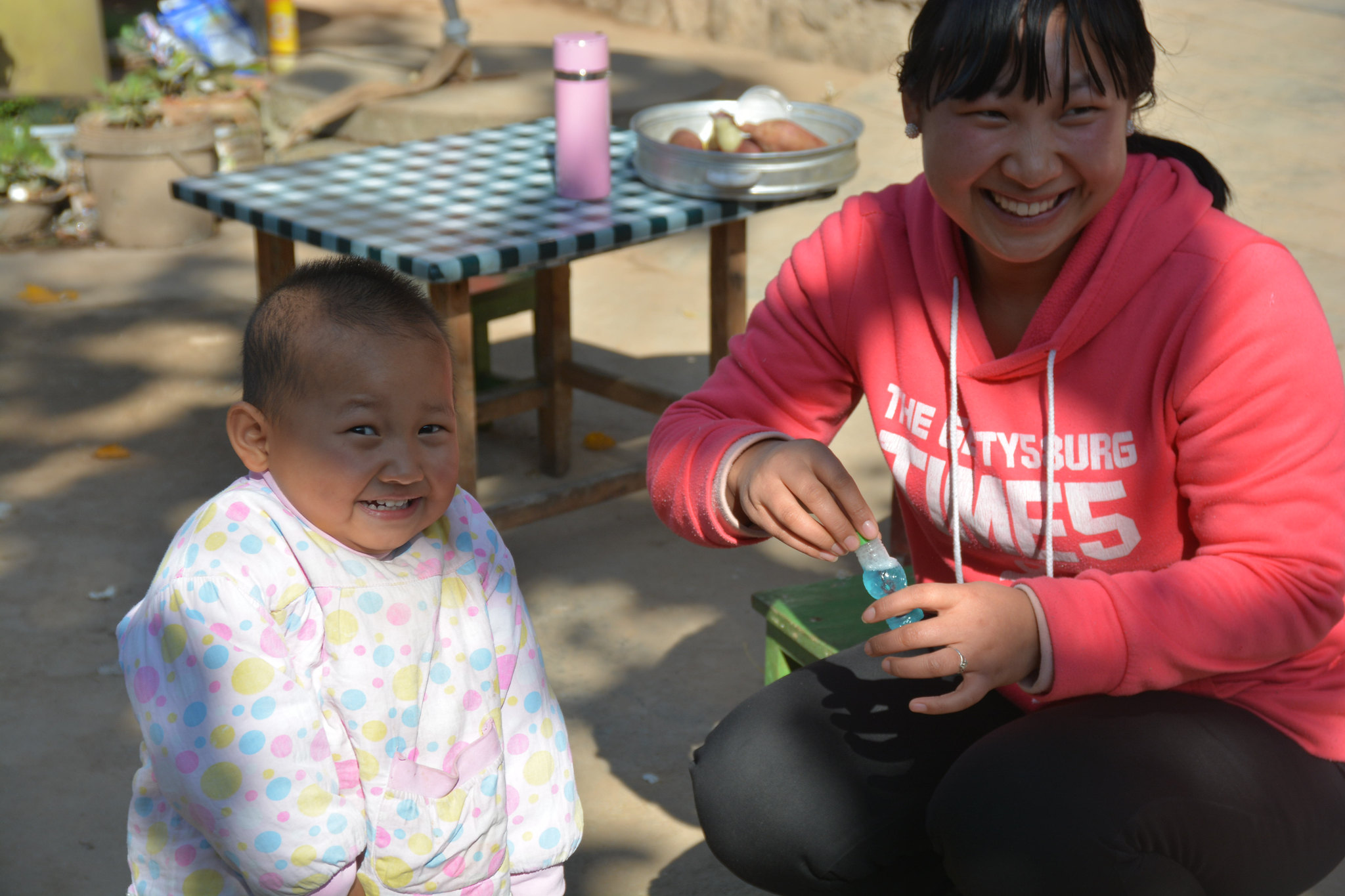
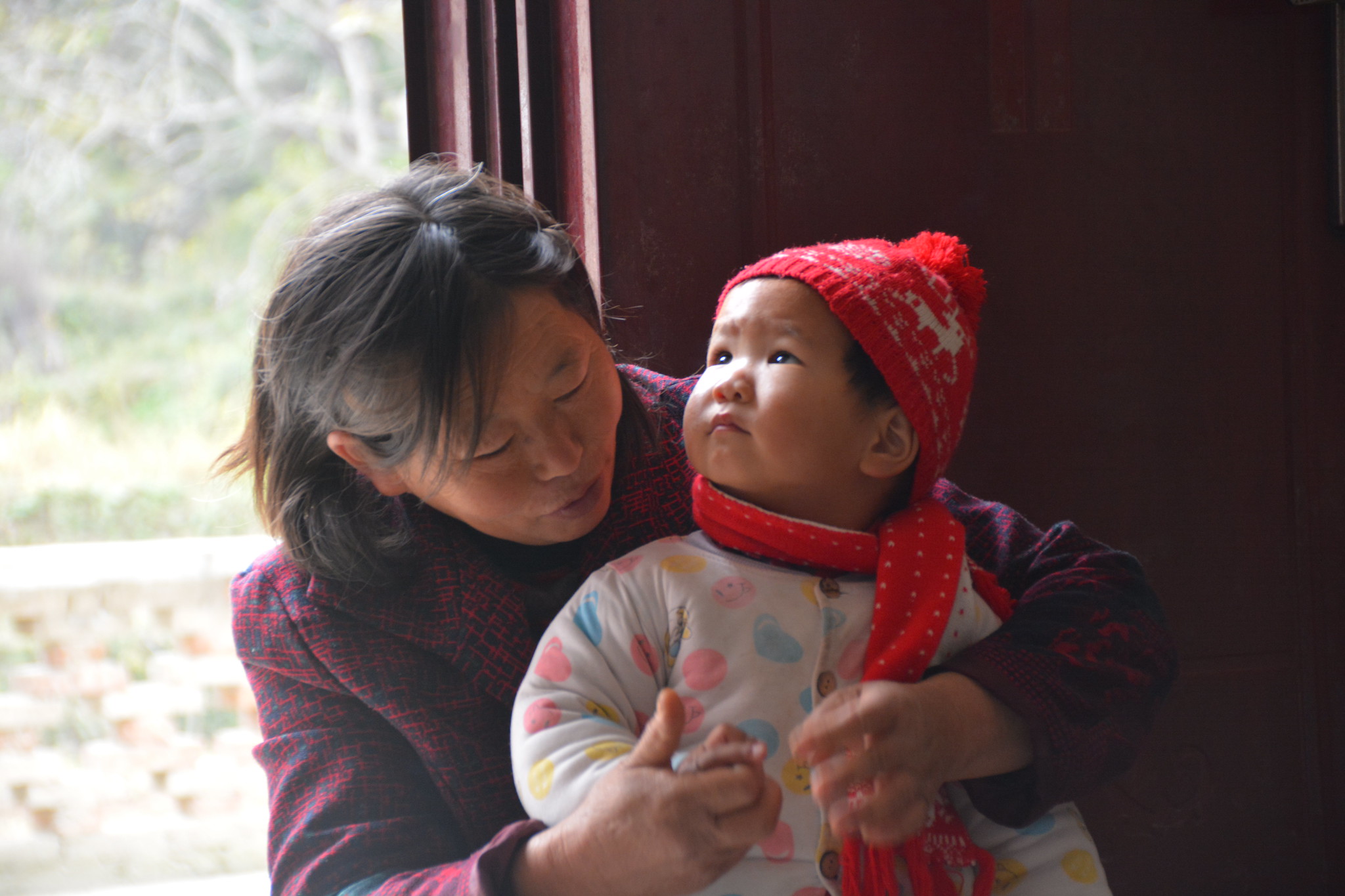
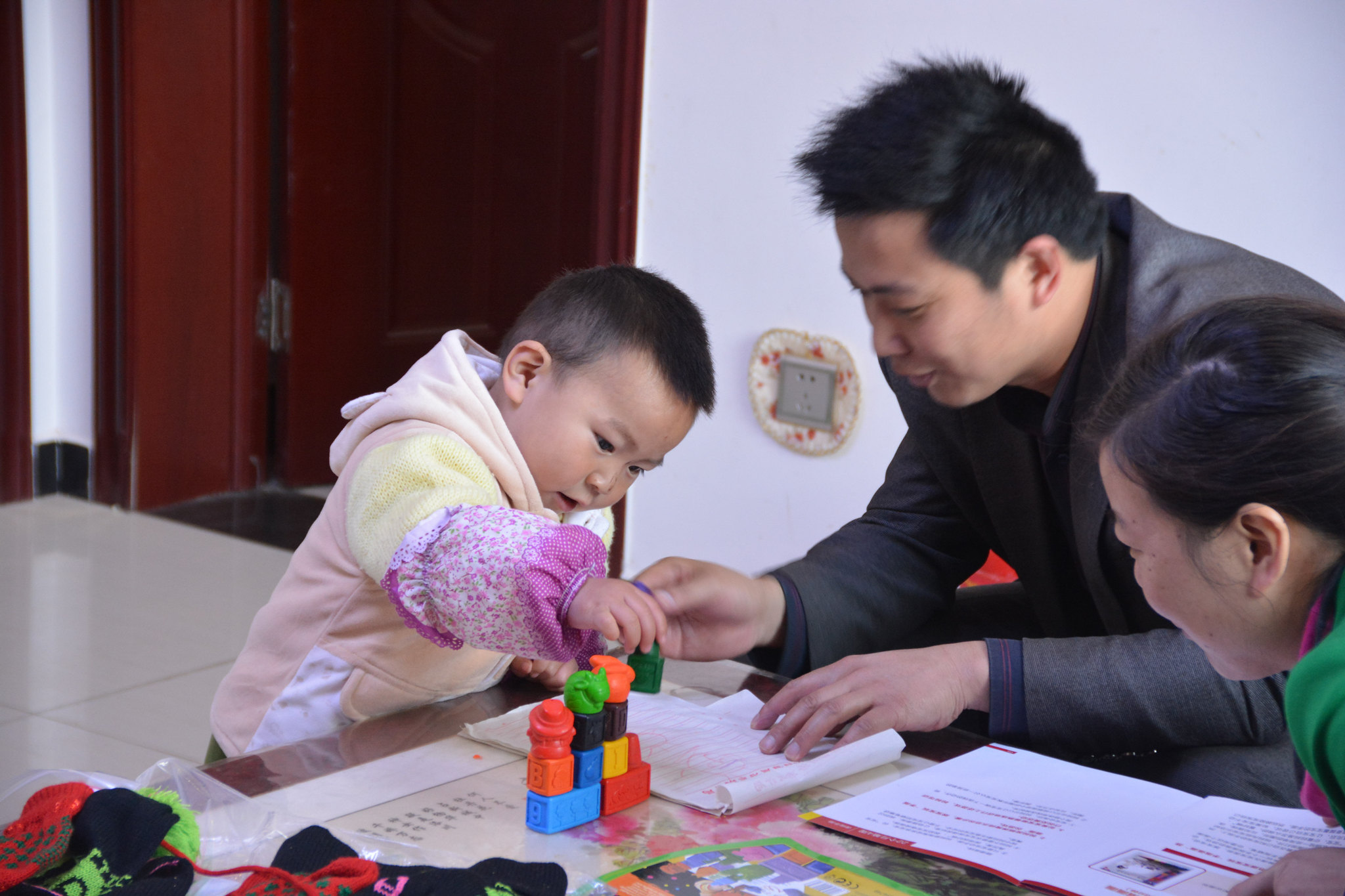
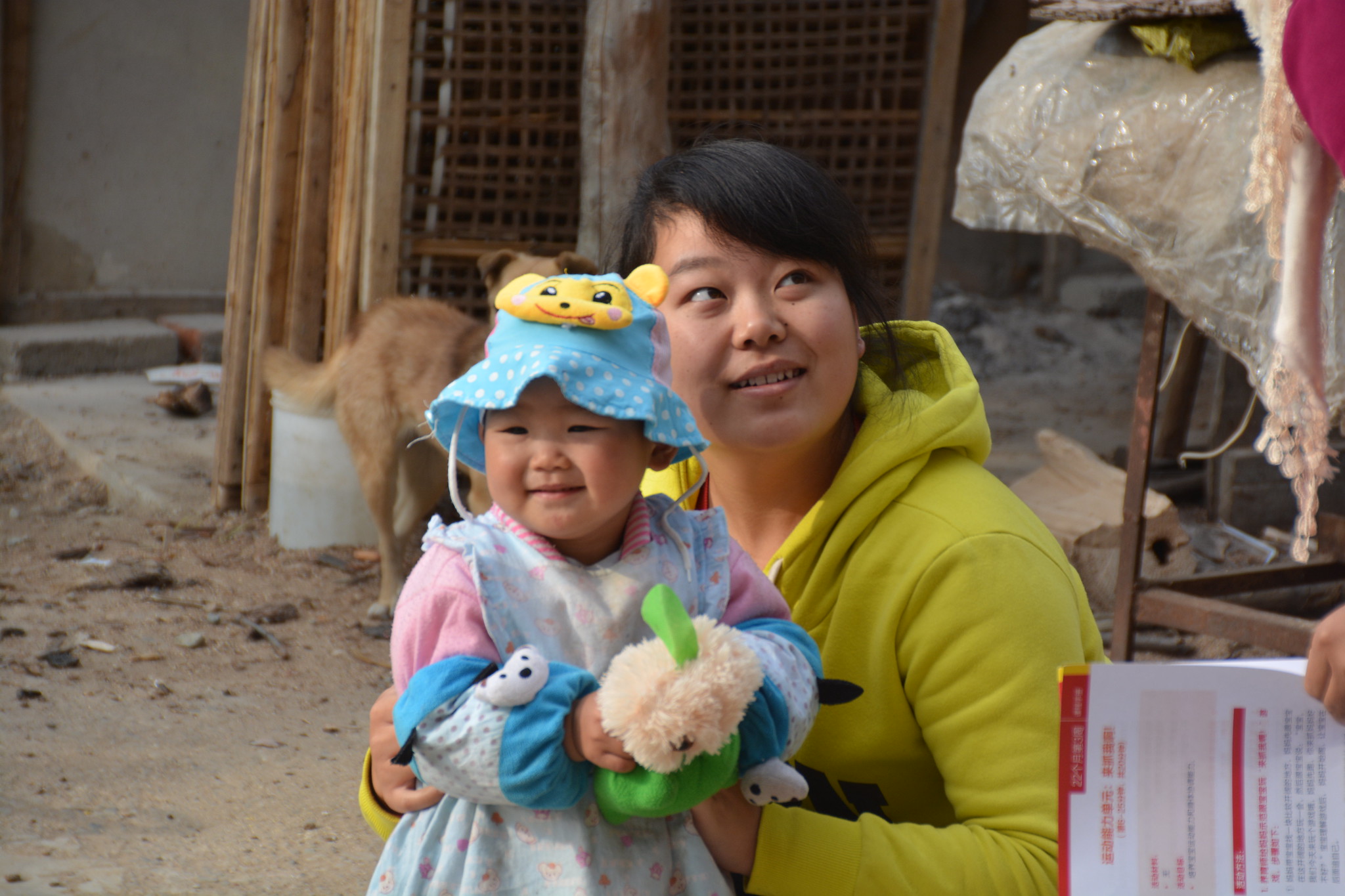
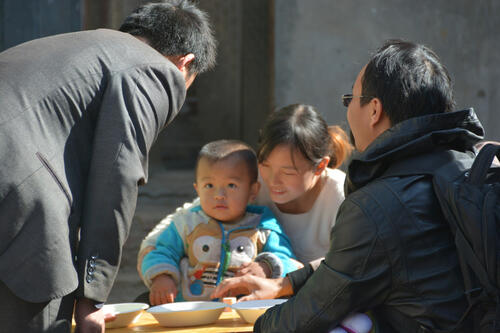 These parenting trainers are propelled by thoughts of the children's recognition and trust when enduring tough travel conditions to reach their homes.

