International Development

FSI researchers consider international development from a variety of angles. They analyze ideas such as how public action and good governance are cornerstones of economic prosperity in Mexico and how investments in high school education will improve China’s economy.

They are looking at novel technological interventions to improve rural livelihoods, like the development implications of solar power-generated crop growing in Northern Benin.

FSI academics also assess which political processes yield better access to public services, particularly in developing countries. With a focus on health care, researchers have studied the political incentives to embrace UNICEF’s child survival efforts and how a well-run anti-alcohol policy in Russia affected mortality rates.

FSI’s work on international development also includes training the next generation of leaders through pre- and post-doctoral fellowships as well as the Draper Hills Summer Fellows Program.

Paragraphs

Purpose: The need for a universal rural pension system has been heightened by demographic changes in rural China, including the rapid aging of the nation’s rural population and a dramatic decline in fertility. In response to these changes, China’s Government introduced the New Rural Social Pension Program (NRSPP) in 2009, a voluntary and highly subsidized pension scheme. The purpose of this paper is to assess the participation of rural farmers in the NRSPP. Furthermore, the authors examine whether the NRSPP affects the labor supply of the elderly population in China.

Design/methodology/approach

This paper uses household-level data from a sample of 2,020 households originating from a survey conducted by the authors in five provinces, 25 counties, and 101 villages in rural China. Using a probit model and conducting correlation analysis, the authors demonstrate the factors affecting the participation and the impact of NRSPP on labor supply of the rural elderly.

Findings

The results show there are several factors that are correlated with participation, such as specific policy variant in force in the respective household's province, the size of the pension payout from government, the age of sample individuals, and the value of household durable assets. Specifically, different characteristics of NRSPP policy implementation increase participation in China’s social pension program. The results suggest that the introduction of the NRSPP has not affected the labor supply of the rural elderly, in general, although it has reduced participation for the elderly who were in poor health.

Originality/value

Several previous studies have covered the NRSPP. However, all previous studies were based on case studies or just focused on a small region, and for this reason the results cannot reflect the populations and heterogeneity of rural areas. Therefore, a data set with a large sample size is used in this paper to provide anew perspective to fully understand the participation of NRSPP and its impacts on rural households. This paper will make an update contribution to the literature in the area of pension programs in China.


All Publications button
1
Publication Type
Journal Articles
Publication Date
Journal Publisher
China Agricultural Economic Review
Authors
Scott Rozelle
Paragraphs

Importance: The number of urban migrants in China is 300 million and is increasing rapidly in response to government policies. Urban migrants have poor access to health care, but little is known about rates of correction of refractive error among migrant children. This is of particular significance in light of recent evidence demonstrating the educational impact of providing children with spectacles.

Objective: To measure prevalence of spectacle need and ownership among Chinese migrant children.

Design, Setting, and Participants: Population-based, cross-sectional study among children who failed vision testing (uncorrected visual acuity ≤6/12 in either eye) between September 15 and 30, 2013, at 94 randomly selected primary schools in predominantly migrant communities in Shanghai, Suzhou, and Wuxi, China.

Main Outcomes and Measures: Refractive error by cycloplegic refraction; spectacle ownership, defined as producing glasses at school, having been told to bring them; and needing glasses, defined as uncorrected visual acuity of 6/12 or less correctable to greater than 6/12 in either eye, with myopia of −0.5 diopters (D) or less, hyperopia of +2.0 D or greater, or astigmatism of 0.75 D or greater in both eyes.

Results: Among 4409 children, 4376 (99.3%) completed vision screening (mean [SD] age, 11.0 [0.81] years; 55.3% boys; 4225 [96.5%] migrant and 151 [3.5%] local). Among 1204 children failing vision testing (total, 27.5%; 1147 migrant children [27.1%] vs 57 local children [37.7%]; P = .003), 850 (70.6%) completed refraction. Spectacle ownership in migrant children needing glasses (147 of 640 children [23.0%]) was less than among local children (12 of 34 children [35.3%]) (odds ratio = 0.55; 95% CI, 0.32-0.95; P = .03). Having uncorrected visual acuity less than 6/18 in both eyes was associated positively with baseline spectacle ownership (odds ratio = 5.73; 95% CI, 3.81-8.62; P < .001), but parental education and family wealth were not.

Conclusions and Revelance: Among urban migrant children, there was a high prevalence of need for spectacles and a very low rate of spectacle ownership. Spectacle distribution programs are needed specifically targeting migrant children.


All Publications button
1
Publication Type
Journal Articles
Publication Date
Journal Publisher
JAMA Ophthalmology
Authors
Scott Rozelle
Paragraphs

Abstract: Growing evidence suggests that teachers in developing countries often have weak or misaligned incentives for improving student outcomes. In response, policymakers and researchers have proposed performance pay as a way to improve student outcomes by tying concrete measures like achievement scores to teacher pay. While evidence from randomized experiments generally indicates that performance pay programs are effective at improving student achievement in developing countries, there has been considerable variation in how much these programs affect student achievement. The goals of this study are to: (1) examine the impacts of different teacher performance pay designs on student achievement, both for the average student and for students across the baseline achievement distribution; and (2) examine the mechanisms through which different teacher performance pay designs affect student achievement (for the average student and for students across the baseline achievement distribution). The sample includes a total of 8,892 students and their grade 6 mathematics teachers from 216 schools from 16 nationally-designated "poverty" counties in Yulin Prefecture (Shaanxi Province) and Tianshi Prefecture (Gansu Province) in rural, northwest China. To test the impacts of the different teacher performance pay designs, researchers designed a cluster-randomized controlled trial. In this trial, schools were randomly allocated to 4 different treatment arms: (1) control--no teacher incentive pay; (2) levels incentive--performance pay contract stipulating rewards based on student achievement levels on endline tests; (3) gains incentive--performance pay contract based on student achievement gains from baseline and endline tests; and (4) pay-for-percentile incentive--performance pay contract stipulating rewards based on student growth percentiles. Surveys were used to collect information from the students, teachers, and school administrators. Findings reveal that: (1) Only "pay-for-percentile" incentives had a positive, statistically significant impact on average student achievement; (2) Teacher incentives based on "levels" or "gains" were ineffective; (3) "Gains" incentives led teachers to only focus on certain types of students, which led to negligible learning (on average) across all students; and (4) Pay-for-percentile incentives led to score gains across all students (on average). The results of this study may have important implications for how Teacher Performance Pay Policy can be implemented in China and in other developing countries.

All Publications button
1
Publication Type
Journal Articles
Publication Date
Journal Publisher
Society for Research on Educational Effectiveness
Authors
Sean Sylvia
James Chu
Scott Rozelle
News Type
News
Date
Paragraphs

Caixin Media writes about REAP's research on rural China's epidemic of slow cognitive development, caused by poor parenting. Read the original article here.

Children in rural areas of China suffer from slow cognitive development due to a lack of proper parenting and nutrition, casting a shadow over the future of the country's economy, a Stanford University study shows.

Scott Rozelle, co-director of the Stanford University Rural Education Action Program (REAP), told Caixin that more than half of the toddlers 24 to 30 months old and about 40% of the infants 6 to 18 months old scored below average in IQ tests. The average IQ score for these age groups should range between 90 to 109.

By monitoring the development of 2,500 children across Shaanxi, Hebei and Yunnan provinces in 2015, the REAP study found that the poor development of rural children was mostly due to poor parenting.

Only about 5% of parents in rural areas read books to their children, and 70% of families surveyed possessed only one book, or no books at all, the study showed.

"Chinese families love their children but don't know much about parenting," Rozelle said. "They think reading a book or singing to their babies is silly because they think 'They're just babies.' "

The study also showed that malnutrition also contributed to poor development.

The situation in rural areas could pose a major challenge for China as the country shifts its economy from traditional low-margin manufacturing to services and technology, Rozelle said. If learning difficulties cannot be overcome before a child reaches the age of 3 — a crucial window for child development — hundreds of millions of young people could be in danger of becoming permanently impaired physically and developmentally.

"Ultimately, if China becomes a high-wage, high-income society, a large share of these children will be unemployable," he said.

Malnutrition also contributes to slower intellectual development, the study showed. More than 70% of infants 6 to 18 months old in Yunnan have anemia — a lack of red cells that ferry oxygen around the body. The figure is about 60% in Hebei, and 50% in Shaanxi.

While nutritional supplements could help promote improved cognitive skills, the impact was seen to be relatively small and only aided infants 6 to 18 months old, the study showed.

Hero Image
caixin poor parenting picture
All News button
1
-

About the Topic: Considering continued population growth, increasingly limited availability of uncultivated land, and persistent rural poverty in sub-Saharan Africa, it is imperative to improve crop yields in this region by disseminating yield-enhancing technologies. This presentation explores recent experiences in the effort to bring about a Green Revolution in sub-Saharan Africa, based on case studies of rice and maize, which are promising and strategic smallholder crops. We find that an African Rice Green Revolution has already began in many irrigated areas as well as in some rain fed areas, using Asian-type modern varieties, chemical fertilizer, and improved management practices. This suggests that the pace of Africa’s Rice Green Revolution can be accelerated by strengthening extension capacity. The story for maize is wholly different, where most farmers use traditional farming systems. However, in the highly populated areas of Kenya, a number of farmers have adopted high-yielding hybrid maize varieties and chemical fertilizer, applied manure produced by stall-fed dairy cows, and intercropped maize with legumes. This finding suggests that the success of Africa’s Maize Revolution will require a new farming system approach based on crop-livestock interactions and improved management practices.   

Please RSVP - lunch will be provided


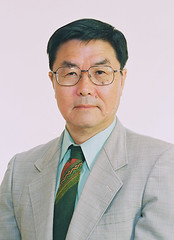
professional photo of Keijiro Otsuka wearing a gray suit

About the Speaker:  Keijiro Otsuka is a Professor of Development Economics at the Graduate School of Economics at the Kobe University and a Chief Senior Researcher at the Institute of Developing Economies. He was a professor at the National Graduate Institute for Policy Studies from April 2001 to April 2016. He received a Ph.D. in economics from the University of Chicago in 1979.He has been conducting comparative analyses on land reform and land tenure, Green Revolution, poverty and income distribution, and cluster-based industrial development between Asia and Africa. He is a Fellow of Agricultural and Applied Economics Association (formerly American Association of Agricultural Economics), an Honorable Lifetime Member of IAAE, and a Distinguished Fellow of African Association of Agricultural Economists. He received a Purple-Ribbon Medal from the Japanese Government in 2010. He has been an editor of Global Food Security since 2015.

Encina Hall East

Goldman Conference Room (4th Floor)

Seminars
News Type
News
Date
Paragraphs

REAP's social enterprise, Smart Focus Vision, along with several other global vision care startups, wins the 2016 Clearly Vision Prize. Read the original news release here.

The winners of the Clearly Vision Prize will share cash prizes totaling $250,000 to help them accelerate their progress and move us another step down the road towards a world where everyone can see.

Smart Focus

Smart Focus is uniting the powers of industry, government, hospitals and schools to provide high quality, low cost eye exams in China. They bring eye care directly into schools to make sure that students get the treatment they need. The country has a real problem with low awareness of the need for vision care. By focusing on serving youngsters in rural areas that might otherwise get left behind, Smart Focus is improving the vision of the next generation.

Visit Smart Focus

Hero Image
REAP's Smart Focus Vision social enterprise wins the 2016 Clearly Vision Prize.
Smart Focus' CEO Mike Young (second from right), pictured with the other winners of the 2016 Clearly Vision Prize.
All News button
1
Date Label
News Type
News
Date
Paragraphs

Liat Clark from Wired writes about REAP's vision care social enterprise, Smart Focus Vision, winning the Clearly Vision Prize for startups that bring low-cost vision care to rural communities around the world. Read the original article here.

Smart Focus Vision

Stanford, CA

The US-based startup has partnered with eyewear company Luxottica OneSight to help scale eye care to ten million people in China that do not have access to affordable services. According to research conducted by Stanford University, only one out of six rural children in China has a set of glasses and most rural students have never had an eye exam. The for-profit ran a pilot operation in conjunction with the Chinese Academy of Sciences before launching in the provinces of Shaanxi and Gansu, where it distributes low-cost glasses, trains doctors and teachers, and constructs clinics. Teachers can test vision directly in classrooms and use mobile phones to automate patient referrals and prescriptions. Smart Focus argues the nonprofit route would never have been a sustainable or scalable way of helping the number of children that need eye care.

As well as a share of the prize money, the winners will have access to mentoring and be invited to a series of one-day events - Clearly Labs - around the globe where they can meet optometrists and other entrepreneurs. The campaign has a number of high-profile advisers onboard, including cofounder of Warby Parker, Neil Blumenthal and founder of Shanghai Tang, David Tang, who commented: "Access to good sight should not be a luxury. Yet, 2.5 billion people are still forced to go without clear vision. Radical new thinking is necessary to rectify this.”

Hero Image
A Chinese girl with glasses provided by Smart Focus, a social enterprise spun out from Stanford and REAP that restores vision to children in rural China.
All News button
1
News Type
News
Date
Paragraphs

In the June 2016 publication of the EYElliance and World Economic Forum report, "Eyeglasses for Global Development: Bridging the Visual Divide," a case study for REAP's Smart Focus social enterprise was published on page 21. Read the entire report here.

The Rural Education Action Program (REAP), an impact-evaluation organization, aims to inform sound education, health and nutrition policy in China. Since 2011, REAP’s five randomized controlled trials have shown that quality vision care is the most cost-effective intervention for improving child welfare, and leads to large and sustainable increases in learning and school performance, along with positive spillovers to children who don’t have poor vision.

REAP is now establishing a network of for-profit vision centres based at county hospitals through an initiative called Smart Focus. Those centres partner with schools to deliver high-quality vision care. Optometrists administer six hours of training for classroom teachers, enabling the latter to conduct initial vision screenings and refer students needing more advanced care through a highly structured referral system. The teachers are provided free mobile-phone time as an incentive, and the vision centres earn revenue from urban consumers in a cross-subsidization scheme that supports providing care for poorer rural consumers whose unmet need is greatest. To date, REAP has provided access to free or affordable glasses for over 30,000 primary school students and screened an additional 120,000 children.

In addition to screening children and supervising their wearing glasses, teachers play a vital role in communicating with parents. Once a teacher’s screening indicates a child needs glasses, the teacher often spends significant time convincing parents that (a) the child’s condition requires attention, (b) the problem is correctable, and (c) taking the child to the vision centre to get glasses is highly advisable. 

Vision centres dispense “first pair free” or very low-cost glasses to rural elementary- and middle-school students, while providing part of the urban market with refraction and eyewear on a fee-for-service basis. Giving away the first pair of glasses is not “just charity”; rather, it provides access to the huge untapped rural market. To build confidence, vision centres unconditionally guarantee the frames for three months and lenses for six months, something that no private optician does. (A noteworthy challenge arises, however, with parents who believe that low-cost or free services must also be of low quality; usage rates and eyeglass prices have been shown to rise in tandem.)

Smart Focus provides county hospitals with management, retail expertise, training and equipment. Critically, the programme assigns a Smart Focus staff member at 
each vision centre to coordinate construction and staff training, and to manage operations and logistics, including relationship-building with schools, hospitals and optical suppliers. To date, REAP has built four vision centres with full approval from the county education and health bureaus. As revenues rise, Smart Focus is committed to expanding the network of vision centres to new counties that lack appropriate care. 
 
In addition, and in collaboration with Zhongshan Ophthalmic Center, Smart Focus arranges training in optometry and vision-centre management for three staff members from each centre. Smart Focus also trains nurses as optometrists through classroom instruction and an in-the-field training and mentoring programme. By the end of their training, nurses are certified to refract patients and make glasses, as well as identify more complex but common eye disorders for referral to ophthalmology departments. Further, Smart Focus pays vision centre staff salaries for the first six months during training and mentoring, and facilitates the centres’ purchasing of frames and lenses. Across China, 2,000 county hospitals each serve 400,000 people annually. 
Hero Image
Boy with glasses in rural China, provided by social enterprise Smart Vision and REAP.
Smart Focus has a goal of developing a nationally supported system that could reach 100% of the 18 million children in rural China who will suffer from poor vision during the early 2020s.
All News button
1
Paragraphs

The education of poor and disadvantaged populations has been a long-standing challenge for education systems in both developed and developing countries. Drawing on data from two randomised controlled trials involving two cohorts of grade 3 students in poor rural minority schools in China’s Qinghai province, this paper explores the effects of computer-assisted learning (CAL) on student academic and non-academic outcomes for underserved student populations, and how interactions between the CAL programme and existing classroom resources affect the programme effectiveness. Results show that CAL could have significant beneficial effects on both student academic and non-academic outcomes. However, when the scope of the programme expanded to include a second subject (in this case, math – which was added on top of the Mandarin subject matter that was the focus of the first phase of the programme), some schools had to use regular school hours for CAL sessions. As a result, the phase II programme did not generate any (statistically) significant improvement over the first phase. 

All Publications button
1
Publication Type
Journal Articles
Publication Date
Journal Publisher
Journal of Development Effectiveness
Authors
Scott Rozelle
News Type
News
Date
Paragraphs

Clifton Parker of the Stanford Report writes about REAP's core researcher, Prashant Loyalka's latest findings on China's higher education system. Read the original article from Stanford News.


China can improve its higher education system by introducing incentives for students and teachers so they take learning more seriously, a Stanford professor says. Under the current system, college students are essentially guaranteed a diploma, offering little motivation to excel.

Prashant Loyalka, a center research fellow at the Rural Education Action Program in the Freeman Spogli Institute for International Studies, led a forthcoming study that found that Chinese college freshmen in computer science and engineering programs began with academic and critical thinking skills about two to three years ahead of their peers in the United States and Russia, but showed almost no improvement in such skills after two years of college. Critical thinking skills are typically defined as the ability to make clear and well-reasoned analyses and evaluations of information.

Loyalka, also an assistant research professor at Stanford Graduate School of Education, recently published an article on how teacher incentives boost student learning in China’s primary schools. Some of the findings could be applicable to China’s universities, he said.

Stanford News Service recently interviewed Loyalka:


What are the strengths of the Chinese educational system?

China’s education system is strong in many ways. By the end of junior high school and high school, students in urban areas display high levels of academic skills like math, science, language arts and English. They also show very high levels of higher-order thinking skills, such as critical thinking and quantitative reasoning. Students from both urban and rural areas tend to be incredibly hardworking and disciplined as well. This is partly due to the fact that Chinese students and their parents spend a lot of time and resources on their studies, both inside and outside of school.

Policymakers in China have also done a great job universalizing access to primary school and getting kids to at least start junior high school.

The weaknesses?

Perhaps the most glaring weakness is that the quality of education is low for the millions of kids who live in rural China. The majority of students in rural China are unlikely to complete high school. About one-third drop out of junior high school. Furthermore, the vast majority of students also do not appear to learn very much after primary school. China shuttles millions of rural kids into vocational high schools that, as several of our studies show, fail to build students’ cognitive and non-cognitive abilities.

Another big weakness is that students, on average, do not improve their academic or high-order thinking skills during college. One of the reasons for this could be that students are essentially guaranteed to graduate college on time and correspondingly have few incentives to work hard during college.

What are the main highlights of your forthcoming study?

In 2014, I led a pilot study to measure the skill levels and gains of engineering and computer science students in China, Russia and the United States. Entering university freshmen in China were roughly three years ahead of U.S. students in critical-thinking skills and roughly two years ahead of Russian students in critical thinking, math and physics skills.

After two years of study, students in the U.S. and Russia closed about half the skill gap with students in China.

The reduction in the skills gap between countries was due to the fact that while U.S. and Russian students made positive skill gains, Chinese students made no skill gains over two years.

I am now in the midst of conducting a much larger study, using nationally random, representative samples of engineering and computer science students in China, Russia and other developed and developing countries. The goals of the study are not just to measure how much students learn in university, but even more to explain what types of factors can contribute to increases in learning.

Why are China’s high schools doing better than their colleges?

Students in China have to study extremely hard if they want to go to college. There are a limited number of spots in academic high schools and colleges, and students have to pass highly competitive exams to get into each level of schooling. In order to prepare students for college, academic high schools offer a rigorous curriculum in math, science, Chinese and English. Academic high school administrators and teachers maintain a highly disciplined environment in which students study long hours in school and do lots of homework and tutoring outside of school. Academic high school teachers are also highly incentivized to make sure students do well.

What are some possible reforms?

China may wish to consider introducing a series of incentives into universities that make students take learning, and faculty take teaching, even more seriously. For faculty, incentives that reward better teaching and are linked to promotion and pay may be needed.

For students, it is likely that they need more incentives to study their course material during college. The vast majority of students do not have significant pressure to show that they learned the course material. They are given a “pass” for their different courses no matter whether they learned the material or not; they also almost all graduate after four years. By contrast, the graduation rates for STEM [science, technology, engineering and math] majors in the U.S. are much lower.

China could also revisit its university curricula and instruction. If, for example, as our study shows, engineering students are already equipped with high levels of math and physics skills before they enter university, offering a more diverse liberal arts curriculum may be a more cost-effective use of resources. Instruction in universities also tends to be passive and rote – students at the university level would likely benefit from a more dynamic interaction with professors than they currently have.

How does the Chinese leadership view education’s impact on the national economy?

China’s leaders are clear that the health of the national economy is tied to the health of its education system. At this point, they appear especially open to improving the quality of higher education. I believe that a lot of attention could continue to be paid to improving the quality of education in rural areas, however, and also expanding access to academic high school and college for rural students.


Hero Image
sns college kids in circle
Prashant Loyalka says that China’s education system is strong in many ways, but shows weaknesses at the college level.
Paul Burns / Getty Images
All News button
1
Subscribe to International Development