Investment
Paragraphs

Abstract: Growing evidence suggests that teachers in developing countries often have weak or misaligned incentives for improving student outcomes. In response, policymakers and researchers have proposed performance pay as a way to improve student outcomes by tying concrete measures like achievement scores to teacher pay. While evidence from randomized experiments generally indicates that performance pay programs are effective at improving student achievement in developing countries, there has been considerable variation in how much these programs affect student achievement. The goals of this study are to: (1) examine the impacts of different teacher performance pay designs on student achievement, both for the average student and for students across the baseline achievement distribution; and (2) examine the mechanisms through which different teacher performance pay designs affect student achievement (for the average student and for students across the baseline achievement distribution). The sample includes a total of 8,892 students and their grade 6 mathematics teachers from 216 schools from 16 nationally-designated "poverty" counties in Yulin Prefecture (Shaanxi Province) and Tianshi Prefecture (Gansu Province) in rural, northwest China. To test the impacts of the different teacher performance pay designs, researchers designed a cluster-randomized controlled trial. In this trial, schools were randomly allocated to 4 different treatment arms: (1) control--no teacher incentive pay; (2) levels incentive--performance pay contract stipulating rewards based on student achievement levels on endline tests; (3) gains incentive--performance pay contract based on student achievement gains from baseline and endline tests; and (4) pay-for-percentile incentive--performance pay contract stipulating rewards based on student growth percentiles. Surveys were used to collect information from the students, teachers, and school administrators. Findings reveal that: (1) Only "pay-for-percentile" incentives had a positive, statistically significant impact on average student achievement; (2) Teacher incentives based on "levels" or "gains" were ineffective; (3) "Gains" incentives led teachers to only focus on certain types of students, which led to negligible learning (on average) across all students; and (4) Pay-for-percentile incentives led to score gains across all students (on average). The results of this study may have important implications for how Teacher Performance Pay Policy can be implemented in China and in other developing countries.

All Publications button
1
Publication Type
Journal Articles
Publication Date
Journal Publisher
Society for Research on Educational Effectiveness
Authors
Sean Sylvia
James Chu
Scott Rozelle
Authors
News Type
News
Date
Paragraphs

China’s commitment to agricultural development over the last thirty years has dramatically transformed the country’s economy. Rural income per capita has risen an astounding 20 times after 30 prior years of stagnation. Its poverty rate (US$1.25/day) has dropped from 40 percent to less than five, and 350 million rural people between the ages of 18-65 are now working in the industrial or service sector, enjoying rising wages and new economic opportunities.

This rapid transformation is largely the result of three key agricultural policy decisions: putting land in the hands of farmers, market deregulation, and major public investment in the agricultural sector. Although China must now contend with extreme inequality, high levels of pollution, and an aging farming sector there are still lessons to draw from China’s experience that could hasten the transformation of other developing countries.

China expert and agricultural economist Scott Rozelle broke these lessons down at FSE’s fourteenth Global Food Policy and Food Security Symposium Series last week, opening with an underlying theme of the series.

“Growth and development starts with agriculture,” said Rozelle. “Agriculture provides the basis for sound, sustained economic growth needed to build housing, invest in education for kids, start self-employed enterprises, and finance moves off the farm.”

To prove this point he referenced China’s ‘lost decades’ (1950s-1970s) when 80 percent of the population lived in the rural sector and relied on communal, subsistence agriculture. Poor land rights, weak incentives, incomplete markets and inappropriate investments left the average rural farmer poorer at the end of 70s than they were in the 50s with almost no off-farm employment growth.

So what changed? Incentives, market deregulation and strategic investments by the state were key.

Creating the right incentives

In 1978 the Chinese government broke the communes down into small “family farms” such that every rural resident was allocated a small parcel of land. A family of five farmed an area the size of a football field. While they did not own nor could sell the land, they had the right to choose what crops and inputs they used and the right to the income generated from their land.

“Incentives are important, and can be enough in the short run,” said Rozelle. “Hard work led to money in the pockets of farmers and China was off.”

“Every two and half years China added another California in term of agriculture,” said Rozelle.

Between 1979 and 1985 productivity for wheat, maize, and rice went up 50 percent using the same amount of labor, land and inputs. Agriculture across the spectrum has grown at an astounding rate of 5 percent since 1988 (about four times the population growth rate). Livestock and fisheries have grown even faster – accounting for most of the output of the agricultural sector by 2005.

Income growth from farming enabled family members to begin to seek work off the farm. Between 1980 and 2011, off-farm work increased 71 percent with more than 90 percent of households reporting that at least one family member worked off the farm.

Increasing efficiency through liberalization and investment

Another key policy decision was China’s commitment to market liberalization and investment in public goods.

“Markets can be an effective, pro-poor tool of development,” said Rozelle. “A remarkable partnership is formed when you let farmers do production and government do infrastructure…let markets guide decisions.”

The government dismantled state-owned grain trading companies and deregulated trading rules. Prices were set once a week the same day across China to better integrate markets, and eventually prices for major crops closely mirrored those of world prices. Villages began specializing in crops and livestock and incomes of the poor increased. By not providing government input subsidies (e.g, pesticides, fertilizers), traders were incentivized to participate in the market.

“Giving land to farmers and letting the private sector emerge is an easy thing for governments, even without a lot of money, to do,” said Rozelle.

The government provided more indirect market support by publicly investing in better roads, communications, and surface water irrigation. Groundwater was left to the private sector. There were no water or pumping fees nor subsidies for electricity, keeping it completely deregulated. As a result, 50 percent of cultivated land in China is irrigated, compared to 10 percent in the US and only four percent in sub-Saharan Africa.

Finally, China has invested heavily in agricultural research and development (R&D). One percent of China’s agricultural GDP is now invested in agricultural R&D while US investment has fallen over time. US$2 billion alone goes to investments in Chinese biotechnology.

Despite major investment, China only has one major success story to show for so far. The introduction of Bt cotton led to a significant drop in pesticide use (with important health benefits for farmers), and drop in labor and seed price; resulting in a huge 30 percent increase in net income.

“GM technology benefits exist but big policy decisions still need to be made in the face of much resistance both in China and elsewhere in the world on its application,” said Rozelle.

Status of China’s economy

China has largely solved the country’s macro-nutrient food security problem at the household level (>3000 Kcal/day/person) and millions have been lifted out of poverty. Practically all 16-25 years old are now working off the farm.

“This is a real transformation, and one that could not have happened without a major investment in agriculture,” said Rozelle.

While China’s agricultural accomplishments have been major, Rozelle recognizes the system is far from perfect. For starters, there are serious food safety concerns due to lack of traceability. An astounding 98 percent of Beijing consumers think their food is tainted, said Rozelle.

Water is being pumped like crazy and farmers are aging. The younger generation is neither willing nor interested in following in their parents’ farming footsteps. To make up for a labor deficit farmers are applying huge amounts of fertilizer on their land with serious environmental consequences. As a result of changing demographics and an increasing demand for meat, fish, fruits and vegetables, China is likely to be a net importer of food in the long run.

China also faces major urban and rural inequality issues. Even though wages have risen, inequality has not fallen, largely a result of China’s decision not to privatize rural land.

“Rural people have no assets on which to build wealth while urban people were given assets in the form of housing,” said Rozelle. “Housing prices in major cities in China now rival those in the Bay Area!”

The Chinese government fears losing control of the land, but this comes at a price of less individual incentive to invest and inability to build larger farmers. As agricultural growth slows, Rozelle worries high levels of inequality could lead to instability.

Adding fuel to the fire, investment in rural health, nutrition, and education remains far from sufficient. Only 40 percent of the rural poor go to high school resulting in 200 million people who can barely read or write.

“What’s going to happen in 20 years when low skill manufacturing jobs move to other countries?” asked Rozelle. “The rural, uneducated poor are going to become unemployable.”

China’s record leaves room for improvement, but presents a strong case for supporting smallholder agriculture. For those countries emerging out of their own lost decades, smallholder agriculture should remain a primary focus of investment and development.

Hero Image
china rice Sevents
All News button
1
-

The lost decades for China in the 1950s, 1960s and 1970s look remarkably like the lost decades of Africa in the 1980s and 1990s. Poor land rights, weak incentives, incomplete markets and inappropriate investment portfolios. However, China burst out of its stagnation in the 1980s and has enjoyed three decades of remarkable growth. In this talk Rozelle examines the record of the development of China’s food economy and identifies the policies that helped generate the growth and transformation of agriculture. Incentives, markets and strategic investments by the state were key. Equally important, however, is what the state did not do. Policies that worked and those that failed (or those that were ignored) are addressed. Most importantly, Rozelle tries to take an objective, nuanced look at the lessons that might be learned and those that are not relevant for Africa. Many parts of Africa have experienced positive growth during the past decade. Rozelle examines if there are any lessons that might be helpful in turning ten positive years into several more decades of transformation.

Scott Rozelle (main speaker). Scott Rozelle is the Helen F. Farnsworth Senior Fellow and the co-director of the Rural Education Action Program in the Freeman Spogli Institute for International Studies at Stanford University. His research focuses almost exclusively on China and is concerned with: agricultural policy, including the supply, demand, and trade in agricultural projects; the emergence and evolution of markets and other economic institutions in the transition process and their implications for equity and efficiency; and the economics of poverty and inequality, with an emphasis on rural education, health and nutrition.

Alain de Janvry (commentator). Alain de Janvry is an economist working on international economic development, with expertise principally in Latin America, Sub-Saharan Africa, the Middle-East, and the Indian subcontinent. Fields of work include poverty analysis, rural development, quantitative analysis of development policies, impact analysis of social programs, technological innovations in agriculture, and the management of common property resources. He has worked with many international development agencies, including FAO, IFAD, the World Bank, UNDP, ILO, the CGIAR, and the Inter-American Development Bank as well as foundations such as Ford, Rockefeller and Kellogg. His main objective in teaching, research, and work with development agencies is the promotion of human welfare, including understanding the determinants of poverty and analyzing successful approach to improve well-being and promote sustainability in resource use.

Bechtel Conference Center

Encina Hall East, E404
Stanford, CA 94305-6055

0
Faculty Co-director of the Stanford Center on China's Economy and Institutions
Helen F. Farnsworth Endowed Professorship
Senior Fellow at the Freeman Spogli Institute for International Studies
Senior Fellow at the Stanford Institute for Economic Policy Research
scott_rozelle_new_headshot.jpeg PhD

Scott Rozelle is the Helen F. Farnsworth Senior Fellow and the co-director of Stanford Center on China's Economy and Institutions in the Freeman Spogli Institute for International Studies and Stanford Institute for Economic Policy Research at Stanford University. He received his BS from the University of California, Berkeley, and his MS and PhD from Cornell University. Previously, Rozelle was a professor at the University of California, Davis and an assistant professor in Stanford’s Food Research Institute and department of economics. He currently is a member of several organizations, including the American Economics Association, the International Association for Agricultural Economists, and the Association for Asian Studies. Rozelle also serves on the editorial boards of Economic Development and Cultural Change, Agricultural Economics, the Australian Journal of Agricultural and Resource Economics, and the China Economic Review.

His research focuses almost exclusively on China and is concerned with: agricultural policy, including the supply, demand, and trade in agricultural projects; the emergence and evolution of markets and other economic institutions in the transition process and their implications for equity and efficiency; and the economics of poverty and inequality, with an emphasis on rural education, health and nutrition.

Rozelle's papers have been published in top academic journals, including Science, Nature, American Economic Review, and the Journal of Economic Literature. His book, Invisible China: How the Urban-Rural Divide Threatens China’s Rise, was published in 2020 by The University of Chicago Press. He is fluent in Chinese and has established a research program in which he has close working ties with several Chinese collaborators and policymakers. For the past 20 years, Rozelle has been the chair of the International Advisory Board of the Center for Chinese Agricultural Policy; a co-director of the University of California's Agricultural Issues Center; and a member of Stanford's Walter H. Shorenstein Asia-Pacific Research Center and the Center on Food Security and the Environment.

In recognition of his outstanding achievements, Rozelle has received numerous honors and awards, including the Friendship Award in 2008, the highest award given to a non-Chinese by the Premier; and the National Science and Technology Collaboration Award in 2009 for scientific achievement in collaborative research.

Faculty affiliate at the Center on Democracy, Development, and the Rule of Law
Faculty Affiliate at the Walter H. Shorenstein Asia-Pacific Research Center
Date Label
Scott Rozelle Speaker
Alain de Janvry Professor of Agricultural and Resource Economics, Goldman School of Public Policy, UC-Berkeley Speaker
Symposiums
Authors
Scott Rozelle
News Type
News
Date
Paragraphs

Full text available at YaleGlobal.

Children of China's Future – Part II

 
Aging population and poverty require stronger investment in China’s rural youth
Karen Eggleston, Jean Oi, Scott Rozelle, Ang Sun, Xueguang Zhou
YaleGlobal, 14 March 2012
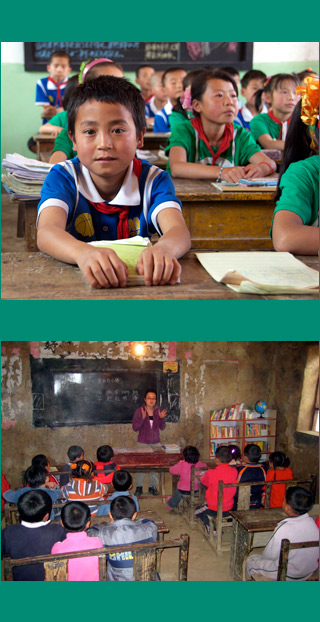
Poor education mortgaging the future? Students in a Gansu province school, where many are anemic (top); another class room in Loess Plateau. (Top Photo: Adam Gorlick)

DINGXI PREFECTURE: Wang Hongli, 8 years old, lives in a remote rural village on the Loess Plateau in one of China’s poorest and most agricultural provinces, Gansu. His prospects for living the good life are as bleak as the landscape. He is not on track to become part of China’s emerging middle class, the free-spending, computer-savvy, person-of-the-world often featured in the western media.

Hongli is a pseudonym. His parents work in a faraway industrial zone, coming home for only three weeks at Chinese New Year. His grandmother takes care of him and his siblings on the weekends, and during the week he lives in a dorm, three to a bed with 36 other students in an unheated room 4 by 4 meters.

Hongli suffers from iron-deficient anemia, but neither his family nor his teacher knows he is sick. Even if his anemia is discovered and treated by the researchers who have documented 30 percent anemia among children in poor rural areas, it likely will recur after he finishes the study, with furnished dietary supplements. Despite educational pamphlets, he’ll likely revert to a diet of staple grains and bits of pickled vegetables.

Unsurprisingly, Hongli’s grades are not good. In China’s competitive school system, he has only a slight chance of attending high school, much less college. In China’s future high-wage economy, all Hongli can hope for is a menial job in the provincial capital, Lanzhou, or as a temporary migrant elsewhere. Without urban permanent residency, hukou, he will have limited access to urban social services. He may suffer chronic unemployment, or resort to the gray economy or crime. He also may never marry – one of the millions of “forced bachelors” created by China’s large gender imbalance.

In China’s future high-wage economy, 
all the rural poor can hope for is menial jobs in a provincial capital.

Hongli is not alone. In fact, he’s one of 50 million school-age youth in China’s vast poor rural hinterlands. Recent studies by Stanford and Chinese collaborators show that 39 percent of fourth-grade students in Shaanxi Province are anemic, with similarly high rates elsewhere in the northwest; up to 40 percent of rural children in the poor southwest regions, e.g., Guizhou, are infected with intestinal worms. Millions of poor rural students throughout China are nearsighted, but do not wear glasses.

Because China’s urbanites have fewer children, poor rural kids like Hongli represent almost a third of China’s school-aged children, a large share of the future labor force. These young people must be healthy, educated and productive if China is to have any chance of increasing labor productivity to offset the shrinking size of its aging workforce.

Many observers presume that China’s growth will continue unabated, drawing upon a vast reservoir of rural labor to staff manufacturing plants for the world. In fact, to a considerable extent, China’s rural areas have already been emptied out, leaving many villages with only the old and the very young. The growth of wages for unskilled workers exceeds GDP growth.

Better pay should be good news for poverty alleviation. However, rising wages push up the opportunity cost of staying in school – especially since high school fees, even at rural public schools, are among the highest in the world.

It’s myopic to allow rural students to drop out of junior high and high school – mitigating the current labor shortage, but mortgaging their futures. Recent studies demonstrate that eliminating high school tuition – or reducing the financial burden on poor households – improves junior high achievement and significantly increases continuation on to high school. Yet unlike many other developing countries, China does not use incentives to keep children in school, such as conditional cash transfers. The public health and educational bureaucracies also do not proactively cooperate to remedy nutritional and medical problems – including mental health – that school-based interventions could address cost effectively.

Less than half of youth in China’s poor rural areas go to academic high school; less than 10 percent head to college.

The educational system, based on rote memory and drill, doesn’t teach children how to learn. The vocational education system is ineffective. Instead, China’s schools tend to focus resources on elite students. Tracking starts early, and test scores are often the sole criterion for success. A recent comparative study documents that China’s digital divide, with lower access to computers in poor rural areas, is among the widest in the world.

China’s government is increasing expenditures for school facilities and raising teacher salaries. However, these steps are far from adequate. During South Korea’s high growth, almost all Korean students finished high school. Today, less than half of youth in China’s poor rural areas go to academic high school, and the percent going to college remains in the single digits.

Greater investment in public health and education for the young people in China’s poor rural areas is urgent. If the government waits 10 years, it may be too late to avert risks for China’s stability and sustained economic growth.

Surely China could easily address this problem? A third of Chinese were illiterate in the early 1960s; now, fewer than 5 percent are. By 2010, about 120 million Chinese had completed a college degree. Chinese also enjoy a relatively long life expectancy compared to India and many other developing countries, and basic health insurance coverage is almost universal.

But the pace of change and citizens’ expectations are higher as well. Most Chinese assume that basic nutritional problems and intestinal worms were eradicated in the Mao era. China’s mortality halved in the 1950s; fertility halved in the 1970s. As a result, China will get old before it gets rich. Population aging, rapid urbanization and a large gender imbalance represent intertwined demographic challenges to social and economic governance. The policy options are complicated, the constraints significant, the risks of missteps real and ever-present.

China’s prosperity depends on youth mastering skills to thrive in a technology-driven world.

Timely policy response is complicated by competition for resources – pensions, long-term care, medical care for the elderly and more – as well as significant governance challenges arising from a countryside drained of young people. The well-intentioned programs for what government regards a “harmonious society” create large unfunded mandates for local authorities. Attempts to relocate rural residents to new, denser communities provoke anger at being uprooted and skepticism that local authorities simply want to expropriate land for development.

Millions of migrant workers – like Wang Hongli’s parents – return to their rural homes during economic downturns. Urbanization weakens this capacity to absorb future economic fluctuations. Government efforts at “social management” – strengthening regulatory control of informal social groups and strategies for diffusing social tensions – expand the bureaucratic state, a central target of popular discontent.

Premier Wen Jiabao’s announcement of a 7.5 percent growth target – the lowest in two decades – has been expected. Future economic growth will moderate partly because of demographics, but mostly because productivity gains slow as an economy runs out of surplus rural labor and converges on the technological frontier. Costly upgrading of industrial structure will squeeze the government’s ability to deliver on its promise of a better future for all, stoking social tensions.

China’s stability and prosperity, and that of the region and the globe, depends on how well today’s youth master the knowledge and skills that enable them to thrive in the technology-driven globalized world of the mid-21st century. Resilient public and private sector leaders of the future must be able to think creatively. Therefore, China’s government should respond to population aging by acting now to invest more in the health and education of youth, especially the rural poor.


Hero Image
5734696609 a3b10b4c8f z
All News button
1
Authors
News Type
News
Date
Paragraphs

As the world holds a collective breath waiting to see whether China’s white-hot economy blazes ahead or fizzles, Stanford economist Scott Rozelle is talking up a plan to protect the country’s future.

“China needs to make sure every kid goes to high school so they have the skills and training they’ll need to be productive workers,” he says.

With only 40 percent of the country’s poor and rural children now receiving a formal high school education, that’s a tall – and expensive – order to fill. Rozelle figures China needs to invest at least $500 billion during the next decade to make sure nearly all the country’s children have the support they’ll need for a quality education.

But he warns the price will be even higher if the country falls short of that goal.

Hourly wages – now about $2 – rose by 19 percent in the past year. If China’s growth pattern continues, those wages can hit $10 to $15 by 2030. That trend is pushing China to shift from an economy based on labor-intensive, low-skilled manufacturing to one needing smarter, more literate workers.

Facing increasing payroll costs, employers cannot afford to hire workers who don’t have a set of basic skills and an ability to master complicated tasks. If the labor force cannot measure up, businesses – and the jobs they promise – will go elsewhere.

And if that happens?

“Then,” Rozelle says, “You have Mexico and the crisis that country is facing today.”

China is now in much the same situation as Mexico during the late 1980s and early 1990s, when wages began to skyrocket and the country planned to attract and create high-skilled jobs to support them.

The idea was to move Mexico from a middle-income nation to a rich one. But there wasn’t a deep enough labor pool to sustain the shift. While just over 80 percent of kids in Mexico’s well-off cities were going to high school, only about 40 percent of those living in rural and poor urban areas were getting a secondary education.

Factories paying low wages soon moved to other countries. Job opportunities dried up. Unemployment soared, and so did the power and presence of drug cartels and organized crime. Gang violence is scaring away tourists, foreign investment and domestic business plans. More than ever, Mexico is now swamped with crime and corruption instead of the spoils of an economic windfall that seemed within reach just three decades ago.

Should China fall into the same trap, Rozelle warns of a destabilized Asian behemoth that would put a crimp in worldwide trade and global prosperity. And without a strong economy to assure its own population of a rising quality of life, China might begin to assert its military to increase a sense of nationalism, he says.

“The world is much better off with a stable and growing China,” says Rozelle, co-director of the Rural Education Action Project at Stanford’s Freeman Spogli Institute for International Studies.

And he says China can avoid Mexico’s mistake by following the path of countries such as South Korea.

While Mexico’s fortunes and wages were rising, so too were South Korea’s. But China’s neighbor made a smooth transition from a low-wage, labor-intensive economy to a highly productive, innovative and service-based workforce.

They pulled it off because of a strong commitment to education. Even in the years when South Korea’s economy was fueled by low-wage, labor-intensive manufacturing, nearly everyone went to high school. Whether or not South Korean officials were betting that education and economic success went hand-in-hand, it turned out that a strong education system was one of the key factors in the country’s growth, Rozelle says.

“In the 1970s and early 1980s, you had young women who were making shirts and socks in sweatshops transform themselves into highly skilled workers doing high-fashion design and other high-wage, high productivity jobs in the 1990s and 2000s,” Rozelle says. “And the key to it all was that those women went to high school and learned the skills that high-wage paying employers demanded. It was mandatory and free, and those women learned how to read, write and do math.”

China has a lot of catching up to do if it aspires to South Korea’s model. With up to 60 percent of children in poor rural areas missing out on high school, China’s education system in those regions now looks more like Mexico’s.

But if China begins investing heavily, the country stands a good chance of hitting a sustainable economic stride. That means spending about $50 billion a year on services like early childhood education and computer-assisted learning while making sure schoolchildren have the health care, vision care and nutrition they need to pay attention and perform well in class.

“China has the money and the resources to contain the problem,” Rozelle says. “But it needs to do something right now, because time is running out.” 

Hero Image
screen shot 2014 08 22 at 2 03 39 pm
All News button
1
News Type
News
Date
Paragraphs

On the eve of the Lunar New Year, Beijing is bright and bustling. Keeping a promise made to a friend 2000 km away, a reporter walks along Zhongguancun Boulevard in search of a medicine called the "baota lozenge." However, more than twenty-some pharmacies of all sizes have all given the same answer: this once familiar anthelmintic drug has been off the counters of pharmacies for over 10 years!

In Sichuan and Guizhou, some 2000 km away, the final report from the Chinese Academy of Sciences Rural Policy Research Center and the Rural Education Action Project (REAP) on the current infection status of intestinal worms in children is fresh off the press. In the more than twenty years since the baota lozenge came off the market, prevention efforts against soil-borne worm infections in rural children have weakened and these parasitic infections traditionally affecting rural children have re-emerged!

According to results from a survey of 6 randomly selected nationally designated poor counties and 95 villages, in which 817 three to five year-old preschool-aged children and 890 eight to ten-year old school-aged children in Sichuan and Guizhou were screened for intestinal worms, REAP found that infection rates for intestinal worms (Ascaris, hookworm and whipworm) reached 22%: 21% for preschool-aged children and 23% for school-aged children.

In a country like China that has been experiencing an economic boom for the past 30 years, why do poor rural children today still have such a high infection rate of intestinal worms?

Delisting the baota lozenge and its effects on children's health

Among 817 three to five year-old preschool-aged children and 890 eight to ten-year old school-aged children randomly selected from 6 poor counties, the overall intestinal worm infection rate was high at 22%, mainly with Ascaris. Of the infected children, ~80% had roundworms, and 15% had multiple infections. This result overturns the presumption that intestinal worms infection decreases when standard of living increases.

A WHO report in 1999 explained that in tropical and subtropical regions, the loss from soil-borne parasitic diseases and schistosomiasis accounts for over 40% of the total disease burden. Those affected are mainly children; the diseases increase the risk of malnutrition, anemia, stunting, impaired cognition, and other diseases.   

Actually, even before this report was published, China had already prioritized prevention of soil-borne parasitic diseases and schistosomiasis in public health measures. In the 50 years from the founding of new China to the early 1990s, the Chinese government had been devoted to increasing awareness of parasitic worm infections and systematic use of anti-parasite drugs as part of its prevention efforts to drastically reduce intestinal worm infection rates in children. However, in the last 20 years, not only have intestinal worms not been considered a priority in national infectious disease control, but the baota lozenge used consecutively for 10 years has also retreated from the market.

With the baota lozenge off the market and intestinal worm prevention at a low, what is the current health status of the vast number of rural children?

With this question in mind, CCAP and REAP's team, with the help of the Chinese CDC's Parasitic Diseases Control and Prevention Institute, conducted a field work investigation from April 2010 to June 2010 in Sichuan and Guizhou.

To ensure representativeness and the scientific nature of the survey, 6 nationally designated poor counties were randomly selected across the two provinces. After sampling areas were confirmed, the townships in each county were divided into 42 groups according to per capita net income and 12 townships were randomly selected from each group. Four sample townships were selected from each sample county. In every sample township, 2 sample schools were randomly selected; in every sample school, 2 sample villages served by the school were randomly selected; in each sample village, 11 eight to ten-year olds were selected for parasitic worm infection screening. At the same time, in every village, using child vaccination records (provided by township health center), the research team acquired the name list of all three to five-year old children in the two sample villages within that township. Eleven three to five-year old preschool-aged children were randomly selected from each sample village for screening for intestinal worms.

In this way, with collaborations with international parasitic worm expert consultants and recommendations from the Chinese CDC Parasitic Disease Control and Prevention Institute, 46 schools, 95 villages served by the schools, and a total of 1707 children were randomly selected to form the sample. Of these, 817 were three to five years old and considered preschool-aged and 890 were eight to ten years old and considered school-aged.

The investigation and screening of children for parasitic worms consisted of three main parts: anthropomorphic measures, basic socioeconomic information and children's fecal samples. A team of nurses from Xi'an Jiaotong University was responsible for measuring children's height and weight; REAP team members collected information on sample children's age, gender, parental education levels, hygiene and family characteristics, as well as whether children had received anthelmintics in the past year and a half. Chinese CDC Parasitic Disease Control and Prevention Institute analyzed fecal samples.    

Over the course of a few months of data analysis, results indicate: sample areas have high infection rates of intestinal worms, but discrepancies exist across different age groups, areas and types of parasitic worm infection. Twenty-one percent of preschool-aged and 23% of school-aged children in sample areas were infected with Ascaris, hookworm or whipworm or a combination thereof. Infection rates meet WHO's criteria for mass treatment. In one province, 34% of preschool-aged and 40% of school-aged children have one or more of the three types of worms. In the other province, although infection rates are lower among preschool and school-aged children, they are still 10% and 7%, respectively. Among the types of worm infection, Ascaris is most severe, with infection rates reaching 17%, followed by whipworm (7%), pinworm (5%), and hookworm (4%).

At the same time, regional differences are quite distinct. In one of the provinces, 7 villages out of 48 sample villages and 2 schools out of the 23 sample schools had prevalence rates above 20%. About half of the sample villages and schools suggest evidence of parasitic worm infection. In the other province, one quarter of the sample villages and one third of the sample schools had infection rates above 50%. Evidently, intestinal worms prevention is an important public health concern that needs to be emphasized by local disease control centers.

Besides high infection rates of parasitic worms, the intensity of infection should not be ignored. Among preschool-aged children in the two sample areas, each gram of fecal matter contains 23,568 and 17,064 roundworm eggs, respectively. According to WHO standards, this level of roundworm infection is considered a "moderate" infection level. Hookworm and whipworm infection intensities are lower; only hookworm infection among school-aged children in Sichuan reached "moderate intensity," while other infection levels could be considered "low intensity".

 What causes parasitic worm infection in these children?

The investigation shows that infection in preschool-aged children correlates with maternal education and family health conditions, while infection in school-aged children correlates with school health education and hygiene conditions. Of particular importance is that even though eliminating worms costs only 4 RMB per person per year, prevention efforts have not been included in local medical services in less accessible rural areas with high infection rates.

In the third grade class of Longshan elementary school in Machang township, Pingba county, Anshun city, Guizhou province, one question continues to haunt head teacher Li: "Why does our class have students calling in sick and missing school every day?"

On the surface, Teacher Li's third grade class is no different from schools in other rural areas in China. The students are typical rural schoolchildren filled with curiosity, who have bright eyes, dirty hands, and colorful backpacks.

However, if you pay close attention, you will notice they are very different from same-aged children in other areas. These students are mostly on the small side, and look one to two years younger than their actual age. At recess, there is none of the typical pent-up energy kids usually have after sitting in a classroom all morning. No excited children chasing one another, no shouts from the hubbub of play, no lively rhythm of skipping rope. It is as if a blanket of weariness has descended on these children.  

The culprit is no other than intestinal worms. According to the introduction provided by researchers Drs. Xiaobing Wang and Chengfang Liu, Longshan elementary school has one of the highest infection rates of all sampled schools, reaching 70%. One of the two sample villages covered by Longshan elementary schools had parasitic worm infection rates as high as 80%.

What effect does parasitic worm infection have on children's growth and development? REAP's results indicate that worms lead to anemia in 22.7% of the rural school-aged children, and delayed physical development in 30%, which is a 400% higher risk than non-infected children. Compared with non-infected children, affected children have below-average weights, shorter stature, weaker body constitution, and general underdevelopment, just to name a few characteristics.

The project research team, Chinese CDC Parasitic Disease Control and Prevention Institute's Guofei Wang and Xibei University's Professor Yaojiang Shi believe that worms not only cause discomfort and nausea, but also lead to significant learning (memory) and cognitive impairments.

Renfu Luo, an assistant researcher at CCAP, believes that the underlying reason is that high infection rates have long been neglected, and so have caused low school attendance rates and limited attention spans, which ultimately lead to infected children falling behind their healthy counterparts.

In fact, according to the WHO's parasitic worms prevention guidelines, for schools like Longshan elementary school that are rural and inaccessible, two mass administrations of albendazole or mebendazole (both available on the market) are needed per year. However, the reality is, even though the medicine costs only 4 RMB per person per year for kids from Longshan elementary school and other nearby rural villages, the public health infrastructure required to combat the disease has not been incorporated into the scope of medical services.

If the Longshan elementary school sample is an example of the typical conditions in western villages, what are the implications on a larger scale? CCAP researcher Linxiu Zhang believes that in the long run, if parasitic worm infections in children continue to be neglected in national infectious disease control, the future efficiency and productivity of the rural labor force will be affected. From an education perspective, and in light of an increasingly competitive skill-based socioeconomic environment, intestinal worms may very well be the primary driver for perpetuating the vicious intergenerational cycle of poverty.

From the 6 sample counties investigated over the course of 3 months, the researchers were able to see with their own eyes the health situation of Longshan elementary school and other sample schools. The researchers could not resist asking, how did these kids become infected with intestinal worms? Living in more or less the same environment, why do some kids become infected while others escape that fate?

After repeated comparison and analysis of the data, researchers found that these poor rural village children's infection rates are correlated with mother's education level, children's unsanitary hygiene habits (such as not washing hands before meals and after bathroom use), and family health conditions (such as access to potable, clean water, toilet sanitation, and livestock/poultry breeding habits). At the same time, children's habit of wearing split pants for convenient urination/defecation also exacerbates the risk for worm infection. Because mothers are usually responsible for their children's eating and health habits at home, mothers with lower education levels often lack knowledge about health and nutrition improvement and intestinal worm disease severity. Thus, the higher the mother's education level, the lower the child's chance of infection. Interestingly though, father's education level has no visible effect on the child's risk of infection.

For school-aged children, the main reason for intestinal worm infection is that poor rural village schools lack safe drinking water services and facilities. In these sample schools, researchers found that the schools' water quality is a far cry from the national standards for safe, potable water. However, because these schools cannot provide boiled water, many students have no choice but to drink unprocessed, unboiled water.

Drinking unboiled water is a main cause for infection in children. According to calculations made by the research team, consuming unboiled water increases infection by 11%, while washing hands before meals can decrease infection by about 4.6%.

Poor school sanitation conditions are also a main driver for infection. Research findings indicate that two-thirds of the sampled schools did not have sinks for washing hands; even though a few schools have constructed sinks, because there is no running water or soap, they are really just for display. Also, none of the sampled school treated their bathroom waste using appropriate and safe chemical methods, which not only affects sanitation in and around the school, but also facilitates parasitic worm cross-infection.

Insufficient knowledge or poor public health measures?

Prevention of intestinal worm infection for poor, rural village children is unstructured, unsystematic, and combined with school sanitation and health education deficiencies, has triggered high infection rates in remote rural areas. However, the primary reason for this phenomenon is the lack of basic public health measures in rural settings.

The analysis of the data begs the following question: Why, in the midst of rapid economic progress, are there still elevated levels of infection among children in certain regions? We know from China's past successes in infectious disease control that basic public health services are all that is needed to effectively prevent parasitic worm infection. And cheap, effective, safe, and reliable anthelmintics are easily acquirable. Yet high levels of infection persist. Why?

As early as 1960, many international experts in global development praised China for its ability, despite its developing status and low average income, to effectively provide public health services for rural citizens and children. Turning back to that page in long forgotten history, China was actually able to prevent parasitic worm disease at impressive proportions in a short span of 50 years. The success can be attributed to strong adherence to prevention and the hard work of medical and public health personnel.

Data indicate that in the 1970s, the parasitic worm infection rate among China's children reached about 80%. The 1990 seminal nation-wide human parasites survey found that overall parasitic prevalence remained high at 63%, with the intestinal worm infection rate at 59%. Even though China's population infected with Ascaris, whipworm and hookworm at that time reached 140 million people, due to administration of anthelmintics in rural villages combined with health education and waste management as part of a concerted prevention effort, the parasitic infection rate ultimately plummeted at the beginning of this century. Soil-borne worm infection rates decreased to about 20%. 

This was an accomplishment during a time of massive prevention and treatment by the infectious disease control unit. This period marked a golden era for public health measures in rural villages. Almost everyone over 35 years of age born in rural areas can still vividly remember the many "barefoot" and village doctors who performed regular check-ups for various villages, treated common diseases for free, and educated people about basic disease prevention and health practices. One of the most commonly seen services was providing free "baota" lozenges or albendazole to children, in the form of a pink or blue, mildly sweet anthelmintic pill.

However, this "free lunch" period did not last long. After conducting field work studies on the sample villages, researchers discovered that entering into the 1980s, with decreasing investment in rural public health and medical services, the rural health system sustained by "barefoot" doctors crumbled, and villagers have since rarely enjoyed basic public health protection. With severe financial shortages and lack of coordination, education and public health collaboration efforts also descended into stagnation. School-aged children's health surveillance and vaccination measures reached a nearly historic low. In recent years, the Chinese government has begun to redirect attention to rural public health. However, the prolonged 20-year disappearance of basic rural public health services from the national radar has initiated the revival of many once eliminated diseases in these areas. Some villages actually exist in zones of concentrated outbreaks.

With an impressive record of success just twenty years ago, why is the prevention of parasitic worms in children still so difficult in an economically blossoming and increasingly health conscious society? Is it due to insufficient monetary funding, gaps in knowledge, or some other reason?

Researchers believe that even with the disappearance of the high quality and inexpensive "baota" lozenge, other drug treatments for parasitic worm infections in children exist today, requiring just two administrations per year and a low cost of less than 4 RMB. However, the critical problem is that health and education administration in various areas currently lack substantive, effective coordination in their anthelmintic efforts. Small investments that maximize benefit to many people's livelihoods are slow to be made.

According to field interviews, when the "baota" lozenge retreated from center stage, local health and education departments debated about who should take responsibility for children's health, and teachers and principals also shunned the problem. In discussions with some teachers from sampled schools, researchers found that teachers scratched their heads over poor parental care in addressing the issue. Despite all schools establishing relevant health education curricula, due to limited manpower and financial resources, most schools do not have full-time health education teachers and do not distribute unified teaching materials to students, so the curriculum can hardly be implemented.

Actually though, cross-department cooperation has occurred in the past. At the end of the last century, the Ministries of Health and Education used to collaborate on formulating and implementing effective anthelmintic interventions for children through stratified school-based efforts that provided anthelmintics for free to children in severe infection areas. At that time, treatment of parasitic worms in children was highly successful.

However, the reality is that in the sampled areas, a relatively large portion of medical institutions lack funding support and the necessary facilities. Thus, they have no capacity to freely provide parasitic worm prevention services to children, resulting in 55% of sampled rural children being infected with intestinal worms. These children have never been administered any anthelmintics, and even for those who have been treated, they did not undergo any examination of the distribution of intestinal worm infection beforehand. Parents often solely look for changes to their children's appetite or compare their children's weight with that of other same-aged peers. They rarely seek medical help or follow a doctor's advice, and many freely allow their kids to take the medications on their own. Due to limited knowledge about parasitic worm infections and prevention, parents never followed-up to make sure the medication worked and are unclear about reinfection risks. The vast majority of parents wrongly assume that using anthelmintics just once will prevent infection in the long run.

By investigating children who have used anthelmintics in the past 18 months (47% of the sample), researchers found that even after treatment, intestinal worms reinfection rates in children remained at a high 20%. In one sampled province, intestinal worms reinfection rates in children were at a startling 33% after treatment. These results indicate that across sampled areas, one-third of preventive medication efforts produced no effect. What is needed is integration into rural public health services system with long-term follow-up, surveillance, and medical intervention when appropriate.

An indisputable reality is that the worm burden reduction is different from other types of infectious disease control because specialized equipment and knowledge are needed for detection of intestinal worm infection in children, and the disease often strikes poor, remote rural areas. Thus, even though rural public health services have received more attention today, it remains difficult to attract the focus of relevant departments.

Recommendations from experts in multiple fields: Increase the level of parasitic worm prevention and improve health facilities in poor rural schools

The situation of intestinal worm infection is one parameter by which to measure the economic development and social civilization level of a country. However, some poor areas in China today still have high rates of infection, which is inconsistent with the rapid socioeconomic development in the country, sounding a loud warning bell for the Ministries of Health and Education. 

International research indicates that for every 1 RMB spent on health education, 6 RMB is saved in medical treatment fees. For the reemergence of intestinal worms affecting children in some rural areas, are there other better solutions?

Renfu Luo, an assistant researcher at CCAP, suggests that the pressing matter at the moment is to mobilize parasitic worms prevention efforts in poor rural areas, renew inclusion of such efforts in the government's infectious disease control focus, develop and implement a long-term health education curriculum in schools that covers parasitic worm prevention, as well as launch health promotion campaigns in rural communities. With this foundation, the government needs to organize relevant experts to go deep into the vast number of poverty-stricken villages. Talks, newspapers, bulletins, and slogans, among other methods that address intestinal worms prevention; disseminating information on individual and public health; motivating schools, children, and families; urging poor rural communities to change unsanitary habits and thereby eliminate or reduce external factors affecting health are among the basic interventions that can lower the infection rates in impoverished children.

Yaojiang Shi, Director of the Xibei (Northwest) Research Center for Economic and Social Development and Professor of Xibei University, believes that the education administrative departments must intensify improvements to public health and drinking water facilities in poor rural schools while simultaneously nurturing and teaching children about good health habits. On the supply side, schools should provide students with safe drinking water and improve toilets and hand-washing areas; these improvements in external conditions can facilitate decreases in parasitic worm infection rates.

CCAP deputy director Linxiu Zhang recommends that the central government should augment investment efforts to manage environmental sanitation in poor rural villages, improve water source environmental protection and water quality, promote context-specific domestic pollution control, strengthen livestock pollution measures, reduce livestock waste, recycle, and process waste through non-hazardous treatment. At the same time, the government should consider including parasitic worm prevention services in the Rural Cooperative Medical System in poverty-stricken areas, allowing children to truly enjoy the benefits of national public health services for intestinal worms detection and treatment, experience effective decreases in infection rates, and develop healthily to reach their potential. (Article correspondent: Jin Ke)


Relevant background information


The past and present of the "baota" lozenge


"Baota" lozenge targets a common type of parasitic worm, the intestinal roundworm. At the beginning of the liberation period, roundworm infection was prevalent throughout China's cities and countryside.

As part of the former Soviet Union's aid projects in China, China imported wormseed seeds to test plant from the Soviet Union. The 20 g of seeds (can imagine the value of the seeds) imported were divided into 4 portions and under the protection of public security personnel, were transported to 4 state-owned farms in cities given the task of test planting: Hohhot, Datong, Xian and Weifang. Only one trial in Weifang announced success. In order to keep the information secret, Weifang publicized the successful test plant as "Pyrethrum No. 1" to the outside.

This roundworm-specific anthelmintic is derived from wormseed in the Chenopodiaceae family of herbs. It was initially administered in pure tablet form, but in order to expedite administration to children, a certain proportion of sugar was added, and the medicine was transformed into a light yellow and pink cone-shaped pill that resembled a pagoda ("baota"). People thus named this medication the "baota" lozenge.

The anthelmintic encountered many hardships including the Great Leap Forward, which through mistaken industrial techniques led to 3500 kg of raw materials going to waste. Then, the rebels from the "Ten Years of Turmoil" took the promising manufacturing of wormseed medication and left it in a terrible mess. In 1979, the Ministry of Health and State Food and Drug Administration promoted universal administration of "baota" lozenge. But in September 1982, all dosage forms and raw materials were eliminated. By the early 1990s, "baota" lozenge had disappeared from China.


The dangers of a few important types of intestinal worms


Intestinal worms mainly infect children, and due to competition with the host for nutrients, often lead to malnutrition and anemia in infected children, compromised physical and cognitive development, and even death from complications.

Ascaris larvae migration can lead to larvae-induced pneumonia and allergic reactions, while adult roundworms residing in the small intestine can destroy gastrointestinal function, generating abdominal pain, loss of appetite, nausea, diarrhea or constipation and even severe complications such as intestinal obstruction, biliary duct ascariasis, and appendicitis.

Hookworm resides in the duodenum and small intestine, sucking up nutrients and blood in children, leading to anemia, poor appetite, nausea and vomiting, pale nails and facial complexion, dizziness, feebleness, shortness of breath, palpitation etc. Chronic infection can affect children's growth and development and severe infection can cause anemia-induced congestive heart failure.  

Whipworm resides in children's cecum and appendix and consumes tissue fluid and blood for sustenance. Infected individuals can experience appetite loss, nausea, vomiting, bloody stool and other symptoms.

Pinworm's unique feature is that it stimulates itchy sensations in the anus and genitals at night, affecting sleep with associated symptoms of poor appetite, emaciation, irritability, night terror etc and can induce ectopic complications such as appendicitis.  


Hero Image
dirty kid
All News button
1
News Type
News
Date
Paragraphs

Image
3ie logo
Among hundreds of applicants, REAP was one of only 25 groups to secure a competitive grant from the International Initiative for Impact Evaluation, or 3ie, to assess the value of expanding vocational education training (VET) in China.

Read below for a summary of the proposed study.


Investment in Vocational vs. General Schooling: Evaluating China’s Expansion of Vocational Education and Laying the Foundation for Further Vocational Education Evaluation


A key policy question in developing countries, including China, is how to balance investments between vocational and general education in a way that supports economic growth and reduces social inequality. There is no definitive study in any developing country on the returns to vocational education and training (VET). In the absence of information on how VET might affect the earnings of workers, it is unclear if recent efforts of the Chinese government to expand VET are sound. If the returns are negligible, the government might consider slowing the expansion or improving the quality of VET.

Additionally, it is estimated that only about 40% of the students that graduate from junior high school in poor, rural areas continue with their studies; the rest enter the unskilled labour force. Why are these rates so low? Surprisingly, little is known about the factors that keep students out of school. There is no systematic study of what is working in VET and what is not. Despite the rapid expansion of VET, China has set up few mechanisms to evaluate the quality of VET programs.

The goal of this project is to help the Chinese government evaluate the effectiveness of the expansion of VET. It aims to provide empirical evidence on the returns to VET; the factors that might keep disadvantaged students from receiving quality schooling; and measure the quality and cost-effectiveness of VET programs.

This study will estimate the returns from VET versus general schooling using various “quasi-experimental” methods. It will follow a randomized control trial design and randomly assign junior high students to programmes that provide vouchers for VET schooling, vouchers for academic schooling, and academic counselling for students to become better informed about their schooling/employment options. The project will assess if students work harder, perform better and matriculate to academic high school and VET at higher rates when they have sufficient financial aid and counselling. Finally, it will also develop an Entrance/Exit Examination that can be used by principals of VET institutions and local officials in charge of VET to assess the quality of their programs. The findings of these quality studies of VET will be useful in influencing policy on one of China’s most debated education issues.


Hero Image
4992859722 bebf12b142 z
All News button
1
Subscribe to Investment