Environment

FSI scholars approach their research on the environment from regulatory, economic and societal angles. The Center on Food Security and the Environment weighs the connection between climate change and agriculture; the impact of biofuel expansion on land and food supply; how to increase crop yields without expanding agricultural lands; and the trends in aquaculture. FSE’s research spans the globe – from the potential of smallholder irrigation to reduce hunger and improve development in sub-Saharan Africa to the devastation of drought on Iowa farms. David Lobell, a senior fellow at FSI and a recipient of a MacArthur “genius” grant, has looked at the impacts of increasing wheat and corn crops in Africa, South Asia, Mexico and the United States; and has studied the effects of extreme heat on the world’s staple crops.

Paragraphs

A recently developed small area estimation technique is used to geographically derive detailed estimates of consumption-based poverty and inequality in rural Shaanxi, China. These estimates may be helpful for targeting since there is wide variability in poverty rates within Shaanxi but low levels of inequality within most counties and townships. We also investigate whether including environmental variables in the equation used to predict consumption and poverty improves upon typical approaches that only use household survey and census data. Ignoring environmental variables appears likely to produce targeting errors.

All Publications button
1
Publication Type
Journal Articles
Publication Date
Journal Publisher
Environment and Developmental Economics
Authors
Scott Rozelle
Paragraphs

Abstract: Using field survey data collected by the authors, this chapter first describes groundwater markets in northern China that have been developing rapidly in the past two decades. Groundwater markets in the area are informal, localized and mostly unregulated. There is little price discrimination, and institutional characteristics tend to be similar in both high- and low-income villages. The privatization of tubewells is one of the most important driving forces encouraging the development of groundwater markets. Increasing water and land scarcity are also major determinants. The chapter also explores the impacts of the emergence of the groundwater markets on agricultural production – including crop water use and crop yields – and farmer income in northern China. Results indicate farmers that buy water from groundwater markets use less water than those that have their own tubewells. However yields of water buyers are not negatively affected. This is probably because water buyers exert more efforts to improve water use efficiency. Results also show that other things held constant, the crop incomes of water buyers are not statistically different from those of well owners. The chapter also finds that groundwater markets in northern China are not monopolistic, supporting the notion that they offer poor rural households affordable access to irrigation water.

All Publications button
1
Publication Type
Books
Publication Date
Journal Publisher
Water Markets for the 21st Century: What Have We Learned?
Authors
Scott Rozelle
-

About the Topic: Considering continued population growth, increasingly limited availability of uncultivated land, and persistent rural poverty in sub-Saharan Africa, it is imperative to improve crop yields in this region by disseminating yield-enhancing technologies. This presentation explores recent experiences in the effort to bring about a Green Revolution in sub-Saharan Africa, based on case studies of rice and maize, which are promising and strategic smallholder crops. We find that an African Rice Green Revolution has already began in many irrigated areas as well as in some rain fed areas, using Asian-type modern varieties, chemical fertilizer, and improved management practices. This suggests that the pace of Africa’s Rice Green Revolution can be accelerated by strengthening extension capacity. The story for maize is wholly different, where most farmers use traditional farming systems. However, in the highly populated areas of Kenya, a number of farmers have adopted high-yielding hybrid maize varieties and chemical fertilizer, applied manure produced by stall-fed dairy cows, and intercropped maize with legumes. This finding suggests that the success of Africa’s Maize Revolution will require a new farming system approach based on crop-livestock interactions and improved management practices.   

Please RSVP - lunch will be provided


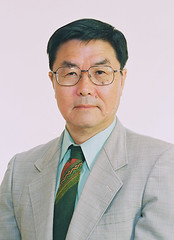
professional photo of Keijiro Otsuka wearing a gray suit

About the Speaker:  Keijiro Otsuka is a Professor of Development Economics at the Graduate School of Economics at the Kobe University and a Chief Senior Researcher at the Institute of Developing Economies. He was a professor at the National Graduate Institute for Policy Studies from April 2001 to April 2016. He received a Ph.D. in economics from the University of Chicago in 1979.He has been conducting comparative analyses on land reform and land tenure, Green Revolution, poverty and income distribution, and cluster-based industrial development between Asia and Africa. He is a Fellow of Agricultural and Applied Economics Association (formerly American Association of Agricultural Economics), an Honorable Lifetime Member of IAAE, and a Distinguished Fellow of African Association of Agricultural Economists. He received a Purple-Ribbon Medal from the Japanese Government in 2010. He has been an editor of Global Food Security since 2015.

Encina Hall East

Goldman Conference Room (4th Floor)

Seminars
Paragraphs

The lost decades for China in the 1950s, 1960s and 1970s look remarkably like the lost decades of Africa in the 1980s an 1990s.  Poor land rights, weak incentives, incomplete markets and inappropriate investment portfolios.  However, China burst out of its stagnation in the 1980s and has enjoyed three decades of remarkable growth.  In this paper we examine the record of the development of China's food economy and identify the policies that helped generate the growth and transformation of agriculture.  Incentives, markets and strategic investments by the state were key.  Equally important, however, is what the state did not do.  Policies that worked and those that failed (or those that were ignored) are addressed.  Most importantly, we try to take an objective, nuanced look at the lessons that might be learned and those that are not relevant for Africa.  Many parts of Africa have experienced positive growth during the past decade.  We examine if there are any lessons that might be helpful in turning ten positive years into several more decades of transformation.

All Publications button
1
Publication Type
Books
Publication Date
Journal Publisher
Frontiers in Food Policy: Perspectives on sub-Saharan Africa
Authors
Scott Rozelle
Paragraphs

New research on the political economy of policy-induced distortions to incentives for optimal resource use in agriculture and insights from the study of the dramatic reforms in former state-controlled economy has led to enhanced insights on the role of governance structures on policy making in agricultural and natural resources. This paper reviews these research developments and key new insights.


All Publications button
1
Publication Type
Books
Publication Date
Journal Publisher
Annual Review of Resource Economics
Authors
Scott Rozelle
Authors
News Type
News
Date
Paragraphs

China’s commitment to agricultural development over the last thirty years has dramatically transformed the country’s economy. Rural income per capita has risen an astounding 20 times after 30 prior years of stagnation. Its poverty rate (US$1.25/day) has dropped from 40 percent to less than five, and 350 million rural people between the ages of 18-65 are now working in the industrial or service sector, enjoying rising wages and new economic opportunities.

This rapid transformation is largely the result of three key agricultural policy decisions: putting land in the hands of farmers, market deregulation, and major public investment in the agricultural sector. Although China must now contend with extreme inequality, high levels of pollution, and an aging farming sector there are still lessons to draw from China’s experience that could hasten the transformation of other developing countries.

China expert and agricultural economist Scott Rozelle broke these lessons down at FSE’s fourteenth Global Food Policy and Food Security Symposium Series last week, opening with an underlying theme of the series.

“Growth and development starts with agriculture,” said Rozelle. “Agriculture provides the basis for sound, sustained economic growth needed to build housing, invest in education for kids, start self-employed enterprises, and finance moves off the farm.”

To prove this point he referenced China’s ‘lost decades’ (1950s-1970s) when 80 percent of the population lived in the rural sector and relied on communal, subsistence agriculture. Poor land rights, weak incentives, incomplete markets and inappropriate investments left the average rural farmer poorer at the end of 70s than they were in the 50s with almost no off-farm employment growth.

So what changed? Incentives, market deregulation and strategic investments by the state were key.

Creating the right incentives

In 1978 the Chinese government broke the communes down into small “family farms” such that every rural resident was allocated a small parcel of land. A family of five farmed an area the size of a football field. While they did not own nor could sell the land, they had the right to choose what crops and inputs they used and the right to the income generated from their land.

“Incentives are important, and can be enough in the short run,” said Rozelle. “Hard work led to money in the pockets of farmers and China was off.”

“Every two and half years China added another California in term of agriculture,” said Rozelle.

Between 1979 and 1985 productivity for wheat, maize, and rice went up 50 percent using the same amount of labor, land and inputs. Agriculture across the spectrum has grown at an astounding rate of 5 percent since 1988 (about four times the population growth rate). Livestock and fisheries have grown even faster – accounting for most of the output of the agricultural sector by 2005.

Income growth from farming enabled family members to begin to seek work off the farm. Between 1980 and 2011, off-farm work increased 71 percent with more than 90 percent of households reporting that at least one family member worked off the farm.

Increasing efficiency through liberalization and investment

Another key policy decision was China’s commitment to market liberalization and investment in public goods.

“Markets can be an effective, pro-poor tool of development,” said Rozelle. “A remarkable partnership is formed when you let farmers do production and government do infrastructure…let markets guide decisions.”

The government dismantled state-owned grain trading companies and deregulated trading rules. Prices were set once a week the same day across China to better integrate markets, and eventually prices for major crops closely mirrored those of world prices. Villages began specializing in crops and livestock and incomes of the poor increased. By not providing government input subsidies (e.g, pesticides, fertilizers), traders were incentivized to participate in the market.

“Giving land to farmers and letting the private sector emerge is an easy thing for governments, even without a lot of money, to do,” said Rozelle.

The government provided more indirect market support by publicly investing in better roads, communications, and surface water irrigation. Groundwater was left to the private sector. There were no water or pumping fees nor subsidies for electricity, keeping it completely deregulated. As a result, 50 percent of cultivated land in China is irrigated, compared to 10 percent in the US and only four percent in sub-Saharan Africa.

Finally, China has invested heavily in agricultural research and development (R&D). One percent of China’s agricultural GDP is now invested in agricultural R&D while US investment has fallen over time. US$2 billion alone goes to investments in Chinese biotechnology.

Despite major investment, China only has one major success story to show for so far. The introduction of Bt cotton led to a significant drop in pesticide use (with important health benefits for farmers), and drop in labor and seed price; resulting in a huge 30 percent increase in net income.

“GM technology benefits exist but big policy decisions still need to be made in the face of much resistance both in China and elsewhere in the world on its application,” said Rozelle.

Status of China’s economy

China has largely solved the country’s macro-nutrient food security problem at the household level (>3000 Kcal/day/person) and millions have been lifted out of poverty. Practically all 16-25 years old are now working off the farm.

“This is a real transformation, and one that could not have happened without a major investment in agriculture,” said Rozelle.

While China’s agricultural accomplishments have been major, Rozelle recognizes the system is far from perfect. For starters, there are serious food safety concerns due to lack of traceability. An astounding 98 percent of Beijing consumers think their food is tainted, said Rozelle.

Water is being pumped like crazy and farmers are aging. The younger generation is neither willing nor interested in following in their parents’ farming footsteps. To make up for a labor deficit farmers are applying huge amounts of fertilizer on their land with serious environmental consequences. As a result of changing demographics and an increasing demand for meat, fish, fruits and vegetables, China is likely to be a net importer of food in the long run.

China also faces major urban and rural inequality issues. Even though wages have risen, inequality has not fallen, largely a result of China’s decision not to privatize rural land.

“Rural people have no assets on which to build wealth while urban people were given assets in the form of housing,” said Rozelle. “Housing prices in major cities in China now rival those in the Bay Area!”

The Chinese government fears losing control of the land, but this comes at a price of less individual incentive to invest and inability to build larger farmers. As agricultural growth slows, Rozelle worries high levels of inequality could lead to instability.

Adding fuel to the fire, investment in rural health, nutrition, and education remains far from sufficient. Only 40 percent of the rural poor go to high school resulting in 200 million people who can barely read or write.

“What’s going to happen in 20 years when low skill manufacturing jobs move to other countries?” asked Rozelle. “The rural, uneducated poor are going to become unemployable.”

China’s record leaves room for improvement, but presents a strong case for supporting smallholder agriculture. For those countries emerging out of their own lost decades, smallholder agriculture should remain a primary focus of investment and development.

Hero Image
china rice Sevents
All News button
1
-

The lost decades for China in the 1950s, 1960s and 1970s look remarkably like the lost decades of Africa in the 1980s and 1990s. Poor land rights, weak incentives, incomplete markets and inappropriate investment portfolios. However, China burst out of its stagnation in the 1980s and has enjoyed three decades of remarkable growth. In this talk Rozelle examines the record of the development of China’s food economy and identifies the policies that helped generate the growth and transformation of agriculture. Incentives, markets and strategic investments by the state were key. Equally important, however, is what the state did not do. Policies that worked and those that failed (or those that were ignored) are addressed. Most importantly, Rozelle tries to take an objective, nuanced look at the lessons that might be learned and those that are not relevant for Africa. Many parts of Africa have experienced positive growth during the past decade. Rozelle examines if there are any lessons that might be helpful in turning ten positive years into several more decades of transformation.

Scott Rozelle (main speaker). Scott Rozelle is the Helen F. Farnsworth Senior Fellow and the co-director of the Rural Education Action Program in the Freeman Spogli Institute for International Studies at Stanford University. His research focuses almost exclusively on China and is concerned with: agricultural policy, including the supply, demand, and trade in agricultural projects; the emergence and evolution of markets and other economic institutions in the transition process and their implications for equity and efficiency; and the economics of poverty and inequality, with an emphasis on rural education, health and nutrition.

Alain de Janvry (commentator). Alain de Janvry is an economist working on international economic development, with expertise principally in Latin America, Sub-Saharan Africa, the Middle-East, and the Indian subcontinent. Fields of work include poverty analysis, rural development, quantitative analysis of development policies, impact analysis of social programs, technological innovations in agriculture, and the management of common property resources. He has worked with many international development agencies, including FAO, IFAD, the World Bank, UNDP, ILO, the CGIAR, and the Inter-American Development Bank as well as foundations such as Ford, Rockefeller and Kellogg. His main objective in teaching, research, and work with development agencies is the promotion of human welfare, including understanding the determinants of poverty and analyzing successful approach to improve well-being and promote sustainability in resource use.

Bechtel Conference Center

Encina Hall East, E404
Stanford, CA 94305-6055

0
Faculty Co-director of the Stanford Center on China's Economy and Institutions
Helen F. Farnsworth Endowed Professorship
Senior Fellow at the Freeman Spogli Institute for International Studies
Senior Fellow at the Stanford Institute for Economic Policy Research
scott_rozelle_new_headshot.jpeg PhD

Scott Rozelle is the Helen F. Farnsworth Senior Fellow and the co-director of Stanford Center on China's Economy and Institutions in the Freeman Spogli Institute for International Studies and Stanford Institute for Economic Policy Research at Stanford University. He received his BS from the University of California, Berkeley, and his MS and PhD from Cornell University. Previously, Rozelle was a professor at the University of California, Davis and an assistant professor in Stanford’s Food Research Institute and department of economics. He currently is a member of several organizations, including the American Economics Association, the International Association for Agricultural Economists, and the Association for Asian Studies. Rozelle also serves on the editorial boards of Economic Development and Cultural Change, Agricultural Economics, the Australian Journal of Agricultural and Resource Economics, and the China Economic Review.

His research focuses almost exclusively on China and is concerned with: agricultural policy, including the supply, demand, and trade in agricultural projects; the emergence and evolution of markets and other economic institutions in the transition process and their implications for equity and efficiency; and the economics of poverty and inequality, with an emphasis on rural education, health and nutrition.

Rozelle's papers have been published in top academic journals, including Science, Nature, American Economic Review, and the Journal of Economic Literature. His book, Invisible China: How the Urban-Rural Divide Threatens China’s Rise, was published in 2020 by The University of Chicago Press. He is fluent in Chinese and has established a research program in which he has close working ties with several Chinese collaborators and policymakers. For the past 20 years, Rozelle has been the chair of the International Advisory Board of the Center for Chinese Agricultural Policy; a co-director of the University of California's Agricultural Issues Center; and a member of Stanford's Walter H. Shorenstein Asia-Pacific Research Center and the Center on Food Security and the Environment.

In recognition of his outstanding achievements, Rozelle has received numerous honors and awards, including the Friendship Award in 2008, the highest award given to a non-Chinese by the Premier; and the National Science and Technology Collaboration Award in 2009 for scientific achievement in collaborative research.

Faculty affiliate at the Center on Democracy, Development, and the Rule of Law
Faculty Affiliate at the Walter H. Shorenstein Asia-Pacific Research Center
Date Label
Scott Rozelle Speaker
Alain de Janvry Professor of Agricultural and Resource Economics, Goldman School of Public Policy, UC-Berkeley Speaker
Symposiums
-

Stanford Center for International Development Twelfth Annual Huang Lian Memorial Lecture

The Real China Threat: Why Might We Need to Worry About a Stagnating China?

Reception: 4:30 - 5:00

Lecture: 5:00 - 6:00

Huang Lian was a doctoral student from the People's Republic of China. He enrolled in the Economics Department at Stanford University in the fall of 1997 after just completing a Master’s degree from the Graduate School of the People's Bank of China. Talented and diligent, Huang Lian came to the United States to seek higher professional training, and planned a career in China working on economic policy. In June 1999, he died in a tragic accident. SCID founded a lecture series as a memorial.


Scott Rozelle holds the Helen Farnsworth Endowed Professorship at Stanford University and is Senior Fellow in the Food Security and Environment Program and the Shorenstein Asia-Pacific Research Center, Freeman Spogli Institute (FSI) for International Studies, the Stanford Center for International Development (SCID) and the Stanford Institute for Economic Policy Research (SIEPR). He is also an adjunct professor at five universities in China and the Chinese Academy of Sciences. Dr. Rozelle's research focuses almost exclusively on China’s rural economy. For the past 15 year, Rozelle has been the chair of the International Advisory Board of the Center for Chinese Agricultural Policy, Chinese Academy of Sciences (CAS). In recent years Rozelle spends most of his time co-directing the Rural Education Action Project (REAP), a research organization with collaborative ties to CAS, Peking University, Tsinghua University and other universities that runs studies to evaluate China’s new education and health programs. In recognition of this work, Professor Rozelle has received numerous honors and awards. Among them, he became a Yangtse Scholar (Changjiang Xuezhe) in Renmin University of China in 2008. In 2008 he also was awarded the Friendship Award by Premiere Wen Jiabao, the highest honor that can be bestowed on a foreigner. In 2009, Rozelle also received in 2009 the National Science & Technology Research Collaboration Award, a prize given by the State Council.

This lecture is sponsered by SCID.

Koret-Taube Conference Room
Gunn-SIEPR Building
366 Galvez Street
Stanford University

Encina Hall East, E404
Stanford, CA 94305-6055

0
Faculty Co-director of the Stanford Center on China's Economy and Institutions
Helen F. Farnsworth Endowed Professorship
Senior Fellow at the Freeman Spogli Institute for International Studies
Senior Fellow at the Stanford Institute for Economic Policy Research
scott_rozelle_new_headshot.jpeg PhD

Scott Rozelle is the Helen F. Farnsworth Senior Fellow and the co-director of Stanford Center on China's Economy and Institutions in the Freeman Spogli Institute for International Studies and Stanford Institute for Economic Policy Research at Stanford University. He received his BS from the University of California, Berkeley, and his MS and PhD from Cornell University. Previously, Rozelle was a professor at the University of California, Davis and an assistant professor in Stanford’s Food Research Institute and department of economics. He currently is a member of several organizations, including the American Economics Association, the International Association for Agricultural Economists, and the Association for Asian Studies. Rozelle also serves on the editorial boards of Economic Development and Cultural Change, Agricultural Economics, the Australian Journal of Agricultural and Resource Economics, and the China Economic Review.

His research focuses almost exclusively on China and is concerned with: agricultural policy, including the supply, demand, and trade in agricultural projects; the emergence and evolution of markets and other economic institutions in the transition process and their implications for equity and efficiency; and the economics of poverty and inequality, with an emphasis on rural education, health and nutrition.

Rozelle's papers have been published in top academic journals, including Science, Nature, American Economic Review, and the Journal of Economic Literature. His book, Invisible China: How the Urban-Rural Divide Threatens China’s Rise, was published in 2020 by The University of Chicago Press. He is fluent in Chinese and has established a research program in which he has close working ties with several Chinese collaborators and policymakers. For the past 20 years, Rozelle has been the chair of the International Advisory Board of the Center for Chinese Agricultural Policy; a co-director of the University of California's Agricultural Issues Center; and a member of Stanford's Walter H. Shorenstein Asia-Pacific Research Center and the Center on Food Security and the Environment.

In recognition of his outstanding achievements, Rozelle has received numerous honors and awards, including the Friendship Award in 2008, the highest award given to a non-Chinese by the Premier; and the National Science and Technology Collaboration Award in 2009 for scientific achievement in collaborative research.

Faculty affiliate at the Center on Democracy, Development, and the Rule of Law
Faculty Affiliate at the Walter H. Shorenstein Asia-Pacific Research Center
Date Label
Scott Rozelle Speaker
Lectures
Subscribe to Environment