Health and Medicine

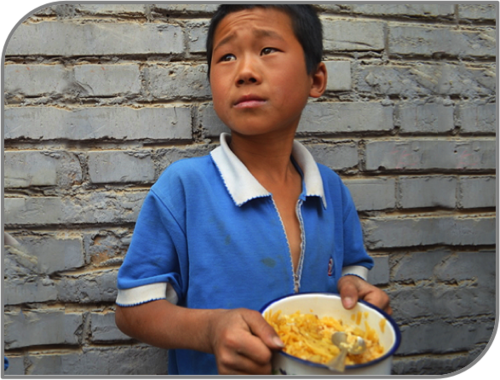
FSI’s researchers assess health and medicine through the lenses of economics, nutrition and politics. They’re studying and influencing public health policies of local and national governments and the roles that corporations and nongovernmental organizations play in providing health care around the world. Scholars look at how governance affects citizens’ health, how children’s health care access affects the aging process and how to improve children’s health in Guatemala and rural China. They want to know what it will take for people to cook more safely and breathe more easily in developing countries.

FSI professors investigate how lifestyles affect health. What good does gardening do for older Americans? What are the benefits of eating organic food or growing genetically modified rice in China? They study cost-effectiveness by examining programs like those aimed at preventing the spread of tuberculosis in Russian prisons. Policies that impact obesity and undernutrition are examined; as are the public health implications of limiting salt in processed foods and the role of smoking among men who work in Chinese factories. FSI health research looks at sweeping domestic policies like the Affordable Care Act and the role of foreign aid in affecting the price of HIV drugs in Africa.

-

Jenny Bowen is the founder and chief executive officer of Half the Sky Foundation, which strives to enrich the lives of orphaned children in China. A former screenwriter and independent filmmaker, Bowen founded Half the Sky in 1998 in order to give something back to her adopted daughters’ home country and to the many children then languishing behind institutional walls. Half the Sky’s five innovative programs now provide nurturing, family-like care for thousands of children of all ages. In partnership with China’s Ministry of Civil Affairs, Half the Sky has embarked on a groundbreaking Integrated National Training Plan that will eventually make the Half the Sky approach the approved national standard of care for all children in the welfare system.

In 2008, Bowen received the Skoll Award for Social Entrepreneurship. She serves on China’s National Committee for Orphans and Disabled Children and on the Expert Consultative Committee for Beijing Normal University’s Philanthropy Research Institute. She is the author of the recently released memoir, Wish You Happy Forever: What China’s Orphans Taught Me About Moving Mountains.


About REAP

The Rural Education Action Program (REAP) at Stanford is an impact evaluation organization that aims to inform sound education, health and nutrition policy in China. REAP’s goal is to help students from vulnerable communities in China enhance their human capital and overcome obstacles to education so that they can escape poverty and better contribute to China’s developing economy.


The author will be available to sign copies of her book after the event.

Reuben W. Hills Conference Room

Jenny Bowen Founder of Half the Sky Foundation Speaker

Encina Hall East, E404
Stanford, CA 94305-6055

0
Faculty Co-director of the Stanford Center on China's Economy and Institutions
Helen F. Farnsworth Endowed Professorship
Senior Fellow at the Freeman Spogli Institute for International Studies
Senior Fellow at the Stanford Institute for Economic Policy Research
scott_rozelle_new_headshot.jpeg PhD

Scott Rozelle is the Helen F. Farnsworth Senior Fellow and the co-director of Stanford Center on China's Economy and Institutions in the Freeman Spogli Institute for International Studies and Stanford Institute for Economic Policy Research at Stanford University. He received his BS from the University of California, Berkeley, and his MS and PhD from Cornell University. Previously, Rozelle was a professor at the University of California, Davis and an assistant professor in Stanford’s Food Research Institute and department of economics. He currently is a member of several organizations, including the American Economics Association, the International Association for Agricultural Economists, and the Association for Asian Studies. Rozelle also serves on the editorial boards of Economic Development and Cultural Change, Agricultural Economics, the Australian Journal of Agricultural and Resource Economics, and the China Economic Review.

His research focuses almost exclusively on China and is concerned with: agricultural policy, including the supply, demand, and trade in agricultural projects; the emergence and evolution of markets and other economic institutions in the transition process and their implications for equity and efficiency; and the economics of poverty and inequality, with an emphasis on rural education, health and nutrition.

Rozelle's papers have been published in top academic journals, including Science, Nature, American Economic Review, and the Journal of Economic Literature. His book, Invisible China: How the Urban-Rural Divide Threatens China’s Rise, was published in 2020 by The University of Chicago Press. He is fluent in Chinese and has established a research program in which he has close working ties with several Chinese collaborators and policymakers. For the past 20 years, Rozelle has been the chair of the International Advisory Board of the Center for Chinese Agricultural Policy; a co-director of the University of California's Agricultural Issues Center; and a member of Stanford's Walter H. Shorenstein Asia-Pacific Research Center and the Center on Food Security and the Environment.

In recognition of his outstanding achievements, Rozelle has received numerous honors and awards, including the Friendship Award in 2008, the highest award given to a non-Chinese by the Premier; and the National Science and Technology Collaboration Award in 2009 for scientific achievement in collaborative research.

Faculty affiliate at the Center on Democracy, Development, and the Rule of Law
Faculty Affiliate at the Walter H. Shorenstein Asia-Pacific Research Center
Date Label
Scott Rozelle Moderator
Conferences
Authors
News Type
News
Date
Paragraphs

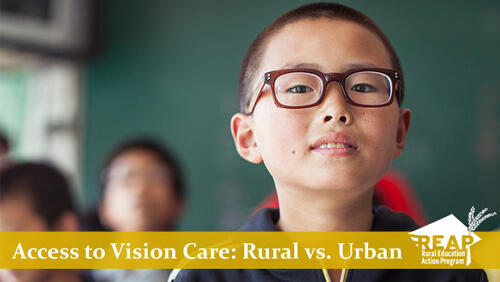
Eyeglasses boosted the standardized test scores of rural Chinese schoolchildren as much as 18 percent in just six months, according to a large-scale, ongoing study led by Stanford researchers.

"The evidence is overwhelming," said Scott Rozelle, co-director of the Rural Education Action Program (REAP), a coalition of Chinese universities and Stanford's Freeman Spogli Institute for International Studies that works to improve education and health in rural China.

The initial test scores for nearsighted students hovered around 68 percent. After receiving glasses, average scores soared to 86 percent. "You do these simple interventions and a child's whole life changes," Rozelle said. "It's fantastic."

REAP scholars partnered with Chinese ophthalmologists and scores of graduate students to orchestrate the massive project, the first to examine vision problems in rural China.

In 2012 and 2013, the team screened the vision of approximately 20,000 fourth and fifth graders in rural Shaanxi and Gansu provinces and doled out more than 4,000 pairs of eyeglasses. They discovered that 25 percent of the students were nearsighted, but only one in seven of those nearsighted students had the glasses they needed.

"There's a huge amount of unmet need," said Matthew Boswell, a REAP project manager based at Stanford.

The results may seem intuitive. Yet, helping the millions of nearsighted children in rural China is anything but easy, the REAP team discovered. Few of these rural children (and adults) know they are nearsighted – the world, to them, is naturally blurry. In addition, eye doctors are concentrated in the populous coastal corridors or regional "county towns," often dozens of miles by bus from the homes of rural Chinese families, Boswell said.

Basic eyeglasses cost between 200 and 500 yuan ($30 to $80), a price out of reach for many, he said.

The researchers also struggled to counter pervasive superstitions about eyeglasses.

For example, many rural Chinese residents believe that glasses make children's' vision deteriorate, relying on the observation that vision generally worsens with age, Boswell said. In addition, many Chinese do "eye exercises" by rubbing their eyes, cheeks and temples each morning, a practice they believe improves vision, he said.

They also face political struggles: China's rural health care program doesn't pay for vision care. "We could tell health or education officials until we were blue in the face there was a high level of need for vision care in rural communities," Boswell said. "But if your findings are not attached to something they care about, it's hard to make them listen."

Hence the connection to the test scores, a highly valued measurement by Chinese policymakers. The REAP team taps its large network of Chinese academic collaborators to translate its research results into policy reform, a process that is often successful, Rozelle said.

REAP is currently analyzing alternative ways to boost the delivery and acceptance of eye care, Boswell said. The original study assigned nearsighted students into six groups.  Researchers gave one-third of the students glasses; one-third received a voucher to purchase glasses; and another third remained untreated. Then, half of the students in each group received training about the causes and treatments for vision problems.

The training failed to significantly affect whether students wore the glasses, Boswell said.  The students who had to invest time to acquire glasses using a voucher demonstrated similar usage rates as students who received free glasses, he said.

Among a variety of other initiatives currently underway, the REAP team is training Chinese teachers to conduct simple vision tests, Boswell said.

"It's an extreme feel–good example," Rozelle said. "You put the first pair of glasses on a kid … and then a huge smile lights up their face."

Becky Bach is a writer for the Stanford News Service.

Hero Image
Glasses logo
All News button
1
Paragraphs

Despite their recent deterioration, village clinics have historically been an important source of health care for the poor and elderly in rural China. In this paper, we examine the current role of village clinics, the patients who use them and some of the services they provide. We focus specifically on the role of village clinics in meeting the health-care needs of the rural poor and elderly. We find that although clinics are continuing to decline financially, they remain a source of care for the rural elderly and poor. We estimate that the elderly are 10–15 percent more likely than young individuals to seek care at a clinic. We show that clinics provide many unique services to support the rural elderly (and the elderly poor), such asin-home patient care, the option for patients to pay on credit, and free and discounted services.

All Publications button
1
Publication Type
Journal Articles
Publication Date
Journal Publisher
China & World Economy
Authors
Paragraphs

Despite increasing institutional and financial support, certain public health issues are still neglected by the Chinese Government. The present paper examines the soil-transmitted helminth (STH) infection and reinfection rates by conducting a survey on 1724 children in Guizhou Province, China. Our results indicate that 37.5 percent of children had been infected with one or more of the three types of tested STH. However, only 50.4 percent of children reported having taken deworming medicine during the 18-month period before the survey. Of those who reported being dewormed, 34.6 percent tested positive for STH infections. Poverty and number of siblings are significantly and positively correlated with infection and reinfection, and parental education is significantly and negatively correlated with infection and reinfection. Given the ineffectiveness of treatment in these areas to date, for anthelminthic campaigns to actually succeed, China must pay more attention to locallevel incentives to improve children’s health.

All Publications button
1
Publication Type
Journal Articles
Publication Date
Journal Publisher
China & World Economy
Authors
Alexis Medina
Scott Rozelle
News Type
News
Date
Paragraphs

"Getting children in developing countries into school is only half the battle. We must also ensure they learn once they are there."

Getting children in developing countries into school is only half the battle. The Guardian cites REAP's computer-assisted learning, school lunch, and multivitamin projects as examples of ways to help kids learn once they are there. For the full article, click here.

Hero Image
5734702897 c3e0c8842b o
All News button
1
Subscribe to Health and Medicine