International Development

FSI researchers consider international development from a variety of angles. They analyze ideas such as how public action and good governance are cornerstones of economic prosperity in Mexico and how investments in high school education will improve China’s economy.

They are looking at novel technological interventions to improve rural livelihoods, like the development implications of solar power-generated crop growing in Northern Benin.

FSI academics also assess which political processes yield better access to public services, particularly in developing countries. With a focus on health care, researchers have studied the political incentives to embrace UNICEF’s child survival efforts and how a well-run anti-alcohol policy in Russia affected mortality rates.

FSI’s work on international development also includes training the next generation of leaders through pre- and post-doctoral fellowships as well as the Draper Hills Summer Fellows Program.

A REAP-sponsored workshop lead by REAP affiliate Paul Gewwe (University of Minnesota) designed to target foundation and non-profit managers and executives, researchers and government officials.

Introduction and objectives

Numerous programs are implemented by governments and non-governmental organizations (NGOs), which are intended to change individuals’ economic or social outcomes. Common examples of this include agricultural extension services, public health programs and education programs. An important (and admittedly difficult to answer) question is: How effective are these programs in changing economic or social outcomes? Comparing the relative effectiveness of different programs, as well as comparing these programs’ benefits to their costs is crucial for governments to understand.

Objectives

  • To obtain a better understanding of how to objectively assess the impacts of programs through program design and data analysis
  • To specifically discuss possible scenarios based on how intervention status is decided, and methods for analyzing data for each scenario

Institute of Geographic Sciences and Natural Resources Research
No.11 Jia Datun Road
Chaoyang District
Beijing, China

Paul Gewwe Speaker University of Minnesota
Workshops

A REAP-sponsored workshop designed to target foundation and non-profit managers and executives, researchers and government officials.

Objectives

  • To review policy-relevant research regarding the education and health of rural students in China
  • To discuss key issues, challenges and shortcomings of current knowledge and research methodology
  • To compare methodologies and discuss opportunities for collaboration and linkages

Institute of Geographic Sciences and Natural Resources Research
No.11 Jia Datun Road
Chaoyang District
Beijing, China

Workshops
Paragraphs

China has made remarkable progress along the path of economic transformation over the past three decades. To continue its rapid growth in an economy with increasingly higher wages, China’s key challenge is whether it can become competitive in quasi-skilled and skilled industrial sectors so that upscale factories can be induced to establish themselves in China? This study seeks to increase our understanding of high school education in China at a time when the nation is facing challenges in its development path. Using secondary statistics, we have found that educational access at the high school level is quite low—especially in poorer areas of rural China. We argue that the low level of access to high school education in China may be a problem resulting from high tuition and fees. We include empirical evidence about the tuition barrier argument by using a survey of 41 developing and developed countries and a representative survey of 1,177 students from one of China’s poorest provinces. We demonstrate that not only is financing high school a burden for the families of poor students, but also there is little financial aid available. The quality of education of students from poor rural areas prior to entering high school is also a problem. We conclude with a recommendation that in poor rural areas of China high school should be made free, as it is in most of the rest of the world—and efforts should be made to improve rural education in general.

All Publications button
1
Publication Type
Journal Articles
Publication Date
Journal Publisher
Asia Pacific Journal of Education
Authors
Scott Rozelle
Paragraphs

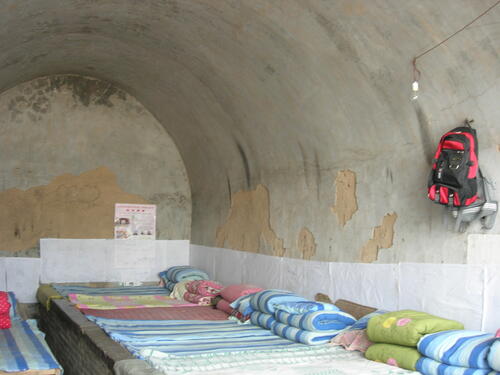
The main goal of this paper is to document the nature of boarding schools and empirically analyze the difference of nutrition intake and malnutrition status between boarding and non-boarding students in western rural China. By using two data sets about boarding schools and boarding students in Shaanxi Province, a representative province in western rural China, this paper finds that dormitory and student canteen facilities in boarding schools are under-equipped and services are poor quality and far below that needed for student development. Poor services in boarding schools and inadequate nutrition intake may be an important cause of low student height-for-age Z-scores (HAZ), as students eating at school have a much lower HAZ on average than that of non-boarding students. Furthermore, girls and students with more siblings have relatively lower HAZ, while the higher the number of parents a student has and the more educated they are exert a positive influence on child nutritional status in terms of HAZ. Finally, our analysis implies that the effective way to decrease the inequality of health, malnutrition and human capital between urban and rural in the long run is to improve the facilities and services of boarding schools in rural China.

All Publications button
1
Publication Type
Journal Articles
Publication Date
Journal Publisher
Asia Pacific Journal of Education
Authors
Scott Rozelle
News Type
News
Date
Paragraphs

REAP Co-Director Scott Rozelle's received the Award for International Cooperation in Science and Technology alongside Lothar Reh, reported an article published by China Daily on March 27, 2009.  

"Scott Rozelle and Lothar Reh are both scientists but their disciplines are as different as chalk and cheese - the only thing in common is their long association with China. Yesterday, they had another thing in common when they became winners of the Award for International Cooperation in Science and Technology. Presented by the Chinese Academy of Sciences, the awards - given for the first time - recognize their contributions to China's international cooperation in science and technology over the past decades, said Lu Yongxiang, CAS president." 

Hero Image
6903809588 8eb3d5e44f z
All News button
1

Problem

In China higher education is expanding at a rate unprecedented anywhere in the world. However, rocketing tuition and fees now exceed a rural family’s annual income many times over. Frequently, the best and brightest of China’s students from the countryside overcome miraculous odds academically to pass the rigorous entrance examinations to go to college, only to find their dreams shattered by the financial reality of escalating tuition.

Subscribe to International Development