International Development

FSI researchers consider international development from a variety of angles. They analyze ideas such as how public action and good governance are cornerstones of economic prosperity in Mexico and how investments in high school education will improve China’s economy.

They are looking at novel technological interventions to improve rural livelihoods, like the development implications of solar power-generated crop growing in Northern Benin.

FSI academics also assess which political processes yield better access to public services, particularly in developing countries. With a focus on health care, researchers have studied the political incentives to embrace UNICEF’s child survival efforts and how a well-run anti-alcohol policy in Russia affected mortality rates.

FSI’s work on international development also includes training the next generation of leaders through pre- and post-doctoral fellowships as well as the Draper Hills Summer Fellows Program.

News Type
News
Date
Paragraphs

A REAP project takes on the challenge of teaching parents in rural China that playing with their children is as important as feeding them.

Once every week for six months, a special team of family planning workers fanned out across the remote towns of Shaanxi Province or journeyed to isolated villages in the Qinling Mountains, the cradle of China’s civilization and habitat of the world’s remaining wild pandas. Determined to make a difference, the workers braved downpours in the dead of winter and long, treacherous roads to conduct weekly visits to families living in the region’s rural corners.  

The little children who were their inspiration were often too shy to even make eye contact during the initial family sessions, but the government workers – part of a pilot group of parenting trainers – persevered. Eventually, the children welcomed the trainers with smiles, open arms and confident curiosity.

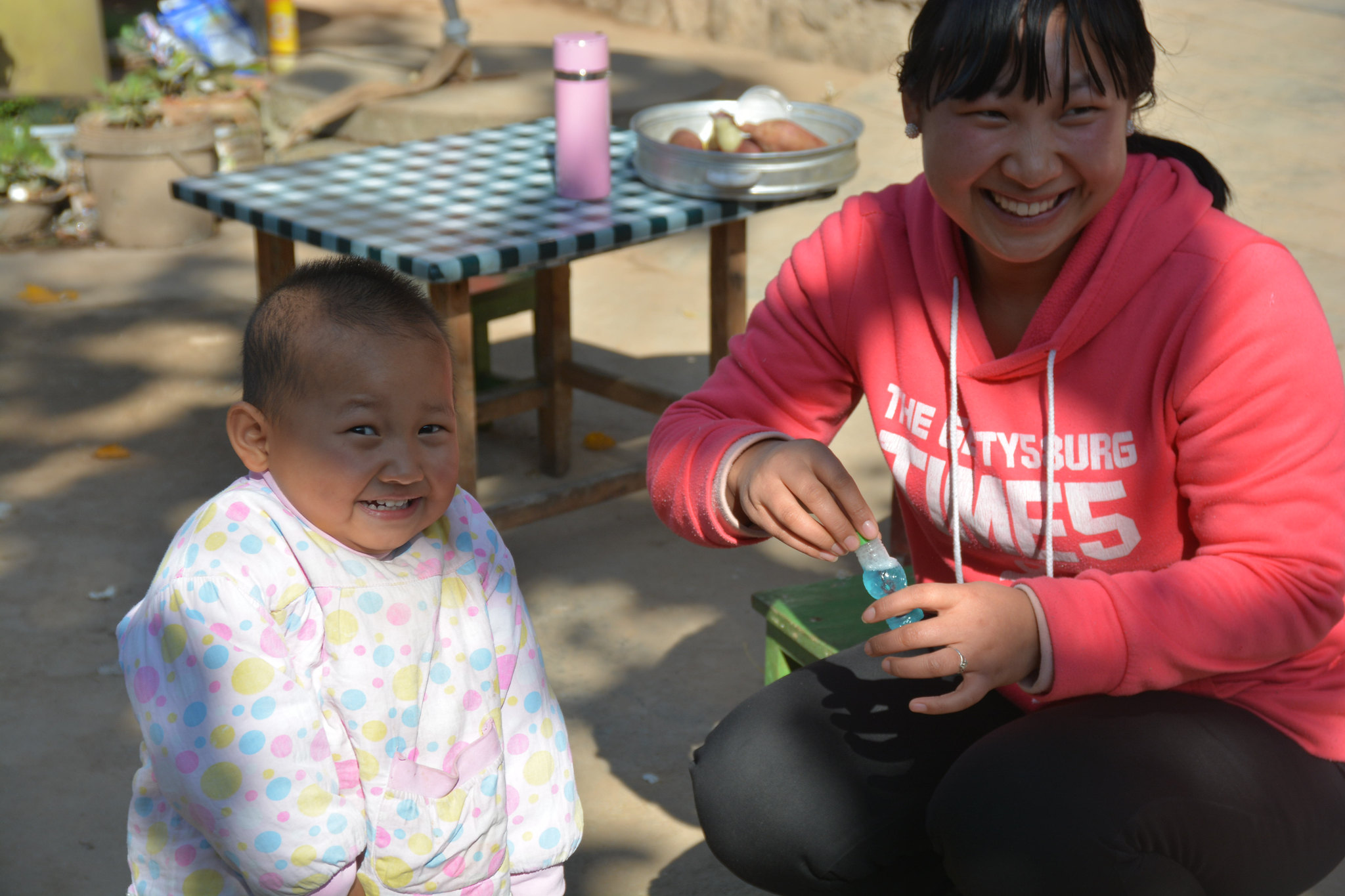
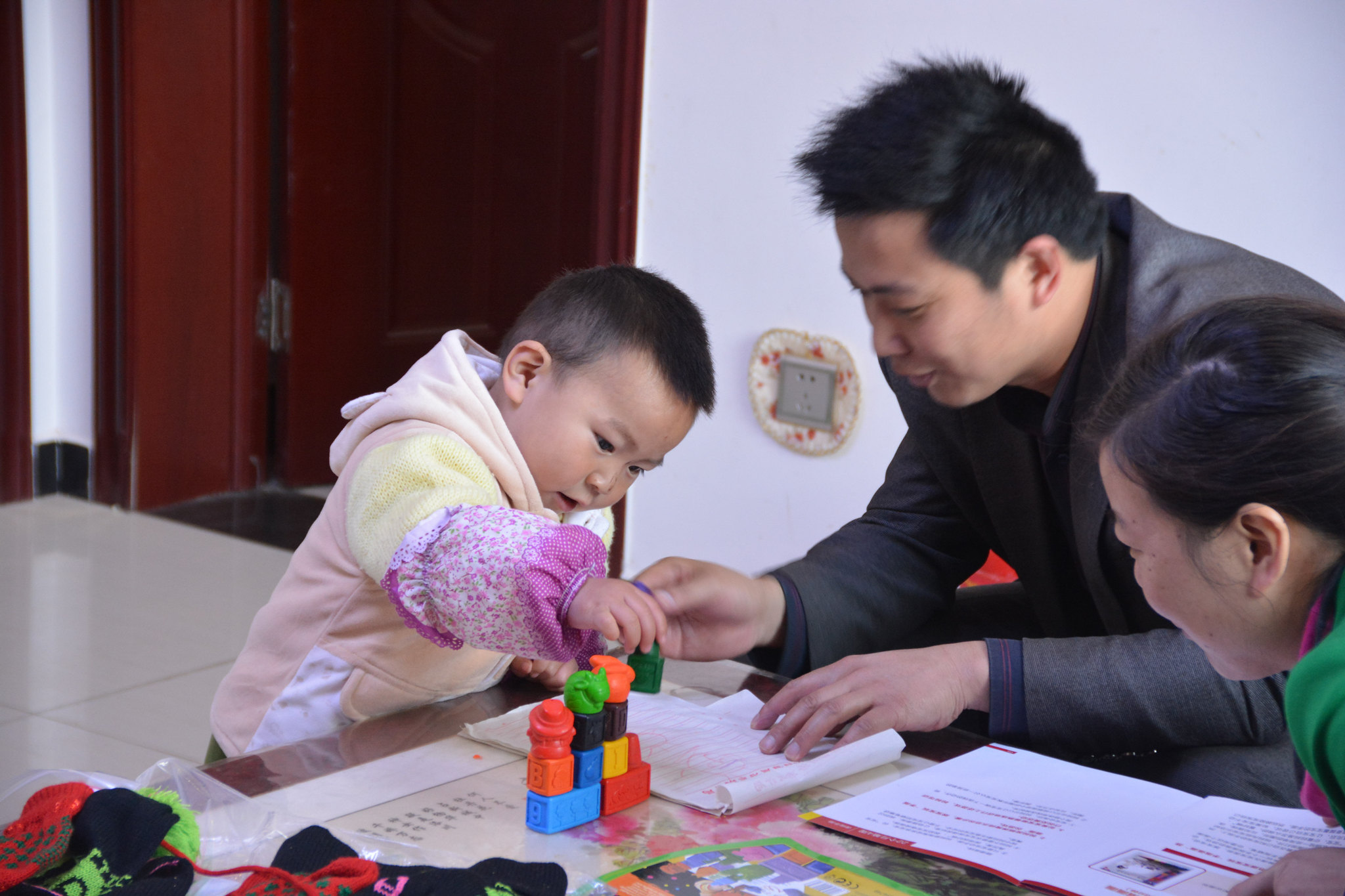
The parenting trainers brought toys to play with the toddlers, but not just for fun. The act of playing had a higher purpose.

Toddlers in rural China lag far behind their urban cohorts in developmental benchmarks, and Stanford’s Rural Education Action Program launched its Perfecting Parenting Project to tackle a key underlying cause: only a small fraction of rural parents interact with their young children.

“We want to get parents to improve their interactions with their toddlers,” said Alexis Medina, project manager of REAP’s health, nutrition and education initiatives.

That’s because the period between birth and age 3 is a critical developmental window, and interactive playing and verbal stimulation are important components of a child’s growth. REAP researchers know this, but a majority of parents in rural China do not.

For many parents or grandparents who are primary caregivers, the concept of actively engaging with their offspring is foreign. Research surveys revealed that less than 5 percent of parents in rural China regularly read to their babies and toddlers, and only 32 percent of them sing songs or use toys to play together. From their fieldwork, REAP researchers witnessed a pervasive view among parents: their young children are clothed and fed, isn’t that all they need?

In launching the 6-month pilot program in November 2014, researchers designed a week-by-week parenting curriculum – complete with books, balls and building blocks – to target key child development milestones.

“Before, the role of the family planning worker was to manage the quantity of the population,” said He Miao, one of the 70 parenting trainers recruited under the REAP project. “But from now on, our role is to improve the population’s quality.” 

3-baby3-5

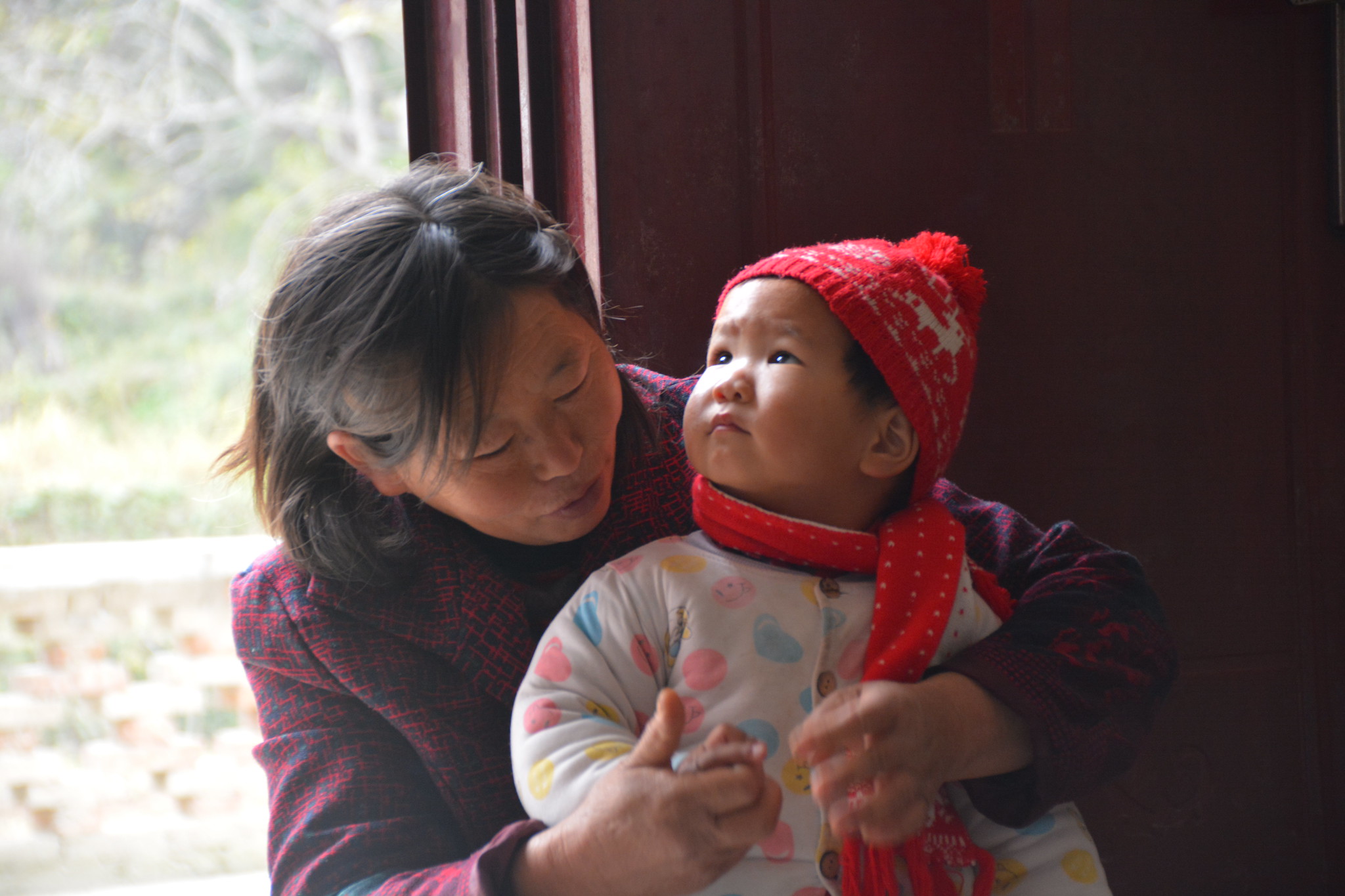
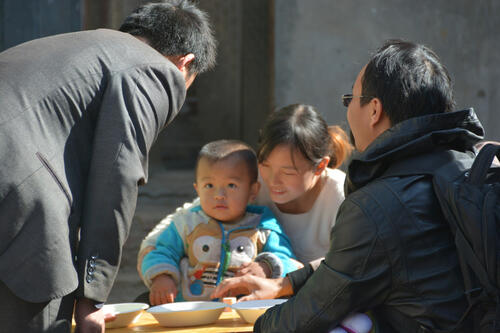
Little Cheng Junya transformed from shy and withdrawn to outgoing and engaged in just two months of parenting visits.

As researchers work to gather project findings, REAP hopes Chinese officials will decide to expand the parenting training program. 

Those at the frontlines are already convinced.

“My child never used to be so comfortable around strangers; I can’t believe she is now so outgoing,” the mother of little Cheng Junya remarked just two months into the program. “This is all because of the visits from such excellent teachers.”

Echoing his fellow parenting trainers, family planning worker Qin Yulu said, "In all the years I’ve been in this position, this is the most meaningful work I have ever done.”

REAP researcher Xueyang Liu summed up her view of the project’s success. “Each family planning worker manages different children and faces different challenges: sometimes the roads are difficult, sometimes the parents are unappreciative, and sometimes the children are unresponsive,” she said. But, she continued, “the parent trainers are united both by their willingness to overcome difficulty and by a passion for their work, and this has earned them the respect and love of the parents.”

For a closer view of the challenges and promise of the Perfecting Parenting Project, take a look at the following stories by REAP researchers who shadowed China’s first crew of parenting trainers.


DSC_2958

Modern Parenting 101 
REAP researcher Xinrui Gao joins parent trainer Liu Xianju on several weekly sessions during the six-month pilot program and describes here a caretaker’s dramatic shift in attitude toward modern parenting.


3-baby1-1

Little Activities Go A Long Way 
REAP researcher Xi Zhiqi witnesses how the parenting program’s activities help to enhance a toddler’s verbal and social-emotional skills. This is her story of Little Wei.


DSC_3085

A Mother’s Realization 
REAP researcher Xueyang Liu describes here how a mother literally and metaphorically tramples on the project’s guidance materials before she comes to embrace the methods of active parenting.


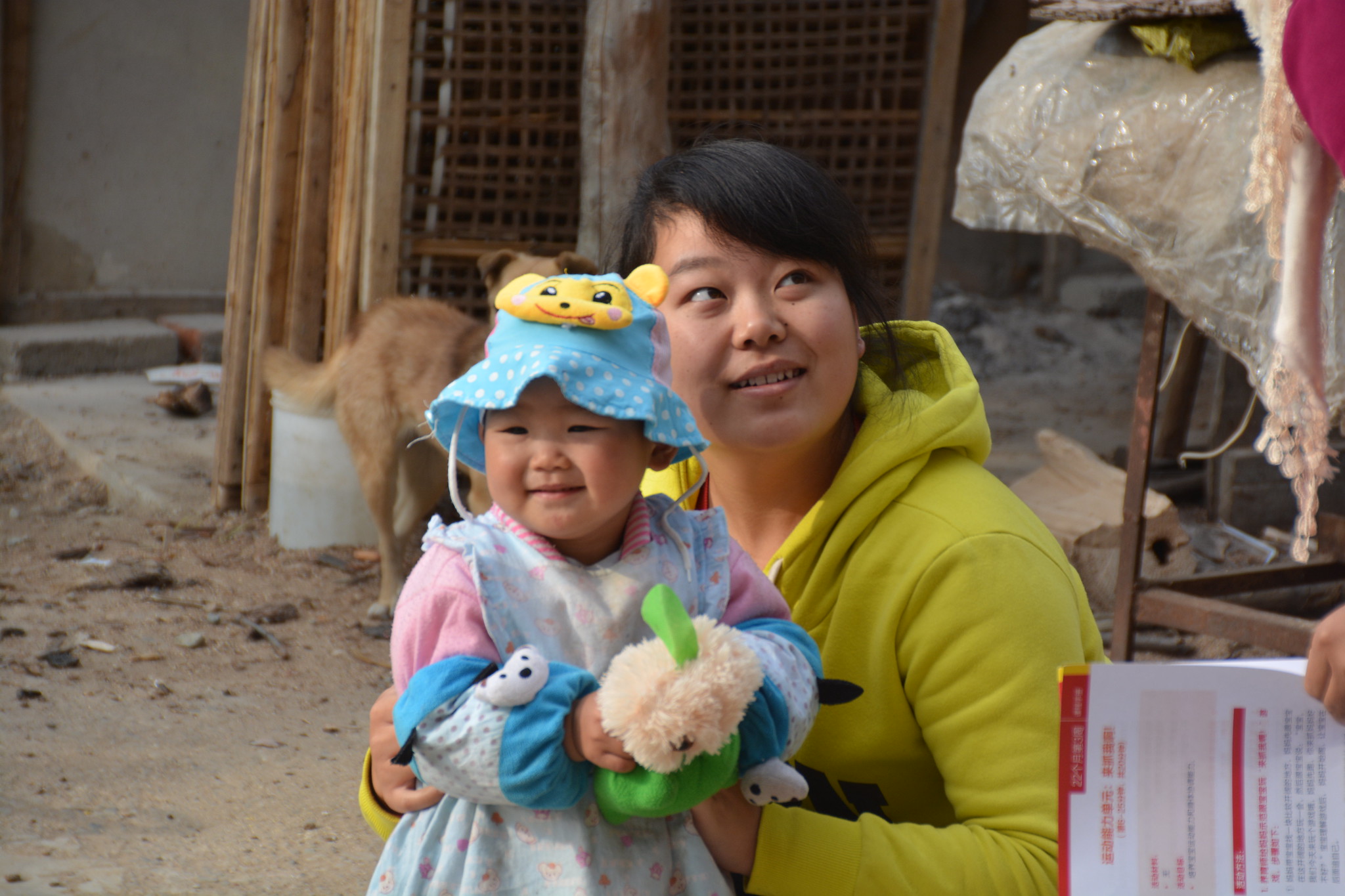
3-baby4 These parenting trainers are propelled by thoughts of the children's recognition and trust when enduring tough travel conditions to reach their homes.

Trainers: A Santa Qin and Honorary Godmother  
The following two accounts by REAP researchers Wang Xiaohong and Jia Fang illustrate the immense dedication of two family planning workers from Shanyang County. 


DSC_3121

No Easy Road 
REAP researcher Zhang Nianrui describes a-day-in-the-life of a pair of parenting trainers as she joins them on a rough journey to the remote village homes of the families under their charge for the pilot project.


Hero Image
18176792366 22405f107b o
All News button
1
-

In the final International Education Initiative seminar of the year, Amita Chudgar, Associate Professor of Educational Administration at Michigan State University and Visiting Scholar at the GSE, will present her new study on "Who teaches marginalized children, and what may explain these teacher distribution patterns? Analysis of data from Asia, Latin America, and Sub-Saharan Africa."

Professor Chudgar's study represents the most systematic cross-national analysis of teacher distribution that has been conducted to date. She will also provide insights into policies and practices that may help ensure a more equitable teacher distribution, and address the vicious cycle that can develop—especially in developing countries—when higher-quality teachers are concentrated in the schools and classrooms of wealthier children, while poor and marginalized children find themselves in the classrooms of relatively weaker teachers.
 
Lunch will be provided. Open to the public.

Encina Hall East Wing, 2nd Floor Conference Room

Seminars
News Type
News
Date
Paragraphs

The Shaanxi Daily issued a press release on REAP's ongoing Perfecting Parenting project.  This article was translated and reprinted with permission from The Shaanxi Daily.  Read the original article (in Chinese) here.


China’s First “Parenting Trainers” Will Be Born in Shangluo

March 19, 2015
 
Shaanxi Media Online
Commentary

In Shangluo, tucked away in the distant parts of the Qinling mountain range, 70 officials have already undertaken the assignment of “early child development parenting trainers.”

Yaojiang Shi, Director of the Center for Experimental Economics in Education at Shaanxi Normal University, was brimming with confidence as he received journalists, saying, “before long, they will pass the evaluations and become China’s first generation of parenting trainers.”

According to statistics, in 2013, 40 percent of 6- to 12-month-old children living in rural areas in Shaanxi province clearly lagged behind in cognitive ability and social-emotional development. Parents are only concerned that their children have enough to eat and warm clothes to wear, neglecting their mental health and development. Scientific research has proven that the first three years of a child’s life is a critical period for mental development. However, in China’s vast rural areas, there is still a blank space in place of education for 0- to 3-year-old children. In order to change this situation, China’s National Health and Family Planning Commission, Shaanxi Normal University, Stanford University in the United States, and the Chinese Academy of Sciences jointly established the “Perfecting Parenting” project. Following this project’s officially launch last November, 70 “parenting trainers” were recruited from among the family planning officials in 58 townships across Danfeng, Shangnan, Shanyang, and Zhenan counties, and 275 babies were randomly selected to take part in the project. After undergoing rigorous training, the “parenting trainers” will teach scientific child-rearing knowledge to children’s parents and caretakers through demonstration and guidance. By having parents interact more with their children through story telling, singing songs with them, playing games, and engaging in other parent-child activities, they aim to improve the babies’ cognitive abilities, motor development, and social-emotional development.

Hero Image
15716968225 217733ff23 o
All News button
1
Paragraphs

"Growing scarcity of freshwater worldwide brings to light the need for sound water resource modeling and policy analysis. While a solid foundation has been established for many specific water management problems, combining those methods and principles in a unified framework remains an ongoing challenge. This Handbook aims to expand the scope of efficient water use to include allocation of sources and quantities."

All Publications button
1
Publication Type
Books
Publication Date
Journal Publisher
Routledge Handbook of Water Economics and Institutions
Authors
Scott Rozelle
News Type
News
Date
Paragraphs
by Hannah Myers
 
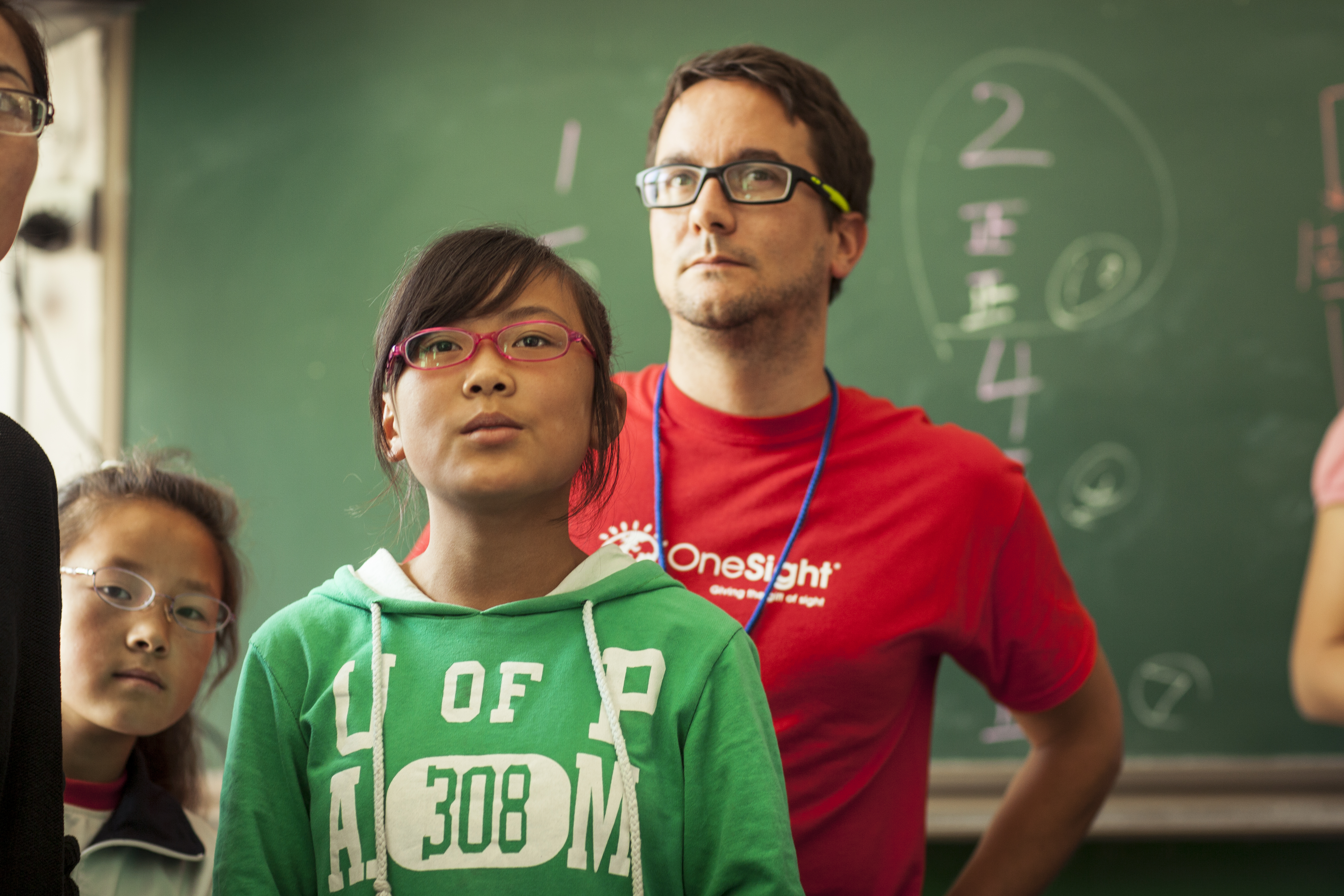
As the bus lurches up the pot-holed dirt road into the village, a storm of seventh- and eight-graders comes rushing out to meet it.  This bus isn't taking them to class, but to a clinic that will revolutionize their school careers.  They are travelling to a OneSight Vision Clinic.  By the end of the day, they will have had their eyes examined, lenses edged, and frames selected for a brand new pair of eyeglasses.  For these children, such a simple intervention can have a huge impact on their education and future.
 
Three years ago, REAP researchers noticed something surprising: in rural China, almost no children wear glasses.  In response, REAP launched the Seeing is Learning program, and have screened over 30,000 children in a series of randomized controlled trials. REAP found that in a nine-month period, nearsighted students who were given glasses learned almost twice as much as those without them--putting them essentially a full grade-level ahead.
 
Yulin China-144
Next, REAP and regional governments in China designed a scaleable sustainable vision care centers based in county hospitals. The vision centers target rural primary school students, and to date have provided new glasses to virtually all 3rd through 6th grade students who need them in two pilot counties.
 
But what about older rural students who need glasses, and whose schoolwork is suffering as a result?  The REAP-supported vision care centers are already operating at capacity to meet the needs of primary school students.  Therefore, from March 15th to 27th, OneSight—with support from REAP—operated a charitable clinic to provide vision care to all middle-school students in Yongshou county Shaanxi Province.  The REAP team trained Yongshou's middle-school teachers to screen their students, then organized buses to transport students who failed the vision tests to the Onesight clinic in the county seat.  OneSight's 65 volunteer optometrists and eye care specialists efficiently diagnosed each student, custom-ground lenses, and delivered a new pair of glasses.  In total, approximately 7,000 students were screened and almost 3,500 received new glasses in the 12-day clinic.
 
In this remote corner of rural China, the group of foreigner eye doctors pulling up in a massive OneSight truck stocked with autorefractors, eye-dilating medicines, and enormous lens-grinding machines was certainly a sight to see.  Local media captured much of the clinic, broadcasting it throughout Yongshou and surrounding areas.  Moving forward, REAP plans to use this momentum to expand its sustainable vision care model into more counties across rural China.


Contacts

Matthew Boswell: Project Manager, Seeing is Learning (boswell@stanford.edu)

Scott Rozelle: REAP Co-Director (rozelle@stanford.edu)

Hero Image
11059370674 2b51085b6a o
All News button
1
News Type
News
Date
Paragraphs

Caixin Magazine reports on REAP's ongoing Perfecting Parenting project.  This article was translated and reprinted with permission from Caixin Magazine.  Read the original article (in Chinese) here.


Transition of Family Planning Officials in China Bears Complicated and Multi-faceted Expectations
Caixin Magazine, 2015, Volume 9
by Heqian Xu

As the year comes to a close, the snow still has not completely melted in the city of Shangluo, 167 kilometers southeast of Xi’an.  On Wednesday, February 11th, 33-year-old Bo Li and 31-year-old Shuxia Yan climb the steep, snow-covered sloping road to the village of Heigouhe in Shangzhen, Danfeng county.  On this day, the two officials, who work for Shangzhen Family Planning Services, are paying a visit to the eight newborn to three-year-old children in this nationally designated poverty county.

On the same day in Weijiatai, Shangnan county, also near Shangluo, grassroots-level family planning official Haichun Yan similarly walked three kilometers along a rugged village road.  She was on her way to visit a two-and-a-half-year-old girl named Zitong Huang, whose family lives in the village of Yangbo, seven or eight kilometers outside of town.

In the past, if family planning officials arrived in a village, they would not receive such a warm welcome as they do today.  Up until the present day, the average quality, expertise, and attitude toward law enforcement among a portion of China’s grassroots-level family planning officials are still poor.  In some places, fines imposed on ordinary citizens for exceeding the One Child Policy were even taken as bonuses to family planning officials’ salaries.  In many areas, control over family planning still functioned as a strict “single veto” standard to assess village leaders.

To this day, the one-month abortion, forcibly induced labor, and the imaginary cries of aborted fetuses--now banned by the state--cast shadows over the hearts of family planning officials who worked in the 1990s.

But today, Bo Li and others look like Father Christmas with a sack of toys on their backs.  The big, gray-checked burlap sack that Haichun Yan carries is filled with toys, teaching materials, picture books, and parenting manuals.

Including Bo Li and Haichun Yan, altogether in Shangluo there are 69 grassroots family planning officials.  In a departure from their former services providing ligations and imposing fines, since November 2014 they have been assigned to a new mission. They have been trained to become early child development “parenting trainers.”  In contrast to family planning officials of the 1980s and ‘90s who carried megaphones, moved as a large group, and arrived in villages to throw open buildings, pull people out and give them ligations; in the eyes of villagers these “parenting trainers”--who carry toys and arrive to help children--are completely different.

This is the “Perfecting Parenting” early child development project, and Bo Li and the other 69 grassroots-level family planning officials in Shangluo are the first batch of “parenting trainers” to be trained.  They and 227 randomly selected newborn to three-year-old babies are in the process of carrying out an early child development intervention as part of an experiment conducted together by the National Health and Family Planning Commission and the Rural Education Action Program (a joint establishment between Shaanxi Normal University’s Center for Experimental Economics in Education, the Center for Chinese Agricultural Policy at the Chinese Academy of Sciences, and Stanford University in the United States).

The project’s principal investigator is Scott Rozelle, an American with a head full of curly gray hair who speaks fluent Chinese.  Rozelle was born in the United States and is a professor of development economics at Stanford University.  He first set foot in China in 1984, and has been researching problems in China’s rural areas for as long as some of the newly-trained family planning officials have been alive.

While searching for reasons behind the lagging development of China’s rural children, Rozelle stopped and interviewed villagers.  He told Caixin reporters he couldn’t count the number of times he had heard grandmothers--carrying children around rural villages--ask him, “Why should I talk to a baby?  Why should I play with him?  He is still so young, and he can’t speak.  I’ll wait until he can speak and then talk to him.”  Rozelle discovered that rural families’ severe lack of accurate information on how to raise babies was not only a weak link that the entire country would not be able to skip over, but was also a fundamental reason explaining the gap that develops very early between rural and urban children.

With respect to this problem, “Perfecting Parenting” has arisen at an opportune time.  According to the program’s plan, each week the family planning officials designated as “parenting trainers” will visit and coach a baby--playing games with them, doing art, singing songs, and together with the child completing the specially designed curriculum.  They will also record whether or not the child can jump, count, stand on one leg, and perform other development indicators.  Each meeting lasts one hour.

 
Closing the gap in early education
 
On January 28th, 2015, a Caixin reporter arrived with Bo Li and others in the village of Heigouhe.  On that day snowflakes had just started to float through the sky.  Two-and-a-half-year-old Yibo Cao had a slight fever.  Her parents worked in another part of the country and still had not returned home.  The primary responsibility for carrying for her as she grew up fell on her 46-year-old grandmother, Yinlian Xu.
 
The city of Shangluo is named for the Shang mountains and Luo river, and the history of civilization there can be traced to the pre-Qin era.  However, nowadays all seven counties that fall under Shangluo’s jurisdiction have been nationally-designated as impoverished counties.  The foundation for business in the area is weak, and hopes for development can only be placed on supplying traditional Chinese medicine ingredients, agricultural by-product processing, and small-scale industry in limestone building materials. 
 
Shangluo has become Shaanxi province’s most concentrated region of migrant workers.  Of the city’s total population of 2.34 million people, over 560,000 leave the city to work in another part of the country, a number equivalent to the half of the prefecture’s rural labor force.  Furthermore, according to Shangluo’s official statistics, annual income per capita in local rural areas is only 6,223 yuan.
 
Yibo Cao and her migrant parents are rarely together--they are apart far more.  In order to keep her job, her mother cannot return home even at Chinese New Year.  In the village of Heigouhe, where the population in the prime of their lives has left for work, daily life is very simple.  Other than occasionally tending to maize, wheat, and other crops on small plots of land, grandmothers ordinarily have a lot of time to look after children.  When a little more pocket money is needed, grandfathers who still count as young--not yet 50-years-old--search for odd jobs to do in the village.  Between Yibo Cao and her elderly grandparents, the entire household’s expenses are probably around 1,000 yuan each month.
 
Just like Yinlian Xu and many other relatively young, small-town grandmothers, two-and-a-half-year-old Mengyue Li’s grandmother Chunling Wang also used to maintain the child-rearing mantra, “feed them until they are full, dress them warmly, don’t drop them and everything’s ok.”  She somewhat sheepishly told Caixin reporters that before the launch of the “Perfecting Parenting” project, she raised her granddaughter in the ways that her ancestors had passed down. 
 
When the weather is warm, Chunling Wang, who still farms in the fields, brings Mengyue Li with her to a cherry field where she can look after her close at hand.  When the weather is cold, she leaves her at home to watch television.  Chunling Wang said that Mengyue Li’s family had not bought books for her, “they all think she is still young, she doesn’t know how to read yet.”
 
However, Scott Rozelle thinks this causes great harm to children.  “Such young children, wrapped up so tightly, lying on their beds, without anyone to talk to or play games with; adults only know how to make them eat enough and not cry--this is wrong.”
 
There is already a large body of scientific research confirming that in a baby’s first 1,000 days of life, the external stimulation, frequency of interaction with caregivers, and quality of interaction with caregivers they receive has a significant impact on their long-term physiological and mental development.  In a child’s first two years of life, in which the brain grows continuously, about 700 neuronal connections happen every second.
 
In China’s rural areas--especially in poor regions where a large number of grandparents raise the children--the deficit of child-rearing knowledge has turned into the starting line of China’s rural-urban gap in human capital.  This gap already begins to open in the first 1,000 days of life.
 
Heigouhe is the epitome of a midwestern Chinese village.  According to a sample study by REAP’s partner center in Shaanxi, of the rural Chinese children surveyed, 33 percent of babies lagged behind in motor development and 21 percent lagged in cognitive development.  
 
According to Shaanxi Normal University, 70 percent of urban children in China receive higher education, but in poor rural areas, only 8 percent of children do.  A further 30 percent of rural children drop out before they even complete junior high school.
 
If this situation does not change, intergenerational transmission of poverty is almost a guaranteed destiny.  Even if children follow the path taken by their parents and go to cities to work, it’s still hard to call the prospect of economic mobility optimistic. 
 
Every week, the family planning officials give the newborn- to three-year-old children a children’s picture book.  In addition to explaining the book to the children themselves, the officials also ask the children’s caretakers to tell the story to the children several times during the week. 
 
Chunling Wang, who never bought picture books for her children, quite proudly told Caixin reporters her granddaughter, Mengyue Li--just two-and-a-half-years-old and unable to read--is already taking initiative to look over the picture books left behind by the family planning officials. She says, “when she arrives at the page where the rabbit and her mother wander off together, she bursts into tears, crying inconsolably.”
 
Soot from the smoking wood stove clings to the mud brick walls in Yibo Cao’s family’s house, and a large area is taken up by a big bed where the grandmother sleeps with her granddaughter in her arms.  Other than a spongy old sofa and an iron stove with a straight chimney, the house has nothing else to show.  Conspicuously, it lacks a child’s room or child’s table and chair--things often seen in the homes of urban children.  Bo Li and Shuxia Yan are there together, one encouraging Yibo Cao to play a game, the other occupied with properly stacking up three levels of paper cups on a red, plastic-covered low wooden table, for use in the day’s lesson training Yibo Cao in fine motor development and hand-eye coordination.
 
As Renfu Luo, the principal curriculum designer for the “Perfecting Parenting” project and a research associate at the Center for Chinese Agricultural Policy at the Chinese Academy of Sciences, points out, babies only need to be shown appropriate guidance and nurturing in the early stages of their development, and rural children’s reading ability, interest in reading, and comprehension will no longer be innately inferior to that of urban children.
 
The people find a path, the government joins hands
 
The REAP team first began to pay attention to parenting, education, and other problems faced by rural children ten years ago.  “Once I started, I couldn’t clearly distinguish a difference between early child development and what is commonly called early education” Luo told Caixin reporters.
 
In their search to uncover the crucial link explaining the gap between rural and urban children, Renfu Luo from the Chinese Academy of Sciences, Scott Rozelle from Stanford University, Yaojiang Shi from the Center for Experimental Economics in Education at Shaanxi Normal University, and others have directed the REAP team’s efforts toward rural children’s vocational education, primary education, vision problems, and nutritional problems.  The team aims to dismantle each issue by unceasingly carrying out comparative before-and-after experiments.
 
In 2014, REAP finally determined that it is most important to leverage the earliest link in the entire education impact chain--by initiating a fundamental change in the views and knowledge of caregivers about raising children.
 
In the National Health and Family Planning Commission office on Zhichun Road in Beijing, Jianhua Cai, director of the Health and Family Planning Training and Communication Center, is also pondering over the situation.  Nowadays, the general public’s desire to have children is weakening and China’s population surplus is declining--in the future what will they do?
 
Jianhua Cai reflects, “if we want to maintain the same level of economic development, China’s next generation will have to be smarter.”  If China wants to transform its method of economic growth to rely mainly on innovation, and thereby avoid the “middle income trap,” “we cannot depend only on urban children, we cannot waste even a single person.  We must set out now to solve the problems that are likely to arise in 20 years.”
 
When describing the cooperation behind the “Perfecting Parenting” project, both the REAP team and the National Health and Family Planning Commission say that the government and the public “hit it off.”
 
Shaanxi Normal University is located in the western part of the country, and therefore has many dedicated and enthusiastic young graduate students who are capable of researching in the field.  The Center for Chinese Agricultural Policy at the Chinese Academy of Sciences then reports on experimental findings and policy recommendations via the direct channel of communication between the Chinese Academy of Sciences and the decision-making level of the central government.  Additionally, the National Health and Family Planning Commission has ranks of officials in every part of the country--including the villages--that it can mobilize.  “We have feet underneath us,” says Cai Jianhua.  In contrast to the Ministry of Education and Women’s Federation, he believes that this is what makes the Health and Family Planning system a superior fit for shouldering the heavy task of early child development. 
 
In June of 2014, the project’s implementers launched the first step: they began to gather and compile well-developed foreign lesson plans on baby counselling.  They then adapted them to the local area and revised them into a manual that both grassroots-level family planning officials and children’s caretakers could use effectively.
Another problem arose regarding which teaching materials and toys to use for the lessons.  Within China there is still no complete set of interactive toys for newborn to three-year-old children to use weekly as they grow.  Therefore, the project implementers were forced to find factories to custom-make their teaching materials and toys, then divide and pack them into weekly sets--all in accordance with the newly compiled lesson manual.  Last summer, 15 new graduate students at the Center for Experimental Economics in Education at Shaanxi Normal University volunteered as “Perfecting Parenting” project coordinators.  Not only did these students report to school in advance, they also often stayed up until one or two o’clock on summer nights busily packing and sorting balloons, scissors, bubble water, and other teaching materials.
 
Each week, the group of 70 parenting trainers exchanges toys with the child’s family, then disinfects and packages the used ones.  The toys fill up two large trucks, and are transported from Shaanxi Normal University campus to the various villages.  In total, the toys cost approximately 100,000 yuan, the main material cost of running the “Perfecting Parenting” project up to this point.  This cost is shared by the National Health and Family Planning Commission, the Center for Chinese Agricultural Policy at the Chinese Academy of Sciences, and the Center for Experimental Economics in Education at Shaanxi Normal University.
 
At the end of October 2014, 227 babies were randomly selected to join the project’s pilot scheme.  The National Health and Family Planning Commision also sent notifications out through the Shaanxi province, Shangluo prefecture Health and Family Planning branch to the grassroots-levels officials.  Officials from villages in which treatment group babies lived were asked to gather together to take part in a training.
 
In mid-November, the family planning officials newly trained as “early child development trainers” began to visit the baby’s families, walking down the village roads with teaching materials in hand.  However, for many the first part of the road was not smooth.  “I really don’t know how you speak with the mother of a small child,” says Hailan Tang, a family planning official from Huaping village in Dansheng county, Shangluo.  The first time he visited the home of two-year-old Guohao Wang, shortly after the project launched, he was driven out by the child’s grandmother.  Helpless, Hailan Tang suddenly glimpsed Guohao Wang peaking out at him from behind the door.  This cemented Tang’s sense of responsibility toward the child, and he resolved to question the child’s mother when she was home.
 
“If I am not accepted what can I do?” However, Guohao Wang’s mother, who was very difficult to meet with, tossed aside questions like this from Hailan Tang.  She didn’t believe that the state would deliver toys for free.  Many rural children’s caregivers worry that once a child has become dependent on the toys, the state will start to charge for them.
 
In addition, because farming is time-consuming, or because negative feelings toward the family planning system exist in a family’s memory, some families treated the “parenting trainers” with cool indifference at the start of the project.  After several weeks, experiences such as “the toys were scattered in all directions and footprints covered the lesson books” and “[the families] would not drink even a cup of water” had become common among many family planning officials.
 
As the project progressed, Shuhui Qin--a family planning official in Shilipu village, Shanyang county who began her job in 1999--increasingly began to feel that out of all of her assignments, “Perfecting Parenting” gave her the greatest feeling of accomplishment.  No matter if it’s Yiling Cao running out the door in the rain to help her bring a sack of toys inside, rattling and shaking them; or Haoyu Liu accompanying her out the door, then turning around and racing back inside to read a picture book; or somewhat shy Xinyu Chen hiding in a cardboard box upon seeing a stranger; “at night when my eyes are closed, I often think of them.”
 
Faced with the merging of the grassroots-level health and family planning systems--which will be completed in July or August this year--and the job adjustments that will be subsequently worked out, Shuhui Qin, who is already in the middle of her career, says, “if I am allowed, I want to specialize in this.”
 
In the future, who will implement?
 
Since its launch in rural households in mid-November, to date the “Perfecting Parenting” project has been going on for four months.  The 69 family planning officials trained as “parenting trainers” have developed a profound bond.  If they aren’t busy sharing pictures of themselves with the babies, then they discuss who has just had a big harvest, or the first day they began work travelling to children’s homes.
 
However, at the start not everyone was happy to see the “Perfecting Parenting” pilot project land within their boundaries.
 
In addition to ordinally being responsible for carrying out prenatal examinations and the “three exams,” family planning officials working in village branches are also occasionally transferred by the village government to take on other tasks.  After the launch of “Perfecting Parenting,” each family planning official is now in charge of three to four children, so every week they must set aside at least one work day to travel to each child’s home.  Leaders who would like to transfer the family planning officials to assist with other tasks are having more difficulty arranging time.
 
Once, on their way to a village to visit households, Shuhui Qin and her colleague Jia Liu happened to catch up with the town secretary and mayor as they arrived at the station in Chagang.  After realizing this, Shuhui Qin hurriedly called the mayor to explain the whole story, informing him of her whereabouts.  “When he heard which village we were in, he said ok, he would go to the village office and wait, and he would definitely see us that day.”  But when Shuhui Qin and Jia Liu arrived at the office looking travel-worn and carrying large woven bags bursting with toys, the mayor murmured only one sentence, “why do you come back looking like you’ve been working outside?”
 
Heavy-hearted, but having already walked four or five miles and disrupted their visits with the phone call to Chagang, the two took advantage of the situation and opened their sack, spreading out all the toys.  One-by-one, they explained each toy’s purpose, how it was used, and how it fit into the teaching plan.  “Wait until your daughter-in-law has a baby, then we will also teach your grandchild,” they said.  Only after that point did the town leaders slowly begin to understand this field of work.  Now, when the mayor sees Shuhui Qin and Jia Liu on the road, sometimes he rolls down the car window and asks, “are you going to ‘work’ again today?  Would you like a ride for a ways?”
 
Given the project’s gradual progression since the training period last November, and considering the REAP team and 69 family planning official’s six month timeline, Shuxia Yan--who works in Shangzhen, Danfeng county--is a little worried.  When this round of the project ends in April or May, “will our group be broken up?”  Shuxia Yan understands that, following the consolidation of the health and family planning systems, everyone--from the county-level to the most basic-level village officials--could be assigned to a new job or post.
 
Furthermore, what will happen to the 227 children who will reach the “Perfecting Parenting” experiment’s three-year-old age limit?  Shuxia Yan is not too concerned about this point.  “We cannot leave the children, we will absolutely go to see them often,” she says.
 
Yaojiang Shi is the director of the Center for Experimental Economics in Education at Shaanxi Normal University, and is on the frontlines in Shaanxi, directing the “Perfecting Parenting” troops and ready to solve related problems at any moment.  He told Caixin reporters that after the end of the first round in April or May, they will select a new group of children to survey, then continue to visit households and ensure that the project carries on.
 
This April, the first group of 227 children who both consumed nutritional packets and received half a year of interaction through the “Perfecting Parenting” project will face a two-hour-long baby development indicator test.  Their performance will be compared to that of more than 1,500 children of the same age throughout Shaanxi who received only the nutritional packet intervention, and not training visits with the family planning officials.  After the completion of the first round of “Perfecting Parenting,” the foundation for policy presentations will be formed on whether or not the development gap between the two groups is statistically significant, and on which development indicators the gap is the widest.
 
In 2014, China welcomed the arrival of 16,870,000 newborn babies in total.  Regarding this statistic, Jianhua Cai says, “if the whole country has 50 million children aged zero- to three-years-old, then there could be at least 8 million people working in early child development.”  Jianhua Cai revealed that--in order to ensure that this type of work has society’s approval and the power of popular support invested in it--the Ministry of Human Resources and Social Security (following the recommendation of the National Health and Family Planning Commission) has already agreed to add a new “child development parenting instructor” occupation to the 2015 version of the “National Occupational Classification Document.”
 
Jianhua Cai predicts that once the importance of early child development is publicly recognized enough to encourage investment in social capital, the relevant industry standards, training, and professional licensing system will also be gradually established.  This process can not only solve the country’s employment problems, but also may allow millions of grassroots-level family planning officials to find a new career focus.
 
Furthermore, after receiving training, ambitious rural youth who have joined the workforce in the big cities can flow back to the countryside and small towns to work as professionals.  They have the potential to become an emerging force in rural areas.
 
But how will the manpower costs of establishing this system be resolved?  Yaojiang Shi proposes that, by transferring family planning and village officials to this new task, other than funding for training, the burden of personnel expenditures on public finances will remain fundamentally unchanged.  Yaojiang Shi also believes that after this service matures and receives public recognition, it will naturally attract private capital and investment from the people.  Shi says, “the government only needs to launch the project and reveal it.”
 
In cities in the western part of the country such as Shangluo, each village family planning branch has only four or five people.  The smallest may be provided with only one or two family planning officials.  In this round of the experiment, 69 officials must set aside one work day to serve 227 children.  The crucial point in someday opening a “Perfecting Parenting” style early child development service will be whether or not local governments are willing to set aside the corresponding manpower.  This will be the case regardless of whether a “household visit” model is used or each village prepares a center.
 
Yulu Qin, who has been working in family planning for 20 years, still doesn’t know what her own position will be after the family planning branch in the town of Gaoba, Shanyang county--where she is the station master--merges into the town hospital.  “I can’t take care of patients” she says; but at least with regard to her current assignment, “my heart is at ease.”
 
Yulu Qin laments that her previous family planning work was done for the abstract, overall national interest, limiting the well-being of common individuals and families.  But now, the start of the “Perfecting Parenting” project “took our former work and turned it completely upside-down.”  Yulu Qin says, now “we can both serve the national interest and bring happiness to the people.”
 
Hongwei He, the Shangluo Prefecture Health and Family Planning Bureau chief, told Caixin reporters that pilot project areas by no means specially set aside a budget for the “Perfecting Parenting” project.  They simply provided manpower, training, communications subsidies, and other administrative support.  However, if early child development work becomes a large-scale public service, establishing a stable budget will be an unavoidable issue--especially in the vast, rural impoverished areas.
 
In 2013, China’s public education expenditures exceeded 2.44 trillion yuan, or 4.3 percent of the country’s GDP.  Yet there was not a single specialized budget item set for use on newborn to three-year-old children’s early development.
 
Jianhua Cai believes that if the “Perfecting Parenting” project’s results are able to prove the effectiveness of early child development work, they may be able to secure stable public investment.  He says, “even if we secure only 0.1 percent of GDP, that is probably 63 billion yuan or more, and the whole nation’s prospects can be changed.  Right now, we are struggling for that 0.1 percent.” 
  
 
Hero Image
caixinparenting
All News button
1
News Type
News
Date
Paragraphs

On March 20th, 2015 the Christian Science Monitor reported from the field on REAP's Perfecting Parenting project.  

The Perfecting Parenting project was designed in response to REAP research showing that a startling 40 percent of China's rural babies were significantly delayed in cognitive or motor development, or both.  The REAP team collected qualitative evidence during their Baby Nutrition project suggesting that these developmental delays may be excacerbated by a lack of interaction with their caregivers.

Therefore, REAP developed the Perfecting Parenting project, a randomized controlled trial to examine the impact of a parenting training program on child development.  Since November 2014, a group of "parenting trainers" has travelled to rural villages each week to visit the families of newborn to three-year-old children and teach interactive activities to the children and their caregivers.  

The Christian Science Monitor documents anecdotal evidence that the program is already having a positive impact, not only on the children, but also on their parents, grandparents, and even the "parenting trainers"officials from the National Health and Family Planning Commission who were once responsible for enforcing China's One Child Policy.

"Until six months ago, nobody played much with Li Mengyue, an apple-cheeked two-year-old growing up with her grandma in this remote, hardscrabble village in central China.

"Now, as part of a project to make Chinese village kids smarter, Mengyue's granny is getting weekly classes in how to use toys and books to exercise the little girl's mind.  And in an unexpected twist, the parenting lessons are coming in weekly visits by a woman from the family planning task force — long the most reviled of government agencies.

"Behind the experiment, say Chinese officials involved in it, is a new approach to population that worries less about how many babies are born, and more about what they will be able to do when they grow up."

Read the full article here.


Hero Image
screen shot 2015 03 23 at 8 10 07 pm
All News button
1
News Type
News
Date
Paragraphs

Caixin Magazine features REAP co-director Scott Rozelle, who has been researching and supporting policy change in China for the last 30 years.  This article was translated and reprinted with permission from Caixin Magazine.  Read the original article here.


January 15, 2015

By spending time not only in the ivory towers of academia but also experiencing life in the field, he has been able to create more real change in Chinese society than the vast majority of researchers.


"He’s more Chinese than Chinese people," say those who know him well.

He is development economist Scott Rozelle. 2014 marks the 30th year since he first came to China’s mainland. In the last 30 years, he went from being a graduate student to a faculty member at the University of California, Davis and then Stanford University, and was awarded the Chinese Academy of Sciences’ International Science and Technology Collaboration Award and the State Administration of Foreign Experts Affairs’ China Friendship Award.

He has spent approximately a third of the last 30 years in China. The affinity he shares with China began in 1966.

Lasting Bonds With China

Born in 1955, Rozelle was only 12 years old at the time. The junior high school he attended happened to be one of only a few in the United States to offer Chinese language courses. At that time, Sino-US relations still had not normalized, but the US government saw the opportunity to build a relationship of mutual understanding with China.  The US government therefore sought to prepare for the re-opening of Sino-US relations by improving education in Chinese.  This Chinese language program was the starting point at which Rozelle was first exposed to the Chinese world.

In 1974, Rozelle, an undergraduate at Cornell University, took part in a student exchange program to Taiwan to learn Chinese. "At first I had planned to stay for three months, but I ultimately ended up staying for three years,” he told Caixin reporters.

On January 1, 1979, the People's Republic of China formally established diplomatic relations with the United States. That year, Rozelle, now pursuing his Master’s Degree at Cornell, applied for funding from the US National Science Foundation to go to Shandong, China in 1982 to research the system of contract labor in rural areas. However, these plans did not come to fruition, and he temporarily left school to work for several years instead.

A new opportunity appeared for Rozelle in 1984, when Nanjing Agricultural University invited Cornell University to send an instructor to China to teach Western economics. Rozelle’s advisor immediately thought of him. "Can’t Scott speak Chinese? He can go!"

Thus, Rozelle came to China and became the first foreign exchange student accepted into the Chinese Academy of Social Sciences, Institute of Agricultural Development, to study and to gather data. Since the 1980s, he has maintained friendships with many Chinese economists.

At the same time, he was also pursuing his PhD at Cornell. He was deeply interested in poverty alleviation in rural areas, but he believed that because the dividends of institutional reforms and the free market manufacturing were only temporary, long-term development had to rely on new technology. Therefore, he chose hybrid rice production as his doctoral dissertation topic, "I just wanted to figure out why some farmers are willing to use hybrid rice while others did not? How do they decide?"

To answer this question, he visited various rural villages throughout northern Jiangsu and Hubei to conduct interviews and research,  conducted interviews throughout various rural villages in northern Jiangsu and Hubei, yet was unable to find an answer.  Finally, while in Hubei, a young official in the local education bureau who had just graduated from university told him, "There is no relationship between the farmer and the decision to grow hybrid rice or not. The decision lies with the head of the village or the other leaders who fall under his jurisdiction. They are the ones who decide.”

Struck by this sudden realization, Rozelle used this perspective to understand the logic behind individual choice, economic production and power dynamics among leaders in China, and ultimately completed his doctoral dissertation on “The Economic Behavior of China’s Village Leaders.”

Between the Ivory Tower and the Field

In 1990, Rozelle travelled to the Philippines to attend a meeting organized by the International Rice Research Institute, he got to know a young agricultural economist named Jikun Huang, who was a visiting scholar in Manila at the time. This marked the beginning of nearly twenty-five years of collaboration between the two. After Huang returned home, he and Rozelle both searched eagerly for funds that would eventually allow them to jointly open and run the Center for Chinese Agricultural Policy.

Since the mid-1990s, together they have observed the repeated reforms in China’s agricultural market, and witnessed the changes as farmers have left their land to invest in village businesses or move to cities to work.  The research center also investigates agricultural expansion, rural development, agricultural technology and other related topics. The center’s policy recommendations have garnered increased attention from leaders of the Ministry of Agriculture and the State Council.

In 2000, the Center for Chinese Agricultural Policy became part of the Chinese Academy of Sciences, and was therefore able to directly submit policy recommendations to upper-level decision makers.  According to the Rural Education Action Program (REAP), a research team affiliated with the Center for Chinese Agricultural Policy, between 2009 and 2012, the center submitted 34 policy briefs to the State Council.  Of these policy briefs, 31 have been adopted and 25 have received comment from deputy- and higher-level government officials.

To Rozelle, engaging in academic research, influencing policy change, and improving the real situation in poverty-stricken areas are not mutually exclusive, but in fact function together simultaneously. By spending time not only in the ivory towers of academia but also experiencing life in the field, he has been able to create more real change in Chinese society than the vast majority of China researchers from the West.

"My role in this has changed, from a scholar to now a kind of advocate," the nearly 60-year-old Rozelle--with a head of silver hair and a weathered yet joyful face--jokes,  "I’m too old to publish more papers anyway."

The Goal is to Solve Practical Problems

That being said, in his academic career Rozelle has published more than 300 articles on Chinese development problems, all of which have relied on rigorous experimentation, comparison, and statistical analysis. Rozelle recalls when he first threw himself into development economics in the 1980s it was still a relatively new discipline on the international scene, and was therefore an almost exclusively theoretical construct.  Empirical study was not introduced into the discipline until the 1990s.  For Rozelle, the purpose of experimentation is not simply to meets the standards of academic research, but to find the most efficient and cost-effective solutions to real-world problems.

While Rozelle’s team gathered research in Shaanxi, Gansu, Qinghai, Ningxia, and other areas, they found that nearly 40 percent of fourth and fifth grade students in northwest regions of the Northwest were suffering from iron deficiency anemia. Iron deficiency anemia has led to unhealthy development among rural children, causing them to be in poor health and weakening cognition, and preventing them from competing on an even academic playing field with children from rural areas.  Through his visits to many rural villages, Rozelle discovered that the meals of rural children were composed primarily of rice, noodles, and steamed buns, and severely lacked meat and fresh fruit and vegetables.  “Almost 70% of parents understand that to raise a piglet into a healthy, plump pig, a certain amount of micronutrients are needed, but not even a third of parents believe that babies also need them.”

Now that the central government is aware of this problem, it has decided to grant 3 to 4 yuan per day for each child living in poor areas to begin eating healthy lunches.  However, Rozelle and his team estimate that for each child to consume the necessary amount of iron, they need to eat two servings of meat and fresh vegetables everyday, which would cost at least 8 to 9 yuan.  Schools would also have to add cafeterias, hire more cooks, and take on additional expenses.  Taking into account the budgets, facilities, and feasibility of implementation in poor areas, Rozelle proposed a different plan: the most cost-effective method to combat iron deficiency anemia is to provide vitamin tablets to rural children.  Each tablet costs only 20 to 30 cents and provides the same amount of iron as meat and vegetables.

Rozelle recognized that children should not have to rely on vitamin tablets everyday to survive, but this is nevertheless the safest, most effective, and inexpensive way to provide iron and other micronutrients. Not only would special subsidies for these vitamins be easy to regulate, there would also be low wastage during the implementation process, and no additional facilities are required.  “If this plan is successfully implemented, malnutrition among children in rural China will soon become a thing of the past."

Rozelle and his team have often seen that in the course of solving one problem they discover yet another.

For example, while working to improve nutrition and educational efficiency, Rozelle realized that in Guizhou province and other southern regions with similar climates, several million school-aged children may be suffering from intestinal parasites.  In his initial investigation, Rozelle found that 50 percent of school children were infected with one or more parasites, including roundworm, hookworm, and whipworm.  As early as 2010, Rozelle and his team reported on this problem, pointing out the depth of the issue to relevant government leaders.  Three years later, when Rozelle again travelled to Guizhou, he found that situation had in no way improved.  He continued to draw attention to the importance and simplicity of preventing and curing intestinal worm infection, “Children only need to take two deworming tablets every six months, each tablet costs only 2 yuan, and within one or two days you can see results.  In one year, for only 8 yuan a child can be freed from suffering from intestinal parasites.

Another way to improve the learning efficiency of rural children--that, in Rozelle’s mind, is critical--is to protect their eyesight.  According to his data, on average, 30 percent of China’s 10- to 12-year-old students suffer from myopia, or nearsightedness.  However, in the thousands of primary schools that Rozelle visited in villages throughout China, he had very rarely seen students wearing glasses; in middle schools of 100 or more students, only one or two would be wearing glasses.  He eventually concluded that in China, 57 percent of middle school students and 24 percent of primary school students failed to receive timely treatment for their vision problems.  Furthermore, among rural children and the children of migrant workers, only one in seven had glasses.  Whether or not students were appropriately wearing glasses had a huge impact on their learning outcomes.  After putting on glasses, some weak students jumped to medium academic standing.  On average, student scores increased 10 percent when given glasses.

Rozelle approached lens manufacturers and managed to receive more than 8,000 pairs of free glasses to distribute.  However, his research also showed that even when given free, high-quality glasses, only 35 percent of students would regularly wear them.  Finally, he found a “best practice” to ensure that students wore their glasses--giving teachers incentives.  In an experiment he designed, Rozelle found that by simply offering teachers an iPad if their students wore glasses appropriately, the teachers would continuously supervise and exhort their students to wear their glasses, and uptake increased to 80 percent.  In contrast, in classes in which teachers were not offered incentives, only 9 percent of students wore their glasses.

From nutrition to vision and anemia to parasites, Rozelle realized that many small details were affecting the effectiveness of education policies for the poor. In Rozelle’s words, while the Chinese government has already invested several billion yuan in improving facilities, raising teacher salaries, and other programs, if students are not healthy enough to study, “then the huge amount that has already been invested is likely to go to waste.”  

Turning Toward Health and Education

In recent years, Rozelle has extended his interest in poverty in rural China beyond his initial focus on agricultural policy to two other key areas: health and education.  The structure of China’s educational system and prospects for mobility in the system are causes of concern.  “75 percent of the five-year-olds in China live in rural areas.  But in rural areas, only 37 percent of students graduate high school.”  As a result, will there be an adequate supply of skilled workers to fuel China’s economic transformation and industrial upgrade?

Rozelle uses the example of European garment industry workers to illustrate his point: European workers must have a grasp of mathematics, language, computer skills, and other fundamental knowledge in order to do their jobs, and their salaries can reach 11 euros per hour.  But when he tested young Chinese factory workers using a fifth grade exam, “60 percent of workers couldn’t pass math, 70 percent failed Chinese, and English is not even worth mentioning.”  Rozelle worries that in the future young workers such as these will be unable to enter the ranks of the high-income labor force after China’s economic transformation. “This is not ten or twenty million people, its three or four hundred million people.  This is the future of China’s population.”

He also cautions that China's current education system is very similar to Mexico’s in the 1980s.  From the mid-1970s to 1980, Mexico’s and South Korea’s economic growth rates and industrial composition were almost identical.  However, throughout the 1980s to the late 1990s the development trajectories of the two countries changed.  In South Korea--where almost everyone received a high school education--the economy smoothly continued to improve.  In contrast, following the exodus of the low-level manufacturing industry, a large portion of the labor force was insufficiently educated to turn to high productivity positions in the service sector or innovative industries, causing Mexico to sink into the “middle-income trap.”

Rozelle also compared vocational training in China and Germany.  He believes that German vocational training emphasizes building foundational knowledge and cultivating learning ability as the best way to prepare individuals for future technology and skills.  “Chinese vocational training focuses excessively on training for a single occupation, training workers in only in skills that currently in demand but can be outdated in the blink of an eye.”

In December 2014, the Ministry of Education finally issued a document setting forth strict rules declaring that in addition to teaching technical skills, vocational schools also have to teach language, mathematics, English, computer skills, physical education, history, and other common fundamental courses.  In vocational middle schools these basic classes should take up one third of total instruction time, and in vocational high schools these courses must make up no less than one quarter of total instruction.

After having worked with people on the ground in China for the last three decades, Rozelle does not begrudge praise for Chinese officials, especially basic-level cadres; “many of them are hard-working, intelligent, and eager to do good.”  However, Rozelle is occasionally dismayed by the excessive misgivings of officials in some areas.  In Qinghai province, while carrying out an experiment to test the effectiveness of computer-assisted learning software in helping Tibetan students to learn Mandarin.  Although “the local governor liked it very much,” due to his American citizenship and the foreign background of those in the Rural Education Action Program team, his research was temporarily halted. “Let’s take a break for a semester, then see if we can start again.”  In the next two days, Rozelle rushed to Shangluo, in Shaanxi province.  There, he and the National Health and Family Planning Commission started a new experiment.  This experiment prepares for the future transformation and training of rural cadres responsible for enforcing the One Child Policy, and enable them to become trainers in charge of educating village families--especially grandparents raising migrant children--in accurate information about child development and skills for raising babies.

Rozelle said, "I have heard too many grandparents in rural China ask me in surprise, ‘why should we talk to an infant? Why should we sing to them? Why should we give them toys to play with?’” He found that by the age of four, a significant IQ gap had already appeared between rural children--who in the first four months after birth lack sufficient stimuli--and urban children--whose parents interacted with them from a young age.

"We all say that we cannot let children lose before they get to the starting line. This starting line begins much earlier than we thought," Rozelle said.

 
Hero Image
14704471956 6f94012a16 b
All News button
1
Subscribe to International Development