Education
Paragraphs

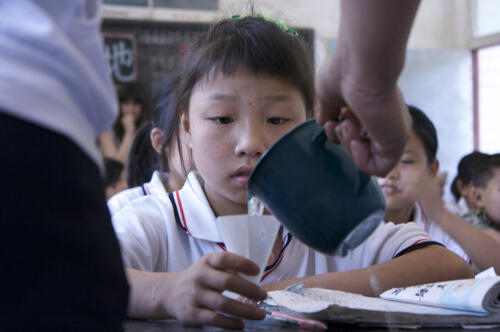
Although universities have expanded in size, it is unclear if the poor have benefited. If there are high returns to college education, then increasing access of the poor to college has important welfare implications. The objective of this paper is to document the rates of enrollment into college of the poor and to identify the hurdles to doing so. Relying on several sets of data, including a survey of college students from universities in three poor provinces in China, we have found that the college matriculation rate of the poor is substantially lower than students from non-poor families; the same is true for rural women and minorities. Clearly, there are barriers that are keeping the rural poor out. The paper also demonstrates that the real hurdles are not during the years of secondary schooling or at the time of admissions to college. The real impediments keeping the rural poor from pursuing a college education arise long before high school—as early as preschool and elementary school years—and are present throughout the entire schooling system.

All Publications button
1
Publication Type
Journal Articles
Publication Date
Journal Publisher
Asia Pacific Education Review
Authors
Scott Rozelle
-

REGISTRATION IS NOW CLOSED

The problem: Despite the recent robust growth, there is concern that as China moves up the income ladder that its high level of inequality may be a breeding ground for future instability. We are not merely talking about the current (today’s) inequality: the 3:1 one urban to rural inequality in per capita income. More importantly, we are concerned about the implications of today’s human capital inequality between China’s cities and its poor rural areas. There are inequality gaps of 30:1 (matriculation into college); and 8:1 (early childhood education gap; and 4:1 (matriculation into fast-tracked academic high schools).

Is this a concern of development economists from the West? Or, is this something in which China’s policy making, academic and business communities are interested. In fact, China’s leaders—including those at the very top—have recently become extremely interested in understanding if anything in the nature of its economy is setting up the country to be headed on a road that could end up in a middle income growth trap.

China knows a lot about its own economy today. There are two questions that are outstanding and which this conference hopes to answer:

ONE: We are interested in what if, anything the implications of the human capital gaps on the economy and political stability (wending) of one to two decades from now.

TWO: Are there lessons from the rest of the world—yesterday, today and tomorrow—that can help formulate policy solutions to potential barriers to rapid and sustained growth?

Approach: In a one day conference at Stanford, sponsored by FSI and SCID, experts from growth, inequality, development and political economy, academics and policy people from inside and outside of China (and from inside and outside of Stanford) will contribute their knowledge.

Output: A monograph that distills the lessons from the conference, the target audience being China’s top leadership and its academic elite (who act as advisors to China’s top leadership).

This document will seek to put the current economic development process through which China is moving into international perspective. The monograph will be coauthored by Scott Rozelle, Nick Hope, Hongbin Li, Liu Shouying, Cai Fang and others.


CONFERENCE AGENDA

7:45 – 8:30 Breakfast

8:30 – 8:45 Welcome: Nicholas Hope, Director, SCID, and Scott  Rozelle, Senior Fellow, APARC, Stanford University

8:45 – 10:15 Panel One

Chinese Growth and Inequality: Past and Present 

Moderator:         Jean Oi (Stanford)

Presenters:  Growth and Income Inequality: T. sicular, Professor, U. Western Ontario

Human Capital Inequality: Li Hongbin, Professor, Tsinghua University

Plenary Discussant:   Liu Shouying, Development Research Center, State Council

 10:15 – 10:30 Coffee Break

 10:30 – 12:30 Panel Two  

Chinese Growth and Inequality: Future

Moderator:   Xueguang Zhou, Professor, Stanford

Presenters:    Emerging Growth Patterns: TBD

Status and Outlook for FDI

Thilo Hanemann, Peterson Institute for International Economics

The Collapse of Rural Education: Scott Rozelle, Stanford

Plenary Discussant:             Cai Fang, Development Research Center, State Council

 12:30 – 2:00 Lunch Break

 2:00 – 3:00 Panel Three, Session I

Lessons from Outside of China for China

Inequality and Stagnation: Mexico

Moderator/Discussant: Beatriz Magaloni, Stanford

Human Capital and Mexico’s Labor Markets:

J. Edward Taylor, Professor, UC Davis

Avoiding Collapse: Brazil

Moderator/Discussant:  Martin Carnoy, Stanford

Growth, Equity and Stability: Francisco Ferriera, World Bank

 3:00 – 3:15            Coffee Break

 3:15 – 5:15 Panel Three, Session II

 Growth through Restructuring: South Korea:

Moderator/Discussant: Gi-wook Shin, Professor, Stanford University

Presenter:          The Education Hedge and Recovery from Crisis:  Kwon Daebong, Professor, Korea University

What lessons should be learned? What policies adopted?

Moderator: Nicholas Hope, Stanford

Discussants: Andrew Walder, Stanford, Paul Cavey, MacQuarrie Securities           

5:30 – 6:00Reception

6:00 – 7:30 Dinner, Vidilakas Room, Schwab Center, 680 Serra Street, Stanford

John A. and Cynthia Fry Gunn Building
366 Galvez Street
Stanford, CA 94305-6015

Xueguang Zhou Professor, Stanford University Speaker
Thilo Hanemann Peterson Institute for International Economics Speaker
Li Hongbin Professor, Tsinghua University Speaker
Liu Shouying Development Research Center, State Council Speaker
Nicholas Hope Host

Encina Hall East, E404
Stanford, CA 94305-6055

0
Faculty Co-director of the Stanford Center on China's Economy and Institutions
Helen F. Farnsworth Endowed Professorship
Senior Fellow at the Freeman Spogli Institute for International Studies
Senior Fellow at the Stanford Institute for Economic Policy Research
scott_rozelle_new_headshot.jpeg PhD

Scott Rozelle is the Helen F. Farnsworth Senior Fellow and the co-director of Stanford Center on China's Economy and Institutions in the Freeman Spogli Institute for International Studies and Stanford Institute for Economic Policy Research at Stanford University. He received his BS from the University of California, Berkeley, and his MS and PhD from Cornell University. Previously, Rozelle was a professor at the University of California, Davis and an assistant professor in Stanford’s Food Research Institute and department of economics. He currently is a member of several organizations, including the American Economics Association, the International Association for Agricultural Economists, and the Association for Asian Studies. Rozelle also serves on the editorial boards of Economic Development and Cultural Change, Agricultural Economics, the Australian Journal of Agricultural and Resource Economics, and the China Economic Review.

His research focuses almost exclusively on China and is concerned with: agricultural policy, including the supply, demand, and trade in agricultural projects; the emergence and evolution of markets and other economic institutions in the transition process and their implications for equity and efficiency; and the economics of poverty and inequality, with an emphasis on rural education, health and nutrition.

Rozelle's papers have been published in top academic journals, including Science, Nature, American Economic Review, and the Journal of Economic Literature. His book, Invisible China: How the Urban-Rural Divide Threatens China’s Rise, was published in 2020 by The University of Chicago Press. He is fluent in Chinese and has established a research program in which he has close working ties with several Chinese collaborators and policymakers. For the past 20 years, Rozelle has been the chair of the International Advisory Board of the Center for Chinese Agricultural Policy; a co-director of the University of California's Agricultural Issues Center; and a member of Stanford's Walter H. Shorenstein Asia-Pacific Research Center and the Center on Food Security and the Environment.

In recognition of his outstanding achievements, Rozelle has received numerous honors and awards, including the Friendship Award in 2008, the highest award given to a non-Chinese by the Premier; and the National Science and Technology Collaboration Award in 2009 for scientific achievement in collaborative research.

Faculty affiliate at the Center on Democracy, Development, and the Rule of Law
Faculty Affiliate at the Walter H. Shorenstein Asia-Pacific Research Center
Date Label
Scott Rozelle Speaker
T. Sicular Professor, University of Western Ohio Speaker
Jean C. Oi Moderator
Cai Fang Development Research Center, State Council Speaker
Beatriz Magaloni Associate Professor, Stanford University Speaker
Gi-Wook Shin Speaker
Kwon Daebong Professor, Korea University Speaker
J. Edward Taylor Professor, UC Davis Speaker
Martin Carnoy Speaker
Francisco Ferriera World Bank Speaker
Andrew G. Walder Speaker
Conferences
Paragraphs

Impact evaluation has become an increasingly integral part of development project design and execution in recent years. Many questions remain, however, about what methods yield the most compelling evaluations, and how best to implement them. The Rural Education Action Project (REAP) is among the most successful impact evaluation groups currently operating in China. The goal of this paper is to share five practical strategies that REAP has employed to maximize the effectiveness of our impact evaluations. These strategies include the use of randomization and other experimental and quasi experimental research designs; pursuit of local and international collaboration; strict attention to policy relevance; a modular, incremental research approach; and robust outreach. 

All Publications button
1
Publication Type
Journal Articles
Publication Date
Journal Publisher
Journal of Development Effectiveness
Authors
Scott Rozelle
Paragraphs

The overall goal of this paper is to try to understand in the context China’s middle school education system what is the tradeoff between community service and educational performance. In addition, we seek to understand some of the other effects of participation in community service activities. When students participate in community service, does their self-esteem rise and/or self-efficacy rise? Finally, we also want to know if students participate in community service activities will their sense of social responsibility rise.

Because the nature of this question is so broad we must necessarily reduce the scope of the paper. To do so, we study a community service program funded and run by a private US foundation in 592 junior high and high school classes in two counties in Shaanxi province. While we understand that there are many institutional and pedagogical issues that will affect the relationship among community service, grades and a sense of social responsibility (e.g., citation), we will focus our efforts on empirically evaluating the linkages. We also recognize that by focusing on the activities of an NGO in a single part of China that many of the findings will be affected by the context of the program. However, we also believe that we may be able to observe and measure more fundamental behavioral relationships. At the very least we seek to provide rigorous, statistically-based evidence from a case study which hopefully can be combined with other work to help us more fully understand community service, social responsibility and educational performance.

All Publications button
1
Publication Type
Journal Articles
Publication Date
Journal Publisher
Journal of Moral Education
Authors
Scott Rozelle
Paragraphs

The education of the disadvantaged population has been a long-standing challenge to education systems in both developed and developing countries. Although computer-assisted learning (CAL) has been considered one alternative to improve learning outcomes in a cost-effective way, the empirical evidence of its impacts on improving learning outcomes is mixed. This paper uses a randomized field experiment to explore the effects of CAL on student academic and non-academic outcomes for students in migrant schools in Beijing. Our results show that a remedial CAL program held out of regular school hours improved the student standardized math scores by 0.15 standard deviations and most of the program effect took place within 2 months after the start of the program. Students with less-educated parents benefited more from the program. Moreover, CAL also significantly increased the students’ interest in learning

All Publications button
1
Publication Type
Journal Articles
Publication Date
Authors
Scott Rozelle
Subscribe to Education