Health and Medicine

FSI’s researchers assess health and medicine through the lenses of economics, nutrition and politics. They’re studying and influencing public health policies of local and national governments and the roles that corporations and nongovernmental organizations play in providing health care around the world. Scholars look at how governance affects citizens’ health, how children’s health care access affects the aging process and how to improve children’s health in Guatemala and rural China. They want to know what it will take for people to cook more safely and breathe more easily in developing countries.

FSI professors investigate how lifestyles affect health. What good does gardening do for older Americans? What are the benefits of eating organic food or growing genetically modified rice in China? They study cost-effectiveness by examining programs like those aimed at preventing the spread of tuberculosis in Russian prisons. Policies that impact obesity and undernutrition are examined; as are the public health implications of limiting salt in processed foods and the role of smoking among men who work in Chinese factories. FSI health research looks at sweeping domestic policies like the Affordable Care Act and the role of foreign aid in affecting the price of HIV drugs in Africa.

Encina Hall East, 4th Floor,
Stanford, CA 94305-6055

0
alexis-new.jpg MA

Alexis Medina is the Associate Director for Research Programs at SCCEI, and also Associate Director of the Rural Education Action Program (REAP). At SCCEI, she helps to connect China-oriented faculty and graduate students with university resources and with one another, as well as to navigate administrative bureaucracies on both sides of the Pacific. She has been directly involved in building research networks and fostering connections between the US and China since 2006, and has extensive experience in international program management, including leading survey teams in rural China, overseeing the design and development of field projects, and coordinating data collection efforts and analysis. Her academic expertise lies at the intersection of health and education, and she has co-authored dozens of academic publications in this area. Alexis speaks fluent Mandarin, and has previously held research positions at the Harvard T.H. Chan School of Public Health, and Shandong University in China.

Associate Director, Research Programs, Stanford Center on China's Economy and Institutions
Associate Director, Rural Education Action Program
Date Label
News Type
News
Date
Paragraphs

Image
3ie logo
Among hundreds of applicants, REAP was one of only 25 groups to secure a competitive grant from the International Initiative for Impact Evaluation, or 3ie, to assess the value of expanding vocational education training (VET) in China.

Read below for a summary of the proposed study.


Investment in Vocational vs. General Schooling: Evaluating China’s Expansion of Vocational Education and Laying the Foundation for Further Vocational Education Evaluation


A key policy question in developing countries, including China, is how to balance investments between vocational and general education in a way that supports economic growth and reduces social inequality. There is no definitive study in any developing country on the returns to vocational education and training (VET). In the absence of information on how VET might affect the earnings of workers, it is unclear if recent efforts of the Chinese government to expand VET are sound. If the returns are negligible, the government might consider slowing the expansion or improving the quality of VET.

Additionally, it is estimated that only about 40% of the students that graduate from junior high school in poor, rural areas continue with their studies; the rest enter the unskilled labour force. Why are these rates so low? Surprisingly, little is known about the factors that keep students out of school. There is no systematic study of what is working in VET and what is not. Despite the rapid expansion of VET, China has set up few mechanisms to evaluate the quality of VET programs.

The goal of this project is to help the Chinese government evaluate the effectiveness of the expansion of VET. It aims to provide empirical evidence on the returns to VET; the factors that might keep disadvantaged students from receiving quality schooling; and measure the quality and cost-effectiveness of VET programs.

This study will estimate the returns from VET versus general schooling using various “quasi-experimental” methods. It will follow a randomized control trial design and randomly assign junior high students to programmes that provide vouchers for VET schooling, vouchers for academic schooling, and academic counselling for students to become better informed about their schooling/employment options. The project will assess if students work harder, perform better and matriculate to academic high school and VET at higher rates when they have sufficient financial aid and counselling. Finally, it will also develop an Entrance/Exit Examination that can be used by principals of VET institutions and local officials in charge of VET to assess the quality of their programs. The findings of these quality studies of VET will be useful in influencing policy on one of China’s most debated education issues.


Hero Image
4992859722 bebf12b142 z
All News button
1

A REAP-sponsored workshop lead by REAP affiliate Paul Gewwe (University of Minnesota) designed to target foundation and non-profit managers and executives, researchers and government officials.

Introduction and objectives

Numerous programs are implemented by governments and non-governmental organizations (NGOs), which are intended to change individuals’ economic or social outcomes. Common examples of this include agricultural extension services, public health programs and education programs. An important (and admittedly difficult to answer) question is: How effective are these programs in changing economic or social outcomes? Comparing the relative effectiveness of different programs, as well as comparing these programs’ benefits to their costs is crucial for governments to understand.

Objectives

  • To obtain a better understanding of how to objectively assess the impacts of programs through program design and data analysis
  • To specifically discuss possible scenarios based on how intervention status is decided, and methods for analyzing data for each scenario

Institute of Geographic Sciences and Natural Resources Research
No.11 Jia Datun Road
Chaoyang District
Beijing, China

Paul Gewwe Speaker University of Minnesota
Workshops
-

Landau Economics Building
Conference Room A

Encina Hall East, E404
Stanford, CA 94305-6055

0
Faculty Co-director of the Stanford Center on China's Economy and Institutions
Helen F. Farnsworth Endowed Professorship
Senior Fellow at the Freeman Spogli Institute for International Studies
Senior Fellow at the Stanford Institute for Economic Policy Research
scott_rozelle_new_headshot.jpeg PhD

Scott Rozelle is the Helen F. Farnsworth Senior Fellow and the co-director of Stanford Center on China's Economy and Institutions in the Freeman Spogli Institute for International Studies and Stanford Institute for Economic Policy Research at Stanford University. He received his BS from the University of California, Berkeley, and his MS and PhD from Cornell University. Previously, Rozelle was a professor at the University of California, Davis and an assistant professor in Stanford’s Food Research Institute and department of economics. He currently is a member of several organizations, including the American Economics Association, the International Association for Agricultural Economists, and the Association for Asian Studies. Rozelle also serves on the editorial boards of Economic Development and Cultural Change, Agricultural Economics, the Australian Journal of Agricultural and Resource Economics, and the China Economic Review.

His research focuses almost exclusively on China and is concerned with: agricultural policy, including the supply, demand, and trade in agricultural projects; the emergence and evolution of markets and other economic institutions in the transition process and their implications for equity and efficiency; and the economics of poverty and inequality, with an emphasis on rural education, health and nutrition.

Rozelle's papers have been published in top academic journals, including Science, Nature, American Economic Review, and the Journal of Economic Literature. His book, Invisible China: How the Urban-Rural Divide Threatens China’s Rise, was published in 2020 by The University of Chicago Press. He is fluent in Chinese and has established a research program in which he has close working ties with several Chinese collaborators and policymakers. For the past 20 years, Rozelle has been the chair of the International Advisory Board of the Center for Chinese Agricultural Policy; a co-director of the University of California's Agricultural Issues Center; and a member of Stanford's Walter H. Shorenstein Asia-Pacific Research Center and the Center on Food Security and the Environment.

In recognition of his outstanding achievements, Rozelle has received numerous honors and awards, including the Friendship Award in 2008, the highest award given to a non-Chinese by the Premier; and the National Science and Technology Collaboration Award in 2009 for scientific achievement in collaborative research.
Faculty affiliate at the Center on Democracy, Development, and the Rule of Law
Faculty Affiliate at the Walter H. Shorenstein Asia-Pacific Research Center
Date Label
Scott Rozelle Speaker
Seminars
Paragraphs

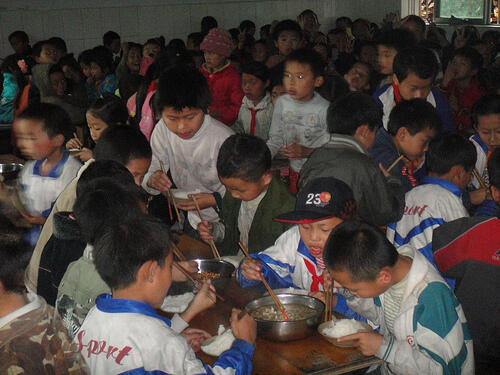
The main goal of this paper is to document the nature of boarding schools and empirically analyze the difference of nutrition intake and malnutrition status between boarding and non-boarding students in western rural China. By using two data sets about boarding schools and boarding students in Shaanxi Province, a representative province in western rural China, this paper finds that dormitory and student canteen facilities in boarding schools are under-equipped and services are poor quality and far below that needed for student development. Poor services in boarding schools and inadequate nutrition intake may be an important cause of low student height-for-age Z-scores (HAZ), as students eating at school have a much lower HAZ on average than that of non-boarding students. Furthermore, girls and students with more siblings have relatively lower HAZ, while the higher the number of parents a student has and the more educated they are exert a positive influence on child nutritional status in terms of HAZ. Finally, our analysis implies that the effective way to decrease the inequality of health, malnutrition and human capital between urban and rural in the long run is to improve the facilities and services of boarding schools in rural China.

All Publications button
1
Publication Type
Journal Articles
Publication Date
Journal Publisher
Asia Pacific Journal of Education
Authors
Scott Rozelle
Subscribe to Health and Medicine