Children's health
News Type
News
Date
Paragraphs

Hannah Myers

One simple action—placing eyeglasses on a nearsighted child’s face—can help that child to learn almost twice as much in a single school year. Yet only one out of seven children in rural China who needs glasses actually has them. Researchers at Stanford’s Rural Education Action Program (REAP) are now partnering with local government in China to address this problem. Targeting underserved rural primary school students in particular, they have implemented a sustainable pediatric vision care system in two counties. REAP is now preparing to launch a social enterprise based on this model to upscale across the country.
 
Matthew Boswell, Seeing is Learning’s Project Manager, explains, “We’ve tested our vision care model in the field and know that it’s effective at making care accessible, and makes a big difference in children’s education. By expanding into a social enterprise, we’re hoping to sustainably reach the millions of rural kids in China who need vision care.”
 
Yang Wenqing is one such child. A fourth grader at Helong Primary School in China’s rural northwestern Shaanxi province, Yang was struggling so much in school that she wanted to drop out. When the REAP team checked Yang’s vision, they found that she could not distinguish the largest letter on an eye chart 20 feet away—the same distance from her desk to the blackboard, where class notes and homework assignments are written. Having never had her vision checked, Yang thought this was normal. When the REAP team fitted Yang with her first pair of glasses, her jaw dropped and she whispered, “Can I keep these?”
 
At the end of her eye appointment, Yang told the REAP optician that receiving glasses had given her a new outlook on life. When her parents, who are migrant workers, return to visit Yang during the Chinese New Year, she is looking forward to showing them not only a new pair of glasses, but also an improved report card.
 
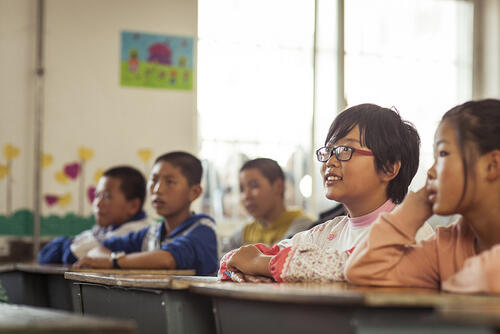
11059332616 c231f4a625 z Students whose vision problems were corrected learned almost twice as much in a single academic year as myopic children who did not receive glasses.


Having never had their vision tested, many rural children are unaware that they have poor vision, and that their eyesight is holding them back in school.
 
She is not alone. Over half of the world’s cases of uncorrected vision occur in China, where the lack of vision care in rural areas is obvious to even the casual observer. In response, REAP researchers launched the Seeing is Learning program in 2012, with the goal of using a simple intervention to transform the education and life opportunities for children like Yang.
 
The REAP team found that the vast majority of children with vision problems in rural China remain untreated. Furthermore, uncorrected vision is causing these students to fall far behind in school. As a Beijing ophthalmologist told the REAP team, “Eye care is sort of like cars in China. In the cities, people have luxury sedans, and in the countryside many still only have donkeys.” Why is vision care readily available in China’s urban areas, but failing in rural areas—and exacerbating the already substantial rural-urban education gap?
 
REAP identified both supply- and demand-side obstacles to vision care in rural China. On the demand side, widespread misconceptions hinder uptake of vision care. Rural parents, teachers, school administrators, and even government officials often believe that glasses harm children’s vision. Due to pervasive suspicion of eyeglasses and endorsement of eye exercises, a practice of rubbing around the eyes, rural families often do not seek care.
 
On the supply side, vision care professionals and eye doctors are located exclusively in the county seat. No clinicians, either public or private, have any incentive to visit rural areas to conduct screening or examinations. Because 7 out of 10 residents in rural areas live a long distance from the county seat, seeking care can be costly.
 
Since documenting these challenges, REAP has designed practical means to address them. The research team conducted a series of randomized controlled trials and unequivocally found that glasses slow, rather than speed up, the progression of myopia (nearsightedness), and that eye exercises have no measurable impact on vision.
 
Image
16436591941 2de1560300 z


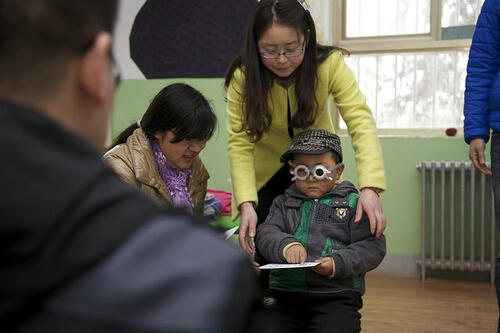
Teachers are generally a trusted source of advice in rural communities. When they buy in to vision care, families often do too.

 
They also demonstrated that teachers can form a key component in the vision care system. After a half-day training session, teachers in rural schools screened their students for visual acuity with greater than 90 percent accuracy. Teachers can also supervise glasses wear effectively, guaranteeing that the vast majority of nearsighted students wear their glasses in class, where they are most needed.
 
Finally, the REAP team found that a student’s first pair of glasses must be free (or close to free) for rural households to uptake vision care. When offered free glasses, 8 out of 10 rural families accepted them, even when they had to travel long distances to obtain them. After receiving a voucher for free glasses, the parents of one nearsighted fifth-grade student told the REAP team, “We would travel a thousand miles to restore our daughter’s vision and brighten her future—we just didn't know she had a problem.”
 
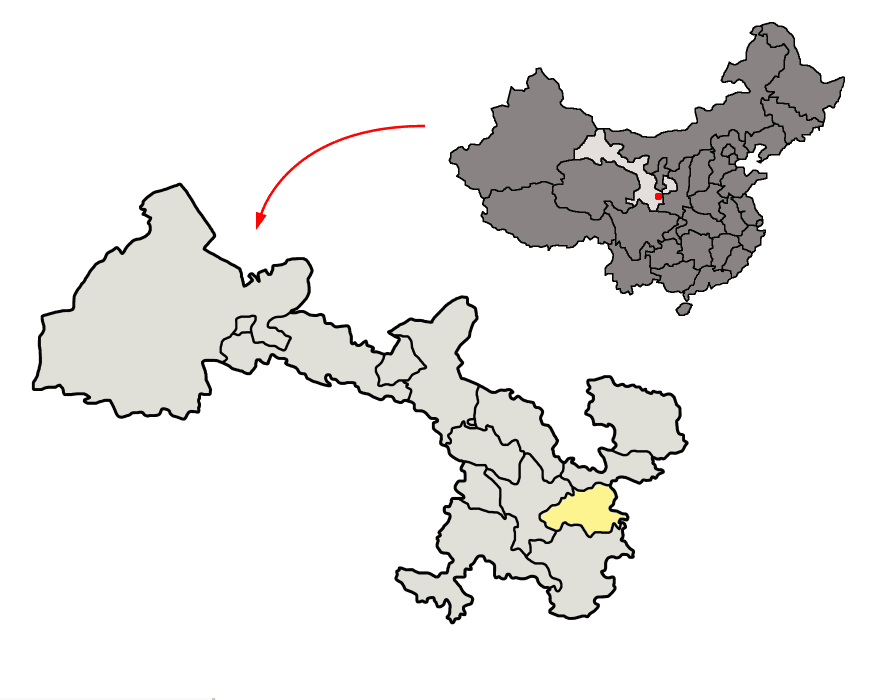
Location_of_Xianyang_Prefecture_within_Shaanxi_(China)

Yongshou, Shaanxi province (Photo Credit: Wikipedia)

Tianshui

Qinan, Gansu province (Photo Credit: Wikipedia)

With research in hand, in early 2014 REAP partnered with local governments in Yongshou county, Shaanxi province, and Qinan county, Gansu province to implement a new pediatric vision care system. REAP provided donated equipment (including autorefractors and lens edging machines) and high-quality glasses, and helped the hospitals transform space in their outpatient buildings into the vision centers. Four hospital staff were selected to run the clinics, and attended an intensive training program with REAP’s partners at Zhongshan Ophthalmic Center, returning as certified refractionists and opticians. The local Bureaus of Education then trained primary school teachers to screen their students and refer them to the new vision clinics.
 
This model met with strong success. During the 2014-2015 academic year, 80 percent of children who failed their vision tests went to the clinics in Qinan and Yongshou, where the newly trained optometrists were able to correct 96 percent of vision problems.
 
“Some students never raised their hands in class because they could not read the blackboard,” explained a primary school teacher in Shaanxi province. “Now that they can see clearly, they are eager to be called on.” Moving forward, these children will likely achieve far more in school, generating greater life opportunities and the ability to participate in China’s fast-changing economy.
 
REAP is now preparing to launch an innovative social enterprise based on the vision care system they tested in Qinan and Yongshou. The REAP team aims to use this social enterprise, called Learning in Focus, to end China’s rural vision care crisis, and do so sustainably.
 
As a part of Learning in Focus, REAP will assist county hospitals in building vision centers and provide necessary equipment. REAP will then arrange for four hospital staff members to be trained in ophthalmology and vision center management at Zhongshan Ophthalmic Center, China’s leading ophthalmology hospital. These new optometrists will train local teachers to vision screen their students in a monthly rotation.
 
Image
16252456337 b7854955cf b 1


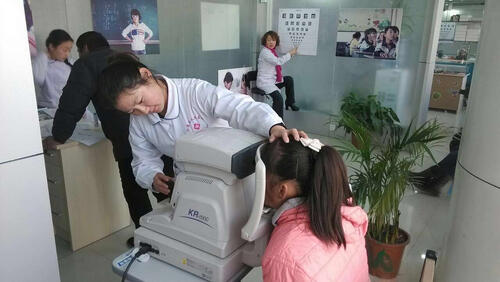
A view inside Seeing is Learning's Yongshou vision clinic: newly certified refractionists and opticians diagnose and treat rural children.

 
Once Learning in Focus vision centers are up and running, they will give away the first pair of glasses to referred rural primary school students for free, while also providing refraction and eyewear to a fraction of the urban market and junior high students on a fee-for-service basis. This “first pair free” model is not just charity, it also helps build access to the huge and untapped rural market.
 
The vision centers will repay REAP’s initial investments in monthly installments. After three years, the vision centers will have recouped all start-up costs (equipment, renovation, training, and free glasses), and will begin to earn a profit. Through this market-driven approach, Learning in Focus will rapidly become self-sustaining.
 
In May, the REAP team met with government officials from 18 counties near Qinan and Yongshou to discuss starting Learning in Focus programs in their localities. County officials were highly interested, as the social enterprise both provides county hospitals with a new revenue stream and helps local governments tackle a key health and education issue. The REAP team is now laying the groundwork to implement Learning in Focus in these areas. In the next several years, they look forward to expanding across rural China, transforming education and opportunities for rural kids like Yang Wenqing in the process.
 
This Seeing is Learning project is a part of REAP’s broader goal to improve the health, nutrition, and education of China’s rural poor families. Under the direction of Scott Rozelle, the Helen F. Farnsworth Senior Fellow at the Freeman Spogli Institute for International Studies, REAP evaluates the impact and effectiveness of development projects and seeks to upscale programs that work. To learn more about REAP’s diverse projects across rural China, visit their website.
 
 
Contacts
 
Matthew Boswell - Project Manager, Seeing is Learning (boswell@stanford.edu)
Scott Rozelle - REAP Co-Director (rozelle@stanford.edu)
 
 
Hero Image
11059432544 63bef89ec8 o
All News button
1
Paragraphs

Soil-transmitted helminths (STHs) are parasitic intestinal worms that infect more than two out of every five schoolchildren in rural China, an alarmingly high prevalence given the low cost and wide availability of safe and effective deworming treatment. Understanding of local knowledge, attitudes, and practices regarding STHs in rural China has until now, been sparse, although such information is critical for prevention and control initiatives. This study elucidates the structural and sociocultural factors that explain why deworming treatment is rarely sought for schoolchildren in poor villages of rural China with persistently high intestinal worm infection rates. In-depth, qualitative interviews were conducted in six rural villages in Guizhou Province; participants included schoolchildren, children’s parents and grandparents, and village doctors. We found evidence of three predominant reasons for high STH prevalence: lack of awareness and skepticism about STHs, local myths about STHs and deworming treatment, and poor quality of village health care. The findings have significant relevance for the development of an effective deworming program in China as well as improvement of the quality of health care at the village level. 

All Publications button
1
Publication Type
Journal Articles
Publication Date
Journal Publisher
PLoS Neglected Tropical Diseases
Authors
Alexis Medina
Scott Rozelle
Paragraphs

Although China has experienced rapid economic growth over the past few decades, significant health and nutritional problems remain. Little work has been done to track basic diseases, such as iron-deficiency anemia, so the exact prevalence of these health problems is unknown. The goals of this study were to assess the prevalence of anemia in China and identify individual, household and community-based factors associated with anemia. We used data from the 2009 China Health and Nutrition Survey (CHNS), including the measurement of he- moglobin levels among 7,261 individuals from 170 communities and 7 provinces in central and eastern China. The overall prevalence of anemia was 13.4% using the WHO’s blood hemoglobin thresholds (1968). This means in China’s more developed central and eastern regions up to 180 million people may be anemic. Some vulnerable subgroups were disproportionately affected by anemia. Seniors (aged 60 years and above) were more likely to be anemic than younger age cohorts, and females had higher anemia prevalence among all age groups except among children aged 7 to 14 years. We found a negative correlation between household wealth and the presence of anemia, suggesting anemia prevalence may decline as China’s economy grows. However, the prevalence of anemia was greater in migrant households, which should be experiencing an improved economic status.


All Publications button
1
Publication Type
Journal Articles
Publication Date
Journal Publisher
Southeast Asian Journal of Tropical Medicine and Public Health
Authors
Sean Sylvia
Alexis Medina
Scott Rozelle
Number
2
Paragraphs

Junior high dropout rates are up to 25% in poor, rural areas of China. Although existing studies have examined how factors such as high tuition and opportunity costs contribute to dropout, fewer studies have explored the relationship between dropout rates and mental health in rural China. The overall goal of this study is to examine the relationship between dropout and mental health problems in rural Chinese junior high schools. Correlational analysis was conducted among 4,840 students across 38 junior high schools in rural China. Ordinary least squares (OLS) regressions were used to determine the types of students most at risk for mental health problems and whether mental health problems are correlated with dropout behavior. Our measure for mental health is based on the Children’s Manifest Anxiety Scale. Mental health problems are widespread in the sample of rural children, with 74% of students at risk for mental health problems. The student and family characteristics that correlate with dropout (poverty and low achievement) also correlate with mental health problems. More importantly, even after controlling for these background characteristics, mental health problems remain correlated with dropout rates. Mental health problems, especially among low-achieving poor students, may be contributing to the high dropout rates in rural China today. This finding suggests that interventions focusing on mental health in rural areas may also help reduce dropout.

All Publications button
1
Publication Type
Journal Articles
Publication Date
Journal Publisher
International Journal of Educational Development
Authors
Huan Wang
James Chu
News Type
News
Date
Paragraphs

"Growth has helped millions to avoid malnutrition but it still threatens to hold back a generation of rural Chinese."

A recent article in The Economist about malnutrition in rural China cites REAP's research on anemia.

“The propaganda message, scrawled in white paint on the side of a wood-frame house, could hardly be more blunt: ‘Cure stupidity, cure poverty’. The cure for both, in one of China’s poorest counties, seems to be a daily nutritional supplement for children. At a pre-school centre in Songjia, as in more than 600 other poor villages across China, children aged three to six gather to get the stuff with their lunch. If China is to narrow its urban-rural divide, thousands more villages will need to do this much, or more....

"'Babies are probably 50% malnourished' in poor rural areas, says Scott Rozelle, co-director of the Rural Education Action Programme (REAP), a research outfit at Stanford University which has done extensive tests on anaemia in rural China. 'But almost no mums are malnourished.' Mr Rozelle says that in one of his surveys rural mothers showed a better understanding of how to feed pigs than babies: 71% said pigs need micronutrients, whereas only 20% said babies need them."

Read more here.

Hero Image
economist
All News button
1
News Type
Blogs
Date
Paragraphs

REAP's efforts on childhood anemia were featured in an article in Scope, an award-winning medical blog produced by writers at Stanford University School of Medicine.

"How can health and nutrition education needs in rural China be addressed? Start by examining infant-feeding practices.

"Scott Rozelle, PhD, director of the Rural Education Action Program, part of the Freeman Spogli Institute for International Studies (FSI) Center on Food Security and the Environment at Stanford, conducted a study on 1,800 babies in China’s Shaanxi province to address high rates of anemia and cognitive delays in children owing to poor nutrition, though not necessarily lack of funds for healthy food...The study is ongoing through April, 2015, but 12 months into the program, the researchers have found that the supplements have reduced anemia rates by 28 percent..." 

Read the article here

Read more about REAP's study on anemia here

Hero Image
9351372601 3fc0609079 z
All News button
1
Paragraphs

Empirical evidence suggests that the prevalence of soil-transmitted helminth (STH) infections in remote and poor rural areas is still high among children, the most vulnerable to infection. There is concern that STH infections may detrimentally affect children’s healthy development, including their cognitive ability, nutritional status, and school performance. Medical studies have not yet identified the exact nature of the impact STH infections have on children. The objective of this study is to examine the relationship between STH infections and developmental outcomes in 2,180 school-aged children in seven nationally-designated poverty counties in rural China. We conducted a large-scale survey in Guizhou province in southwest China in May, 2013. Overall, 42 percent of elementary school-aged children were infected with one or more of the three types of STH—Ascarislumbricoides (ascaris), Trichuris trichuria (whipworm) and the hookworms Ancylostoma duodenaleor Necator americanus. After controlling for socioeconomic status, we observed that children infected with one or more STHs have worse cognitive ability, worse nutritional status, and worse school performance than their uninfected peers.

All Publications button
1
Publication Type
Working Papers
Publication Date
Authors
Alexis Medina
Scott Rozelle
Subscribe to Children's health