Society

FSI researchers work to understand continuity and change in societies as they confront their problems and opportunities. This includes the implications of migration and human trafficking. What happens to a society when young girls exit the sex trade? How do groups moving between locations impact societies, economies, self-identity and citizenship? What are the ethnic challenges faced by an increasingly diverse European Union? From a policy perspective, scholars also work to investigate the consequences of security-related measures for society and its values.

The Europe Center reflects much of FSI’s agenda of investigating societies, serving as a forum for experts to research the cultures, religions and people of Europe. The Center sponsors several seminars and lectures, as well as visiting scholars.

Societal research also addresses issues of demography and aging, such as the social and economic challenges of providing health care for an aging population. How do older adults make decisions, and what societal tools need to be in place to ensure the resulting decisions are well-informed? FSI regularly brings in international scholars to look at these issues. They discuss how adults care for their older parents in rural China as well as the economic aspects of aging populations in China and India.

-

Stanford Center for International Development Twelfth Annual Huang Lian Memorial Lecture

The Real China Threat: Why Might We Need to Worry About a Stagnating China?

Reception: 4:30 - 5:00

Lecture: 5:00 - 6:00

Huang Lian was a doctoral student from the People's Republic of China. He enrolled in the Economics Department at Stanford University in the fall of 1997 after just completing a Master’s degree from the Graduate School of the People's Bank of China. Talented and diligent, Huang Lian came to the United States to seek higher professional training, and planned a career in China working on economic policy. In June 1999, he died in a tragic accident. SCID founded a lecture series as a memorial.


Scott Rozelle holds the Helen Farnsworth Endowed Professorship at Stanford University and is Senior Fellow in the Food Security and Environment Program and the Shorenstein Asia-Pacific Research Center, Freeman Spogli Institute (FSI) for International Studies, the Stanford Center for International Development (SCID) and the Stanford Institute for Economic Policy Research (SIEPR). He is also an adjunct professor at five universities in China and the Chinese Academy of Sciences. Dr. Rozelle's research focuses almost exclusively on China’s rural economy. For the past 15 year, Rozelle has been the chair of the International Advisory Board of the Center for Chinese Agricultural Policy, Chinese Academy of Sciences (CAS). In recent years Rozelle spends most of his time co-directing the Rural Education Action Project (REAP), a research organization with collaborative ties to CAS, Peking University, Tsinghua University and other universities that runs studies to evaluate China’s new education and health programs. In recognition of this work, Professor Rozelle has received numerous honors and awards. Among them, he became a Yangtse Scholar (Changjiang Xuezhe) in Renmin University of China in 2008. In 2008 he also was awarded the Friendship Award by Premiere Wen Jiabao, the highest honor that can be bestowed on a foreigner. In 2009, Rozelle also received in 2009 the National Science & Technology Research Collaboration Award, a prize given by the State Council.

This lecture is sponsered by SCID.

Koret-Taube Conference Room
Gunn-SIEPR Building
366 Galvez Street
Stanford University

Encina Hall East, E404
Stanford, CA 94305-6055

0
Faculty Co-director of the Stanford Center on China's Economy and Institutions
Helen F. Farnsworth Endowed Professorship
Senior Fellow at the Freeman Spogli Institute for International Studies
Senior Fellow at the Stanford Institute for Economic Policy Research
scott_rozelle_new_headshot.jpeg PhD

Scott Rozelle is the Helen F. Farnsworth Senior Fellow and the co-director of Stanford Center on China's Economy and Institutions in the Freeman Spogli Institute for International Studies and Stanford Institute for Economic Policy Research at Stanford University. He received his BS from the University of California, Berkeley, and his MS and PhD from Cornell University. Previously, Rozelle was a professor at the University of California, Davis and an assistant professor in Stanford’s Food Research Institute and department of economics. He currently is a member of several organizations, including the American Economics Association, the International Association for Agricultural Economists, and the Association for Asian Studies. Rozelle also serves on the editorial boards of Economic Development and Cultural Change, Agricultural Economics, the Australian Journal of Agricultural and Resource Economics, and the China Economic Review.

His research focuses almost exclusively on China and is concerned with: agricultural policy, including the supply, demand, and trade in agricultural projects; the emergence and evolution of markets and other economic institutions in the transition process and their implications for equity and efficiency; and the economics of poverty and inequality, with an emphasis on rural education, health and nutrition.

Rozelle's papers have been published in top academic journals, including Science, Nature, American Economic Review, and the Journal of Economic Literature. His book, Invisible China: How the Urban-Rural Divide Threatens China’s Rise, was published in 2020 by The University of Chicago Press. He is fluent in Chinese and has established a research program in which he has close working ties with several Chinese collaborators and policymakers. For the past 20 years, Rozelle has been the chair of the International Advisory Board of the Center for Chinese Agricultural Policy; a co-director of the University of California's Agricultural Issues Center; and a member of Stanford's Walter H. Shorenstein Asia-Pacific Research Center and the Center on Food Security and the Environment.

In recognition of his outstanding achievements, Rozelle has received numerous honors and awards, including the Friendship Award in 2008, the highest award given to a non-Chinese by the Premier; and the National Science and Technology Collaboration Award in 2009 for scientific achievement in collaborative research.

Faculty affiliate at the Center on Democracy, Development, and the Rule of Law
Faculty Affiliate at the Walter H. Shorenstein Asia-Pacific Research Center
Date Label
Scott Rozelle Speaker
Lectures
Paragraphs

In the late 1990s and early 2000s, China’s Ministry of Education embarked on an ambitious program of elementary school mergers by shutting down small village schools and opening up larger centralized schools in towns and county seats. The goal of the program was to improve the teacher quality and building resources in an attempt to raise the human capital of students in poor rural areas, although it was recognized that students would lose the opportunity to learn in the setting of their own familiar villages. Because of the increased distances to the new centralized schools, the merger program also entailed building boarding facilities and encouraging or mandating that students live at school during the week away from their family. Given the magnitude of the program and the obvious mix of benefits and costs that such a program entails there has been surprisingly little effort to evaluate the impact of creating a new system that transfers students from school to school during their elementary school period of education and, in some cases, making students live in boarding facilities at school. In this paper, our overall goal is to examine the impact of the Rural Primary School Merger Program on the academic performance of students using a dataset from a survey that we designed to reflect transfer paths and boarding statuses of students. We use OLS and Propensity Score Matching approaches and demonstrate that there is a large “resource effect” (that is, an effect that appears to be associated with the better facilities and higher quality of teachers in town and county schools) that is associated with the transfer of students from less centralized schools (such as village schools) to more centralized schools. Boarding, however, is shown to have a negative impact on academic performance. However, students who transfer to county schools benefit from the transfer regardless of where they start and whether they board.

All Publications button
1
Publication Type
Journal Articles
Publication Date
Journal Publisher
International Journal of Educational Development
Authors
Scott Rozelle
Alexis Medina
0
Assistant Professor of Health Policy and Management, University of North Carolina
Research Affiliate, Rural Education Action Program
Sean.jpg PhD

Sean Sylvia, PhD, is an Assistant Professor in the Department of Health Policy and Management at UNC’s Gillings School of Global Public Health. As a health and development economist, Dr. Sylvia’s research focuses on designing and evaluating innovative approaches to improve the delivery of health services in developing countries. In past and ongoing projects, he has studied the design of performance-based incentives for providers, the implementation of school-based health and nutrition programs, community health worker interventions to improve early childhood health and development, and the measurement of and interventions to improve the quality of primary care in low-resource settings.

Fluent in Mandarin, Dr. Sylvia has long-standing collaborations with researchers at a number of universities in China where he has directed several large-scale surveys and randomized trials. Prior to joining UNC, he worked as an Assistant Professor in the School of Economics at Renmin University of China. He also previously worked for the World Bank and was a predoctoral fellow at Stanford University’s Freeman Spogli Institute for International Studies. Dr. Sylvia received his PhD in Agricultural and Resource Economics from the University of Maryland.

Paragraphs

In this paper we present new evidence on the impact of health and nutrition information on anemia rates from three large-scale randomized controlled trials (RCTs) in rural China. Each RCT studies a different type of health education campaign designed in partnership with the Chinese government to reduce the prevalence of iron-deficiency anemia among rural primary school students. These campaigns include single and multiple face-to-face education sessions for parents at their children’s schools as well as dissemination of written health education materials. Across all three studies, we find little evidence of changes in blood hemoglobin concentration or anemia status. In contrast, in our two studies that also examined a multivitamin supplementation intervention, we find meaningful reductions in anemia.

All Publications button
1
Publication Type
Journal Articles
Publication Date
Journal Publisher
CESifo Economic Studies
Authors
Alexis Medina
Scott Rozelle
-

China’s future economic growth is dependent on skilled and educated workers. However, recent studies have shown that only a little more than half of the students from poor, rural areas finish junior high school and enter academic or vocational high school. The low level of educational attainment of these students is not surprising given that China has a high level of poverty in rural areas, rapidly rising wages for unskilled work and a highly competitive education system. One problem behind the low rates of matriculation to high school is that, as early as grade 7, students may be misinformed about the returns to high school education and lack other career planning information and skills, such that they drop out before even graduating, lose motivation to perform well academically, and exclude high school from their future plans.

The purpose of this study is to explore the effectiveness of providing information and career counseling in reducing dropout, improving academic performance, and increasing the number of grade 7 students who plan to attend high school in China’s poor, rural areas. To meet this objective, we conducted a cluster-randomized controlled trial (RCT) using a sample of 132 junior high schools and roughly 20,000 students in 15 nationally-designated poor counties in Shaanxi and Hebei provinces. In the RCT we randomly selected and provided training for junior high school teachers to give students either a) information on the returns and costs associated with higher levels of schooling or b) career counseling to help students plan for their school and career options. We then evaluated whether students dropped out less, performed better academically, or planned to matriculate in academic and vocational high school more.

Richard and Rhoda Goldman Conference Room

Prashant Loyalka Assistant Research Fellow, China Institute for Educational Finance Research, Peking University. Research Affiliate, Rural Education Action Project. Speaker
Authors
News Type
News
Date
Paragraphs

When the computers arrived at Ma Guanghui’s primary school in China’s rural Qinghai Province, the principal worried his students would break them. It’s not that the third- and fourth-graders are a malicious bunch. They just wouldn’t keep their hands off the new machines.

“They were so enthusiastic because they had never seen computers before,” Ma said, mimicking how the children whacked the keyboards, poked the monitors and pounded the mice before realizing they work with just a click.

“They couldn’t leave them alone,” he said.

The 15 computers that were suddenly being used by about 60 students were part of an experiment to see whether educational software and computer-assisted learning techniques would boost the scores of China’s most disadvantaged students. It’s a question that Stanford researcher Scott Rozelle and his collaborators in the Rural Education Action Project have answered with a resounding “yes.”

An economist and senior fellow at Stanford’s Freeman Spogli Institute for International Studies, Rozelle has worked for years to narrow the income and education gaps between China’s rural poor and urban middle-class. He’s now focusing much of his attention on bridging a digital divide that threatens to leave children without computer skills even farther behind.

His research – the first academic work to really measure those technological disparities – has revealed stark contrasts. While about 80 percent of Chinese students living in cities use the Internet at home, only 2 percent of those in rural areas have online access at home. No one is able to surf the Web at school, and few have access to working computers.

“This is probably the greatest digital divide of any country in the world,” Rozelle said during a March 22 conference at the newly opened Stanford Center at Peking University, where Ma and a few of his students came to discuss how computers have helped improve test scores.

Loaded with games and software that taught Ma’s students Mandarin, the computers provided by ADOC2.0 – a nongovernmental organization affiliated with the Acer computer company – had a quick payoff.

Within 10 weeks, test scores rose on average from the equivalent of a C-plus to a B.

“We were No. 1 in the whole school district,” Ma said. “All our students should have computers and Internet access”

Chinese officials agree. A 10-year-plan laid out by the government calls for every student in China to have access to the Internet.

“This is a very ambitious plan,” Zheng Dawai, a director in China’s Ministry of Education, said during the conference. “But the Internet is an important way to promote learning, especially in the rural areas.”

Rozelle says the costs of a bad education and missed opportunities for China's youngest generation are too big for China to ignore. Hundreds of thousands of migrants are making their ways from the countryside into big cities where jobs await.

But as wages go up, so will the demand for skilled labor. Being poor and looking for a job is one thing. Being poor and uneducated is another.

“Nearly 40 percent of China’s kids are in poor, rural areas,” Rozelle said. “What’s the nature of their education? Are they ready for a new era where you need to know how to use a computer and navigate the Web? We’re talking about more than 100 million rural kids going through the system without the skills they need.”

That premise sets the stage for a disenfranchised class, increased violence and greater poverty that can destabilize China and jeopardize its role as one of the world’s economic stars.

Rozelle’s goal is to influence Chinese policy with the results of his research and lead government officials to the decisions that will improve the health and education of the country's up-and-coming workforce.

He and his colleagues have already had success in tackling anemia, an iron deficiency that’s rampant in rural areas where diets are often unbalanced and consist of hardly any meat. Anemic children tend to do poorly in school because of the lethargy and lack of concentration that accompany the disease.

Thanks in large part to REAP studies that have shown students’ test score go up when they take vitamins or eat more meat and vegetables, the government has committed about $20 billion during the next decade to improving school lunches.

Now the REAP team is measuring the best ways to use technology to improve school performance so he’ll have the data he needs to convince government officials to move faster and spend more money on computer-assisted learning.

Along with computer manufacturer Dell Inc., Rozelle is now partnering with toy and game developer Mike Wood. Wood is the founder and CEO of SmartyAnts, a software program that teaches English as a second language and reading skills through a series of games where the player helps “teach” an ant avatar how to read, write and enjoy learning.

With the cost of technology getting cheaper – tablet computers can cost as little as $50 – Wood is looking for ways to get educational software into the hands of children in the world’s poorest areas.

“It’s possible to load a low-cost platform with top-notch software that’s personalized and will give kids from pre-K through sixth grade access to as good a curriculum as is available to the richest kids going to the richest private schools there are,” he said. “It’s possible. And it’s something we should be doing.”

Through his research and collaborations, Rozelle and his colleagues in the Chinese Academy of Sciences aim to convince Chinese officials that Wood is right.

Hero Image
cal square
All News button
1

Center for Chinese Agricultural Policy,
Chinese Academy of Sciences
Room 3830, Anwai Datun Road, 11A
Beijing, 100101, P. R. China

0
REAP Project Manager for Keeping Kids in School
JC_REAP.jpg MA

James Chu manages the Keeping Kids in School projects at REAP. He has five years of experience researching educational issues in China. His research experience involves extensive quantitative and qualitative fieldwork in Shaanxi province and Beijing migrant schools. He has also designed and implemented several projects in Beijing benefiting migrant students. He is fluent in Mandarin and received his MA in Sociology at Stanford University.

Authors
Scott Rozelle
News Type
News
Date
Paragraphs

Full text available at YaleGlobal.

Children of China's Future – Part II

 
Aging population and poverty require stronger investment in China’s rural youth
Karen Eggleston, Jean Oi, Scott Rozelle, Ang Sun, Xueguang Zhou
YaleGlobal, 14 March 2012
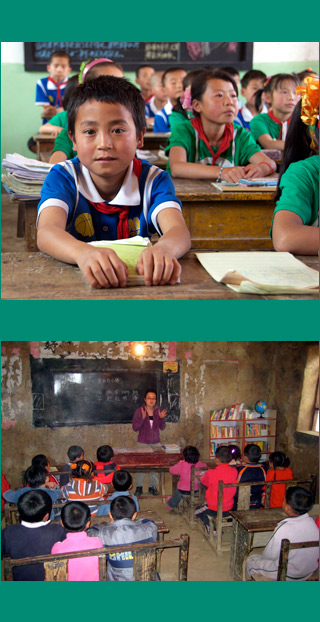
Poor education mortgaging the future? Students in a Gansu province school, where many are anemic (top); another class room in Loess Plateau. (Top Photo: Adam Gorlick)

DINGXI PREFECTURE: Wang Hongli, 8 years old, lives in a remote rural village on the Loess Plateau in one of China’s poorest and most agricultural provinces, Gansu. His prospects for living the good life are as bleak as the landscape. He is not on track to become part of China’s emerging middle class, the free-spending, computer-savvy, person-of-the-world often featured in the western media.

Hongli is a pseudonym. His parents work in a faraway industrial zone, coming home for only three weeks at Chinese New Year. His grandmother takes care of him and his siblings on the weekends, and during the week he lives in a dorm, three to a bed with 36 other students in an unheated room 4 by 4 meters.

Hongli suffers from iron-deficient anemia, but neither his family nor his teacher knows he is sick. Even if his anemia is discovered and treated by the researchers who have documented 30 percent anemia among children in poor rural areas, it likely will recur after he finishes the study, with furnished dietary supplements. Despite educational pamphlets, he’ll likely revert to a diet of staple grains and bits of pickled vegetables.

Unsurprisingly, Hongli’s grades are not good. In China’s competitive school system, he has only a slight chance of attending high school, much less college. In China’s future high-wage economy, all Hongli can hope for is a menial job in the provincial capital, Lanzhou, or as a temporary migrant elsewhere. Without urban permanent residency, hukou, he will have limited access to urban social services. He may suffer chronic unemployment, or resort to the gray economy or crime. He also may never marry – one of the millions of “forced bachelors” created by China’s large gender imbalance.

In China’s future high-wage economy, 
all the rural poor can hope for is menial jobs in a provincial capital.

Hongli is not alone. In fact, he’s one of 50 million school-age youth in China’s vast poor rural hinterlands. Recent studies by Stanford and Chinese collaborators show that 39 percent of fourth-grade students in Shaanxi Province are anemic, with similarly high rates elsewhere in the northwest; up to 40 percent of rural children in the poor southwest regions, e.g., Guizhou, are infected with intestinal worms. Millions of poor rural students throughout China are nearsighted, but do not wear glasses.

Because China’s urbanites have fewer children, poor rural kids like Hongli represent almost a third of China’s school-aged children, a large share of the future labor force. These young people must be healthy, educated and productive if China is to have any chance of increasing labor productivity to offset the shrinking size of its aging workforce.

Many observers presume that China’s growth will continue unabated, drawing upon a vast reservoir of rural labor to staff manufacturing plants for the world. In fact, to a considerable extent, China’s rural areas have already been emptied out, leaving many villages with only the old and the very young. The growth of wages for unskilled workers exceeds GDP growth.

Better pay should be good news for poverty alleviation. However, rising wages push up the opportunity cost of staying in school – especially since high school fees, even at rural public schools, are among the highest in the world.

It’s myopic to allow rural students to drop out of junior high and high school – mitigating the current labor shortage, but mortgaging their futures. Recent studies demonstrate that eliminating high school tuition – or reducing the financial burden on poor households – improves junior high achievement and significantly increases continuation on to high school. Yet unlike many other developing countries, China does not use incentives to keep children in school, such as conditional cash transfers. The public health and educational bureaucracies also do not proactively cooperate to remedy nutritional and medical problems – including mental health – that school-based interventions could address cost effectively.

Less than half of youth in China’s poor rural areas go to academic high school; less than 10 percent head to college.

The educational system, based on rote memory and drill, doesn’t teach children how to learn. The vocational education system is ineffective. Instead, China’s schools tend to focus resources on elite students. Tracking starts early, and test scores are often the sole criterion for success. A recent comparative study documents that China’s digital divide, with lower access to computers in poor rural areas, is among the widest in the world.

China’s government is increasing expenditures for school facilities and raising teacher salaries. However, these steps are far from adequate. During South Korea’s high growth, almost all Korean students finished high school. Today, less than half of youth in China’s poor rural areas go to academic high school, and the percent going to college remains in the single digits.

Greater investment in public health and education for the young people in China’s poor rural areas is urgent. If the government waits 10 years, it may be too late to avert risks for China’s stability and sustained economic growth.

Surely China could easily address this problem? A third of Chinese were illiterate in the early 1960s; now, fewer than 5 percent are. By 2010, about 120 million Chinese had completed a college degree. Chinese also enjoy a relatively long life expectancy compared to India and many other developing countries, and basic health insurance coverage is almost universal.

But the pace of change and citizens’ expectations are higher as well. Most Chinese assume that basic nutritional problems and intestinal worms were eradicated in the Mao era. China’s mortality halved in the 1950s; fertility halved in the 1970s. As a result, China will get old before it gets rich. Population aging, rapid urbanization and a large gender imbalance represent intertwined demographic challenges to social and economic governance. The policy options are complicated, the constraints significant, the risks of missteps real and ever-present.

China’s prosperity depends on youth mastering skills to thrive in a technology-driven world.

Timely policy response is complicated by competition for resources – pensions, long-term care, medical care for the elderly and more – as well as significant governance challenges arising from a countryside drained of young people. The well-intentioned programs for what government regards a “harmonious society” create large unfunded mandates for local authorities. Attempts to relocate rural residents to new, denser communities provoke anger at being uprooted and skepticism that local authorities simply want to expropriate land for development.

Millions of migrant workers – like Wang Hongli’s parents – return to their rural homes during economic downturns. Urbanization weakens this capacity to absorb future economic fluctuations. Government efforts at “social management” – strengthening regulatory control of informal social groups and strategies for diffusing social tensions – expand the bureaucratic state, a central target of popular discontent.

Premier Wen Jiabao’s announcement of a 7.5 percent growth target – the lowest in two decades – has been expected. Future economic growth will moderate partly because of demographics, but mostly because productivity gains slow as an economy runs out of surplus rural labor and converges on the technological frontier. Costly upgrading of industrial structure will squeeze the government’s ability to deliver on its promise of a better future for all, stoking social tensions.

China’s stability and prosperity, and that of the region and the globe, depends on how well today’s youth master the knowledge and skills that enable them to thrive in the technology-driven globalized world of the mid-21st century. Resilient public and private sector leaders of the future must be able to think creatively. Therefore, China’s government should respond to population aging by acting now to invest more in the health and education of youth, especially the rural poor.


Hero Image
5734696609 a3b10b4c8f z
All News button
1
Paragraphs

We estimate the effects of attending the first versus second-tier of higher education institutions on Chinese students’ at-college and expected post-college outcomes using various quasi-experimental methods such as regression discontinuity, genetic matching, and regression discontinuity controlling for covariates. Overall we find that just attending the first versus second-tier makes little difference in terms of students’ class ranking, net tuition, expected wages, or likelihood of applying for graduate school. The results do show, however, that just attending the first versus second tier makes it less likely that students will get their preferred major choice.

All Publications button
1
Publication Type
Journal Articles
Publication Date
Journal Publisher
Social Science Research
Authors
Prashant Loyalka
Subscribe to Society