Society

FSI researchers work to understand continuity and change in societies as they confront their problems and opportunities. This includes the implications of migration and human trafficking. What happens to a society when young girls exit the sex trade? How do groups moving between locations impact societies, economies, self-identity and citizenship? What are the ethnic challenges faced by an increasingly diverse European Union? From a policy perspective, scholars also work to investigate the consequences of security-related measures for society and its values.

The Europe Center reflects much of FSI’s agenda of investigating societies, serving as a forum for experts to research the cultures, religions and people of Europe. The Center sponsors several seminars and lectures, as well as visiting scholars.

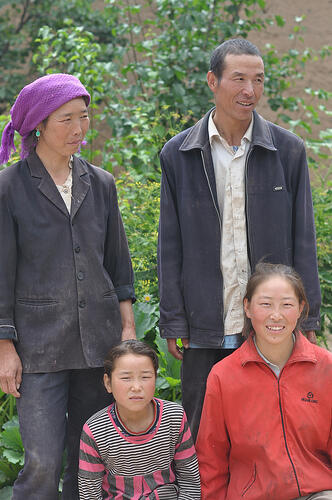
Societal research also addresses issues of demography and aging, such as the social and economic challenges of providing health care for an aging population. How do older adults make decisions, and what societal tools need to be in place to ensure the resulting decisions are well-informed? FSI regularly brings in international scholars to look at these issues. They discuss how adults care for their older parents in rural China as well as the economic aspects of aging populations in China and India.

Paragraphs

Although rural schools in China are still lagging behind urban schools in the quality of education provided, the government has made considerable efforts in improving rural education. In March of 2006, the central government announced that over the next five years it would provide the funding needed to finally implement the Compulsory Education Law of 1986, which mandated free and compulsory nine-year education (Xinhua, 2006). In the past few years, officials have also taken measures to bolster investment in teacher salaries), buildings and facilities and curriculum reform (Hannum et al., 2008). While there is still much effort needed to continue to improve rural schools, considerable progress has been made in the quality of teachers, facilities and curriculum and making education free in rural as well as urban schools.

However, there is a growing segment of the population that does not fit neatly into the rural-urban dichotomy traditionally characterizing the economy and the school system. The children of the rural-to-urban migrants that are flooding China’s cities have fallen into a conspicuous gap in the provision of public education.

Why are migrant children not covered by the formal education system? The source of the problem most likely is that migration itself has not always been fully sanctioned by the government. In recent years, however, the government has gradually begun to pass laws and design policies to protect the rights of migrants (Nielson et al, 2006). Migrant children are now allegedly entitled to attend urban schools in their local school districts. Schooling in urban areas is supposed to be free. There are indications that municipal governments are begging to address the migrant schooling issue.

Despite the change in the official line, access to schooling is still not routine; there are considerable barriers remaining (citation). Difficulties for migrant children to enroll in urban public schools have led to the emergence of privately-run migrant schools, which struggle to fill the educational gap. However, the quality of the school has been observed to be low by many scholars. Unfortunately, most of the studies have been based on small sample sizes and interviews and not on rigorous survey-based research.

All Publications button
1
Publication Type
Working Papers
Publication Date
Authors
Scott Rozelle

A REAP-sponsored workshop lead by REAP affiliate Paul Gewwe (University of Minnesota) designed to target foundation and non-profit managers and executives, researchers and government officials.

Introduction and objectives

Numerous programs are implemented by governments and non-governmental organizations (NGOs), which are intended to change individuals’ economic or social outcomes. Common examples of this include agricultural extension services, public health programs and education programs. An important (and admittedly difficult to answer) question is: How effective are these programs in changing economic or social outcomes? Comparing the relative effectiveness of different programs, as well as comparing these programs’ benefits to their costs is crucial for governments to understand.

Objectives

  • To obtain a better understanding of how to objectively assess the impacts of programs through program design and data analysis
  • To specifically discuss possible scenarios based on how intervention status is decided, and methods for analyzing data for each scenario

Institute of Geographic Sciences and Natural Resources Research
No.11 Jia Datun Road
Chaoyang District
Beijing, China

Paul Gewwe Speaker University of Minnesota
Workshops

A REAP-sponsored workshop designed to target foundation and non-profit managers and executives, researchers and government officials.

Objectives

  • To review policy-relevant research regarding the education and health of rural students in China
  • To discuss key issues, challenges and shortcomings of current knowledge and research methodology
  • To compare methodologies and discuss opportunities for collaboration and linkages

Institute of Geographic Sciences and Natural Resources Research
No.11 Jia Datun Road
Chaoyang District
Beijing, China

Workshops
Paragraphs

China has made remarkable progress along the path of economic transformation over the past three decades. To continue its rapid growth in an economy with increasingly higher wages, China’s key challenge is whether it can become competitive in quasi-skilled and skilled industrial sectors so that upscale factories can be induced to establish themselves in China? This study seeks to increase our understanding of high school education in China at a time when the nation is facing challenges in its development path. Using secondary statistics, we have found that educational access at the high school level is quite low—especially in poorer areas of rural China. We argue that the low level of access to high school education in China may be a problem resulting from high tuition and fees. We include empirical evidence about the tuition barrier argument by using a survey of 41 developing and developed countries and a representative survey of 1,177 students from one of China’s poorest provinces. We demonstrate that not only is financing high school a burden for the families of poor students, but also there is little financial aid available. The quality of education of students from poor rural areas prior to entering high school is also a problem. We conclude with a recommendation that in poor rural areas of China high school should be made free, as it is in most of the rest of the world—and efforts should be made to improve rural education in general.

All Publications button
1
Publication Type
Journal Articles
Publication Date
Journal Publisher
Asia Pacific Journal of Education
Authors
Scott Rozelle
Paragraphs

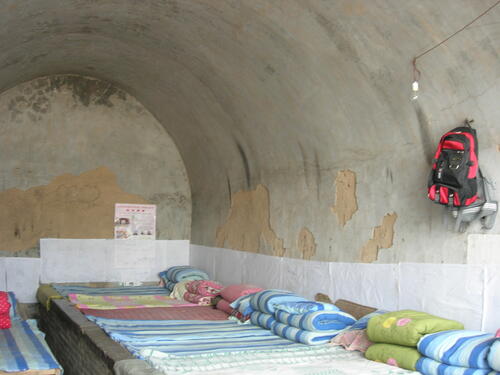
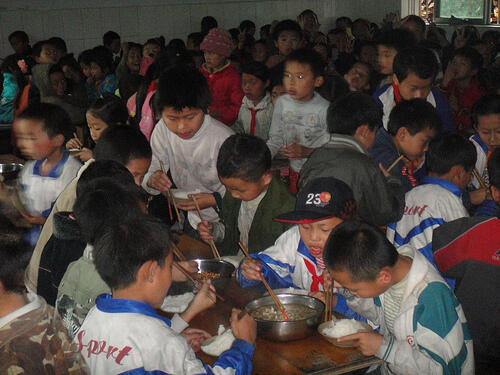
The main goal of this paper is to document the nature of boarding schools and empirically analyze the difference of nutrition intake and malnutrition status between boarding and non-boarding students in western rural China. By using two data sets about boarding schools and boarding students in Shaanxi Province, a representative province in western rural China, this paper finds that dormitory and student canteen facilities in boarding schools are under-equipped and services are poor quality and far below that needed for student development. Poor services in boarding schools and inadequate nutrition intake may be an important cause of low student height-for-age Z-scores (HAZ), as students eating at school have a much lower HAZ on average than that of non-boarding students. Furthermore, girls and students with more siblings have relatively lower HAZ, while the higher the number of parents a student has and the more educated they are exert a positive influence on child nutritional status in terms of HAZ. Finally, our analysis implies that the effective way to decrease the inequality of health, malnutrition and human capital between urban and rural in the long run is to improve the facilities and services of boarding schools in rural China.
All Publications button
1
Publication Type
Journal Articles
Publication Date
Journal Publisher
Asia Pacific Journal of Education
Authors
Scott Rozelle
Subscribe to Society