
Fall 2020 Seminar Series on China's Development and Transition

Fall Seminar Series on China's Development and Economic Transition Hosted by REAP & the China Program
This event will take place on Zoom. Registration is required:
Wednesday Lectures at 4pm PT Registration Link: http://bit.ly/FallSeminars2020
Register once to receive the Zoom meeting link that will be used for all five Wednesday lectures.
Friday 10/30 Book Launch Event at 1pm PT Registration Link: http://bit.ly/InvisibleChinaOct30
You will need to register seperately to attend the Invisible China book launch webinar on Friday, October 30.
After registering, you will receive a confirmation email containing information about joining the meeting.
Please join us for our fall seminar series of six lectures given by Stanford faculty who are leading experts on China's development and economic transition. These lectures will cover discussion topics ranging from China's carbon dioxide emissions-control system to China's bureaucracy and will be moderated by Professor Scott Rozelle, faculty director of the Rural Education Action Program at the Freeman Spogli Institute for International Studies and Professor Hongbin Li, faculty director of the China Program at the King Center on Global Development at SIEPR.
Seminar Series Moderators:

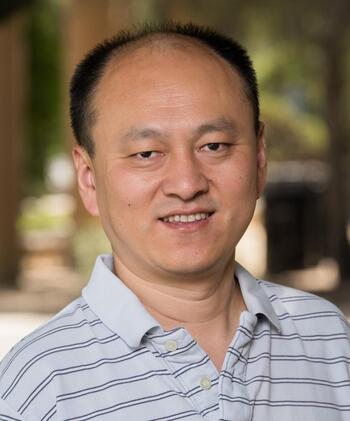
Hongbin’s research has been focused on the transition and development of the Chinese economy, and the evidence-based research results have been both widely covered by media outlets and well read by policy makers around the world. He is currently the co-editor of the Journal of Comparative Economics.
Lectures and Topics
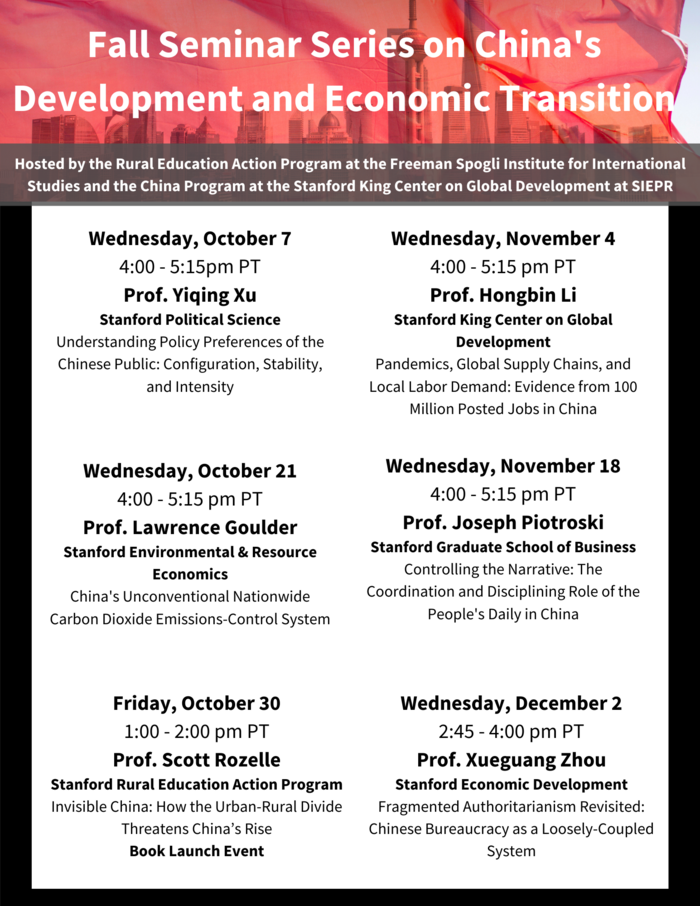
Seminar 1: Wednesday, October 7, 2020 | 4:00 - 5:00 pm Pacific Time
Understanding Policy Preferences of the Chinese Public: Configuration, Stability, and Intensity
Understanding the nature of societal preferences has important implications for the emergence of party systems, the dynamics of political conflict, and the direction of political development. However, policy preferences of the Chinese public have received relatively little scholarly attention. Using a series of surveys and experiments administrated online, we study the configuration, stability, and intensity of policy preferences in China.
We find that, first, policy preferences of the Chinese public are highly multi-dimensional. For example, preferences for dovish foreign policy, for policies that ensure more political freedom, and for market-oriented reforms are correlated, but the levels of correlations are low. Second, using longitudinal surveys, we find that a large proportion of the Chinese respondents hold relatively stable policy preferences in most issue domains, which makes measuring policy preferences a meaningful endeavor. Third, using a conjoint design with an embedded experiment, we show that respondents exhibit different levels of preference intensity over different issue domains; moreover, respondents on average are willing to trade preferred policies for tighter institutional constraints on government officials.
-----
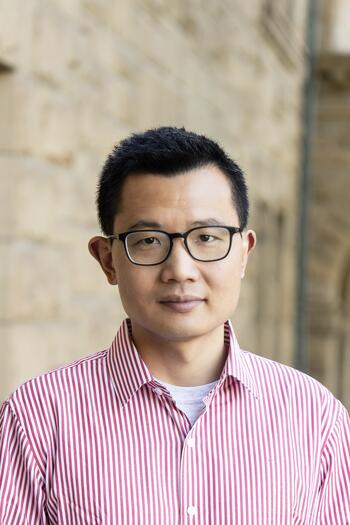
Dr. Yiqing Xu is Assistant Professor of Political Science at Stanford University. His primary research covers political methodology, Chinese politics, and their intersection. He received a PhD in Political Science from Massachusetts Institute of Technology (2016), an MA in Economics from China Center for Economic Research at Peking University (2010) and a BA in Economics (2007) from Fudan University.
His work has appeared in American Political Science Review, American Journal of Political Science, Journal of Politics, Political Analysis, Political Science Research and Methods, among other peer-reviewed journals. He has won several professional awards, including the best article award from American Journal of Political Science in 2016 and the Miller Prize for the best work appearing in Political Analysis in 2017 and 2019.
Seminar 2: Wednesday, October 21, 2020 | 4:00 - 5:00 pm Pacific Time
China's Unconventional Nationwide Carbon Dioxide Emissions-Control System
Professor Goulder will present his research focused on China’s new efforts to address climate change through a nationwide and market-based carbon dioxide (CO2) emissions trading program. He will discuss the strengths and weaknesses of China’s novel approach and present estimated impacts of China’s new program during its first phase, when it covers the power sector. He will display numerical simulation results indicating potential impacts of the program on CO2 emissions and on electricity outputs, production costs, prices and profits, both in the aggregate and in particular regions and provinces.
-----
Seminar 3: Friday, October 30, 2020 | 1:00 - 2:00 pm Pacific Time
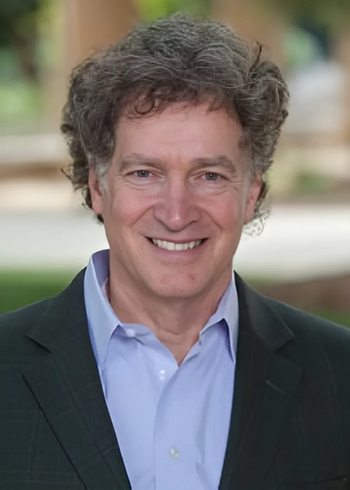
Book Launch Event with Scott Rozelle: Invisible China: How the Urban Rural-Divide Threatens China's Rise
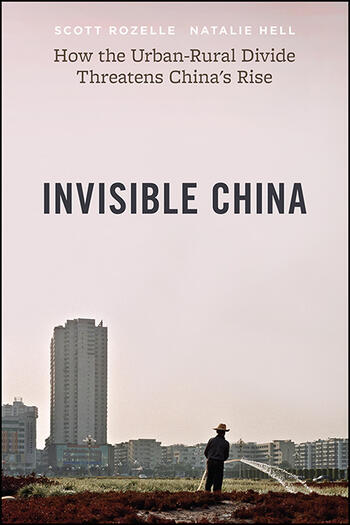
As the glittering skyline in Shanghai seemingly attests, China has quickly transformed itself from a place of stark poverty into a modern, urban, technologically savvy economic powerhouse. But as FSI Senior Fellow Scott Rozelle and Natalie Hell show in their new book Invisible China, the truth is much more complicated and might be a serious cause for concern.
Drawing on extensive surveys on the ground in China, Rozelle and Hell reveal that while China may be the second-largest economy in the world, its labor force has one of the lowest levels of education of any comparable country. The low levels of basic education of such a large share of workers may leave many unable to find work in the formal workplace as China’s economy changes and manufacturing jobs move elsewhere.
In this book talk event, Rozelle, who is also the director of FSI’s Rural Education Action Program, will be joined by Hongbin Li, a senior fellow at the Stanford Institute for Economic Policy Research and director of the China Program at the Stanford King Center on Global Development, who will moderate a discussion about the major themes of the book. A question and answer session with the audience will follow the discussion.
Seminar 4: Wednesday, November 4, 2020 | 4:00 - 5:15 pm Pacific Time
Pandemics, Global Supply Chains, and Local Labor Demand: Evidence from 100 Million Posted Jobs in China
Professor Li will discuss his new research on how the COVID-19 pandemic has affected labor demand in China using data collected from over 100 million posted jobs online. His data show that the number of newly posted jobs within the first 13 weeks after the Wuhan lockdown on January 23, 2020 was about one third lower than that of previous years. He will also explore how trade intermediaries outperformed other firms at the beginning of the pandemic but underperformed during the recovery as the virus spread throughout the world, suggesting economic decoupling from the rest of the world will likely cause job losses in China in a similar manner, except that the magnitude of such a shock will likely be that much greater.
-----

Hongbin’s research has been focused on the transition and development of the Chinese economy, and the evidence-based research results have been both widely covered by media outlets and well read by policy makers around the world. He is currently the co-editor of the Journal of Comparative Economics.
Seminar 5: This lecture has been postponed and will be rescheduled soon
Controlling the Narrative: The Coordination and Disciplining Role of the People's Daily in China
This seminar provides an overview of corporate news reporting in China, with a focus on understanding the political and market-based incentives behind Chinese newspapers' biased coverage of China's listed companies. And, given these prevailing incentives, we will explore how politicians in China use the Party's flagship newspaper, the People’s Daily, to coordinate the reporting of corporate news in China.
-----
Seminar 6: Wednesday, December 2, 2020 | 2:45 – 4:00 pm Pacific Time
Fragmented Authoritarianism Revisited: Chinese Bureaucracy as a Loosely-Coupled System
Professor Zhou will discuss his study on the prevailing image of fragmented authoritarianism in China in the theoretical framework of “loose coupling” in organizational analysis. He will define the “loose coupling” model in contrast to the rational model of organizations and identify the institutional mechanisms that cultivate and reproduce the loose-coupling phenomena in the Chinese bureaucracy, despite the tremendous efforts of the Leninist party organization to reshape it into a tightly-coupled system. Empirical evidence from patterns of personnel flow in the large Chinese bureaucracy and fieldwork observations are used to illustrate this line of arguments and to make sense of the observed bureaucratic behaviors.
-----
Register to Attend via Zoom
After registering, you will receive a confirmation email containing information about joining the meeting.