
Emma Xiaolu Zang | Demographic Constraint: Why Aging Societies Struggle to Invest in the Future
Emma Xiaolu Zang | Demographic Constraint: Why Aging Societies Struggle to Invest in the Future
Friday, January 15, 202712:00 PM - 1:20 PM (Pacific)
Goldman Room E409, Encina Hall
SCCEI Seminar Series (Winter 2027)
Friday, January 15, 2027 | 12:00 pm -1:20 pm Pacific Time
Goldman Room E409, Encina Hall, 616 Jane Stanford Way
Demographic Constraint: Why Aging Societies Struggle to Invest in the Future
As fertility falls, societies come to depend on each new generation more than ever. So why do they find it so hard to support the people raising it? This talk takes up two puzzles: why governments delay investing in families, and why their eventual responses so often fall short. The central argument is that waiting is never neutral. Governments hesitate because forecasts are uncertain, priorities compete, and reform is costly. When they act, policies tend to miss the insecurity, exhaustion, and coordination burdens that shape family life. Meanwhile, sustained low fertility remakes the population: pension and care commitments grow, political priorities shift, and workforces shrink. The result is demographic constraint, where investing in future generations gets harder just as it becomes more urgent. Drawing mainly on China, with comparisons across East Asia and Europe, the book traces a feedback loop in which fertility decline and delayed investment reinforce each other. Can societies make raising children feasible again before the imbalance between generations becomes self-reinforcing?
About the Speaker
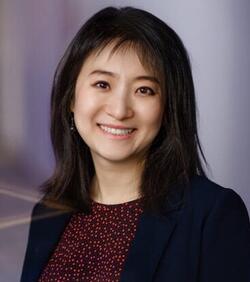
Emma Xiaolu Zang is an Associate Professor of Sociology, Biostatistics, and Global Affairs (with tenure), at Yale University, with secondary appointments in Biostatistics and Global Affairs. She directs the Computational Aging, Family, and Evidence Lab (Z-CAFE) and serves as the founding faculty organizer of the Yale Population Studies Speaker Series, which brings together scholars working on population and health research. Additionally, she is a non-resident fellow at the Center for China Analysis at the Asia Society Policy Institute. She has completed a Ph.D. in Public Policy in 2019 and an M.A. in Economics in 2017, both from Duke University.