
CISAC Year in Review 2014-2015
CISAC Year in Review 2014-2015
[[{"fid":"221140","view_mode":"crop_870xauto","fields":{"format":"crop_870xauto","field_file_image_description[und][0][value]":"","field_file_image_alt_text[und][0][value]":false,"field_file_image_title_text[und][0][value]":"U.S. Secretary of Defense Ashton Carter shares a light-hearted moment backstage before delivering CISAC's annual Drell Lecture.","field_credit[und][0][value]":"","field_caption[und][0][value]":"","field_related_image_aspect[und][0][value]":"","thumbnails":"crop_870xauto"},"type":"media","field_deltas":{"1":{"format":"crop_870xauto","field_file_image_description[und][0][value]":"","field_file_image_alt_text[und][0][value]":false,"field_file_image_title_text[und][0][value]":"U.S. Secretary of Defense Ashton Carter shares a light-hearted moment backstage before delivering CISAC's annual Drell Lecture.","field_credit[und][0][value]":"","field_caption[und][0][value]":"","field_related_image_aspect[und][0][value]":"","thumbnails":"crop_870xauto"}},"attributes":{"title":"U.S. Secretary of Defense Ashton Carter shares a light-hearted moment backstage before delivering CISAC's annual Drell Lecture.","width":"870","class":"media-element file-crop-870xauto","data-delta":"1"}}]]
Dear Friends,
We’re delighted to share with you some of CISAC’s proudest moments and greatest achievements from the past year. Our esteemed faculty and fellows continued to make important contributions to pressing policy questions in our core areas of research strength: from how to contain the growing threat of ISIS in the Middle East, to disposing of high-level radioactive waste, and the landmark nuclear deal with Iran. We also made great strides in expanding CISAC’s mission to combat emerging threats: from proposing new frameworks to regulate bioengineered super viruses, to the preparing for the future of drone warfare, and protecting critical infrastructure from cyber attack.
Our location in the heart of Silicon Valley – at the intersection between academia, the tech and biotech industries, and the policy world – has positioned CISAC to have an important impact in these areas in the years ahead.
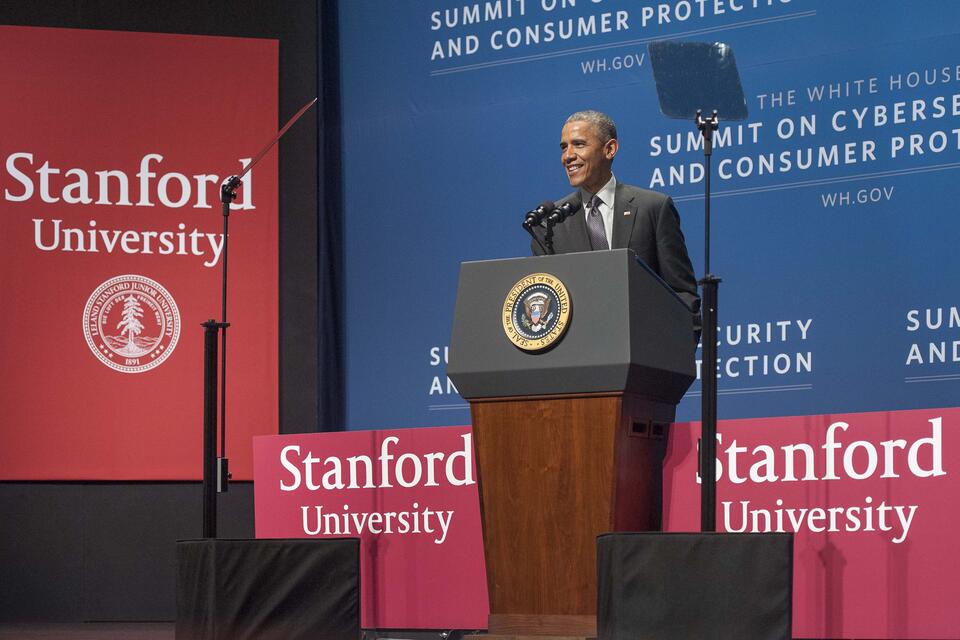
We were honored when President Barack Obama chose to host his White House Summit on Cybersecurity and Consumer Protection at Stanford in collaboration with CISAC earlier this year.
“When we had to decide where to have this summit, the decision was easy,” Obama told the audience gathered in Stanford’s Memorial Auditorium.
Our honors students were thrilled when, in addition to meeting with senior White House officials, they got a surprise visit from the President himself. We were particularly proud that they took advantage of the opportunity to ask our Commander in Chief serious, informed questions about U.S. foreign policy and national security. Their preparedness was a testament to CISAC’s ongoing dedication to teaching and training the next generation of security specialists, which has been a central part of our mission since CISAC was founded in the 1970s.
Our fellowship program, for pre and postdoctoral scholars and senior military officers, is another key part of our educational efforts. And our diverse group of fellows helps make CISAC a dynamic environment where thoughtful, interdisciplinary discussions about national security can evolve organically.
We hope that you’ll also visit us throughout the coming year, in person or online, and join the conversation. You’ll hear much more in the coming pages about the groundbreaking research, innovative teaching and policy impact that our faculty, students, fellows and staff are working together to create.
We also want to take this opportunity to acknowledge your important contributions to our continued success. We could not carry out our mission without your loyal support. So on behalf of all of us here at CISAC, we thank you.
Regards,
Amy Zegart and David Relman
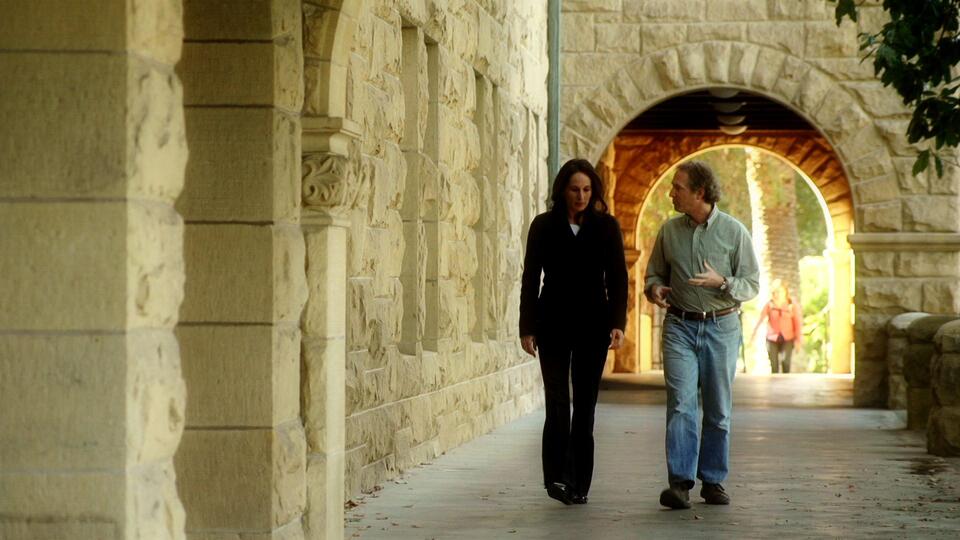
NUCLEAR
CISAC continued its long tradition of leadership in the nuclear field over the last year.
 Sig Hecker, CISAC faculty member and former Los Alamos National Laboratory director, worked closely with top government officials from the U.S. Department of Energy to produce an assessment of the Iranian nuclear program. Their assessment helped guide the historic nuclear talks between the P5+1 and Iran, which resulted in a landmark deal, where Iran agreed to curb its nuclear program in exchange for the lifting of economic sanctions.
Professor Hecker collaborated with Chinese colleagues on an assessment of North Korea’s nuclear arsenal, which estimated that Pyongyang now has many as 20 nuclear warheads, as well as the capability to produce enough highly-enriched uranium to double its arsenal within a year – significantly higher than previous U.S. estimates of between 10-16 bombs. Their estimates were published in a front-page story in the Wall Street Journal, “China Warns North Korean Threat Rising” on April 22, 2015.
Hecker also continued to direct the Nuclear Risk Reduction Project in which he collaborated with nuclear scientists and policy makers around the world to enhance global nuclear stewardship and foster scientific cooperation to address issues of nuclear security and safety, nonproliferation, and nuclear terrorism.
This year, Hecker held a Nuclear Working Group workshop in Pakistan and traveled to Islamabad for the first time to meet with the former Pakistani Chair of the Joint Chiefs of Staff, Gen. Ehsan ul Haq, and to visit the Pakistan Center of Excellence for Nuclear Security. Hecker also hosted Lt. Gen. Khalid Kidwai, former head of the Pakistani Strategic Plans Division (SPD) and current Advisor to Pakistan's National Command Authority, and a delegation from the SPD at CISAC to discuss nuclear dynamics in South Asia and to further Nuclear Working Group objectives of developing a roadmap toward the normalization of Pakistan's nuclear program and the enhanced safety and security of both the civil and military programs. These efforts are accompanied by follow up meetings and debriefs in Washington in the Departments of State, Department of Energy, and the National Security Council, to explore opportunities for achieving these objectives. The NSC acknowledged that these efforts have made very positive contributions to U.S.–Pakistan nuclear relations.
[[{"fid":"221153","view_mode":"crop_870xauto","fields":{"format":"crop_870xauto","field_file_image_description[und][0][value]":"","field_file_image_alt_text[und][0][value]":false,"field_file_image_title_text[und][0][value]":"Rod Ewing chairs a steering committee meeting of his Reset of U.S. Nuclear Waste Management Strategy and Policy series.","field_credit[und][0][value]":"","field_caption[und][0][value]":"","field_related_image_aspect[und][0][value]":"","thumbnails":"crop_870xauto"},"type":"media","field_deltas":{"2":{"format":"crop_870xauto","field_file_image_description[und][0][value]":"","field_file_image_alt_text[und][0][value]":false,"field_file_image_title_text[und][0][value]":"Rod Ewing chairs a steering committee meeting of his Reset of U.S. Nuclear Waste Management Strategy and Policy series.","field_credit[und][0][value]":"","field_caption[und][0][value]":"","field_related_image_aspect[und][0][value]":"","thumbnails":"crop_870xauto"}},"attributes":{"title":"Rod Ewing chairs a steering committee meeting of his Reset of U.S. Nuclear Waste Management Strategy and Policy series.","width":"870","style":"width: 500px; height: 327px; float: right; margin-left: 15px;","class":"media-element file-crop-870xauto","data-delta":"2"}}]]
Rod Ewing, Frank Stanton professor in nuclear security, convened a series of high-level meetings at Stanford that brought together some of the world’s leading experts on nuclear waste disposal in an effort to kick-start the stalled U.S. nuclear waste storage program.
“All the people who are here have the ability to influence, through some level of authority and scholarship, and they’ll be able to take the ideas that they’ve heard back to their different offices and different organizations,” said conference participant David Clark, a CISAC visiting scholar and Fellow at Los Alamos National Laboratory.
Another advantage of holding the meetings at Stanford was the ability to include graduate students in the process.
“There’s a next generation of researchers coming online, and I want to save them the time that it took me to realize what the problems are,” Ewing said.
“By mixing students into the meeting, letting them interact with all the parties, including the distinguished scientists and engineers, I’m hoping it speeds up the process.”
Former Secretary of Defense and CISAC faculty member William J. Perry traveled to ground zero in Hiroshima for the 70th anniversary of the first atomic attack to campaign for global nuclear disarmament.
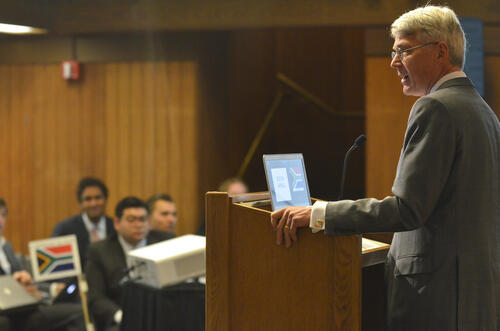
In late March 2015, professor Sagan was part of a cohort of sixteen CISAC faculty who went to U.S. Strategic Command (US STRATCOM) and participated in a series of roundtable discussions with U.S. STRATCOM Commander Admiral Cecil Haney and other members of his senior staff. During the trip, the CISAC fellows and faculty met with a range of STRATCOM personnel at all levels. CISAC fellows and faculty also had the opportunity to brief Admiral Haney and other senior STRATCOM officials on relevant problems of international security. Professor Sagan briefed on deterrence lessons from the Gulf War. CISAC co-director and senior fellow Amy Zegart discussed how the proliferation of armed drones could change the conduct of coercion between states. CISAC pre-doctoral MacArthur Nuclear Security fellow (and experienced Sandia employee) Jason Reinhardt briefed on how to update and apply our Cold War understandings to today’s environment. CISAC pre-doctoral MacArthur Nuclear Security fellow Daniel Altman briefed Admiral Haney on “Red Lines or Red Bands: the Role of Ambiguity in Deterrence.” At the conclusion of the visit, STRATCOM and CISAC teams discussed possibilities for further discussion and possible collaboration.
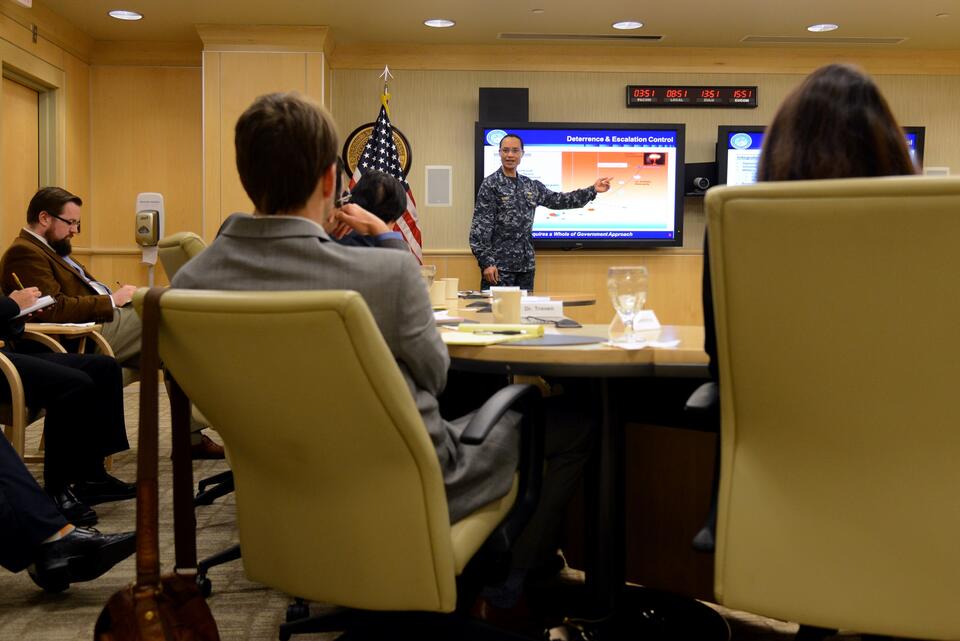
CISAC faculty in attendance included Lynn Eden, Rodney Ewing, Herbert Lin, David Relman, Scott Sagan, and Amy Zegart. The CISAC fellows included Daniel Altman, James Cameron, Edward Geist, Andreas Kuehn, Marshall Kuypers, Chris Lawrence, Jason Reinhardt, Magdalena Stawkowski, David Traven, and Benjamin Wilson. The visit proved enormously beneficial. During our debrief with fellows, many discussed the intangible and lasting value of seeing STRATCOM and learning about the Command’s mission and challenges first-hand. STRATCOM has expressed strong interest in continuing and further enhancing this relationship. And several CISAC attendees, including Altman, Sagan, and Reinhardt, have conducted follow-on research with STRATCOM interest and assistance as a result of the visit.
TERRORISM
CISAC’s terrorism and counter insurgency experts continued their academic research and shared their findings widely – providing high-level briefings to policy makers, academic experts, and military officials.

Crenshaw provided research assistance to graduate and undergraduate students in the FSI Policy Implementation Lab for her Mapping Militants project (mappingmilitants.stanford.edu).
Additionally she served on the editorial boards of several leading journals focused on terrorism issues and published insightful essays on terrorism in several edited volumes and news publications including The Atlantic.
Crenshaw also delivered lectures on terrorism at:
- Centre for the Study of Terrorism and Political Violence, University of St Andrews
- International Studies Association Annual Convention “Sapphire Series” Lecture
- University of Virginia, Department of Politics Seminar on Internal War
- Keynote address at the International Institute for Counter-Terrorism (ICT), Interdisciplinary Center (IDC), Herzliya, Israel, 15th International Conference: World Summit on Counter-Terrorism, “Shifting Sands of Terrorism”
- 2015 START Symposium, Washington D.C.
[[{"fid":"221155","view_mode":"crop_870xauto","fields":{"format":"crop_870xauto","field_file_image_description[und][0][value]":"","field_file_image_alt_text[und][0][value]":false,"field_file_image_title_text[und][0][value]":"CISAC senior research scholar Joe Felter is honored for his support in forming the Philippines' first counterterrorism unit.","field_credit[und][0][value]":"","field_caption[und][0][value]":"","field_related_image_aspect[und][0][value]":"","thumbnails":"crop_870xauto"},"type":"media","field_deltas":{"3":{"format":"crop_870xauto","field_file_image_description[und][0][value]":"","field_file_image_alt_text[und][0][value]":false,"field_file_image_title_text[und][0][value]":"CISAC senior research scholar Joe Felter is honored for his support in forming the Philippines' first counterterrorism unit.","field_credit[und][0][value]":"","field_caption[und][0][value]":"","field_related_image_aspect[und][0][value]":"","thumbnails":"crop_870xauto"}},"attributes":{"title":"CISAC senior research scholar Joe Felter is honored for his support in forming the Philippines' first counterterrorism unit.","width":"870","style":"width: 500px; height: 331px; float: right; margin-left: 15px;","class":"media-element file-crop-870xauto","data-delta":"3"}}]]
Joseph Felter, CISAC senior research scholar and former Army Special Forces colonel, conducted numerous briefings on terrorism and counterinsurgency for policy makers and high-ranking military officials around the world, including:
- A joint briefing to more than a hundred senior congressional staffers in Washington D.C. entitled “Lessons from a Decade of War – What Worked and What Didn’t in Iraq and Afghanistan.”
- Presented research findings and policy recommendations on stabilizing conflict areas to LTG Charles Cleveland, Commanding General of US Army Special Operations Command, and staff at conference hosted by Tufts University on January 23, 2014 and participated as a panel member for discussion topic: “Redefining the Win in a Disordered World.” LTG Cleveland directed his “Commanders Initiatives Group” to follow up with Felter on key recommendations.
- Provided a four-hour seminar on the challenges of addressing insurgent threats in the Philippines to senior officers and civilian officials comprising the Armed Forces of the Philippine Military Strategic Studies Group tasked by the Armed Forces Chief of Staff and Secretary of National Defense with conducting a comprehensive strategic reassessment of the Philippines security strategy through 2025. These findings were incorporated into this strategic reassessment.Image
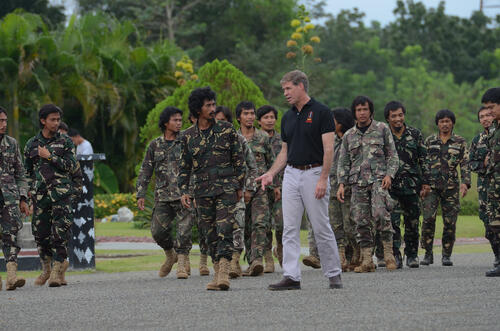
- Presented research findings over a two-day period to Philippine Special Operations Command members including General Eduardo Davalan who commands the major operational units in SOCOM. Provided insights on effective counterinsurgency based on the team’s research to the commanders of multiple Scout Ranger companies prior to their deployment to southern Philippines to conduct counterinsurgency operations. Findings and recommendations informed Philippine counterinsurgency strategy and operations.
- Prepared a comprehensive briefing and presented to former Secretary of State George Shultz, General James Mattis (ret., 4 star, former CENTCOM commander), and other distinguished fellows and faculty on December 4 at Professor John Taylor’s Economics Policy Seminar at the Hoover Institution, Stanford University. The brief, entitled, “The Economics of Counterinsurgency: Winning, Leasing, and Losing Hearts and Minds,” presented the main findings on the impact of aid and investment on violence/conflict.
CYBERSECURITY
This was an important year for our Cyber Policy program, as we continued to strengthen relationships between the Silicon Valley technology community and policy makers in Washington D.C. and in partnership with the Hoover Institution, build Stanford’s Cyber Policy Program into the best in the nation.
Cyber bridge building efforts between academics, policymakers, and industry leaders come at a crucial time. America faces increasing cyber attacks from sophisticated state and non-state actors. However, relations between our federal government and Silicon Valley remain strained in the wake of revelations from former National Security Agency contractor Edward Snowden of far-reaching digital surveillance programs.
CISAC is playing a pivotal role in facilitating the public-private communication we need to forge closer collaboration and meet these looming cyber threats.
CISAC was honored to host President Barack Obama’s White House Summit on Cybersecurity and Consumer Protection here at Stanford. Obama urged government and industry to work together to secure federal networks, improve reporting of cyber attacks and protect the nation’s critical infrastructure.
“This has to be a shared mission. Government cannot do this alone. But the private sector cannot do it alone, either.”
In conjunction with the summit, CISAC also hosted an executive workshop sponsored by the U.S. Department of Commerce's National Institute of Standards and Technology (NIST). The chief information officers and chief technology officers of scores of consumer-facing companies met with Stanford faculty and industry officials to discuss the challenges of applying of new technologies aimed at consumer protection.
 CISAC last year also brought National Security Agency Director and Commander of U.S. Cyber Command Admiral Michael Rogers to campus for a seminar with scholars and a rare public discussion about the NSA’s surveillance programs. Roger’s visit was followed by U.S. Secretary of Defense Ash Carter, who used CISAC’s annual Drell lecture as an opportunity to unveil the Pentagon’s new cyber strategy at Stanford – the first visit to Stanford by a sitting secretary of defense in twenty years.
Carter reminded us of the long history of partnership between the U.S. military, academia and the technology industry, which helped create Silicon Valley’s unique environment of innovation. He called on the audience to renew the bonds of trust and work together to protect America’s national security interests, in an address entitled, “Rewiring the Pentagon: Charting a New Path on Innovation and Cybersecurity.” He used that speech to announce the creation of a new defense innovation unit in Silicon Valley, DIUx. Two of the leaders of that effort are CISAC affiliates and we look forward to working more closely with them. It was heartwarming to hear Carter personally thank CISAC’s Sidney Drell, who was an external thesis advisor for his PhD in theoretical physics from Oxford, and a key mentor during his time as a post-doc at Stanford. He also thanked former Secretary of Defense William Perry. Carter said Perry had been such an important influence on his life that he asked him to stand in for his father on his wedding day.
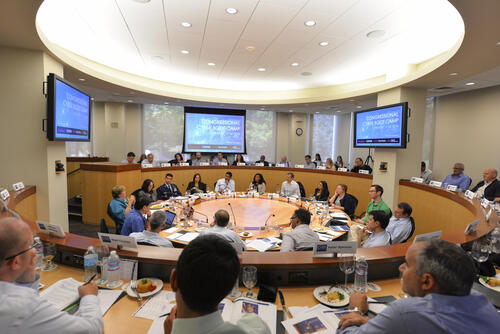
 Herb Lin, CISAC senior research scholar for cyber policy and security and research fellow at the Hoover Institution, was invited to testify before the U.S. Senate Judiciary Committee on the risks of new encryption standards that the FBI says could put American lives at risk. Lin’s research and commentary have also been prominently featured on Lawfare, the leading blog examining national security and legal issues in the country. CISAC affiliate Whitfield Diffie contributed to an influential report from prominent scientists and encryption specialists, which senators cited at the same hearing, and received prominent coverage in the New York Times and other major media outlets.
CISAC has also been awarded a five-year 3 million dollar grant from the Department of Homeland Security as part of a new Center of Excellence on Critical Infrastructure Resiliency housed at the University of Illinois. Lin will be working with CISAC affiliates Rebecca Slayton, Assistant Professor in Cornell University’s Science & Technology Studies Department, and John Villasenor, professor of electrical engineering and public policy at UCLA, in collaboration with colleagues from the Hoover Institution on two projects related to the grant: Supply Chain Cybersecurity Assurance for Critical Infrastructure and Regulatory Options for Managing Systemic Risks.
BIOSECURITY
 CISAC moved to strengthen its focus on emerging national security threats from the life sciences with the appointment of Megan Palmer as senior research scholar. Palmer brings extensive experience as a research scientist and program director to her new role. She earned her PhD in biological engineering from MIT, was a postdoctoral fellowship in bioengineering at Stanford, and has held positions at UC Berkeley and Lawrence Berkeley National Labs. For the last four years Dr. Palmer directed the ‘Policy and Practices’ research program of the multi-university Synthetic Biology Engineering Research Center (Synberc). She serves on the advisory board for the synthetic biology program at the Joint Genomics Institute (JGI) and leads policy and safety programs of the international Genetically Engineered Machine Competition. Dr. Palmer has also launched several programs on the societal aspects of biotechnology, including an international fellowship program in responsible biotechnology development.
Palmer will continue to work closely CISAC co-director and microbiology professor David Relman, as they pursue an interdisciplinary approach to understanding the policy and security implications of the rapid advances and global proliferation of biotechnology. This year they convened an FSI and School of Medicine (SOM)-sponsored working group on ‘globalization, security and the life sciences’ that included faculty from departments across Stanford University to examine opportunities for members of the Stanford community to contribute to research, education and policy in these areas.
Palmer and Relman also helped advise on best practices and policies for the governance and responsible advancement of biotechnology and other emerging technologies in a diversity of venues:
At the National Academies of Science, Relman served as chair of the Institute of Medicine Forum on Microbial Threats and a member of the Committee on Science, Technology and Law. He presented at the symposium launching a yearlong US Government study to map the risks and benefits of so-called gain-of-function research which may generate new types of biological threats.
Megan Palmer also presented at the National Academies on biotechnology governance in the US and internationally as part of a study examining the use of ‘gene drives’ that may allow the rapid spread of traits through populations and ecosystems. She participated on a National Academies, Royal Society and Inter-academy panel on Science and Technology developments relevant to the Biological Weapons Convention in Warsaw, and a panel on new technologies and challenges to nonproliferation at the EU consortium on nonproliferation in Brussels.
Megan Palmer spoke on NPR’s Science Friday on the policy implications of Stanford scientists’ development of a microbial platform for the production of opiates.
For the fifth year, Palmer co-lead the policy and safety and security programs in the international Genetically Engineered Machine competition (iGEM). This year 254 student teams from 38 countries participated.
This year, Palmer also led an international yearlong non-residential fellowship program in responsible biotechnology development. The 25 fellows, emerging leaders in biotechnology from across disciplines and sectors convened for two workshops in Washington, DC and Asilomar, CA. They pitched their initiatives to guide the responsible development of biotechnology development at a final showcase at Stanford in July, which are now being developed into white papers.
TEACHING & TRAINING
Educating the next generation of security specialists has been a core part of CISAC’s mission since it was founded in the 1970s. Over the last year we continued to pursue innovative teaching models and provide intensive mentorship to students who aspire to have an impact in the fields of foreign policy and national security.
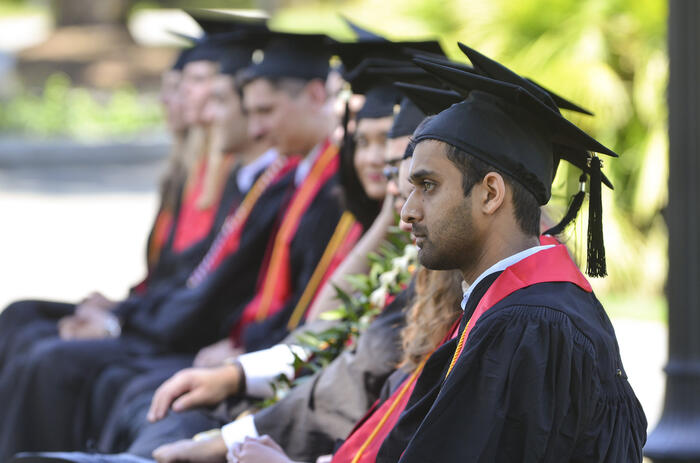
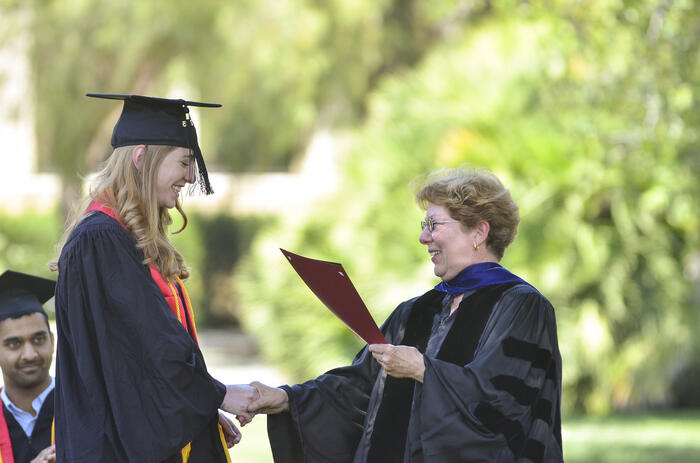
In particular, CISAC is examining how we can field more courses that target the fast-rising number of engineering majors, bridging the sciences and social sciences, and ensuring that the next generation of engineers has a grounding in policy analysis and international security issues. As enrollments in the “usual suspect” majors – Political Science, History, Economics – decline, we will continue to innovate to reach new audiences in new ways to fulfill our teaching mission.
Scott Sagan led CISAC’s signature undergraduate course PS 114: International Security in a Changing World, with help from CISAC lecturer Gil-li Vardi and Martha Crenshaw (who has been working with Sagan to help revise the course) along with many other CISAC faculty and fellows including David Relman, Amy Zegart, Herb Lin, and Megan Palmer who delivered guest lectures and participated in the final U.N. simulation.
Sagan and Joseph Felter were joined by renowned author and former U.S. Army paratrooper Tobias Wolff to teach The Face of Battle sophomore college which included a visit to the Little Big Horn Battlefield National Monument.
Sig Hecker continues to co-teach the course “The Role of Technology in National Security” (MSE 193/293) with William J. Perry and Jim Ellis. The class, which serves both undergraduate and graduate students from engineering and the humanities, had 250 students and remains one of the most popular classes at Stanford University. Professor Hecker also continues to teach an Introductory Seminar class on “All Things Nuclear.” This class, by design, has roughly 16 students and also remains popular with Stanford University students.
Martha Crenshaw co-taught the CISAC honors seminar with Chip Blacker and coordinated CISAC’s online lecture series “Security Matters,” which offers mini-lectures on a multitude of international security challenges.
Washington D.C. veteran and FSI Oksenberg-Rohlen Distinguished Fellow Thomas Fingar and Martha Crenshaw gave the honors students an insider’s tour of the nation’s capital in Septermber 2014, while Karl Eikenberry and Crenshaw led the tour in 2015 – which included visits to the State Department, the Pentagon, the CIA and the White House, and meetings with Senator Jack Reed (D-RI), the Ranking Member of the Armed Services Committee, and Congressman Jim Costa (D-CA).
[[{"fid":"221160","view_mode":"crop_870xauto","fields":{"format":"crop_870xauto","field_file_image_description[und][0][value]":"","field_file_image_alt_text[und][0][value]":false,"field_file_image_title_text[und][0][value]":"CISAC honors students visit the Central Intelligence Agency headquarters in Langley, Virginia.","field_credit[und][0][value]":"","field_caption[und][0][value]":"","field_related_image_aspect[und][0][value]":"","thumbnails":"crop_870xauto"},"type":"media","field_deltas":{"6":{"format":"crop_870xauto","field_file_image_description[und][0][value]":"","field_file_image_alt_text[und][0][value]":false,"field_file_image_title_text[und][0][value]":"CISAC honors students visit the Central Intelligence Agency headquarters in Langley, Virginia.","field_credit[und][0][value]":"","field_caption[und][0][value]":"","field_related_image_aspect[und][0][value]":"","thumbnails":"crop_870xauto"}},"attributes":{"title":"CISAC honors students visit the Central Intelligence Agency headquarters in Langley, Virginia.","width":"870","style":"width: 870px; height: 701px;","class":"media-element file-crop-870xauto","data-delta":"6"}}]]
Fingar traveled to the Stanford Center at Peking University in Beijing to participate in the “International Diplomacy Lecture Series” with CISAC affiliate and former U.S. Ambassador to Afghanistan Karl Eikenberry.
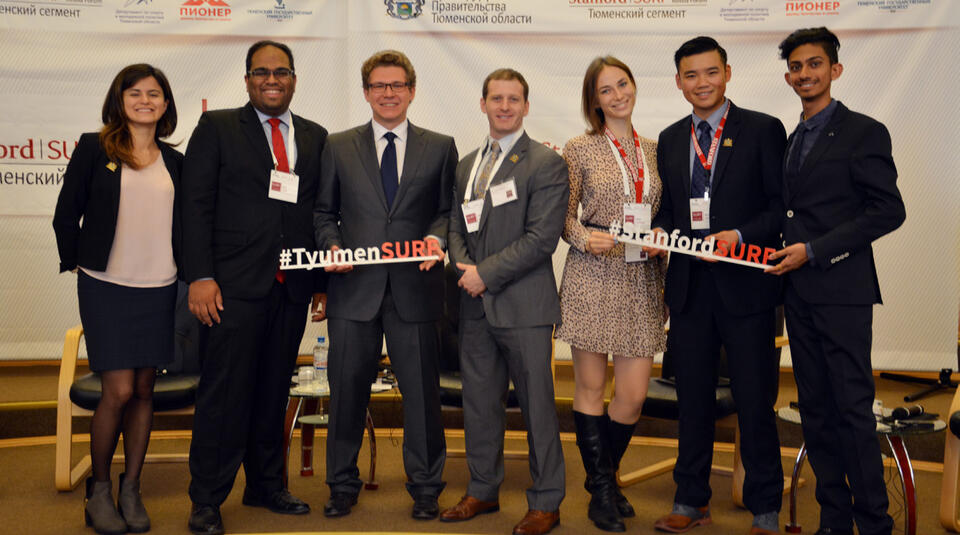
While official relations between the U.S. and Russia have sunk to their lowest level in recent memory, the student-led Stanford U.S.-Russia Forum (SURF), which gives students from America and Russia the opportunity to meet and engage in academic collaboration through a series of conferences staged in each country, continued to be a shining example of international cooperation.
Last year, CISAC established the Security Research Seed Grant Program to provide small grants for early-stage, security–related doctoral research at Stanford, to engage a broader pool of doctoral students in CISAC activities, and to foster interdisciplinary connections across security researchers in engineering, humanities, sciences, and social sciences. The program funded a diverse range of projects from students in Stanford’s political science and African history departments, including research on public attitudes to torture during war, legality and audience costs in arms control, and the logic of repression in Pinochet’s Chile. Grant recipients will give an overview and update on their current research at a briefing for the CISAC community early next year.
FELLOWS
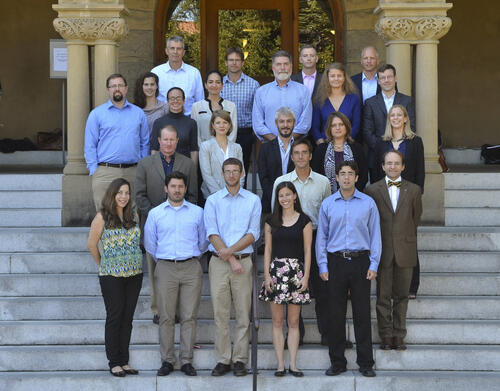
In addition to teaching undergraduate and postgraduate students from Stanford, CISAC also hosted an interdisciplinary cohort of 21 pre and postdoctoral fellows from universities across America and around the world, as well as five senior officers from the U.S. military services.
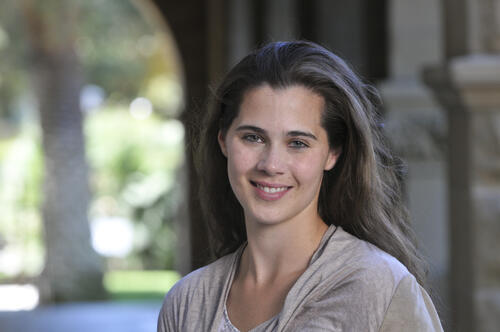
Jason Reinhardt, a national security systems analyst at Sandia National Laboratories and doctoral candidate in risk analysis in Stanford’s Department of Management Science and Engineering, has benefited greatly from the opportunity to devote time to identifying policy problems and analyzing potential solutions as a CISAC fellow over the past two years. Jason is interested in bringing a technology focus into policy considerations. In the context of using technology to mitigate risk, Jason argues “…if you don’t have policies and agreements in place to govern the use of technology, it’s as if the technology doesn’t exist.” In Jason’s current capacity as a CISAC Affiliate, he is partnering with CISAC Professor Sig Hecker and Visiting Scholar Dr. Larry Brandt on a research project with Chinese scholars, examining ways that the U.S. and China can work together on issues of nuclear counter terrorism. They are forming an analytical approach and will be working with a Chinese scholar who is visiting CISAC this year.
Daniel Altman began his CISAC pre-doctoral MacArthur fellowship while completing his Ph.D. in the Political Science Department at MIT. He finished his Ph.D. while at CISAC, after successfully defending his dissertation, “Red Lines and Faits Accomplis in Interstate Coercion and Crisis,” which builds on neglected insights from Thomas Schelling to offer a theoretical framework for explaining crisis behavior and outcomes. Altman says of his CISAC mentor Professor Ken Schultz that he was extremely helpful and generous with his time. His comments and suggestions led to several improvements in his dissertation, especially the territorial branch of the project focusing on land grabs. In addition to Schultz, Altman says Scott Sagan, Lynn Eden, David Holloway and others also made substantial contributions. During Altman’s year as a MacArthur fellow at CISAC, he briefed Admiral Cecil Haney, the Commander in Chief of the United States Strategic Command in Omaha on “Red Lines or Red Bands: the Role of Ambiguity in Deterrence.” Shortly after completing his fellowship, his article “The Strategist’s Curse: A Theory of False Optimism as a Cause of War,” was published in Security Studies. Currently, Altman is a postdoctoral fellow at the Dickey Center at Dartmouth.
Erin Baggott, CISAC predoctoral Carnegie fellow in 2014-15, is completing her Ph.D. in Government at Harvard University. Early last fall, Baggott presented in the CISAC social science seminar on “Predicting Chinese Foreign Policy: Signals and
We’d also like to highlight two exciting, recent policy-relevant publications by 2011-12 fellows Toshihiro Higuchi and Benoît Pélopidas. Higuchi’s article "Radiation Protection by Numbers: Another “Man-made” Disaster," is forthcoming in Learning from a Disaster – Improving Nuclear Safety and Security after Fukushima, a volume edited by Edward D. Blandford, a former MacArthur Fellow at CISAC, and Scott D. Sagan, to be published by Stanford University Press in 2016. Pélopidas’ article “A Bet Portrayed as a Certainty: Reassessing the Added Deterrent Value of Nuclear Weapons,” has been published in George P. Shultz and James E. Goodby’s The War That Must Never Be Fought: Dilemmas of Nuclear Deterrence (Stanford, California: Hoover Institution Press, 2015). Both of these publications are the result of the network of young scholars working with more senior scholars and policy makers that CISAC has created.
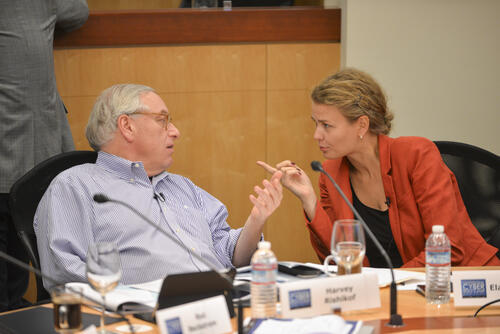
CISAC fellows also participated in a large simulation of a U.N. Security Council meeting, playing the role of “heads of state” in CISAC’s signature course, PS114: International Security in a Changing World a large undergraduate course, open to students pursuing any field of study, and taught by CISAC faculty.
EVENTS
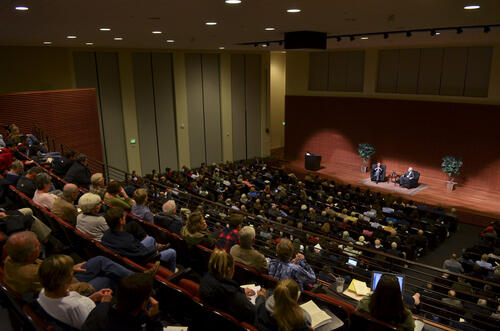
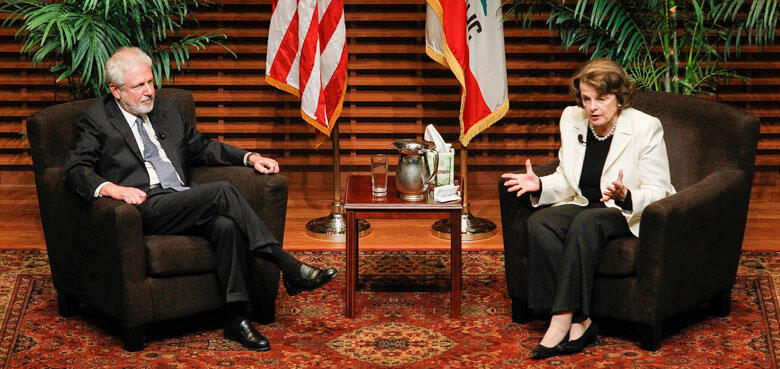
Last year, we partnered with the Law School, Continuing Studies, the Hoover Institution, and the student Group Stanford in Government to create a year-long, campus wide speaker series examining the challenging issues of security and liberty sparked by the Snowden revelations. Called the Security Conundrum, the series brought speakers to campus in conversation with CISAC faculty Amy Zegart and Phil Taubman to examine the Snowden revelations from different vantage points. Speakers included:
- Dianne Feinstein, U.S. Senator
- Mark Udall, former U.S. Senator
- Michael Hayden, former NSA and CIA Director
- Barton Gellman, a Pulitzer Prize-winning Washington Post reporter who closely covered former NSA contractor Edward Snowden’s leaks
- Admiral Cecil D. Haney, STRATCOM commander
- James O. Ellis, former STRATCOM commander
- Khalid Kidwai, former Lt. Gen in the Pakistani Army
- Steven Chu, former U.S. Secretary of Energy
U.S. Secretary of Defense Ash Carter returned to FSI, where he had been the Payne Distinguished Visitor, to deliver CISAC’s annual Drell Lecture.
AWARDS & HONORS
Many CISAC faculty members were honored with prestigious awards over the last year for outstanding career achievements in their chosen fields.
Scott Sagan received the William and Katherine Estes Award from the National Academy of the Sciences for his contributions to social science research on nuclear risk.
“Sagan's work has become an integral part of the nuclear debate in the United States and overseas,” according to the citation from the National Academy of Sciences.
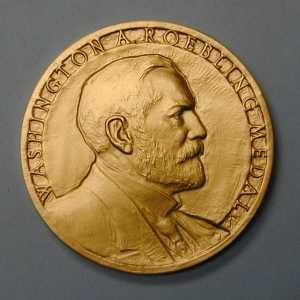
- Roebling Medal (the highest award of the Mineralogical Society of America)
- The International Mineralogical Association’s Medal of Excellence in Mineralogical Sciences
- The American Geoscience Institute’s Ian Campbell Medal for superlative service to the geosciences
“Rod Ewing is a modern mineral scientist at the top of his field who has excelled in both science and service,” according to the citation for the Campbell Medal.
“Dr. Ewing has made seminal contributions to our knowledge of radiation damage in minerals and the design of waste forms for high-level nuclear waste. And he continues to have a major impact on the policies underlying nuclear waste management in the United States.”
Sig Hecker was presented with the Arthur M. Bueche Award by the National Academy of Engineering for contributions to nuclear science and engineering and for service to the nation through nuclear diplomacy. Hecker was also awarded an honorary membership by ASM International – one of the most prestigious awards from the world’s largest association of materials scientists and engineers who study and work with metals. Hecker said he was proud to join a list of honorees that included many of his “old metallurgical heroes,” including Arden Bemet (former director of the National Science Foundation and the National Institute of Standards and Technology), and Thomas Edison (inventor of the phonograph, movie camera and light bulb), who was awarded an honorary membership in 1929. Hecker was also invited to deliver the Alpha Sigma Mu International Professional Honor Society for Materials Science and Engineering distinguished lecture in Columbus, Ohio.
Martha Crenshaw was the first woman to be given the International Security Studies Section (ISSS) Distinguished Scholar Award from the International Studies Association for her pioneering scholarly work on terrorism. She was also elected to the British Academy – the U.K.’s national academy for the humanities and Social Sciences – as one of 20 new Corresponding Fellows from overseas universities.
“Through her research, policy work, service, teaching, and mentoring, Professor Crenshaw has indelibly shaped the International Security field,” read the citation from the International Studies Association.
CISAC IN THE NEWS
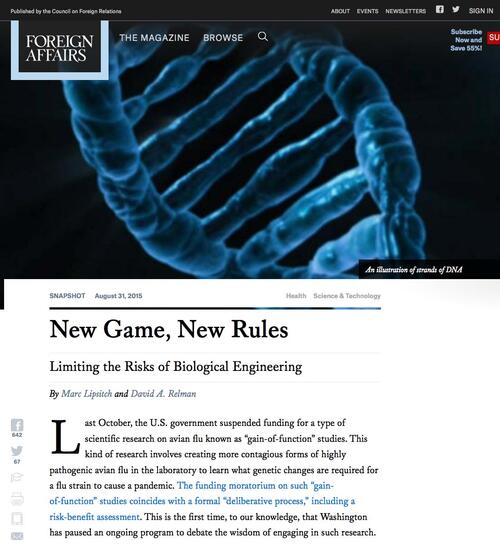
David Relman wrote recommendations for containing the risks of bioengineered super viruses for the Foreign Affairs Web site and discussed risks of biological engineering in the Hastings Center Report.
Martha Crenshaw argued in The Atlantic magazine that there’s no such thing as a global jihadist movement; the extremists are united by shared ideological beliefs, but divided organizationally and sometimes doctrinally.
Sig Hecker wrote in the New York Times that Moscow and Washington must get back on track and work together on nuclear security.
Amy Zegart penned a piece for the Wall Street Journal piece that highlighted how new technologies will allow many states—and non-state actors—to make low-cost but highly credible threats.
CISAC scholars, fellows and affiliates also received coverage in Foreign Policy, The New Yorker, Forbes Magazine and The Los Angeles Times, among many others.
BOOKS
CISAC faculty members wrote, edited and contributed to a wide range of books on important international security issues.
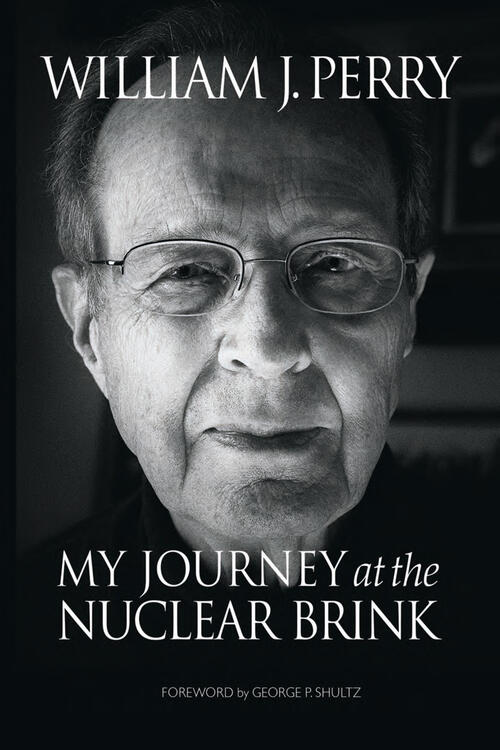
Historian David Holloway contributed chapters to the anthologies “Andrei Sakharov: The Conscience of Humanity” (edited by Sidney Drell & George P. Schulz), and “The Euromissile Crisis and the End of the Cold War.”
Scott Sagan co-edited an American Academy of Arts & Sciences compilation titled “A Worst Practices Guide to Insider Threats: Lessons from Past Mistakes.”
Martha Crenshaw contributed an essay on dealing with terrorism for the compilation “Managing Conflict in a World Adrift.”
CISAC co-director Amy Zegart wrote a chapter for the textbook “Essentials of Strategic Intelligence.”
Thomas Fingar contributed to five books on foreign policy, from political reform in China to the role of intelligence in countering illicit nuclear-related procurement.
Sig Hecker is in the final stages of editing “Doomed to Cooperate: How American and Russian Nuclear Scientists Joined Forces to Mitigate Some of the Greatest Post-Cold War Dangers.”
And we look forward to upcoming books from CISAC faculty members Martha Crenshaw, Joseph Felter and David Holloway in the year ahead.
CISAC affiliates also published several books.
Jeffrey Lewis published “Paper Tigers: China’s Nuclear Posture”, which seeks to understand why China has maintained a relatively small nuclear arsenal in the context of the global arms race.
Whitfield Diffie co-edited a technical account of how the British military created the first large-scale computer, known as “Colossus”, to break the German’s secret codes – “Breaking Teleprinter Ciphers at Bletchley Park.”
And Simon & Schuster accepted a manuscript from CISAC affiliate Anja Manuel of the strategic consulting firm RiceHadleyGates currently titled “Brave New World: The future of China, India and the West”, scheduled for publication next May.